
Last updated: January 2026
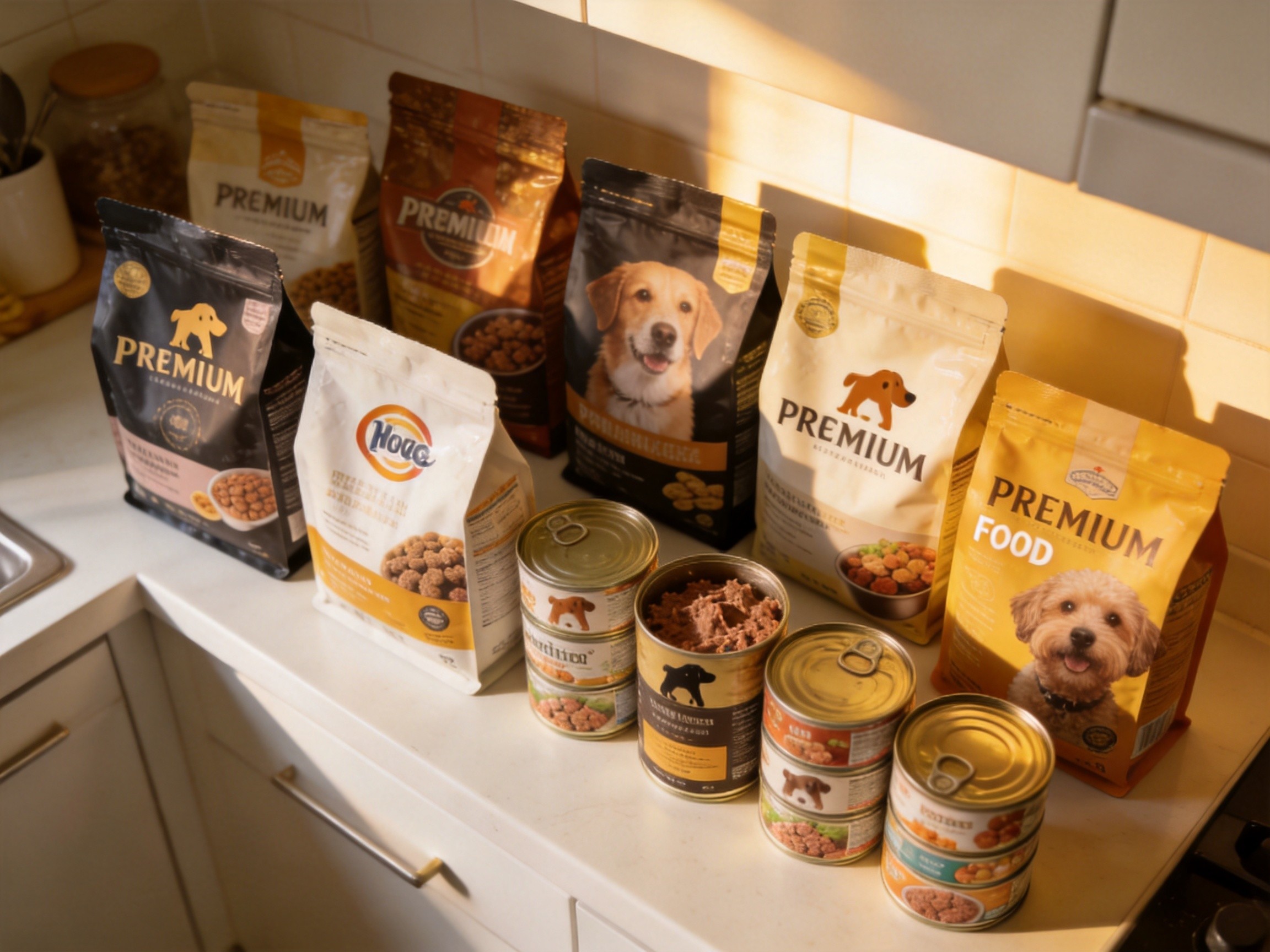
Walking the dog food aisle of any pet store can be overwhelming. Premium brands, grain-free options, limited ingredient formulas, raw diets—the choices seem endless.
This guide cuts through the confusion and helps you choose the right dog food with confidence.
Understanding Your Dog’s Nutritional Needs
Dogs are omnivores with carnivorous ancestors. They need a balanced diet of proteins, fats, carbohydrates, vitamins, and minerals—but protein should be the foundation.
Protein: Dogs need high-quality animal protein. Look for named meat sources (chicken, beef, salmon) as the first ingredient.
Fat: Provides energy and helps absorb vitamins. Animal fats are typically better than plant oils for dogs.
Carbohydrates: Offer energy and fiber. Whole grains, sweet potatoes, and peas are good sources.
Vitamins and Minerals: Support immune function, bone health, and cellular processes.
Water: The most essential nutrient. Always ensure fresh water is available.
Reading Dog Food Labels
The label tells you everything—if you know how to read it.
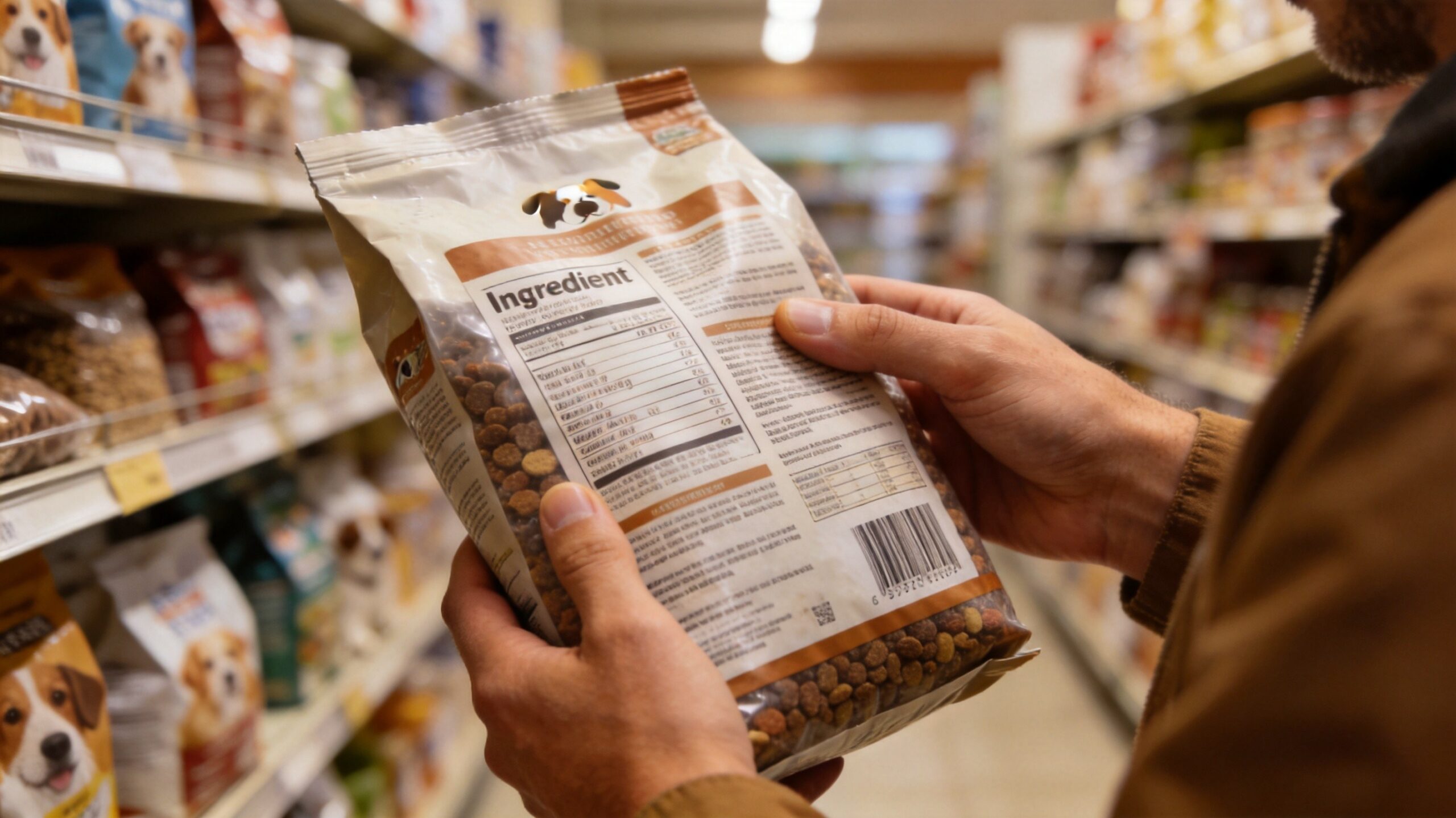
The Ingredient List
Ingredients are listed by weight before cooking.
Good signs: Named meat sources first (chicken, not “meat”), whole food ingredients you recognize, specific fish sources (salmon oil, not just “fish oil”).
Red flags: “By-product” ingredients without specification, vague terms like “animal fat”, artificial colors/flavors/preservatives, added sugars.
Guaranteed Analysis
Typical targets for adult dogs: Protein 25-30%, Fat 15-18%, Fiber 3-5%, Moisture 10-12%. Puppies and active dogs may need higher protein and fat.
AAFCO Statement
Look for the AAFCO (Association of American Feed Control Officials) statement. It tells you the food is “complete and balanced” and which life stage it’s designed for. Feeding trials are preferable—they test the food on real dogs in real conditions.
Types of Dog Food
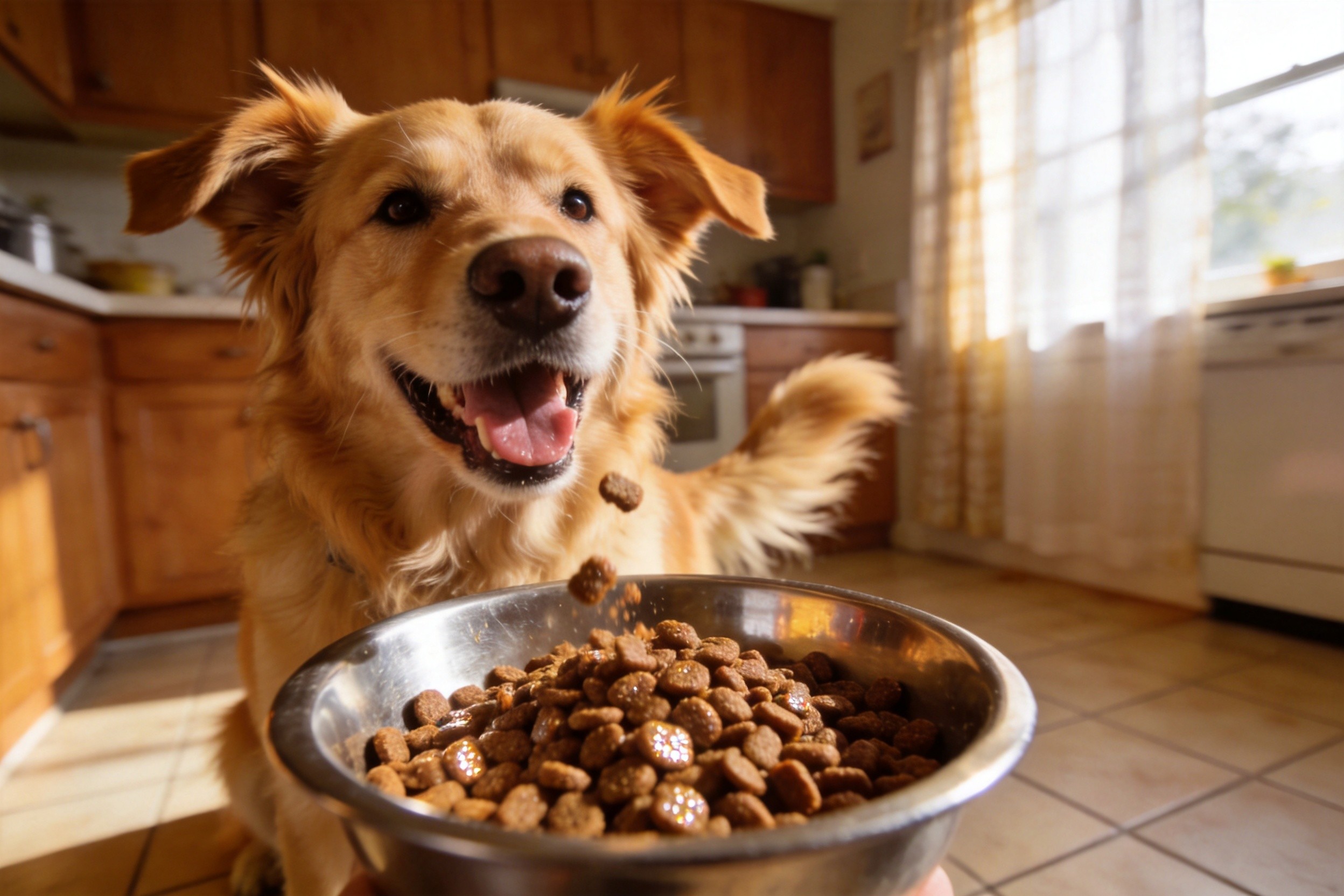
Dry Kibble — Pros: Affordable, convenient, good for dental health. Cons: Lower moisture, quality varies. Best for most dog owners.
Wet/Canned Food — Pros: Higher protein, more moisture, great for picky eaters. Cons: More expensive, harder to store. Best for dogs needing extra hydration.
Grain-Free Food — Pros: Alternative for grain sensitivities. Cons: Some studies link to heart disease, typically more expensive. Best for dogs with proven grain allergies only.
Limited Ingredient Diets (LID) — Pros: Fewer ingredients reduce allergy risk. Cons: More expensive, may lack complete nutrition. Best for dogs with food allergies.
Raw and Freeze-Dried — Pros: Closest to natural diet. Cons: Expensive, food safety concerns, requires careful handling. Best for owners committed to raw feeding.
Fresh/Refrigerated — Pros: Human-grade ingredients, personalized recipes. Cons: Very expensive, short shelf life. Best for dogs with digestive issues and owners with higher budgets.
Matching Food to Your Dog
By Age
Puppies (8 weeks to 12 months): Need higher protein and calories, DHA for brain development, puppy-formulated food only. Large breed puppies need special formulas.
Adult Dogs (1-7 years): Maintenance formulas for their size/activity level. Most dogs do well on quality adult food.
Senior Dogs (7+ years): May need fewer calories, joint supplements, added fiber for digestive health.
By Size
Small Dogs (under 25 lbs): Smaller kibble, higher metabolism needs more calories per pound, prone to dental issues.
Large Dogs (over 50 lbs): Joint support is important, slower growth formulas for puppies.
Giant Breeds (over 100 lbs): Specialized formulas essential, added joint support.
By Activity Level
Sedentary dogs: Lower calorie, higher fiber. Active/working dogs: Higher protein and fat, may need performance formulas.
Common Dog Food Myths Debunked
“Grain-free is always better” — Not necessarily. Most dogs digest grains fine. Some grain-free diets have been linked to dilated cardiomyopathy (DCM). Only switch if your dog has proven grain allergies.
“Premium food costs too much” — Actually, premium food often costs less long-term. Higher quality means you feed less and avoid health issues from poor nutrition.
“Ingredients I can’t pronounce are dangerous” — Not always. Scientific-sounding names often describe essential vitamins and minerals.
“Dogs shouldn’t eat vegetables” — Wrong. Many vegetables provide beneficial fiber, vitamins, and antioxidants.
“Home-cooked is always better” — Home cooking can work, but it’s difficult to balance correctly without veterinary guidance.
How to Transition to New Food
Switching food suddenly causes digestive upset. Transition gradually over 7 days:
Day 1-2: 75% old food, 25% new food
Day 3-4: 50% old food, 50% new food
Day 5-6: 25% old food, 75% new food
Day 7: 100% new food
Monitor for vomiting, diarrhea, changes in appetite, or allergic reactions. If problems occur, slow down the transition.
FAQ
How do I know if my dog food is causing allergies? Food allergies typically cause skin issues or digestive problems. The only way to diagnose is through an elimination diet with novel proteins.
Should I rotate my dog’s protein sources? Some vets recommend it; others worry it increases sensitivity. If rotating, change proteins completely (chicken to beef, not chicken to turkey).
How much should I feed my dog? Start with package guidelines, then adjust based on weight. Most adult dogs should maintain a healthy weight with ribs easily felt but not visible.
Is it okay to mix wet and dry food? Yes, just keep total calories in mind.
How do I store dog food properly? Keep in original bag, store in a cool dry place, seal after opening, use within 6 weeks.
When should I switch from puppy to adult food? Small breeds: ~12 months. Large breeds: ~18 months. Giant breeds: ~24 months.
Our Recommendation
There’s no single “best” dog food for every dog. Choose foods with named meat proteins first, look for AAFCO statement, match food to your dog’s life stage and size, transition slowly, and monitor for negative reactions.
When in doubt, consult your veterinarian. The “best” food is the one your dog thrives on—healthy coat, good energy, normal digestion, and maintained weight. If those boxes are checked, you’re doing it right.
Your dog trusts you to feed them well. Make the choice, commit to it, and enjoy the tail wags.