
Last updated: January 2026
The word “crate” makes some new puppy owners uncomfortable. It sounds like a cage. It feels mean. But crate training is one of the most valuable skills you can teach your new best friend.
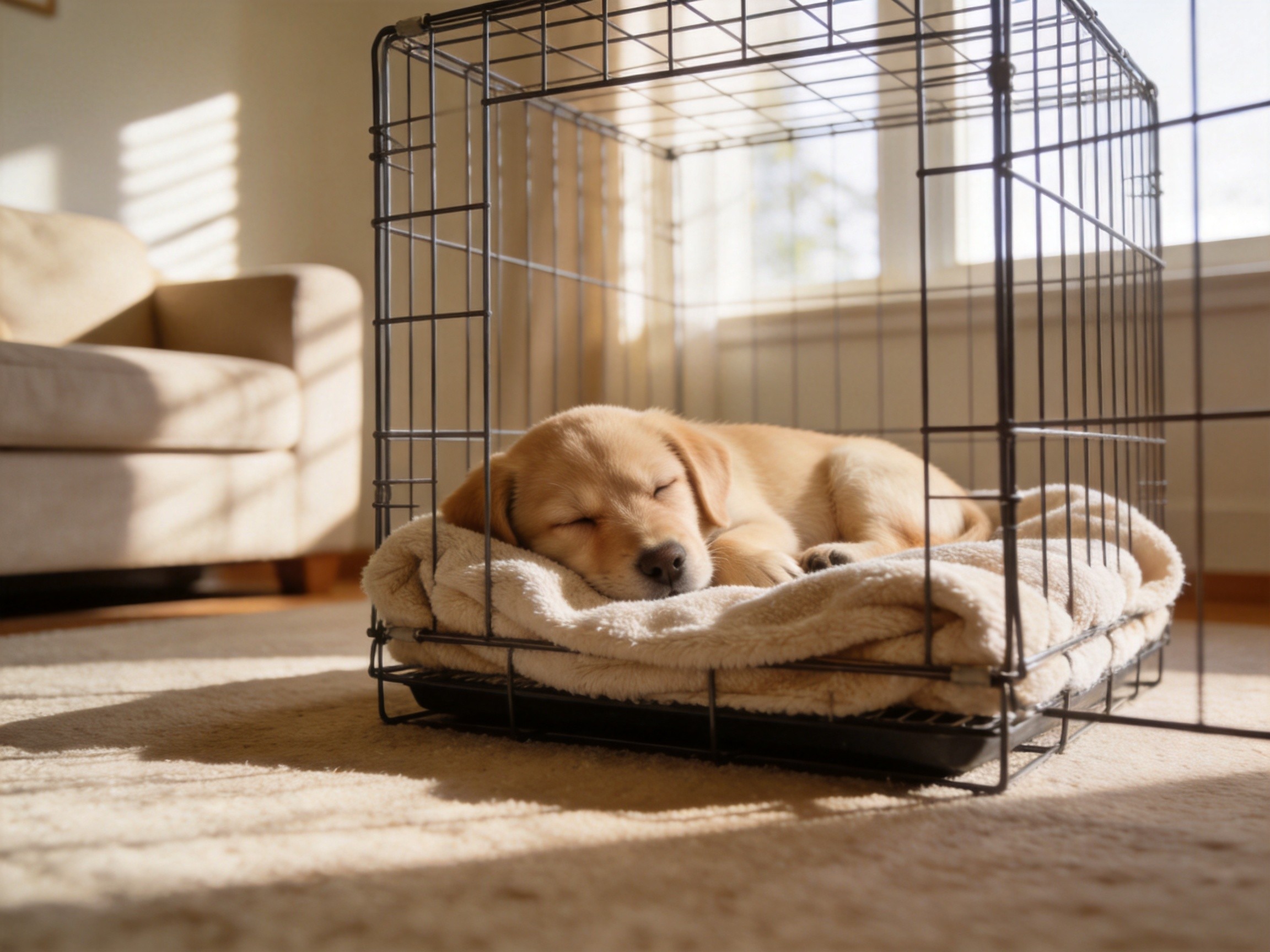
Done right, crate training gives your puppy a safe haven—a cozy den they love. It makes house training faster, keeps your puppy safe when you can’t supervise, and gives your dog a place to feel secure.
This guide walks you through crate training step by step, with patience and positivity.
Why Crate Train?
Dogs are den animals by nature. In the wild, they seek small, enclosed spaces for safety and rest. A crate fulfills this instinct.
Benefits: House training (dogs naturally avoid soiling their sleeping area), safety when you can’t watch them, easier travel, calm recovery space after surgery, anxiety reduction during storms or fireworks, furniture protection from chewing.
“Isn’t it cruel?” — Not when done correctly. The crate should be a positive space, never a punishment.
“My dog will feel trapped.” — The crate door stays open initially. You’re building positive association, not forcing imprisonment.
Choosing the Right Crate
Your puppy’s crate should be large enough to stand up, lie down stretched out, and turn around comfortably. But not so large they can soil one end and sleep in the other.
Pro tip: Buy one crate for adult size, then use a divider to make it smaller for the puppy stage.
Wire crates: Best value and versatility. Good airflow, collapsible, easy to clean, often include dividers.
Plastic/flight crates: More enclosed, feels more den-like, required for airline travel.
Soft-sided crates: Lightweight and portable, good for travel, not for escape artists or heavy chewers.
Recommendation: Wire crates for most puppy owners. Consider two crates—one for the living area, one for the bedroom.
Step 1: Introduce the Crate
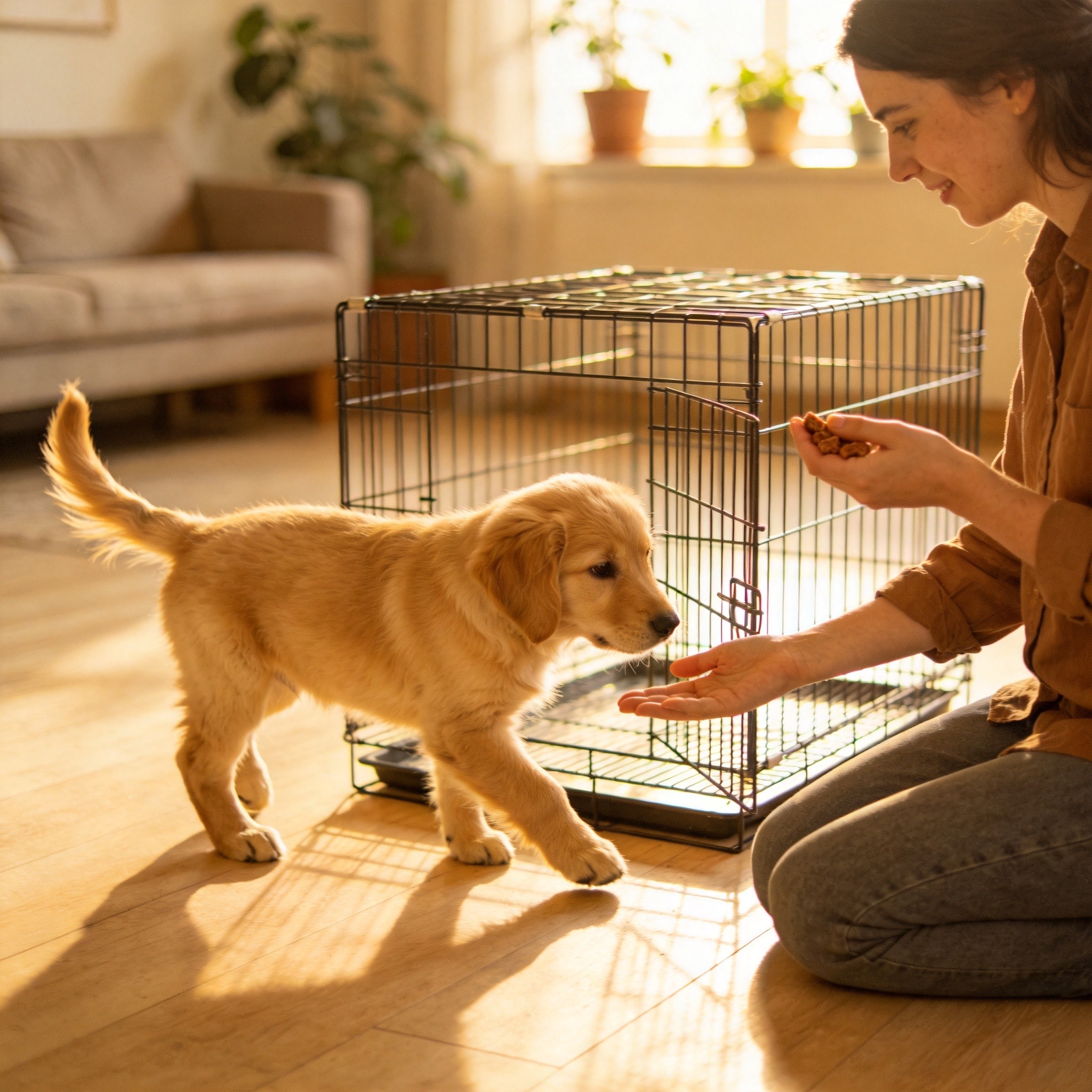
Place the crate in a common family area with the door open. Toss treats inside. Let your puppy investigate at their own pace.
Don’t: Force your puppy inside, close the door immediately, rush the process, use a stern tone.
Do: Make the crate inviting, place treats near and inside, let puppy explore freely, use a happy encouraging voice.
Put your puppy’s favorite blanket or toy inside. Feed meals inside the crate with the door open. Your puppy starts to see the crate as a source of good things.
Timeline: Usually takes 1-3 days. Don’t rush until your puppy voluntarily enters the crate.
Step 2: Practice Closing the Door
Once your puppy enters readily, close the door for just 1-2 seconds. Immediately open it again. Reward calm behavior.
Key point: Open the door before your puppy shows distress. If they whine or struggle, the door was closed too long.
Gradually extend: 5 seconds → 10 seconds → 30 seconds → 1 minute → 5 minutes. If your puppy struggles, go back to a shorter duration.
Quiet = Release: Teach that quiet behavior gets the door open. Don’t release while whining—this teaches whining opens the door.
Step 3: Extend Crate Time
Once your puppy handles 5 minutes calmly, start moving away. Stand beside → one step away → return and release. Gradually increase distance and duration.
Practice with normal household activity. Crates should prepare puppies for real life, not just quiet environments.
Step 4: Nighttime Crate Training
The first few nights are the hardest. Start with the crate in your bedroom—your presence helps your puppy settle.
Nighttime routine: Take puppy outside right before bed → give a calm bedtime command → place puppy in crate with a treat → turn off lights → ignore whining that doesn’t indicate emergency → reward quiet behavior.
Normal crying: Puppies cry because they’re adjusting. Typically decreases after 2-3 nights.
Crying for needs: Your puppy may need to potty. Set an alarm for 2-3 hours after bedtime.
Tip: A ticking clock or white noise nearby can help calm puppies. A worn t-shirt in the crate provides familiar scent comfort.
Step 5: Daytime Crate Training
The 2-Hour Rule: Puppies under 12 weeks can only hold their bladder for about 2 hours.
General guideline—one hour per month of age, plus one:
- 8-week-old: 2-3 hours max
- 12-week-old: 3-4 hours max
- 16-week-old: 4-5 hours max
Routine departures: Give a “crate” command → puppy enters and settles → say a calm goodbye → leave without dramatic displays. Return calmly, wait for quiet, then release.
Common Problems
Separation Anxiety: Build crate comfort gradually, tire puppy out before crating, consider calming supplements or thunder shirts.
Accidents in the Crate: Use a properly sized crate or divider, increase bathroom breaks, don’t crate right after eating, clean with enzyme cleaner.
Refusing to Enter: Start fresh with positive associations, feed all meals inside, never force puppy in, try a different crate style.
Excessive Barking/Whining: Ensure all needs are met before crating, ignore attention-seeking barks, reward quiet immediately, move crate to quieter area.
Crate Training Timeline
Week 1: Crate in living area, door open, treats and meals inside, voluntary entry encouraged.
Week 2: Close door for short periods, start leaving room briefly, begin establishing routine.
Week 3-4: Daytime crating up to 2-3 hours, nighttime crating established, short departures.
Month 2+: Longer crating periods, increased independence, puppy comfortable with routine.
Remember: Every puppy is different. Some learn in weeks; others need months. Stay patient and consistent.
Crate Training Don’ts
- Don’t use the crate as punishment
- Don’t crate too long (not a babysitter for 8 hours)
- Don’t rush the process
- Don’t give up after one bad night
FAQ
How long can my puppy stay in the crate? Under 12 weeks: 30-60 min. 12-16 weeks: 1-2 hours. 4-6 months: 3-4 hours. 6+ months: 4-5 hours. Adults can handle 6-8 hours.
Should I crate my dog at night forever? No. Many owners transition to free roam once house trained (usually by 1 year). Some dogs continue to enjoy their crates as a safe space.
What if my puppy cries all night? Ensure bathroom needs are met first. Some crying is normal adjustment. If excessive, consider crate size, room stimulation, or separation anxiety.
Can I put newspaper or pads in the crate? Avoid this during house training—it teaches puppies to soil where they sleep.
Is it okay to crate my dog for work? Adult dogs can handle 8 hours if necessary, but it’s not ideal. Consider doggy daycare or a dog walker for long days.
Final Thoughts
Crate training requires patience—sometimes lots of it. But the result is a dog who feels secure, a home that’s easier to manage, and a skill that makes travel and vet visits less stressful.
Every whine feels discouraging. Every night of disrupted sleep feels exhausting. But you’re building your dog’s foundation for confidence and calm.
Stay consistent. Stay positive. Trust the process.
Your puppy’s safe space is worth every bit of effort. Good luck, and enjoy your new best friend!