

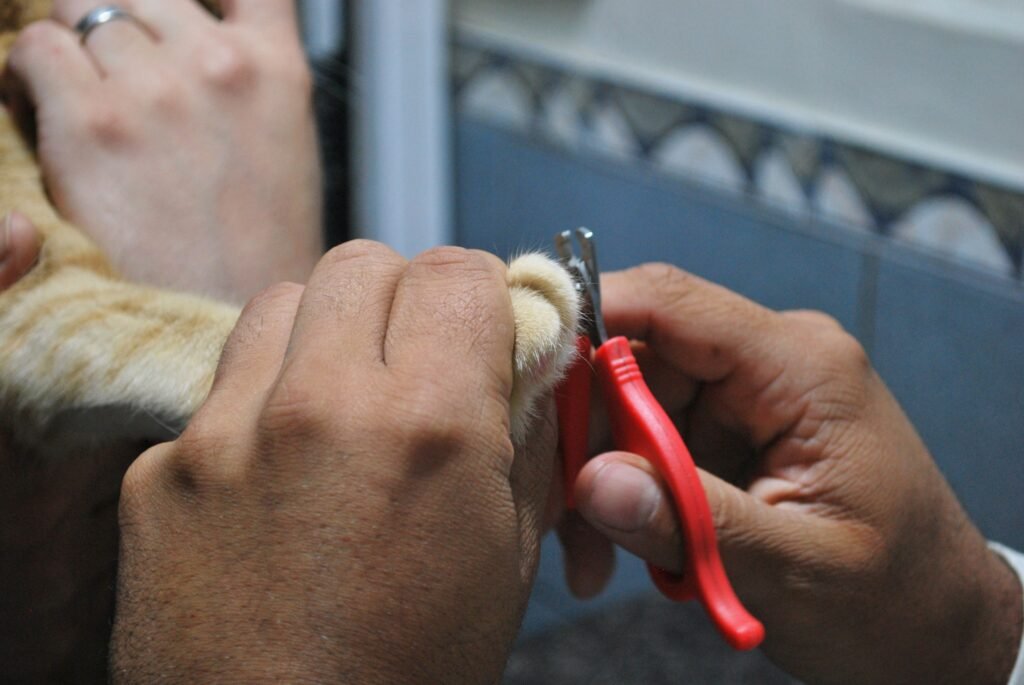
If you are searching for how to trim a cat’s nails at home, you may be imagining a wriggly patient and a decision to leave the job to someone else. A better aim is a short, predictable session the cat can leave at any time: a quiet corner, a tool you can control, and the patience to trim one or two nails today rather than all of them on the first try.
A useful mindset is this: nail trimming is grooming and household comfort, not a test of how still your cat can be, and not a treatment. FurSift is not a veterinarian. If a nail is bleeding, if the cat is in obvious pain, or if you cannot see where it is safe to cut, stop and contact a veterinarian rather than pushing through.
This is general information for cat parents in the US and UK, not a clinical demonstration. Cats are not small dogs. The handling, the shape of the claw, and the way many cats tolerate restraint are different, even if you already have a [calm routine for trimming a dog’s nails at home](/how-to-trim-a-dogs-nails-at-home/).
Why trim, and what trimming does not do
Indoor cats still wear their claws, but they often wear them more slowly than a cat who climbs outdoors. A modest trim of the sharp tip can make home life easier. It does not replace a [scratching post or a plan for furniture](/how-to-stop-a-cat-from-scratching-furniture/), and it will not stop a cat from scratching. Scratching is how cats condition their claws and stretch. Trimming only shortens the hook at the end.
Some older or less active cats may need more frequent checks because a claw can grow in a tighter curve. If a claw looks misshapen, if a nail bed is swollen, or if your cat limps, this is no longer a home trimming question. Contact a veterinarian.
Skip any idea that cutting nails will cure destructive scratching, calm a stressed cat, or treat a medical problem. If your cat’s mood or habits have changed, look at the wider picture, including [signs your cat may be stressed](/signs-your-cat-is-stressed/), and get veterinary advice when something feels off.
You also do not have to trim every claw on the same schedule, or at all, if a professional groomer or a veterinary nurse is the kinder option. A partial success that leaves everyone calm is better than a complete set of nails and a cat who hides the next day.
Tools, light, and a setup that stays calm
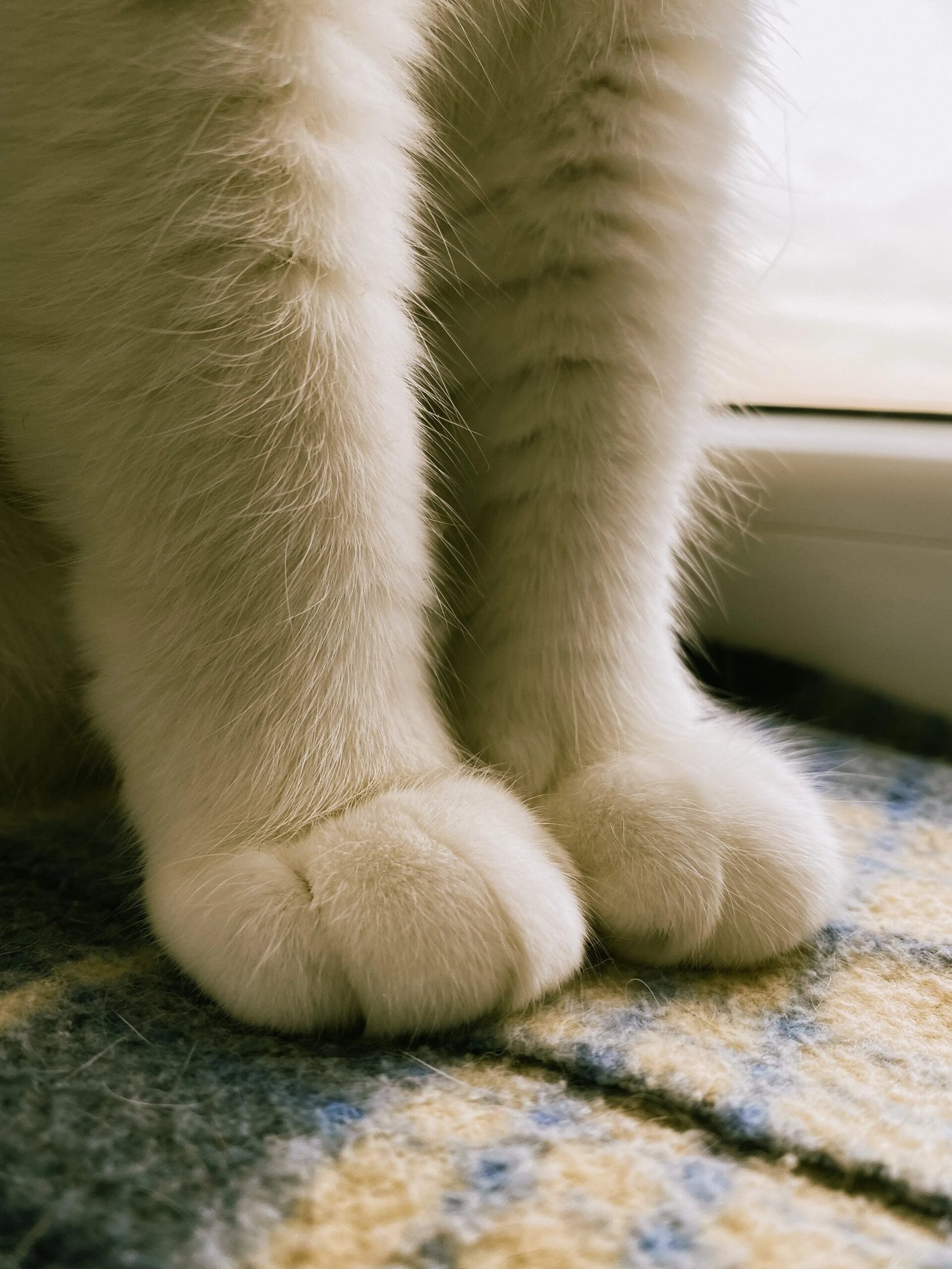
You need a clipper meant for small pet nails, and a room with good light. Guillotine-style or scissor-style pet clippers both appear in home kits; what matters is that the blade is sharp, the opening is not so large that a small claw disappears inside, and you can make a single clean cut rather than crushing the nail.
Keep a clean cloth nearby, and a commercial styptic powder or another product sold for stopping minor nail bleeding, in case you nick the quick. Do not improvise with household chemicals or powders that are not meant for this.
Choose a time when the cat is already relaxed: after a nap or a short play session, not during a noisy moment in the flat, and not when you are in a hurry. In an apartment, a closed bathroom or a quiet corner of the sofa can work, as long as the cat still has a way to leave if you are only practicing handling.
Have a few ordinary treats ready, counted as part of the day’s food. If your cat is not food-motivated, a slow stroke or a pause may be the better reward.
Before any clipper comes out, practice the handling on its own if your cat is new to this. Touch a paw, press the pad gently so a claw extends, then let the paw go and stop.
How to see the quick on light and dark nails
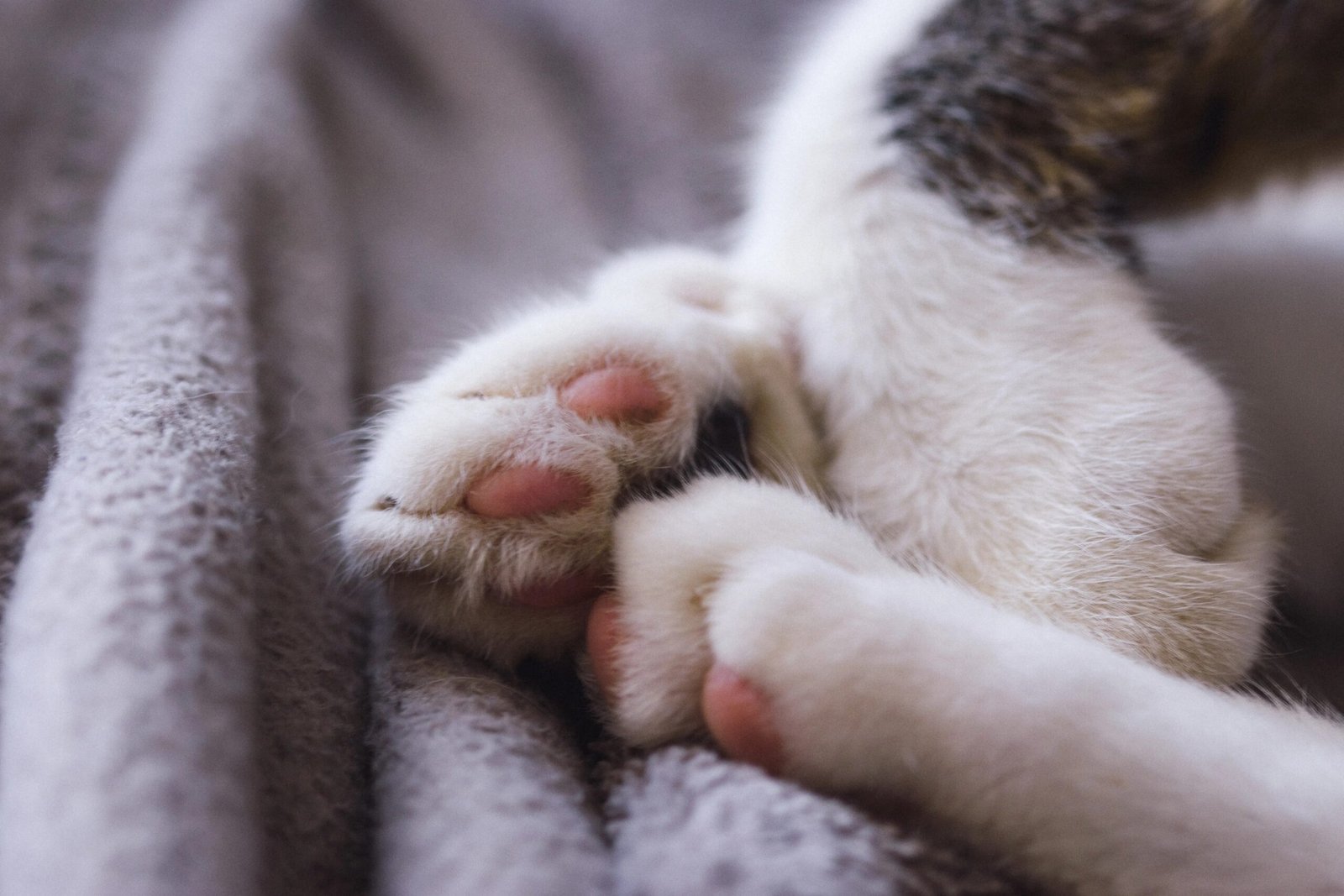
The quick is the living, sensitive part inside the claw. If you cut into it, the nail will bleed and hurt. The whole point of a careful trim is to take only the sharp, dead tip beyond that living part.
On a light or white claw, the quick is often visible as a pinkish core inside the more translucent tip. Look from the side, in good light, and find where the pink ends. Leave a clear margin of pale nail beyond it. If you cannot see a distinct end to the pink, do not guess. Take a smaller tip, try again in better light, or leave that nail for a professional.
On a dark claw, the quick is usually much harder to see. You may only get a hint by looking at the underside of the nail, or by noticing a slight change in the thickness or a paler hook at the very end. When in doubt, cut less. It is better to take a tiny sliver from the tip, or to leave a dark nail alone, than to cut toward a quick you cannot map.
Dewclaws, if your cat has them, sit higher on the inner side of the paw and do not wear down in the same way as the main claws. They still have a quick. Look for them, and treat them with the same caution.
If a nail is already split, dark with old blood, or growing into the pad, do not try to tidy it into shape at home. That is a veterinary job. Home trimming is for ordinary, healthy-looking tips, not for repairs.
A first session: hold, extend, trim a little, then stop
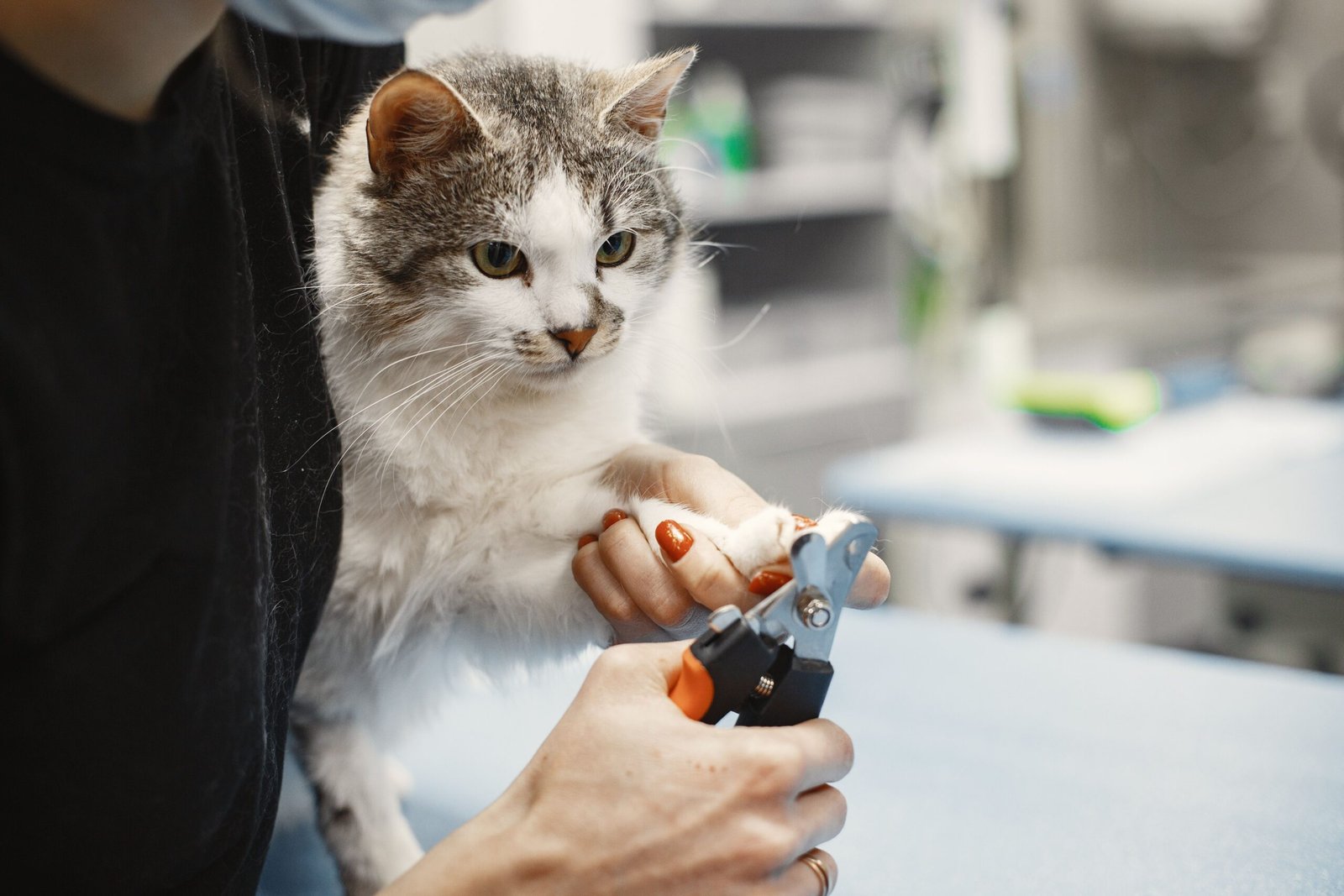
Hold the cat in a position you can both tolerate. Many people sit the cat on their lap, facing away, or rest the cat on a non-slip towel on a table. A loose towel wrap can help some cats feel steadier, as long as the head is free and you are not tightening the wrap as the cat struggles. If the cat begins to fight the hold, the session is over for now.
Pick up one paw and press the pad gently with your thumb so the claws extend. Look at the nail you intend to cut. Place the clipper at a right angle across the tip, well away from the quick on a light nail, or at a very small tip on a dark nail, and make one confident cut. Do not crush or twist. Then let the paw go, offer a treat or a pause, and only then decide whether to do a second nail.
On a first session, one paw, or even one or two nails, is enough. You can return tomorrow. A cat who learns that the clippers appear and then disappear again, without a long restraint, is more likely to allow the next turn.
Work around the paw in a way that feels natural, and remember the dewclaw if it is there. If a housemate is helping, give them one job: gentle steadiness, or offering a lick of a familiar paste, not a tighter grip every time the cat moves. In a small apartment, it helps to close the door so the cat cannot disappear under a bed mid-session, but only if you are still willing to stop when they have had enough.
When to stop, and when to call a veterinarian
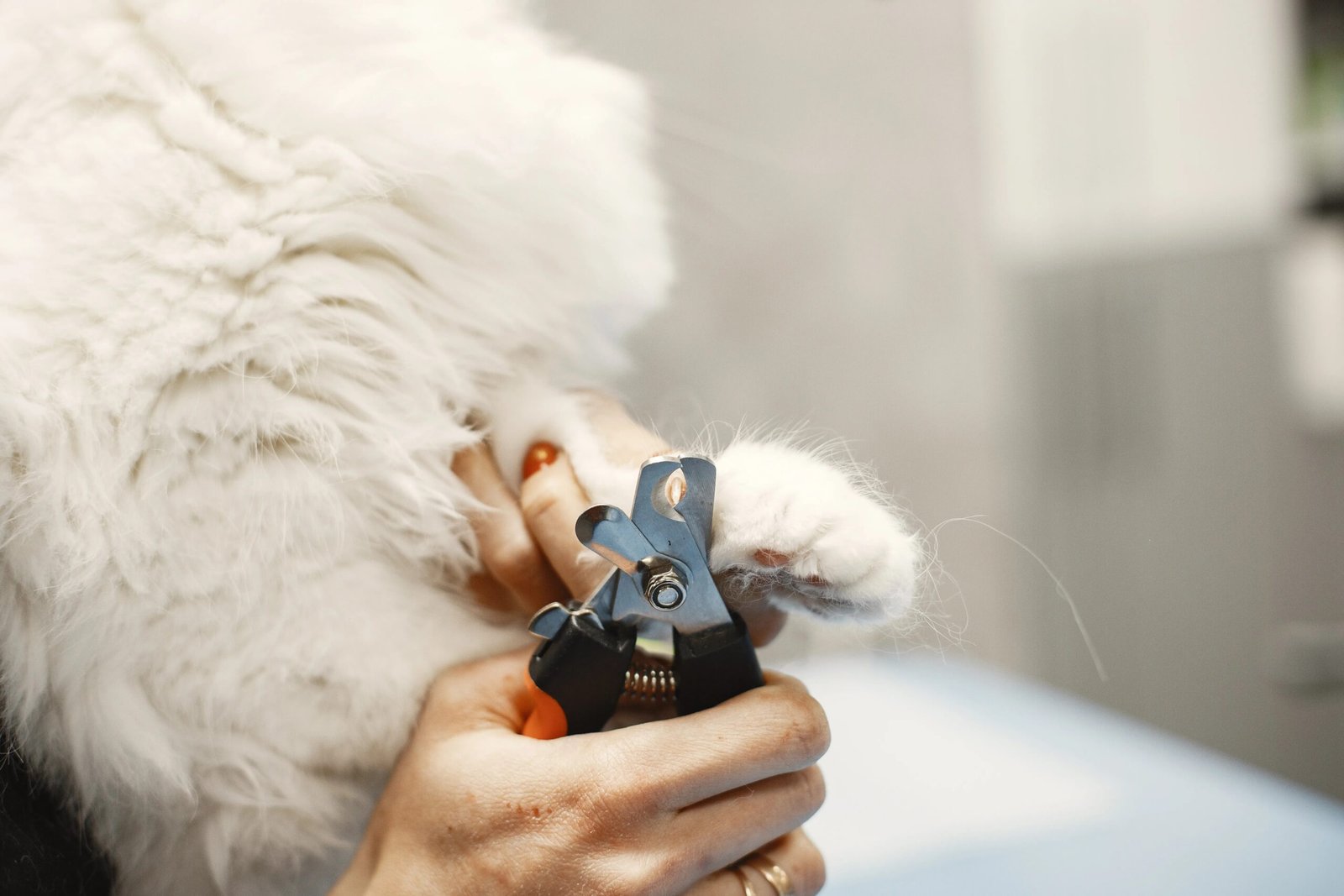
Stop immediately if you cannot see where the quick is, if the cat is struggling hard, if you feel unsure about the angle, or if anyone is becoming frustrated. Uncertainty is a reason to wait, not a reason to take a larger cut and hope.
If you cut into the quick, the nail will bleed and the cat will feel it. Stay calm. Apply gentle pressure with a clean cloth. If you have a product sold for minor nail bleeding, use it as the label directs. Keep the cat still enough to tend the nail, then end the session. Do not try “just one more claw” afterward. If bleeding is heavy, does not slow, or the cat is in obvious distress, contact a veterinarian or an emergency clinic.
Stop and get veterinary advice, rather than continuing at home, if:
- A nail is bleeding heavily, or bleeding continues after calm pressure.
- The paw is swollen, hot, or very painful, or the cat is limping.
- A claw is torn, loose, or growing into the pad.
- You cannot tell where the quick is, even in good light, and you do not feel safe taking a tiny tip.
- The cat cannot bear to have a foot touched, especially if that is a sudden change.
- There is pus, a bad smell, or a nail that looks obviously infected.
Those are medical situations, not a sign that you need a sharper clipper. Do not try to finish the job on a painful foot.
After a calm session, let the cat drop down, have a drink, and go back to ordinary life. A short play session or a chance to use a scratching post can help some cats shake off the handling, as long as you are not chasing them into it.
A calm starting plan looks like this:
- Get a sharp, suitably small clipper, good light, a clean cloth, and a styptic product if you can, and choose a quiet moment.
- Practice touching the paw and extending a claw before you cut anything.
- On light nails, leave a clear margin beyond the visible pink quick; on dark nails, take only a tiny tip or skip the nail if you cannot see a safe place to cut.
- Hold the cat securely but kindly, cut one tip at a time, and reward the pause between nails.
- End the first sessions early, even if only one or two nails are done.
- Stop at once if the cat struggles, if the quick is unclear, or if a nail bleeds, and contact a veterinarian when pain, swelling, heavy bleeding, or a damaged claw is involved.
- Do not treat nail trimming as a cure for scratching, stress, or illness.
How to trim a cat’s nails at home is a small, repeatable skill, not a once-a-year ordeal and not a medical procedure you should force. You need good light, a sharp tool, a cat who is still willing to stay, and a clear rule that struggling or bleeding means you stop. If you are unsure, or if a paw already looks sore, a veterinarian or a qualified groomer is the kinder next step.
FAQ
How often should I trim a cat’s nails at home?
There is no honest single schedule. Many indoor cats do well with a modest trim every couple of weeks, but some wear their claws faster, and some need only an occasional tip. Look at the claws rather than the calendar. If a hook is catching in carpet or fabric, or if a claw is beginning to curve back toward the pad, it is time to check. Older or less active cats may need looking at more often. If you are unsure, ask your veterinarian what is reasonable for that cat.
What should I do if I cut the quick and the nail bleeds?
Stop trimming. Keep the cat as calm as you can and apply gentle pressure with a clean cloth. If you have a product sold for minor nail bleeding, use it as directed. Then end the session entirely. Contact a veterinarian if the bleeding is heavy, does not slow, or the cat is in obvious pain or distress. A nicked quick can happen even when people are careful, but it is a reason to pause, not a reason to carry on with the other nails.
My cat struggles as soon as I pick up a paw. Should I wrap them and finish anyway?
No. A brief, loose towel can help some cats feel steadier, but a struggling cat should be released, not wrapped more tightly so you can finish. Go back to handling practice with no clippers, keep sessions very short, and use food or a pause as a reward for allowing a paw touch. If the cat still panics, or if the struggling is new and extreme, ask a veterinarian or a qualified groomer for help. Forcing the job can make the next attempt harder, and it raises the risk of a bite or a bad cut.
Is it harder to trim dark nails than white ones?
Usually, yes, because the quick is much less visible inside a dark claw. On a white or light nail you can often see a pink core and leave a margin beyond it. On a dark nail, cut only a tiny tip, look at the underside if that helps, and skip the nail if you still cannot judge a safe place to cut. Guessing is how the quick gets nicked. A professional can help if most of the claws are dark and you cannot see a clear tip.
Can trimming my cat’s nails replace a scratching post, or treat a sore paw?
No. Trimming shortens the sharp tip; it does not satisfy the need to scratch, stretch, and mark, and it does not treat illness. Keep a scratching post or pad in the home, and contact a veterinarian about pain, swelling, limping, or a damaged nail rather than trying to trim those problems away. If a claw looks abnormal or the cat resents being touched on one foot, that is a medical question, not a grooming shortcut.