AdvertisementReserved · below header

Category Cat Guides

How to Stop a Cat from Knocking Things Off Shelves

A white cat with tabby and tortoiseshell patches stands on a wooden bookshelf packed with colorful books and looks upward, with more books on the shelves above and below

If you need to stop a cat from knocking things off shelves, the work is less about catching the next swipe and more about taking the game away in a small apartment. This guide helps US and UK cat parents clear tempting edges, give the cat a legal high perch, and add a short play session so glasses, remotes, and plants are not the easiest toys in the room. Use a shelf lip or museum putty on the keepers you still want on display, and do not spray, startle, or chase the cat as entertainment. The advice is general and practical, not a veterinary diagnosis or a training guarantee. Do not leave breakable items or toxic plants on open edges. If a cat suddenly starts knocking things in a new way, seems wobbly, or only does this at night after a behavior change, contact a veterinarian.

How to Stop a Cat From Biting During Play

A white cat crouches on a parquet hardwood floor and pins a black feather teaser attached to a thin black string, with a blue throw on a bed to the left and gray curtains in the background

If you want to stop a cat from biting during play, the work is less about a scolding and more about ending the session before the cat gets overstimulated, and keeping hands and ankles out of the game. This guide helps US and UK cat parents in flats and small homes use a wand or another toy instead of fingers, let the cat catch the toy, take a short break, and restart later at a calmer pace. You will also see how to handle nips and ankle grabs in the middle of play without slapping, startling, or turning your hands into the toy. The advice is everyday play manners, not a treatment for aggression, fear, or pain, and it is not a promise that biting will disappear on a set timetable. If bites break the skin, the cat suddenly becomes aggressive, or the cat bites when touched away from play, contact a veterinarian or a qualified behavior professional.

How to Help a Shy Cat Feel Safe in an Apartment

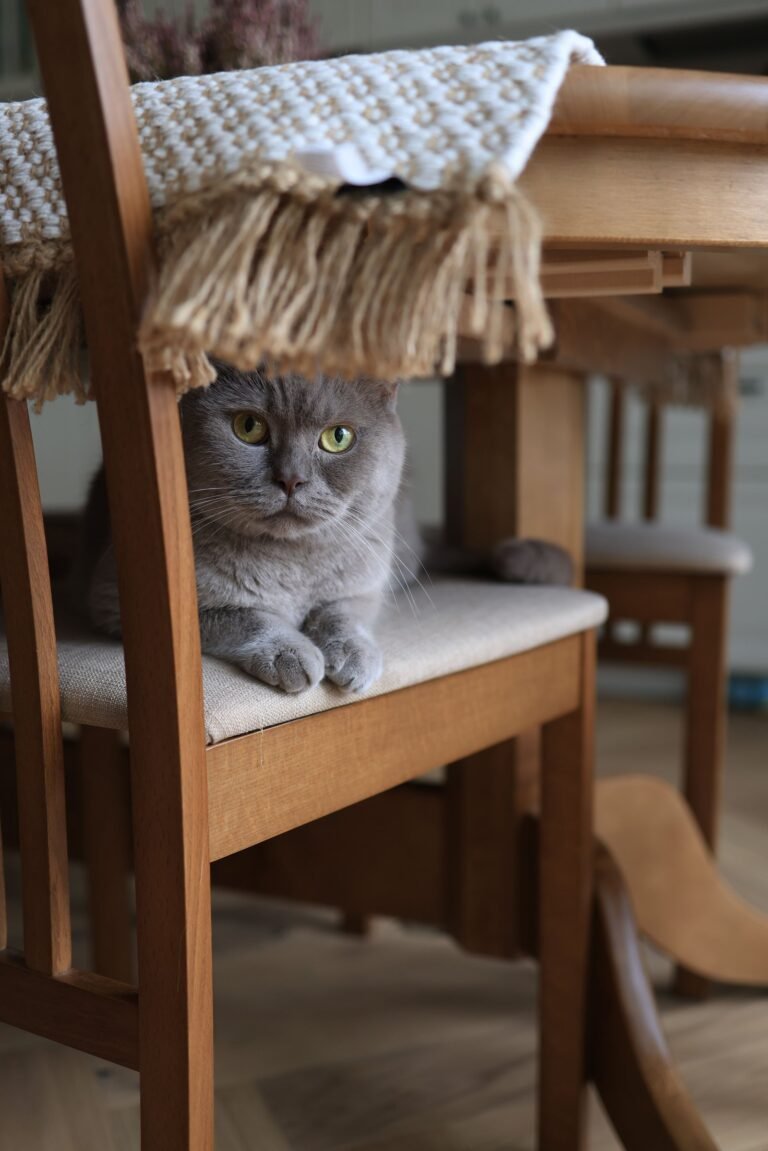
A gray cat with yellow-green eyes sits on a beige cushion of a wooden chair, looking toward the camera from under a light wooden table, with a cream woven runner and long beige tassels hanging in front of it and a wooden floor in the background

If you want to help a shy cat feel safe, the work is less about coaxing them into the middle of the room and more about a calm, low-pressure setup you can repeat in a small home. This guide helps US and UK cat parents in flats and apartments give a hiding, freezing, or people-wary cat a quiet safe room, hiding spots that are not a punishment, and predictable meal and play times. You will also see how to let the cat come to you, and how to use a simple guest protocol so visitors do not corner the cat in a hallway or on a sofa. The advice is general and practical, not a veterinary diagnosis, not a treatment for anxiety, aggression, or trauma, and not a promise that a shy cat will become confident in a week. If hiding is sudden, the cat stops eating, or a once-outgoing cat is suddenly withdrawn, contact a veterinarian.

How to Keep an Indoor Cat Busy While You’re at Work

A tabby cat sits inside a pale-framed apartment window, photographed from the street against a peach stucco wall, with a houseplant on the sill and one upper window pane slightly open

If you are looking for how to keep indoor cat busy while at work, the aim is not to fill every hour or to replace your company. It is a weekday plan that stops a small apartment from feeling like a long empty box. This guide helps US and UK cat parents in flats and small homes start with a short morning play session, leave one food puzzle or a portion of the meal in a feeder, offer a safe window perch, rotate only one or two toys, and close the day with a wind-down play session when you return. The advice is general and practical, not a veterinary diagnosis, not a treatment for separation distress, and not a promise that toys can stand in for companionship. Do not leave string toys, plastic pieces, or anything a cat could swallow unsupervised. If your cat stops eating, cries for hours, or only has accidents when you are gone, contact a veterinarian.

How to Move to a New Apartment with a Cat

A fluffy long-haired ginger and white cat lies on a textured sofa in a sunlit indoor room, with tall houseplants and a wooden window frame in the background

If you need to move to a new apartment with a cat, the work is less about a single "settling day" and more about a low-stress plan you can start before the boxes come out. This guide helps US and UK cat parents in flats and small homes practice the carrier in advance, set up a quiet first room with litter, food, water, and a hiding spot, and unpack gradually while the cat stays indoors and maps the new place. You will also see why it helps to wait before opening windows and balconies, and why ID tags and a microchip address update are practical prep rather than medical advice. The guidance is general and not a veterinary diagnosis, not a treatment for anxiety, and not a promise that a cat will settle on day one. If your cat stops eating, hides constantly, or seems unwell after the move, contact a veterinarian.

How to Build a Daily Play Routine for an Indoor Cat

A cream colorpoint kitten sits on a fluffy rug, holding a colorful feather and tinsel wand toy, with a teal circular track toy in the background

A daily play routine indoor cat households can actually keep is less about a longer toy list and more about a short, repeatable rhythm that fits a flat or small home. This guide helps US and UK cat parents run brief wand or chase sessions, add a clear wind-down, and time play around meals and the evening burst of energy many indoor cats show. You will also see what “enough play” can look like in a tight living room, and how this session plan differs from a buying guide for interactive toys, a broader enrichment day, or gear such as tunnels, hideaways, and cat trees. The advice is general and practical, not a veterinary diagnosis and not a treatment for aggression, anxiety, or medical issues. Do not use hands or feet as toys, and end play before your cat becomes overstimulated. No single routine fixes behavior overnight.

How to Get a Cat Comfortable in a Carrier (Without the Struggle)

An orange tabby cat lies in sunlight inside an open blue and white soft-sided pet carrier

How to get a cat used to a carrier is less about one hurried stuffing on vet day and more about a slow, at-home plan that turns the box into a familiar resting place first. In a small home the carrier often lives in a closet until it is needed, so the cat may associate it only with a stressful trip. This guide helps US and UK cat parents leave the carrier open in everyday space, feed or rest nearby, add short closes, and only then try a brief lift or short ride. You will also see how this differs from choosing a carrier and from introducing a cat to a new home. The advice is general and practical, not a promise that one session will fix it and not a veterinary treatment plan. Do not start with a long trip. If your cat panics, shuts down, or has a medical reason travel is hard, ask a veterinarian.

How to Introduce a Cat and a Dog in a Small Apartment

A black-and-white photograph of a black and white cat and a small dog resting together on a pet bed by a window

How to introduce a cat and a dog in a small apartment is less about one supervised “meeting” and more about a slow, scent-first plan that fits a tight floor plan. Without a spare wing of the house, both animals share the same short hallway, the same living room, and often the same evening routine. This guide helps US and UK cat and dog parents set up separate rooms, swap scent before any face-to-face look, use visual barriers, and keep early meetings short and supervised. You will also see how this differs from introducing a new cat to a home or to another cat. The advice is general and practical, not a promise that they will become friends and not a veterinary behavior-treatment plan. If either animal is fearful, injured, or aggressive, contact a veterinarian or a qualified professional.

How to Cat-Proof a Small Apartment (A Room-by-Room Plan)

A cozy living room scene with a cat asleep on a chair beside a bookshelf

How to cat proof an apartment is less about finding one “dangerous” room and more about a room-by-room pass you can actually keep in a rental. In a small home, cords, houseplants, cleaners, strings, trash, and openable windows share the same few square feet your cat already treats as a climbing frame. This guide helps US and UK cat parents walk the living room, kitchen, bathroom, laundry, and openings, then use renter-friendly fixes rather than a fortress. You will also see where window and balcony safety, and door-dashing, need their own plans, because those are single hazards; this is the whole home. The advice is general and practical, not a veterinary toxicology article and not a guarantee. If your cat chews or swallows something risky, contact a veterinarian or a pet poison helpline; do not guess a dose or try a home remedy.

How to Keep an Indoor Cat Safe Around Windows and Balconies

Graceful black and white cat sitting on a windowsill looking outside

How to keep an indoor cat safe around windows and balconies is less about blocking every view and more about treating each opening as a plan you can actually keep in a rental. In a flat, the glass is often the best “outside” a cat gets, and it is also where a weak insect screen, a sliding door left ajar, or an unsecured balcony can become a fall or an escape. This guide helps US and UK cat parents in apartments and small homes think through screens, sliding doors, plant ledges, supervision, and what not to rig without permission. You will learn how to offer a stable place to watch, when a balcony is only for shared visits, and how a well-placed perch supports safety without becoming a buying guide. The advice is general and practical, not a scare story and not a guarantee. Never leave a cat unattended on an unsecured balcony.