

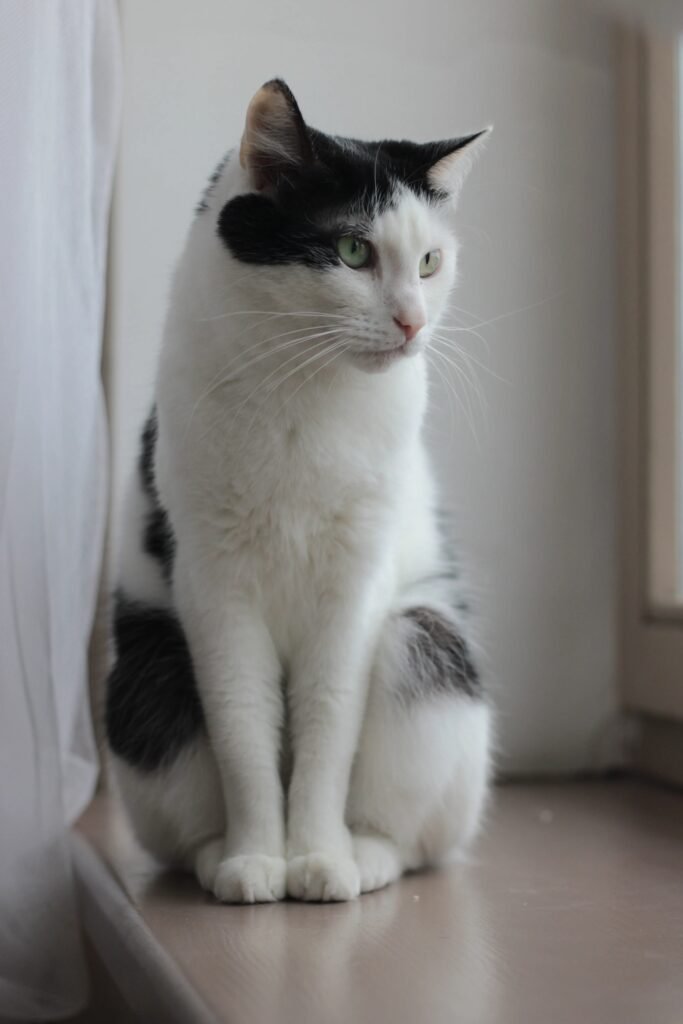
If you want to keep an indoor cat safe around windows and balconies, the hard part is not convincing them that the glass is interesting. In a flat, that glass is often the best “outside” they get: birds, weather, the street, a neighbor’s plant. It is also where a screen that was only meant for insects, a sliding door left two inches open, or an unsecured balcony can turn a normal afternoon into a fall or an escape.
A useful mindset is this: you give your cat a view, and you treat every opening as a plan. You do not need a fortress, and you do not need to block every window with furniture. You need to know which openings are actually secured, which ones are only for supervised use, and what is not worth improvising in a rental.
This is general information for cat parents in the US and UK, not a veterinary diagnosis and not a guarantee that an accident will never happen. Cats vary, and buildings vary. This is not a collection of scare stories. It is also not a reason to leave a cat unattended on an unsecured balcony, even “just for a minute” while you answer the door.
A view is enrichment; an opening is a decision
Watching the world is real enrichment for many indoor cats. A well-placed perch at a closed or properly screened window can make a small home feel larger. That is different from shopping for a perch, and it is different from the front-door dash that happens in a hallway. For choosing a perch that actually stays put, use best window perches for cats. For the front door, lifts, and grocery arrivals, use how to stop a cat from door dashing. For the rest of a fuller indoor day, indoor cat enrichment ideas will do more than this safety guide can.
This article stays on the opening itself: screens, sliding doors, plant ledges, balconies, and what not to rig when you do not own the building.
Think of three jobs, not one:
- Secure the opening. A screen or latch has to hold a cat’s weight and curiosity, not only keep midges out.
- Offer a legal place to watch. A stable sill or perch at a window you have already made safe.
- Supervise anything that is not secured. If you would not bet on the barrier, the cat is not out there alone.
No setup is a promise. A determined cat can test gaps you stopped noticing. Recheck after cleaning, after guests, and when the seasons change and windows start opening again.
Screens that actually do the job

Many apartment windows already have insect screens. Those screens are often designed to keep bugs out, not to hold a cat who stands up, leans, or pounces at a bird. A mesh that you can press out with a palm is not a cat barrier, even if it has been there since you moved in.
Look at the whole installation, not only the fabric. Is the screen in a track that can pop if a cat pushes? Are there holes, loose corners, or a handle gap? Does a sash or sliding window still open far enough, behind the screen, for a cat to squeeze if the mesh fails? Tilt-and-turn windows, common in some UK flats, can create a tempting wedge of air that is awkward to screen well. A cracked window “for ventilation” with no reliable screen is an opening, not a compromise.
If a screen is weak, the honest options are to keep that window closed, to replace or reinforce the screen with something actually intended to resist a pet if your landlord allows it, or to add a secondary barrier you have permission to use. “We have a screen” is not the same as “the screen would hold.”
Renters should ask before drilling into frames or replacing a building-standard screen. Do not assume tape, a tension rod, and a cut of leftover fabric will hold. If you cannot change the window, enjoy the view with the glass closed, and open it only when you are in the room and the gap is too small to use—or not at all, if your cat is a known pusher.
Sliding doors, tilt windows, and the gap you stop noticing

Balcony sliding doors and large window doors are a daily habit in many apartments, which is exactly why they catch people out. You open the door for a breeze, a plant, or a minute of air, and the cat is already faster than your “I’ll only be a second.”
The last few inches matter. A door left slightly ajar for ventilation can be a full exit for a slim cat, or a pinch point if the door moves. If you need a breeze, use a stop or lock that limits the opening to a gap you have measured and that your cat cannot use, or open the door only when the cat is in another room behind a closed door. A door stop is not a training plan, but it is clearer than hoping they will sit politely on the mat.
Build a check into ordinary moments: leaving for work, coming home with bags, having guests, and after a cleaner or a decorator has been in. People who do not live with your cat will not automatically close a balcony door the way you would. The same applies to tilt windows left in the vent position and to bathroom or bedroom windows you open on a warm evening.
This is related to door dashing, but the “door” here often leads to a drop, not only to a corridor. Keep the front-door routine from the door-dashing guide, and treat balcony glass as its own latch.
Plant ledges and windowsills

Cats love a sill. Plants love a sill. Those two facts share a narrow strip of wood in a lot of small homes, and the combination can be unstable, irritating if a plant is chewed, or a step toward an open window.
Give your cat a clear, stable place to sit that does not require walking across wobbling pots. If the sill is deep enough for a cat and a plant, put the pots where they cannot be shouldered off the edge, and keep the window behind them closed or correctly screened. A plant display in front of an open window is a launch pad, not a jungle gym.
Unstable pots are a welfare issue as well as a mess: a falling container can startle a cat, and a cat who slips while climbing through foliage may grab at a screen or a frame that was not meant to be a handle. Check that the ledge itself is sound and that any suction perch or shelf you add is used within its own limits, on a window you have already decided is safe.
Be careful with the plants you keep on that ledge. Some common houseplants are irritating or toxic if chewed. This is not a botanical list and not a diagnosis; if you are unsure about a plant, ask your veterinarian, and keep anything questionable off the cat’s sitting spot. A cat tree that fits a small apartment gives height without using the open frame as furniture.
Balconies: supervision only unless the space is truly secured

A balcony can look like a private garden in the sky. For an indoor cat, it is often a platform with gaps, climbable furniture, and a drop. Do not leave a cat unattended on an unsecured balcony. “I am just in the kitchen” is still unattended if the cat can jump, slip, or climb out of your sight.
What “unsecured” usually means in a rental: railings a cat can slip through or over, furniture or plant stands that become steps, a gap beside the wall, and no barrier that is actually fixed and complete. What “secured” can mean, if the building and the lease allow it, is a carefully installed mesh or netting system with no climb-out points, no sagging, and no loose ties a cat can wriggle through, plus a door habit that still treats the space as part of the home’s perimeter. Even then, check the fixings, weather damage, and any new object that creates a ramp. A net is not a reason to stop supervising at first, and it is not a guarantee.
What not to rig in a rental
Do not invent a balcony enclosure from tape, loose garden mesh, a tension rod, or a blanket clipped to the rail. Those setups fail, they can become entanglement hazards, and they may break building rules. Do not drill into rails, soffits, or window frames without written permission. Do not block a fire escape or a shared walkway with an improvised net. If you want netting, ask the landlord in writing and, where needed, someone who understands pet barriers.
If you cannot secure the balcony, use it only as a supervised visit: you go out together, you stay, and you come back in together. Keep chairs and shelves away from the rail so the cat is not invited to jump up. In heat, wind, or rain, skip the visit. Never leave food or a litter box on an open balcony as a reason for the cat to stay out there alone.
Kittens, newly adopted cats, and cats with a strong urge to hunt or bolt need an even tighter rule. So do days with fireworks, storms, or lots of guests, when a startled cat may run toward the brightest opening. A new cat in the home should meet windows and balcony doors slowly, as part of a wider introduction plan, not on the first afternoon with a sliding door ajar.
A calmer daily setup
Safety is easier when the window is not the cat’s only job. A stable perch at a closed or well-screened window, indoor play before you sit down in the evening, and a predictable routine all make the glass less of a mission. If your cat seems frantic at every opening, or hides and then dashes, look at signs your cat is stressed as well as at the latch.
Recheck the same points on a rhythm you can keep: screens after a windy day, balcony door latches when you come home, pots after you water them, and any temporary opening when someone is cleaning. You are not trying to make the apartment joyless. You are trying to keep the view, and to make sure the opening behind it is one you chose.
Windows and balconies stay kind when the screen is honest, the sliding door is a habit, the plant ledge is stable, and the balcony is either truly secured or used only with you there. That is not a guarantee. It is a plan most renters can actually keep.
FAQ
Are standard insect screens enough to keep a cat safe at a window?
Often no. Many screens are designed to keep insects out, not to hold a cat who leans, climbs, or pounces. If you can press the mesh out with a palm, if the frame pops from its track, or if there are holes and loose corners, treat that window as unsecured and keep it closed unless you are there and the opening is genuinely too small to use. A screen that is actually intended to resist a pet, properly fitted and allowed by your landlord, is a different tool from the insect screen that came with the flat.
Can I let my cat onto the balcony if I am home and the door is open?
Only if you are actually with the cat, staying on the balcony, and the space is not a drop waiting to happen. Being in the kitchen or on the sofa with the balcony door open is not supervision. If the balcony is unsecured, go out together, stay, and come back in together, and keep furniture away from the rail. Do not leave a cat unattended on an unsecured balcony, even briefly. If you cannot stay, keep the door closed.
What if I rent and cannot install netting or new screens?
Then the honest plan is management, not a homemade rig. Keep weak-screened windows closed, enjoy the view through the glass, and use a stable indoor perch at a window you have already decided is safe. Ask the landlord in writing before you change a frame, a rail, or a building-standard screen. Do not use tape, loose mesh, or a tension rod as a balcony enclosure. A closed, well-loved window is safer than an improvised barrier that can fail.
Are window perches safe on their own?
A perch is a place to sit, not a safety device. It does not make a weak screen stronger, and it should not be mounted at a window you would not already trust if the cat leaned hard. Choose a stable perch for a closed or properly screened window, follow the product’s own limits, and keep the sill clear of wobbling pots that could become steps toward an opening. For fit and placement, use a dedicated perch guide; this article is about the opening behind the perch.
My cat already goes out on the balcony. How do I change that without a fight?
Change the access first, then offer a good indoor view. Stop leaving the balcony door open, move chairs and plant stands away from the rail, and make the indoor window the interesting place with a stable perch and regular play. Supervised visits, if you still want them and the space is not badly designed for a cat, should be short, with you there the whole time, and should end before the cat is startled or overheated. If the cat becomes frantic at the door, look at stress and enrichment as well as at the latch, and do not use the unsecured balcony as a daily compromise.
[…] because they are about openings rather than clutter. Windows, screens, and balconies are covered in how to keep an indoor cat safe around windows and balconies. The front door, hallway, and grocery arrival dash are covered in how to stop a cat from door […]
[…] a cat, a slider left ajar, an unsecured balcony used “just for a minute” — belongs in how to keep an indoor cat safe around windows and balconies. That guide covers openings you already have. This article is the purchase and setup of an added […]