

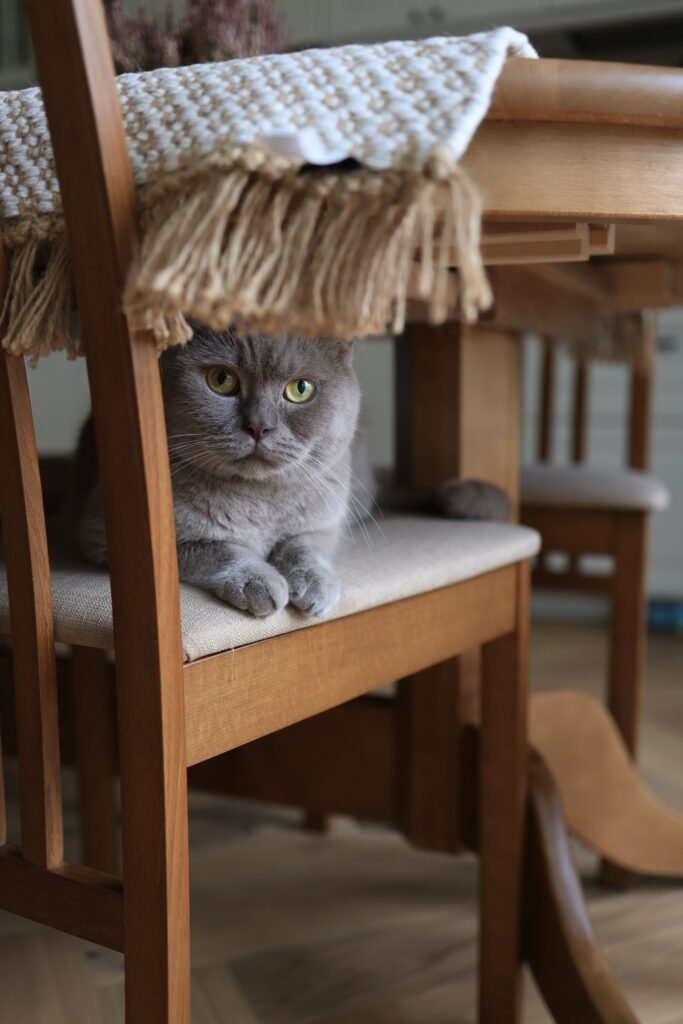
If you want to help a shy cat feel safe, the hard part is not buying a new toy or hoping they will “come out of their shell” this week. It is the small apartment where a hallway, a kitchen, and a sofa share the same few metres, and a cat who hides, freezes, or slips away when someone new stands up. Houses with spare rooms can offer distance by default. Many flats cannot.
A useful mindset is this: you are building a day the cat can predict, and you are leaving them a way to step back without being chased. A quiet safe room, chosen hiding spots, steady meal and play times, and a habit of letting the cat come to you will do more than forced cuddles or a deadline for confidence.
This is general information for cat parents in the US and UK, not a veterinary diagnosis, not a treatment for anxiety, aggression, or trauma, and not a promise that a shy cat will feel bold in a week. Cats vary. If hiding is sudden, the cat stops eating, or a cat that was outgoing is suddenly withdrawn, contact a veterinarian. Medical problems can look like “just shyness.”
This is a day-to-day setup, not a stress-signs rewrite
The job here is the daily environment: a safe room, decent hiding places, a predictable rhythm, and a plan for visitors. It is not a substitute for signs your cat is stressed. That guide is about recognizing stress. This one is about the setup you live with once you know the cat is shy or simply slow to warm up.
A move or a new cat is also a different project. If you have just changed flats, use how to move to a new apartment with a cat. If you are adding a second cat, use how to introduce a new cat. If a dog also lives in the home, use how to introduce a cat and a dog in a small apartment. Those plans have their own pace and should not be rushed.
Think of three jobs, not one:
- A retreat. The cat has a quiet room or corner, and hiding spots that feel optional, not like exile.
- A rhythm. Meals and play happen at times the cat can learn.
- A social rule. People let the cat approach. Guests do not corner, pick up, or follow the cat into a hiding place.
The goal is a calmer small home, not a claim that every shy cat will greet the door.
Start with a quiet safe room

Give the cat one room, or one clearly quieter corner, that does not have to handle the whole flat at once. In a one-bedroom, that is often the bedroom. In a studio, it may be a corner behind a shelf, a covered bed, or the space beside a sofa end, with a way for the cat to leave without crossing a visitor’s feet. The point is a lower-traffic base, not a lock-in.
Set that space up so the cat does not have to bargain for basics. Fresh water, a litter box if this is their main room for now, a comfortable resting place, and a hiding option should all be easy to reach. Keep the room reasonably quiet.
A safe room is not a punishment and it is not a forever prison. The cat should be able to come out when they are ready, and to go back in without being blocked. If you are home, leave the door ajar once the room is set, unless you need it closed briefly for a noisy job or a visitor arriving. Do not drag the cat into the living room to “get used to it.” If the shy period started right after a move, follow the moving guide for the unpacking sequence.
Offer hiding spots that are not a punishment

Hiding is often how a shy cat takes a break. It is not automatically a problem. The useful work is to offer hiding spots the cat can choose, and to treat those spots as theirs.
A cardboard box on its side, a covered bed, a tunnel, a high perch, or a quiet gap behind a stable chair can all work in a small apartment if they do not block a walkway. Place them in the safe room and, if there is space, in the room where you spend the evening. If you want help choosing tunnels or hideaways that fit a small home, that is a separate buying question: best cat tunnels and hideaways for small apartments. Wider enrichment ideas live in indoor cat enrichment ideas.
What you should not do is use hiding as a timeout, or pull the cat out to show a guest “they are friendly really.” If a hiding place is unsafe — a dryer, a balcony, a reclining chair, an open window — close off that option and offer a better one nearby. A cat who hides, then comes out for meals and the litter box, is often using the setup as intended. A cat who never comes out, or who hides in a new, intense way, needs a closer look, including a veterinary check.
Keep meal and play times predictable
Shy cats often cope better when the day has a shape they can learn. Meals and a short play session should happen in a fairly steady order most days.
Feed in a quiet spot the cat already uses, not in the middle of a busy kitchen if that is where they freeze. Put the food down, step back, and let the cat eat. Play can be just as low-pressure: a wand toy along the floor, a short chase to a doorway, then a pause. Stop while it is still going well. A full daily play structure is covered in how to build a daily play routine for an indoor cat. If your question is what the cat can do while you are out, use how to keep an indoor cat busy while you’re at work rather than turning this shy-cat plan into a weekday enrichment rewrite.
Keep your hands and feet out of the game. End with a little food or a calm sit nearby, then leave the cat alone if they go back to a hiding spot. If the cat skips meals, that is not a “wait and see” personality issue. Loss of appetite in a cat is a reason to contact a veterinarian, especially if it comes with hiding that is new.
Let the cat come to you

Be available, and do not chase. Sit on the floor or the sofa with a book or a cup of tea, and let the cat decide whether to pass by, sit nearby, or stay in the doorway. If they approach, you can offer a still hand and let them sniff. If they walk away, let them.
Avoid looming, following them from room to room, and picking them up to “help them be social.” In a studio, turn slightly side-on, keep your voice quiet, and leave a path to the safe room clear. A few minutes of calm company several times a day usually teaches more than one long session of reaching for the cat.
Some shy cats will never be lap cats, and that is a fine outcome. Coming to sit on the same sofa, or walking past without bolting, can be signs the setup is working. Do not set a date by which the cat must be confident; there isn’t an honest one. If the cat hisses, swats, or seems trapped, stop and give them the exit. This plan is not a treatment for aggression or trauma. A veterinarian can help you rule out pain, and a qualified behavior professional can help if fear is part of the picture.
Use a simple guest protocol so visitors do not corner the cat

Guests are often the hardest part of a small apartment, because there is nowhere for a shy cat to put much distance.
Before people arrive, make sure the safe room or a hideaway is open, stocked, and easy to reach. Tell guests, briefly, that the cat may not come out, and that they should not follow, pick up, or reach under furniture. If the cat appears, guests can sit still and let the cat sniff. They do not need to pet, call, or photograph the cat. A visitor who ignores the cat is often the kindest visitor.
Do not close the cat in a room as a punishment for being shy, and do not carry them into the living room to say hello. If you need the door clear when people enter, use the safe room with the litter box and water already there, then open it again once greetings are done. Short visits are easier than long parties. If you know the evening will be noisy, set the safe room up first.
When hiding is a reason to call a veterinarian
Some hiding is ordinary caution. Some hiding is a health question. Contact a veterinarian if the hiding is sudden, if the cat stops eating, or if a cat that was outgoing is now withdrawn, hiding more, or unlike themselves. Also contact a veterinarian if you notice litter-box changes, vomiting, obvious pain, or a drop in grooming.
This guide cannot tell you whether the cause is illness, pain, or temperament, and it is not a treatment plan for anxiety, aggression, or trauma. A checkup is the right first step when the change is new or the cat is not eating. If fear or aggression is intense, or it is getting worse despite a calmer setup, ask the veterinarian about a referral to a qualified behavior professional rather than waiting for the cat to “get over it.”
A calm starting plan you can repeat
Use this as a first draft, then adjust to your cat and your home:
- Set up one quiet safe room or corner with water, a resting place, a litter box if needed, and a hiding option.
- Leave that space available, and do not use it as a timeout.
- Add hiding spots the cat can choose, and do not pull them out for guests.
- Keep meals and a short play session at fairly predictable times.
- Sit nearby and let the cat come to you; do not follow or pick them up to socialize them.
- Brief guests not to corner, chase, or handle the cat, and keep a retreat open during visits.
- If hiding is sudden, the cat stops eating, or a once-outgoing cat is withdrawn, contact a veterinarian.
Helping a shy cat feel safe rewards a repeatable, low-pressure setup more than a campaign to make them outgoing. The aim is a room they can retreat to, a day they can predict, and people who let them approach — not a claim that a week of this will turn a cautious cat into a confident host. If the behavior looks like illness or distress, ask a veterinarian for help.
FAQ
How long does it take for a shy cat to feel safe in an apartment?
There is no honest single date, and this is not a promise that a cat will be confident in a week. Some cats start eating and taking short spells in the open within a few days of a calmer setup. Others need much longer, and some remain reserved with new people even when they are comfortable at home. Watch for eating, litter-box use, and gradual time spent out of hiding, not for a deadline.
Should I pull my shy cat out of hiding so they get used to people?
No. Pulling a cat from a hiding spot, or carrying them to guests, usually makes the home feel less safe. Let the cat come out when they are ready, keep a retreat open, and ask people not to follow them. A cat who is forced into contact may hide more, not less.
Is it a problem if my cat hides a lot?
Not on its own, if the cat still eats, uses the litter box, and can come and go from a hiding spot they chose. Hiding is often a break, not a failure of the home. It becomes a reason to call a veterinarian if it is sudden, if appetite drops, or if a previously outgoing cat is now withdrawn.
How should guests behave around a shy cat?
Ask them not to corner, pick up, or reach under furniture, and not to follow the cat into another room. If the cat appears, guests can sit still and let the cat decide. A quiet visitor who ignores the cat is often easier than a friendly one who wants a photo. Set up the safe room before people arrive.
When should I contact a veterinarian about a shy or hiding cat?
Contact a veterinarian if hiding is sudden, if the cat stops eating, or if a cat that was outgoing is suddenly withdrawn or unlike themselves. Also get help if there is pain, vomiting, litter-box change, or intense fear or aggression. This plan is not a diagnosis and not a treatment for anxiety, trauma, or a medical problem.
[…] the knock, the arrival, and the first hour when someone new is in the flat. It is not a rewrite of how to help a shy cat feel safe in an apartment. That guide is the everyday confidence plan. This article is what to do when a guest is actually […]