


If you are looking for a weekday plan to keep an indoor cat busy while you are at work, the hard part is not buying one more toy. It is the stretch of quiet hours in a small flat, the closed front door, and a cat who still has hunting energy after you have left for the day. Houses with a garden and a spare room can hide some of that emptiness. Many apartments cannot.
A useful mindset is this: you are shaping the day around the cat, not trying to entertain them every minute from a distance. A short play session before you leave, one food puzzle or a portion of the meal in a feeder, a safe window perch, and only one or two toys left out will do more than a pile of gadgets on the floor. A second play session when you return helps the evening wind down. None of that replaces companionship, and it should not be sold as a way to make a cat “fine without you.”
This is general information for cat parents in the US and UK, not a veterinary diagnosis, not a treatment for separation distress, and not a promise that a weekday plan will keep every cat calm. Cats vary. If your cat stops eating, cries for hours, overgrooms, or only has accidents when you are gone, contact a veterinarian.
This is a weekday plan, not a play-routine rewrite
The weekday shape has its own job: a morning session, something worthwhile to do while you are out, and a proper wind-down when you come home. It is not a substitute for how to build a daily play routine for an indoor cat. That article is about the play session itself — how to start, how to end, and how to make the game satisfying. Use it for the quality of the play. Use this guide for where that play sits in a workday.
The same is true of indoor cat enrichment ideas, which is a broader catalog of ways to make a home more interesting. For choosing a wand or another toy you will actually use in those sessions, see best interactive cat toys. For the feeder itself, use best puzzle feeders for cats. For a perch that fits a real window, use best window perches for indoor cats. Tunnels and hideaways have their own buying guide in best cat tunnels and hideaways for small apartments. If nights are the problem — a cat who wants to play at 4 a.m. — a good evening wind-down can help, but the dedicated advice is in how to stop a cat from waking you up at night.
Start the day with a short play session before you leave
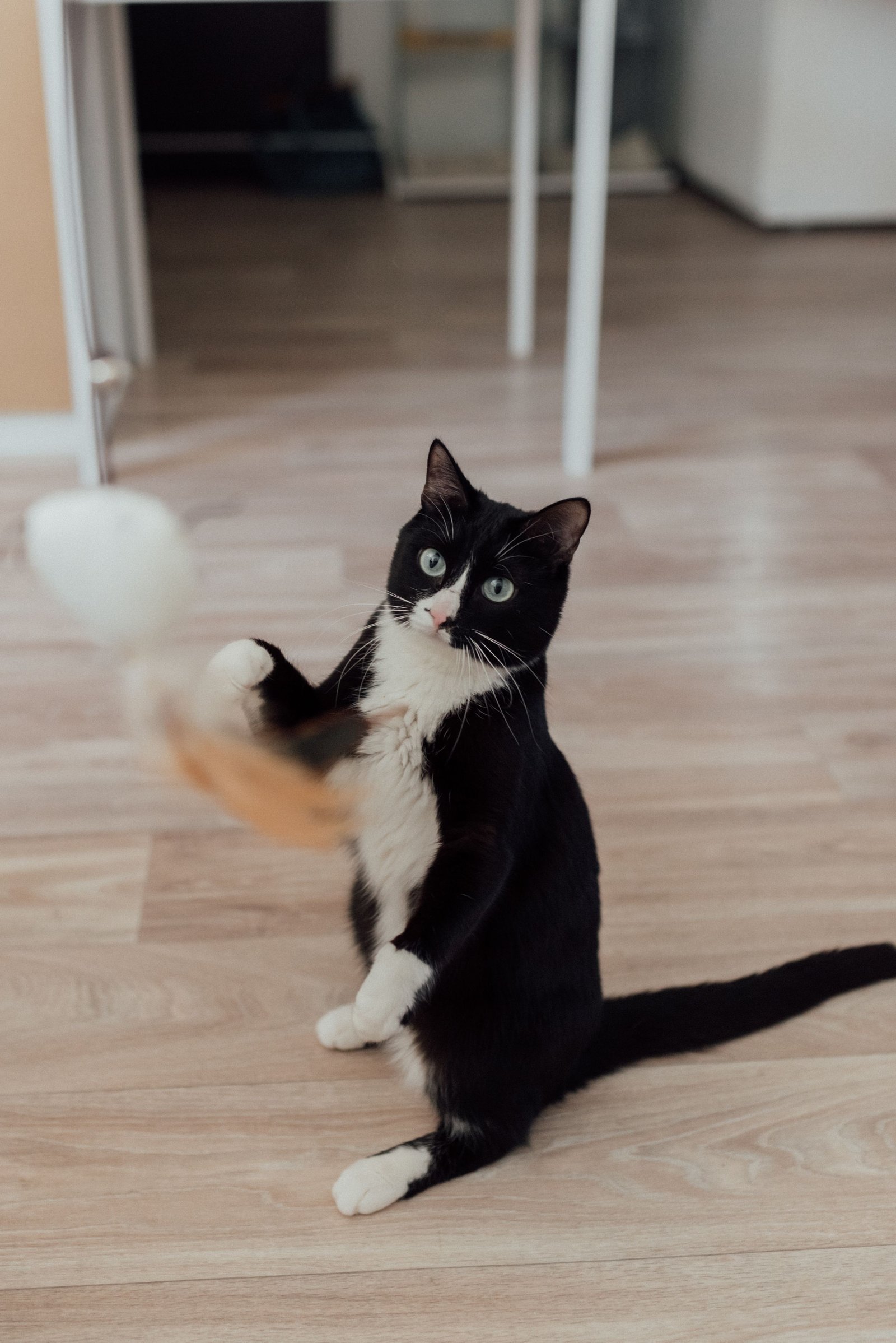
Give the cat a short, genuine play session before you pick up your bag. Ten or fifteen minutes of hunting-style play is often enough: a wand or another toy the cat can chase, catch, and “win,” then a pause, then a meal or a portion of the meal. The point is to use some energy and to end the game clearly, not to exhaust the cat. The session itself — pacing, endings, and what a satisfying hunt looks like — lives in the daily play routine guide. Come back here for the timing: morning play belongs before you leave, not after you are already rushing out the door.
Use a toy, not your hands or feet. A cat who learns that fingers are prey will use that lesson when you are putting on socks, and it is not a kind game for either of you. Wand toys are for supervised play only. When the session ends, put the string, feathers, and any small plastic pieces away. Those are not “something to leave out,” and a cat left alone with a trailing cord can chew or swallow it. If the cat is not interested first thing, try a slightly different time, or a toy that already works in the evening. You need a short, repeatable hunt and a calm exit.
Leave one food puzzle or a portion of the meal in a feeder
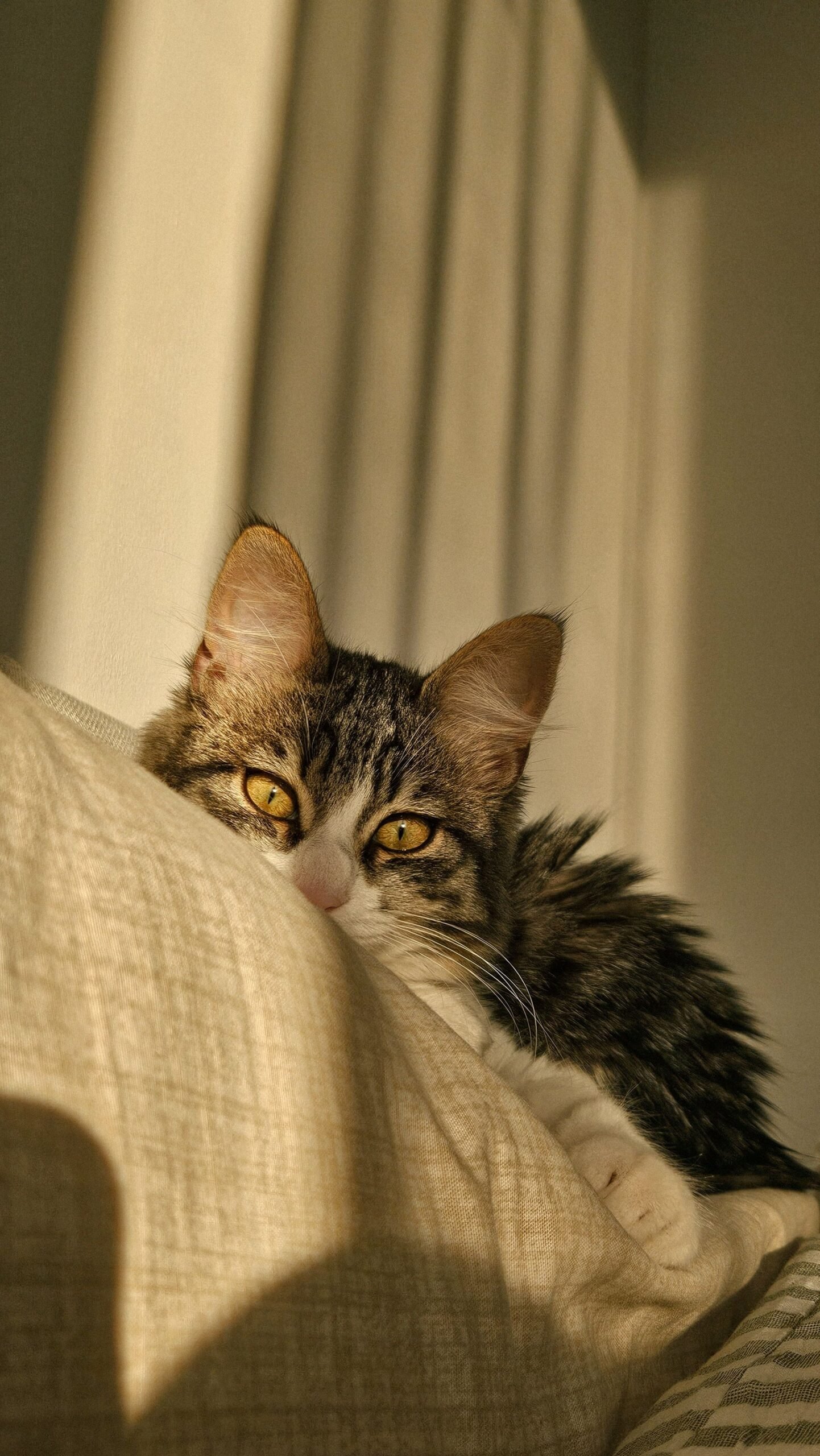
A workday is long enough that it helps to leave one interesting way to earn part of the day’s food. That can be a puzzle feeder, a simple foraging toy designed for food, or a portion of the meal in a feeder the cat already understands. It does not need to be the entire ration or a complicated gadget. The rest of the meal can stay in the usual bowl, or be offered when you return.
The buying and safety questions belong in best puzzle feeders for cats. This plan only asks you to use one at a time, introduce it when you are home first, and leave it out only if the cat can use it safely without your help. If a feeder has small parts, a lid that can crack, or a gap that can trap a paw, it is not a “while you are at work” tool. An automatic feeder can time a meal, but that is a different job; it does not replace a puzzle, and it does not replace play.
Do not leave wet food sitting out for a full workday in a warm room. If you use wet food, keep the longer absence to dry food in a feeder meant for it, or time a wet meal for when you are home, unless your veterinarian has given you different advice. Portions still matter. A puzzle is a way to deliver food, not an extra meal on top of an already complete ration. If you are unsure about amounts, how much you should feed your cat is the place for that question. A food puzzle also cannot fix a cat who will not eat when you are gone. A sudden loss of appetite is a reason to call a veterinarian, not a reason to buy a harder puzzle.
Offer a safe window perch, and rotate only one or two toys
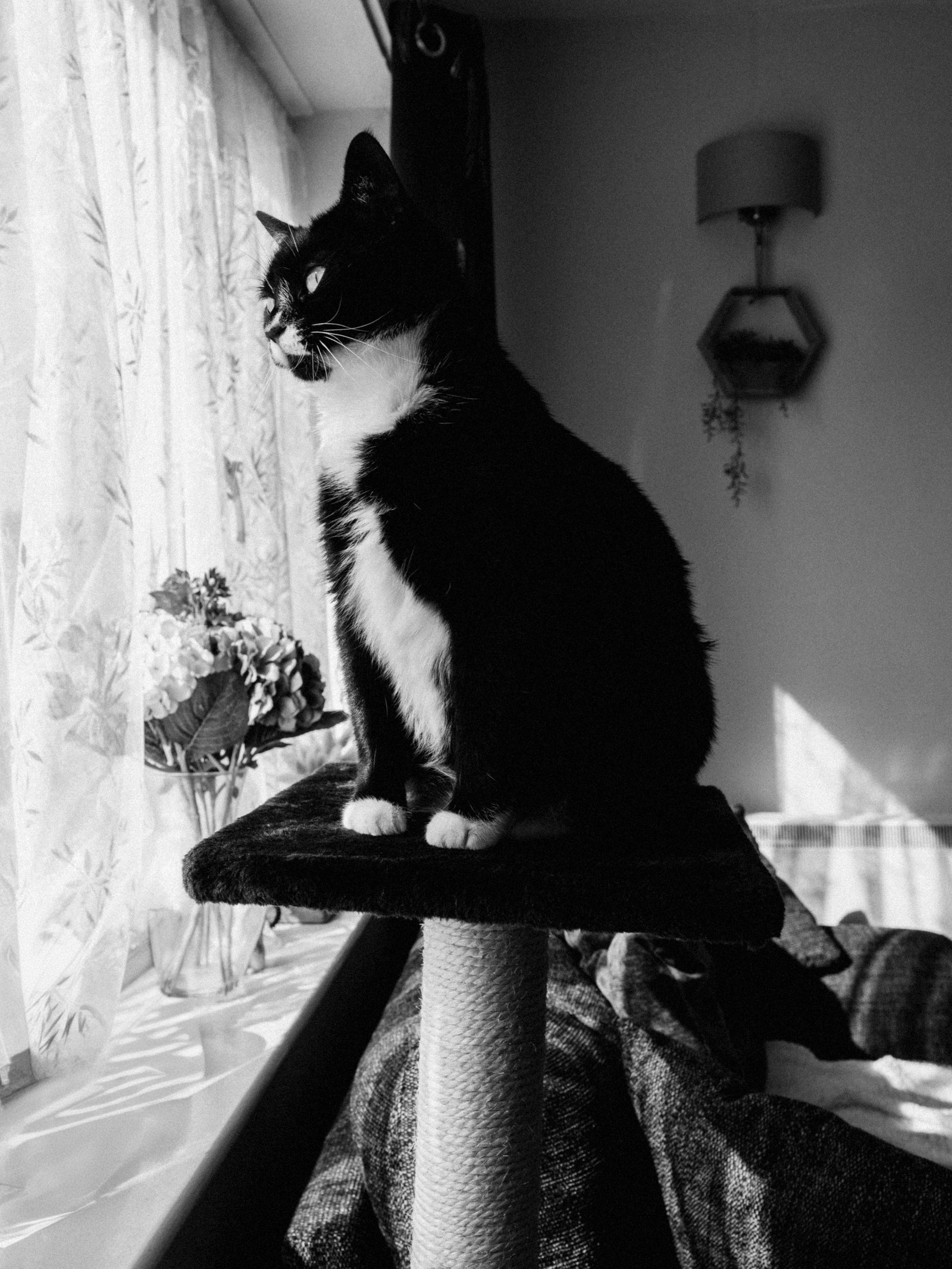
A safe view is one of the simplest things a small apartment can offer during the day. A sturdy window perch, a cat tree set beside a window, or a wide, secure sill can give the cat something to watch. The perch should be fitted so it cannot slip, and the window should be one you have already made safe. Screens, latches, and balcony doors are a safety job, not an afterthought. For the setup, use how to keep an indoor cat safe around windows and balconies alongside the window-perch buying guide. An open pane without a secure screen is not a “busy cat” feature.
Rotate only one or two toys that are safe to leave unsupervised. A sturdy ball, a solid mouse-style toy with no loose parts, or a tunnel the cat already uses can be enough. A pile of toys often becomes clutter the cat ignores. Put the rest away and swap one tomorrow. Tunnels, boxes, and enclosed beds can also make a small flat feel less empty; the buying guide for those is linked above, and best cat trees for small apartments covers climbing options that also work as a daytime lookout. Leave out nothing the cat could swallow, unravel, or get tangled in. That includes string, ribbon, tinsel, hair ties, feather wands, and toys with small plastic parts that can come off.
Close the day with a wind-down play session when you return
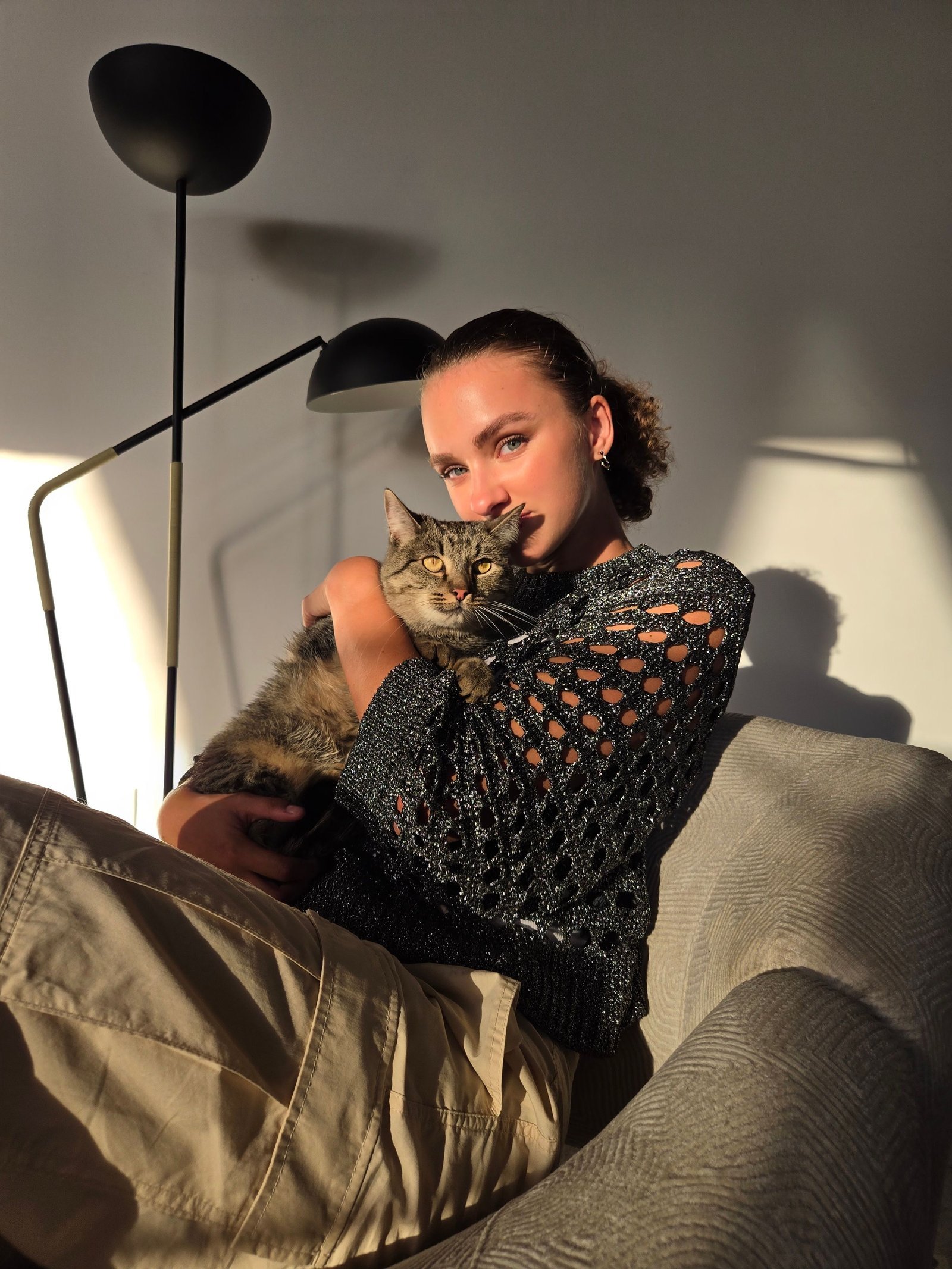
When you come home, the cat may want attention immediately, or they may need a few minutes before they are ready to play. Either way, plan a second short session rather than hoping the cat will “settle on their own.” A hunting-style game, a clear ending, and then food or a quiet rest is a kinder close to the workday than a burst of rough play right before bed.
This evening session can also help if the cat has been waking you at night. It is not a full night-time protocol, and it will not fix every 4 a.m. habit on its own. Use the dedicated guide for that problem, and keep this session as the weekday close: play, then calm, then the night routine you already have. Companionship after work matters. Sitting in the same room, or offering a lap if the cat wants one, is part of the plan. The toys and the perch are support for the hours you cannot be there. They are not a stand-in for you.
Safety, and when this is not the right tool
A weekday plan can make a small apartment more usable. It cannot treat separation distress, overgrooming, or soiling that happens only when you are gone. For a broader picture of stress at home, see signs your cat is stressed. If the cat cries for hours after you leave, stops eating, hides and will not come out, or has litter-box accidents only in your absence, contact a veterinarian. A medical problem can look like “they miss you,” and it is kinder to check than to add another toy and hope.
Do not leave string toys, plastic pieces, or anything a cat could swallow unsupervised. Check toys and feeders now and then for damage, and check window-perch fittings. This plan also cannot promise that a cat will be happy alone for a very long day, or that one puzzle will occupy them until evening. Some cats sleep much of the time you are gone and still want a real session when you return. That can be a successful weekday. A cat who cannot settle, cannot eat, or seems frantic is telling you something different.
A calm starting plan you can repeat
Use this as a first draft, then adjust to your cat and your hours:
- Have a short morning play session before you leave, using a toy rather than your hands or feet.
- Put wand toys, strings, and anything swallowable away when the game ends.
- Leave one food puzzle or a portion of the meal in a feeder the cat already understands.
- Offer a safe window perch or another secure lookout, and check the window itself.
- Rotate only one or two toys that are safe to leave unsupervised.
- Close the day with a wind-down play session when you return, then a calm evening.
- If the cat stops eating, cries for hours, or only has accidents when you are gone, contact a veterinarian.
Keeping an indoor cat busy while you are at work rewards a repeatable weekday more than a drawer full of unused toys. The aim is a morning hunt, something safe to do in the middle, and a real welcome home — not a claim that a feeder or a perch can replace your company. If the behavior looks like distress or illness, ask a veterinarian for help.
FAQ
How long can I leave my indoor cat alone with this weekday plan?
There is no honest single number that fits every cat, and this plan is not a promise that a cat will be content for a full workday. Many adult cats rest for long stretches and do well with a morning session, a safe setup, and a real welcome home. Kittens, elderly cats, and cats who already struggle when left alone may need shorter absences or another person to look in. If the cat cries for hours or will not eat, contact a veterinarian rather than stretching the day.
What toys can I leave out while I am at work?
Only toys that are safe without supervision: sturdy items with no string, no loose feathers, and no small parts that can be chewed off and swallowed. Wand toys, ribbons, hair ties, and anything that can unravel should be put away after play. Rotate one or two safe toys rather than leaving a pile on the floor.
Does a puzzle feeder replace a play session?
No. A puzzle or a portion of the meal in a feeder gives the cat a job during the day. It does not replace the morning or evening hunt, and it does not replace your company. Introduce a feeder at home first, and leave it out only if the cat can use it safely.
Will this plan stop my cat from waking me at night?
It may help, especially if you close the day with a wind-down play session and then a calm evening, but it is not a full night-time protocol. Night waking has its own guide. Do not use this article as a promise that a weekday plan will buy you an unbroken night.
When should I contact a veterinarian?
Contact a veterinarian if your cat stops eating, cries for hours when you leave, overgrooms, or only has accidents when you are gone. This weekday plan is not a treatment for separation distress, soiling, or illness. A sudden change in eating, toileting, or mood should be checked rather than waited out.