


If your cat is waking you up at night, you are not imagining the pattern, and you are also not dealing with a mystery that only a “cat person” can solve. Many indoor cats become very good at one job: making 5 a.m. interesting. A paw on the face, a rattle of the bedroom door, a meow that starts polite and then climbs, or a sudden sprint across the duvet will wake most people. In an apartment, that performance can also wake the person on the other side of the wall.
A useful mindset is this: cats are often crepuscular, which means they naturally tend to be more active at dawn and dusk. That is not a character flaw. It becomes a household problem when night activity is rehearsed, when daytime life is too flat, and when the first human response at dawn is breakfast, a door opening, or a long conversation. You can change the schedule. You cannot scold a cat into a 9-to-5 body clock.
This is general information for cat parents in the US and UK, not a veterinary diagnosis and not a promise that every cat will sleep through until your alarm. Cats vary. If night waking starts suddenly, seems painful, comes with crying, restlessness, drinking more, weight loss, or litter box changes, contact your veterinarian. Older cats especially may wake because of medical issues, discomfort, or confusion, and those are not training problems.
First, sort the night waking you actually have
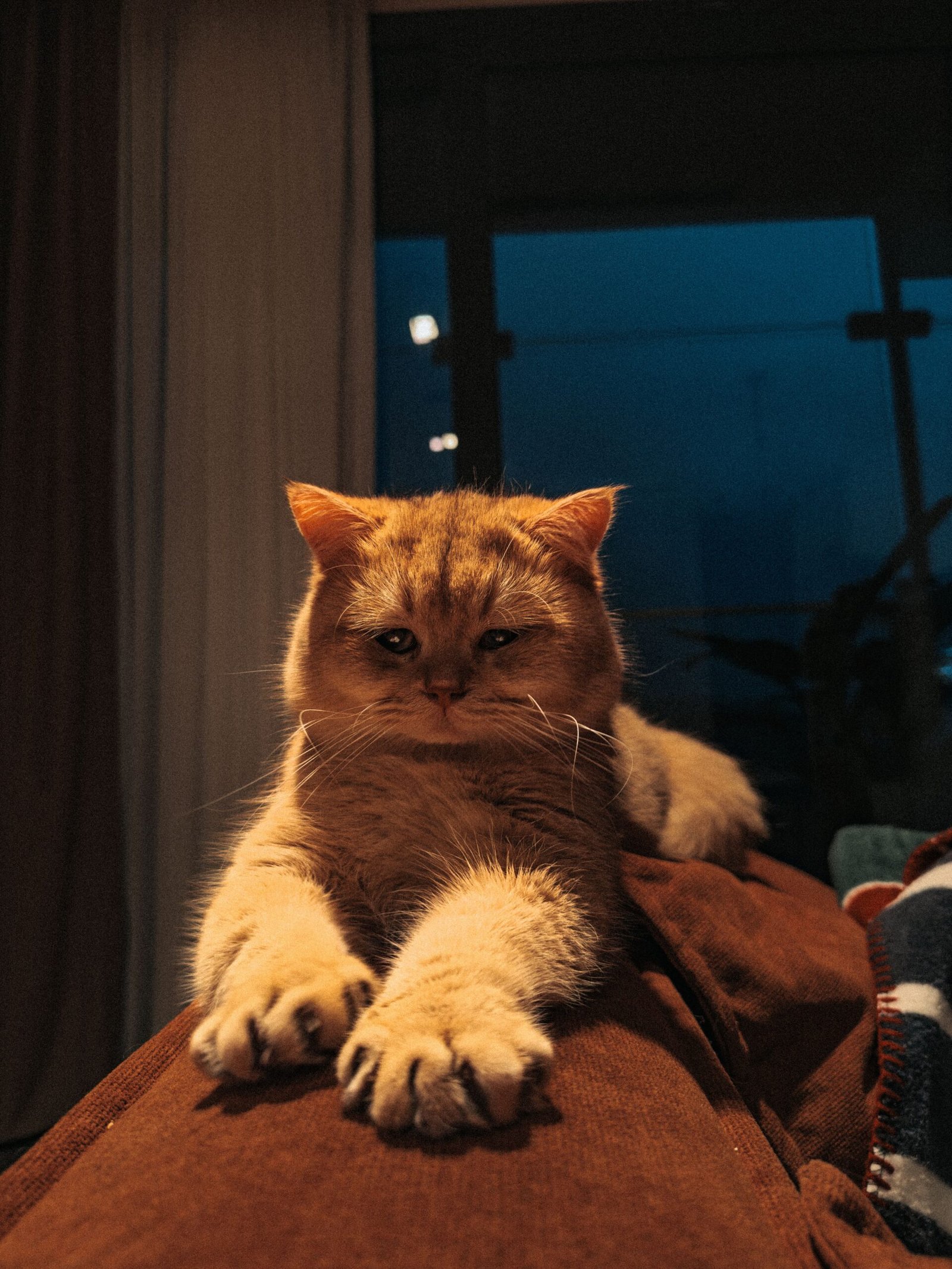
Not every 4 a.m. interruption is the same problem.
Some cats have learned that noise produces food. If breakfast sometimes arrives after a meow, the meow is working. Some cats want company or a door opened, and they have discovered that humans are easier to move at night. Some are simply underworked during the day and ready to hunt the duvet when the building goes quiet. A few are uncomfortable, hungry in a way that is not about habit, or unsettled by a change in the home.
Write down a few nights without trying to fix them yet. Note the time, what the cat did, what you did, and whether food, play, or access followed. The notes are dull and surprisingly useful. A cat who taps you once and then settles is a different project from a cat who yowls for an hour, or a senior who suddenly starts calling in the dark.
If your cat also seems on edge during the day, hides more, or has started avoiding parts of the flat, treat the night as one piece of a wider picture. [Signs your cat is stressed](/signs-your-cat-is-stressed/) can help you notice what is going on when the sun is up, not only when you want to sleep.
Do not pay the 5 a.m. performance

The most common accident is also the most understandable: you feed the cat so the noise will stop. You might do it only on workdays, or only after ten minutes, or only when you are exhausted. To the cat, those are still wins. The behavior that works gets repeated.
A calmer plan is to make the night demand unsuccessful and to move food, play, and attention onto a schedule you can keep. That means:
- Do not serve breakfast because the cat asked at dawn. Serve it when you actually get up, at a time you can repeat.
- Do not open the bedroom door, start a conversation, or start a play session in the dark if those are the prizes the cat is seeking.
- If you must get up for your own reasons, be boring. Toilet, water, back to bed, no narration.
This is hard for a few nights. Many cats get briefly louder when an old trick stops working. That burst is not proof that the plan is cruel. It is often proof that the old plan was clear. If you give in at the loudest moment, you have taught a more determined version of the same request.
A timed meal can take you out of the dawn negotiation and may help some households if it is part of a wider plan. It is not magic, and a cat can still wake you for company. A feeder is a tool, not a promise that a machine will buy you sleep on its own.
Give the hunting instinct a better evening

A cat who slept on and off all day, watched the flat from a windowsill, and then received a quiet bowl at 6 p.m. has a lot of unused hunting energy left at midnight. Night waking often shrinks when the evening has a clear shape: play, then food, then a chance to settle.
Keep play short and genuine. A wand or fishing-rod toy that lets the cat stalk, chase, and catch is more useful than a laser they can never grab, and more useful than leaving a jingly ball in the hallway and hoping for the best. Two or three focused sessions, with one of them in the last hour before you want to sleep, will usually beat one exhausted burst at 10 p.m. after the cat has already started the night zoomies. For toy ideas that indoor cats actually use, see [best interactive cat toys](/best-interactive-cat-toys/). Broader ways to make the day less empty are in [indoor cat enrichment ideas](/indoor-cat-enrichment-ideas/).
After the last play, offer the last meal or a portion of it. Many cats settle better when the “hunt” is followed by eating, the way a successful hunt would end. Then lower the household temperature: quieter lights, fewer sudden guests into the bedroom, a litter box that is already clean, and water where the cat does not have to announce a need. If litter box access is awkward at night, fix that first. A cat who cannot reach a box comfortably may wake you for reasons that have nothing to do with breakfast. [Cat litter box setup for apartments](/cat-litter-box-setup-apartment/) is the practical companion if the night path to the box is the weak point.
Daytime matters more than people think. A window view, a climbing spot, and a few short play breaks while you make tea will not turn your cat into a daytime dog, but they reduce the chance that 2 a.m. is the only interesting part of the twenty-four hours.
Decide what the bedroom is for

You have two honest options, and both can work if you are consistent.
Some people sleep with the cat and teach a quieter night by not rewarding pouncing and by giving the cat a comfortable spot on the bed or a nearby perch. This works better when the cat can settle and when you are willing to ignore a certain amount of rearrangement. It works poorly if you are a light sleeper, if the cat attacks feet under the duvet, or if you negotiate every time a paw lands on your shoulder.
Others close the bedroom door and make the rest of the home a decent night space: a warm bed, a scratcher, water, a clean box, and no reason to sit outside the door and practice crying. If you choose this, do it as a plan, not as a sudden exile on the worst night of the week. Spend some evenings with the door closed while you read, so the closed door is not only a night-time rejection. A cat who has never been shut out of the room will need time.
Neither option is more “loving” than the other. A door is not a punishment if the cat has what they need on the other side. A shared bed is not a failure if it actually lets everyone sleep. What does not work is switching every night based on how tired you are.
If you have more than one cat, night noise can also be social: chasing, blocking a doorway, or a restless new arrival. A slower introduction, rather than a forced shared bedroom, is kinder. [How to introduce a new cat](/how-to-introduce-a-new-cat/) is the right place for that work, and it should not be rushed because you want quieter nights this week.
When night waking is a reason to call the vet
Training changes habits. It does not treat pain, thyroid disease, high blood pressure, urinary discomfort, or the confusion that can come with age. You do not need to diagnose any of those at home. You do need to notice when the picture is not “my cat wants breakfast.”
Contact your veterinarian if:
- The waking is new, sudden, or much louder than the cat’s usual style.
- The cat cries while walking around, seems restless or disoriented, or cannot settle even after food and a clean box.
- You see changes in drinking, appetite, weight, vomiting, or litter box habits.
- An older cat starts calling at night, especially if they also seem clingy, lost, or uncomfortable.
Mention the night pattern clearly at the appointment rather than only saying the cat is “being a bother.” The timing is useful information. Until you have had that conversation, do not add a harsh plan, a spray bottle, or a shut-in space that leaves a possibly uncomfortable cat without an easy box or water.
A calm starting plan you can repeat
Use this as a starting draft, then adjust to your cat and your flat:
- Write down when the waking happens and what you currently do, including whether food or attention follows.
- Move play and a portion of food into the last part of the evening, and keep breakfast on a clock you choose, not a meow you obey.
- Make the night itself unsuccessful as a way to get served, opened, or entertained.
- Give the cat a decent night setup: box, water, a bed, and a clear decision about the bedroom door.
- Enrich the day enough that dawn is not the only hunt.
- Call your veterinarian if the pattern is sudden, intense, or paired with other changes.
Stopping a cat from waking you at night is usually a schedule change, not a personality transplant. The aim is a household you can sleep in, a cat who still gets real play and meals, and a building that does not have to share your 5 a.m. negotiations. If the crying looks painful or confused, ask your veterinarian to help you sort habit from health before you tighten the plan.
FAQ
Is my cat waking me because they are hungry?
Sometimes, but habit is just as common. If a meow has produced breakfast even a few times, hunger and training become hard to tell apart. Try a later evening meal or a portion timed closer to bed, then keep the morning meal at a consistent time you choose. If a cat still seems ravenous, is losing weight, or drinks much more than usual, speak to your veterinarian rather than only rearranging bowls.
Should I ignore my cat completely when they meow at night?
Ignore the request, not the cat’s needs. A clean box, water, and a safe room should already be in place before you go to bed. What you want to stop rewarding is the performance that produces food, play, or a door at 5 a.m. If the sound is new, distressed, or paired with other changes, do not treat it as a habit to extinguish until a veterinarian has seen the cat.
Will a closed bedroom door solve the problem?
It can, if the rest of the home is comfortable and you are consistent. It will not help if the cat is left without a box, if you open the door once the crying peaks, or if the cat is unwell. Some households sleep better together and change the rewards instead. Choose one plan and keep it for more than a night or two before you decide it has failed.
How long does it take for a cat to stop waking me?
There is no honest single date. A habit that has worked for months will not vanish in one quiet weekend, and many cats get louder for a short stretch when the old trick stops paying. You may see slightly later wake-ups within a couple of weeks if evenings include real play and breakfast stops arriving on demand. Sudden or worsening crying is a veterinary question, not a patience contest.
Can I use a spray bottle or shout to stop night waking?
Those are poor tools. They can startle a cat, damage trust, and still leave the underlying schedule untouched. In an apartment, they can also become a second noise problem. Change what the cat gets from the behavior, give the evening a hunt-eat-settle shape, and get veterinary help if the pattern looks physical or anxious rather than opportunistic.