

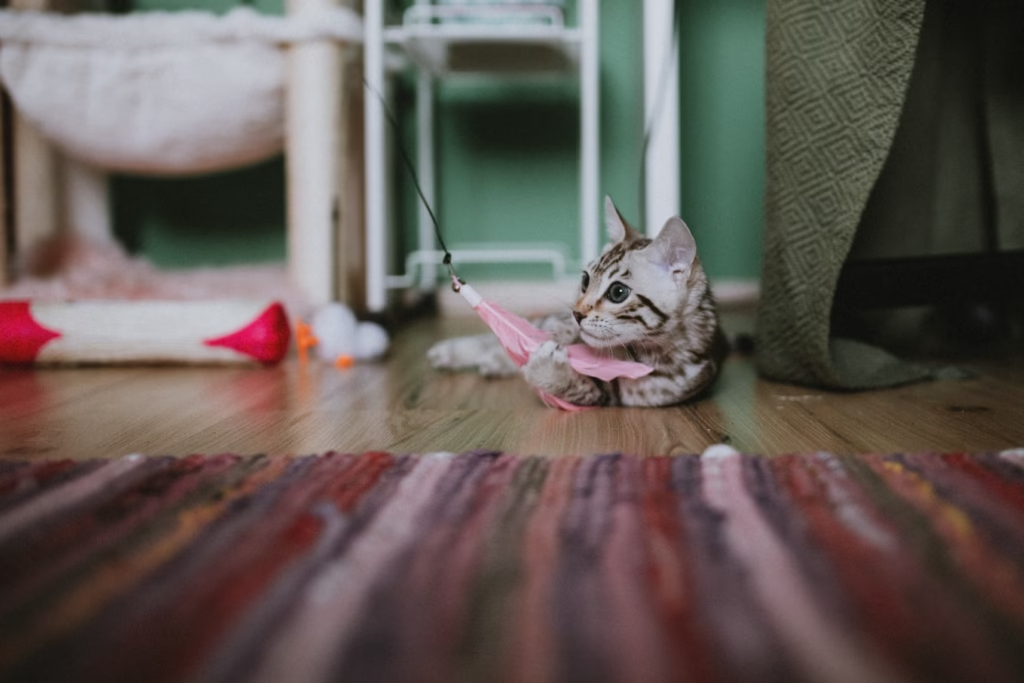
A basket of untouched toys is a familiar apartment scene. The cat sniffed the new mouse, kicked it under the sofa, and returned to watching the hallway. That does not mean your cat is bored beyond help. It often means the toys asked for the wrong kind of play, sat out until they became furniture, or never included you.
The best interactive cat toys, in a small home, do two jobs. They let a cat practice being a predator in a safe, legal way, and they give you a short daily ritual that is more reliable than hoping a battery-powered gadget will babysit the afternoon. Some cats love motion they can chase alone. Many still prefer a wand that darts, pauses, and then lets them win.
This is general information for cat parents in the US and UK, not a training certification and not a ranked review with invented scores. If your cat suddenly stops jumping, yelps when landing, hides from play they used to enjoy, or seems unwell, contact your veterinarian. Pain can look like laziness.
What “interactive” should mean in a real living room
Interactive does not have to mean electronic. It means the toy responds: to you, to the cat’s paw, or to a hidden bit of food. A stuffed mouse that never moves is a prop. A mouse that skitters when batted, or a feather that slips behind a chair leg and reappears, is a conversation.
Indoor cats still have hunting software. A satisfying session usually includes a stalk, a chase or pounce, a catch they are allowed to keep for a moment, and then a come-down—often a small meal or a lick of a familiar wet food. Ending every game by whisking the toy away at the peak of excitement can leave a cat buzzing. Letting them “catch” the prey, then offering a snack, helps the scene finish.
In an apartment, play also has neighbors. Late-night zoomies after a teasing game with no ending are not a mystery. They are unfinished business. A ten-minute evening hunt before supper often does more than a single expensive device left spinning at midnight.
If you want a wider menu of indoor outlets beyond toys, our [indoor cat enrichment ideas](/indoor-cat-enrichment-ideas/) pair well with the gear in this guide. Vertical space matters too; a well-placed [cat tree for a small apartment](/best-cat-trees-for-small-apartments/) gives the “watch and wait” part of hunting a legal perch.
Wand toys and fishing-rod toys still earn their keep
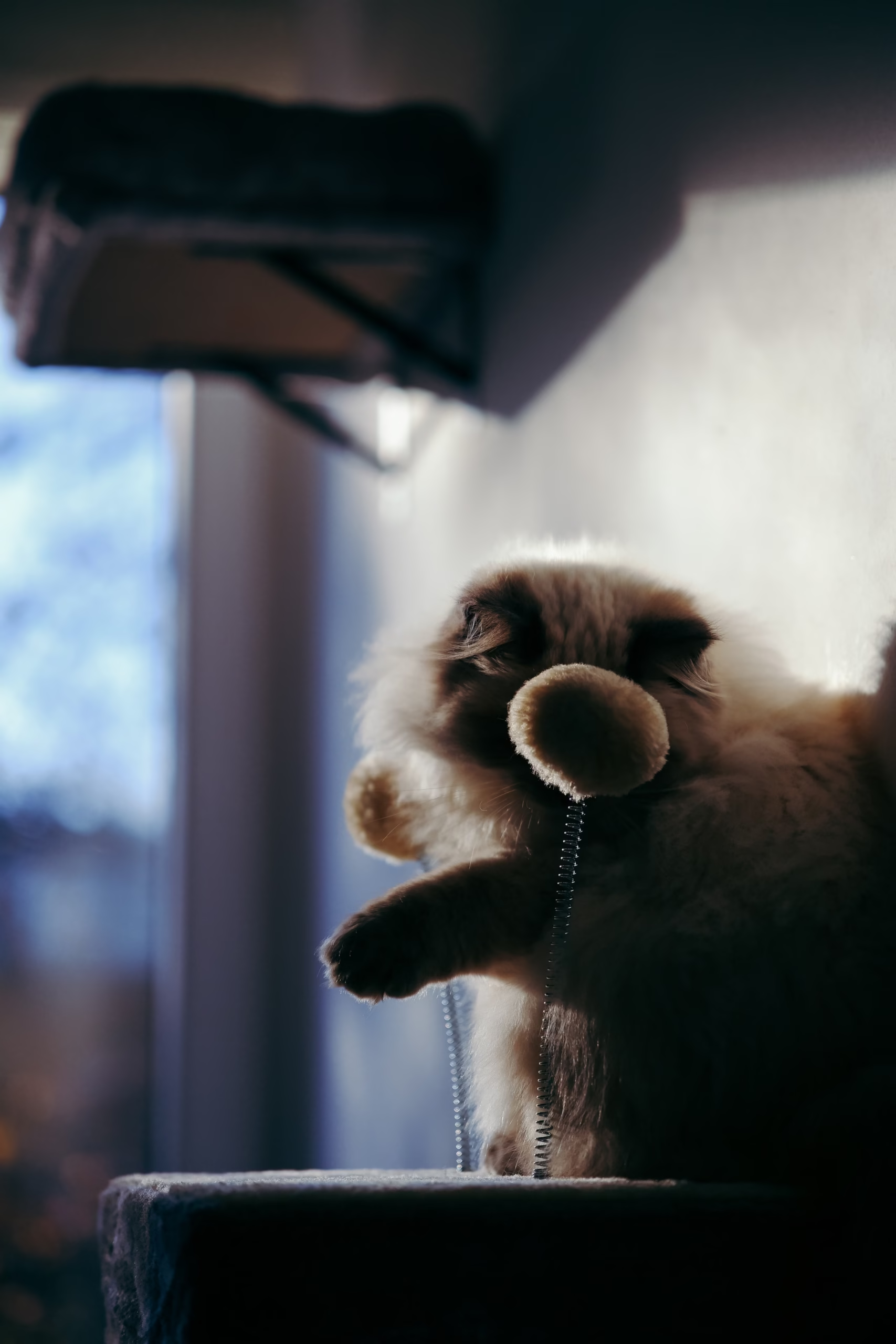
A wand with feathers, fabric strips, or a small lure on a string is the closest many households get to a moving bird or bug. You can drag it like something fleeing along the floor, hide it behind a sofa corner, or let it flutter just out of reach and then land. The skill is variation. A lure that only circles at head height teaches slapping, not stalking.
Keep sessions short and frequent rather than heroic. Two or three bursts of five to ten minutes suit many cats better than one marathon. Watch the body: a still stare, a wiggling rear, then a pounce is the scene you want. If the cat walks away, end on a catch rather than chasing them with the toy.
Safety is the unromantic part. Supervise string and feathers. Put the wand away when you are done so the cat cannot chew cord or swallow decorative bits. Damaged attachments should be retired. A toy that is falling apart is not “loved”; it is a hazard.
Wand play is also useful if claws have been landing on the sofa out of leftover energy. It will not replace a scratcher, but it can take the edge off. If furniture is already taking the hits, see [how to stop a cat from scratching furniture](/how-to-stop-a-cat-from-scratching-furniture/) alongside better play, not instead of it.
Self-moving toys: useful extras, not babysitters
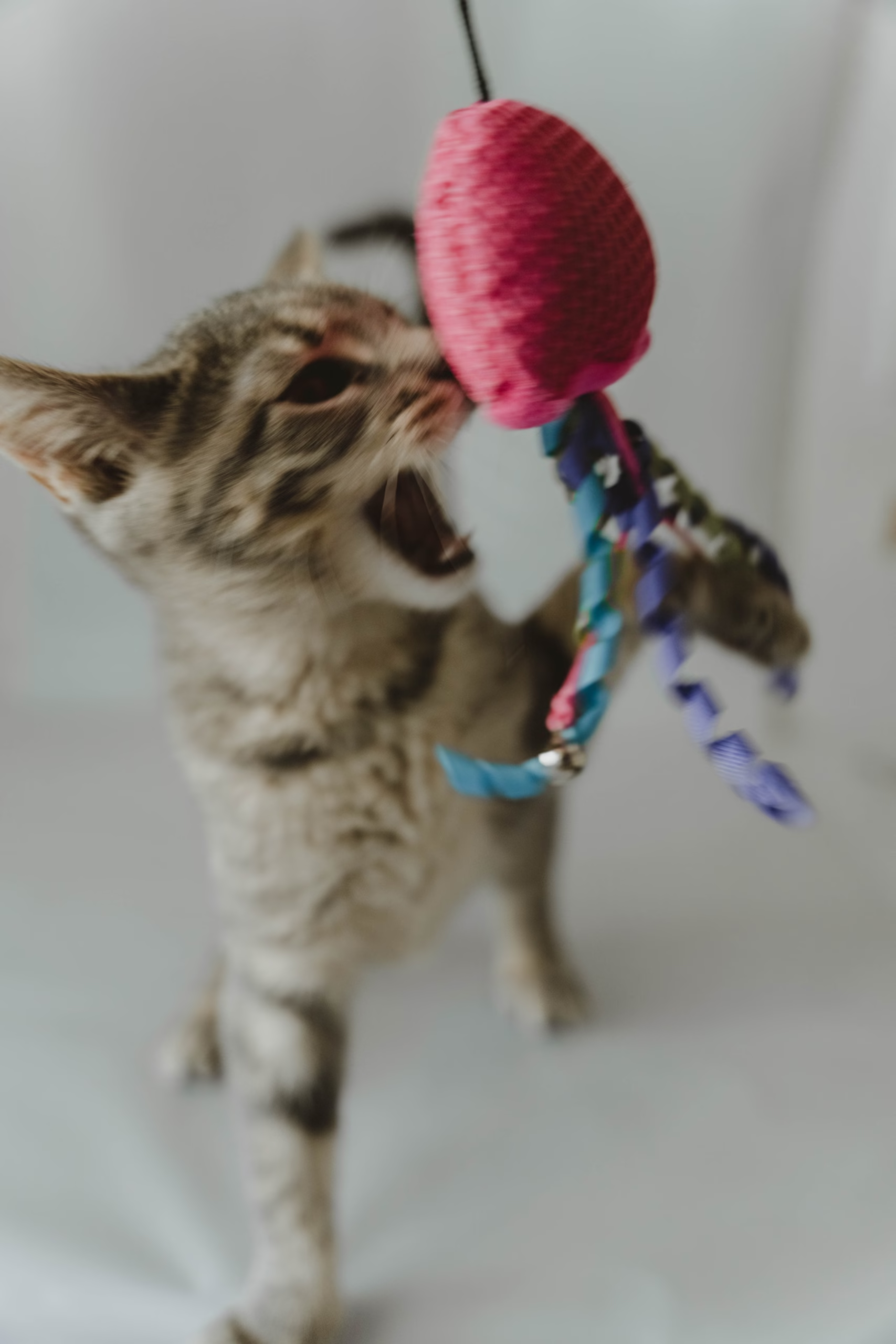
Battery toys, motorized mice, and wand stands that flap on a timer can help when you are on a call or cooking. The honest limit is habituation. Many cats investigate intensely for two days and then treat the gadget like a slightly annoying clock.
Choose motion that looks prey-like rather than frantic and loud. A toy that ricochets off skirting boards may thrill one cat and frighten another, and in a flat it may also thrill the people downstairs. Look for stable bases, enclosed batteries, and no small parts that pop off. If the toy has dangling strings, treat it like a wand: supervised use, then storage.
Rotate electronic toys. Leaving three gadgets running in a studio is not enrichment; it is visual noise. One moving toy, then a rest, then a different object later in the week, usually lasts longer.
Never rely on a moving toy as the only company in a ten-hour day. Cats vary in how much solitude they handle, but a device cannot notice illness, refill water, or offer a real hunt-and-catch sequence. Think of electronics as a supplement for curious moments, not a substitute for you.
Puzzles, balls, and the toys that work when you sit down
Food puzzles turn a meal into a hunt. A simple ball that releases kibble, a board with sliding covers, or a snuffle-style mat can slow a fast eater and give an indoor cat a job. Start easy so the cat wins quickly; a puzzle that never pays out gets abandoned. If your cat already uses a timed meal system, puzzles can complement rather than replace it; see [best automatic cat feeders](/best-automatic-cat-feeders/) if you are combining scheduled meals with foraging.
Lightweight balls and crinkle toys suit cats who bat, chase, and retrieve in short bursts down a hallway. In a small apartment, a clear run along one wall is enough. Avoid toys so small they could be swallowed, and skip anything with loose bells or plastic eyes that can come off.
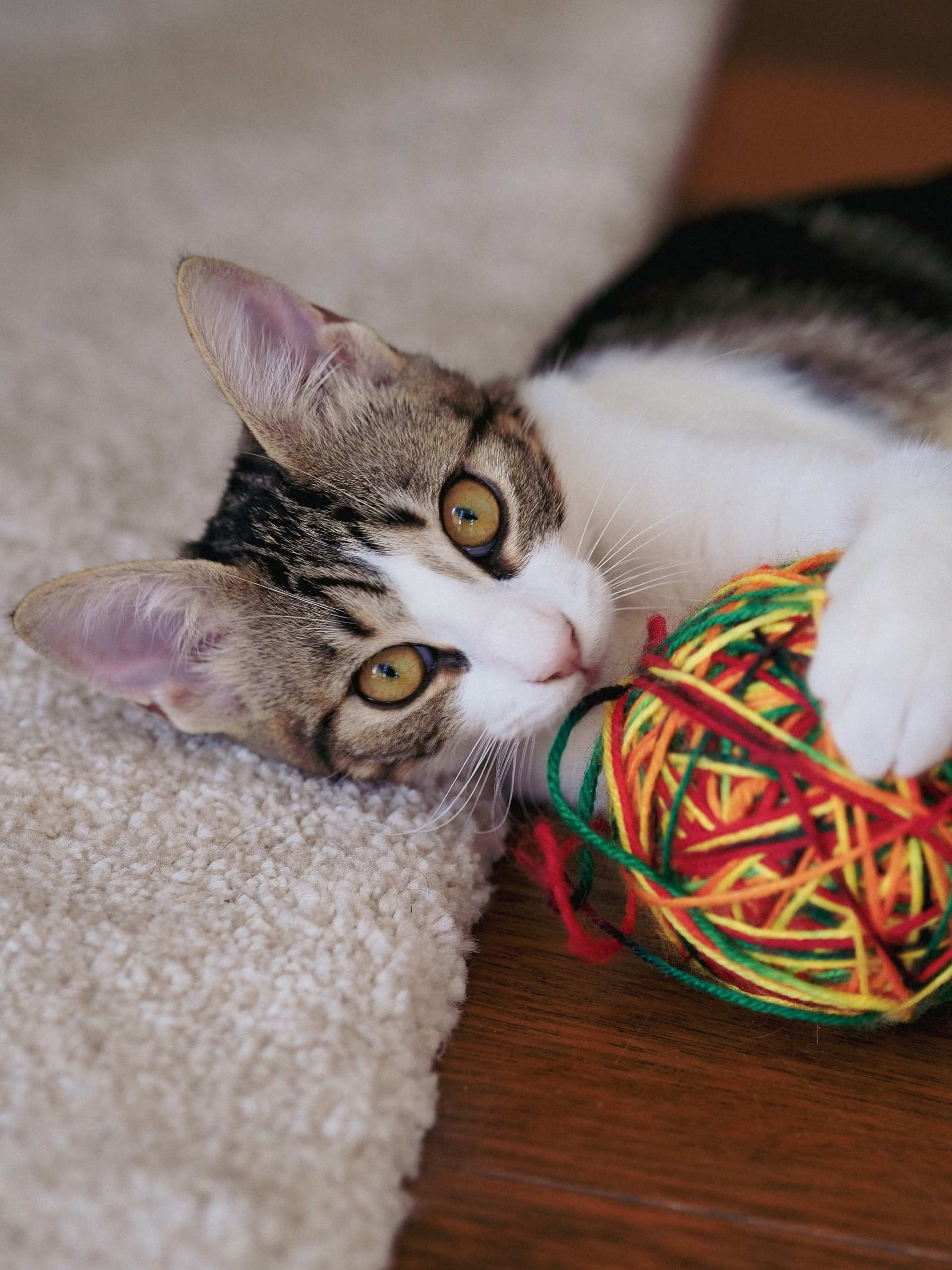
Yarn and loose string look charming and are a poor everyday toy. Cats can swallow thread, which becomes a serious medical problem. If a photo-friendly ball of yarn appears in your home, keep it for supervised knitting, not for the cat. Choose a securely made felt ball, spring, or fabric mouse instead.
Some cats prefer hunting at floor level; others want something they can ambush from a stool or the arm of a sofa. Notice where your cat already waits. Place a legal toy along that path instead of in a basket they never visit.
How to play so the toy gets used tomorrow

You are part of the toy. Cats learn whether play predicts a real catch and a calm ending. A practical evening pattern for many indoor cats looks like this:
- Invite with a wand or a skittering mouse—on the floor first, not in the cat’s face.
- Let the “prey” hide, pause, and flee so the cat can stalk.
- Allow a catch and a brief kick or carry.
- Offer a small familiar meal or a few pieces of their regular food.
- Put the tempting toy away and let the cat rest.
Morning and evening sessions often fit apartment life better than a random burst at 11 p.m. If your cat is more active at dawn, a short pre-breakfast hunt can take pressure off the bedroom door.
Rotate what is available. Keep a small set out and store the rest. Swap every few days so yesterday’s mouse becomes interesting again. Novelty in a studio does not require a shopping habit; it requires hiding things.
Match intensity to the cat in front of you. A young athlete may want faster chases. An older cat may prefer slower sliding toys and less jumping. If a senior suddenly avoids play, ask your veterinarian about pain before you buy a more stimulating gadget.
Safety, noise, and apartment manners
Inspect toys the way you would inspect anything that goes in a mouth. Loose feathers, chewed plastic shells, unraveling fabric, and exposed wires are retirement criteria. If you share the home with a dog who swallows toys, store cat toys up high; some “interactive” cat gadgets are unsafe chew objects for dogs who destroy things—see [best toys for aggressive chewers](/best-toys-for-aggressive-chewers/) if that is also your household.
Think about sound. Motorized toys that click all afternoon in a studio can grate on you and on neighbors through a shared wall. Choose quieter motion, use electronics when you are home to switch them off, and keep late play to a wand you control.
Laser pointers deserve a special note. Some cats enjoy the chase, but there is no object to catch. If you use a light, end every session with a physical toy or a snack so the hunt can finish. Never aim a laser at eyes, and do not use one as the only game.
Plants, cables, and breakable shelves are not toys. If play regularly knocks into a precarious bookcase, move the session to a clearer stretch of floor rather than telling the cat to be careful.
A shortlist that holds up in a small home
You do not need a catalog. Most indoor cats do well with a small, rotating kit:
- One or two sturdy wand toys you put away after play.
- A couple of lightweight, well-made mice or balls for independent batting.
- One easy food puzzle, introduced gradually.
- At most one electronic toy, used in short spells and stored afterward.
- A legal perch or tree so watching and waiting has a place.
The best interactive cat toys are the ones that get a real hunt, a real catch, and a quiet ending—and that you can use on a weeknight without assembling a theme park in the living room. Start with play you can repeat, keep the dangerous bits out of unsupervised mouths, and let your cat’s attention—not the packaging—decide what stays.
FAQ
How often should I play with my indoor cat?
Many cats do well with at least one dedicated session a day, and two shorter ones—morning and evening—if you can manage it. Quality matters more than a stopwatch. A focused five-to-ten-minute hunt that ends with a catch and a snack often settles a cat more than an hour of half-hearted dangling while you answer email.
Are automatic or electronic cat toys worth it?
They can be, as a supplement. Look for sturdy construction, safe batteries, and motion that does not terrify your cat or annoy neighbors. Plan to rotate them and to keep offering wand play. If a gadget is ignored after the first week, store it and bring it back later rather than stacking more devices on the floor.
What toys are safest to leave out when I am not home?
Simple, solid toys without long strings, loose feathers, or small detachable parts are the usual candidates: a sturdy ball, a well-sewn mouse, or a robust puzzle that cannot break into pieces. Wands, yarn, and anything with cord should wait until you are there. When in doubt, leave fewer toys out and inspect them often.
My cat only plays at 3 a.m. Will better toys fix that?
Sometimes richer evening play and a meal after the “hunt” shift the schedule. Sometimes the cat is young, under-stimulated during the day, or responding to household noise. Toys help when they are used in a complete sequence before your bedtime, not when they are dumped in a pile at midnight. If nighttime restlessness is new or extreme, check with your veterinarian.
Can interactive play replace a cat tree or extra enrichment?
No. Play covers the chase. Cats also need rest spots, scratching outlets, hiding places, and something interesting to watch. A wand toy in an empty, noisy room is only part of the picture. Combine play with scratching posts, perches, and the wider ideas in our indoor enrichment guide.
[…] session itself. If you are choosing a wand or something the cat can bat on their own, start with best interactive cat toys. For the rest of the day — scent, foraging, and simple variety — see indoor cat enrichment […]
[…] not the same thing as a wand, a motorized toy, or a play session. Those have their own place in best interactive cat toys and in a wider set of indoor cat enrichment ideas. A puzzle feeder is about food. Play is about […]
[…] supervised chase in a small room, ending with a catch. It is not a substitute for the wider set of best interactive toys for cats, or for a daily play routine for an indoor cat. Electronic toys and what to leave out when you are […]