

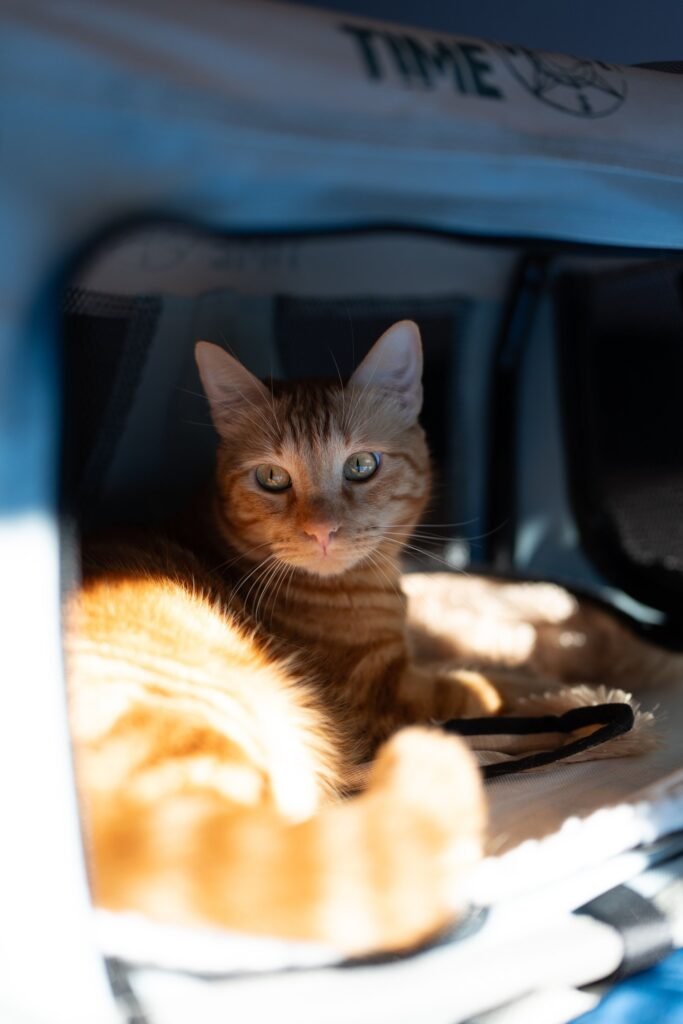
If you want to get a cat used to a carrier, the hard part is not the idea of “put the cat in the box.” It is that the box has often been hidden until the morning of a vet visit, then brought out, loaded, and carried through a hallway and into a car, all in one go. A cat who only sees the carrier on those days has every reason to struggle. A slower plan at home gives you a better chance.
A useful mindset is this: you are turning the carrier into a familiar place to rest and eat, days or weeks before anyone needs to travel. You leave it open, you let the cat explore on their own time, you feed nearby and then inside, and you add short closes only when the cat can still relax. You are not trying to win a single session, and you are not starting with a long trip.
This is general information for cat parents in the US and UK, not a veterinary diagnosis, not a treatment plan, and not a promise that a cat will like a carrier after a set number of days or that one practice will be enough. Cats vary by age, history, health, and how they feel about confinement. If your cat panics, freezes or shuts down, becomes aggressive when handled, or has a medical reason travel is already hard, ask a veterinarian before you push the plan further. This article does not recommend sedating a cat and does not suggest any medication or dose.
Make the carrier a familiar place before any trip
A carrier is a travel tool, but at home it should first be ordinary furniture. If it only appears when you are late for an appointment, the cat learns that the box predicts a stressful outing. In an apartment, storage is tight, and it is tempting to fold a soft carrier or slide a hard one into a closet. The training cost of that habit is a cat who runs when they see it.
This article is about getting comfortable in a carrier you already have. It is not a buying guide; for size, style, and what to look for, use best cat carriers for vet visits and apartment travel. It is also not the same job as how to introduce a new cat to your home, which covers a new cat’s first days and base camp. If a new cat has just arrived, let them settle in a quiet room first, and only then begin unhurried carrier work in that space.
Think of three jobs, not one:
- Visibility and access. The carrier stays out, open, and easy to walk into or sit beside.
- Good things near and in the box. Food, treats, or a familiar rest spot are paired with the carrier, not with a rushed departure.
- Short, reversible closes. The door shuts for seconds, then opens again, long before anyone goes down the hall.
The goal is a calmer process, not a guarantee that vet day will be easy, and not a claim that one session will fix it.
Leave the carrier open in everyday space

Choose a room the cat already uses, not an isolated hallway they avoid. Open the door or unzip the flaps and leave them that way. A hard-sided carrier can sit on the floor with the grate door fully open, or with the top off if your model allows it and you can still put it back together securely later. A soft-sided carrier can stay unzipped in a quiet corner. The cat should be able to go in, sniff, and leave without anyone blocking the exit.
Do not stuff the cat in “to get them used to it.” That is a struggle, and it teaches the opposite of what you want. If the cat ignores the box for several days, that is fine. Walk past it. Sit nearby and read. Let curiosity do the first work.
If the carrier smells like the last vet trip, wipe the interior with a mild, pet-safe cleaner, let it dry fully, and add a familiar towel or blanket that already smells like home. Avoid strong scents, and do not invent home remedies or sprays as a cure for fear. A towel the cat already sleeps on is enough to start.
Keep the box where it will not be kicked in a tight walkway, and where a child or another pet cannot bother a cat who has chosen to sit inside. In a studio, that may be beside a sofa or under a table rather than in a crowded entry. If you share the home with a dog or another cat, make sure the open carrier is not a place the other animal can trap them. A slightly raised, stable surface can help if the floor is a thoroughfare, provided the carrier cannot tip.
Pair food and rest with the box

Once the carrier is just part of the room, start placing good things near it, then closer, then just inside. A meal in a bowl a few feet away is a reasonable first step. If the cat eats easily there, move the bowl nearer over later meals. Only move it inside when the cat is still eating in a normal, unhurried way. If they stop eating, move the bowl back out and slow down.
You can also drop a few favorite treats at the entrance, or rest a familiar bed or blanket so the carrier becomes one more napping option. Some cats will lie in an open carrier on their own. Others will only sit beside it for a while. Both are useful. Do not withhold regular meals to force the cat into the box.
Short, calm sessions beat a long campaign. Put the food down, leave the cat alone, and let them decide. If you hover in the doorway, the box can start to feel like a trap. In a small home, you may still be in the same room; keep your attention on something else.
If your cat is unwell, has a reduced appetite, or is on a diet you must not change, ask your veterinarian how to adapt this step. This is not a feeding plan and not a treatment for picky eating or medical issues.
Add short closes, then a brief lift

Closing the door is a separate skill from going in. When the cat will enter the open carrier, or at least stay relaxed while eating just inside, begin closing the door or zipper for a second or two, then opening it again and letting the cat leave if they want. Reward the calm moment, not the struggle. If the cat bolts or freezes, you have gone too far; return to an open door and shorter steps.
Build duration slowly: a few seconds, then a little longer, still at home, still without a trip down the hall. Talk quietly or sit nearby so the close is ordinary, not a signal that a car ride is next. When short closes are easy, you can lift the carrier an inch off the floor and set it down, then later carry it a few steps around the room and open it. The cat should still look reasonably settled. A flattened body, frantic vocalizing, panting, or a shutdown stare means you should stop, open the door, and go back a step.
Never start this stage on the morning of a vet visit. The close-and-carry practice belongs in ordinary days, when you can end the session early.
Watch the cat as carefully as you watch the clock. Hiding for the rest of the day, a sudden change in appetite, or a cat who no longer approaches the open carrier are signs to pause. Signs your cat is stressed can help you notice when a session has gone too far. This is general information, not a diagnosis. If those signs persist, or if the cat seems unwell, contact a veterinarian rather than repeating a close that already failed.
Do not start with a long vet or travel day
A first outing should be as short and dull as you can make it, and only after the cat can rest in a closed carrier at home for a little while. A walk to the building hallway and back, or a brief sit in a parked car if you use a car, is a more honest next step than a long appointment or a trip out of town. If you have a scheduled vet visit before the cat is comfortable, use as much of the at-home plan as you still have time for, keep the carrier out, and ask the clinic what they prefer for a worried traveler. Do not try to “get it over with” by forcing a long practice ride the night before.
On the day you do travel, set the carrier up in the familiar room, give the cat time to enter if they will, and use a calm, efficient load if they will not. Take the same towel or blanket the cat already uses in the box, and keep the carrier level as you walk, especially in a stairwell or elevator. Do not open it in an unsecured hallway. There is no single correct loading method for every cat and every carrier style, and this article will not describe forcing a cat into a box. If you cannot get the cat in without a struggle, pause and ask your veterinarian or a qualified professional for handling advice that fits your cat.
This plan will not replace veterinary care, and it will not make every cat love travel. Some cats remain tense in a carrier even after careful practice. The aim is less struggle and a more familiar box, not a personality change and not a one-session fix.
If your cat panics, tries to escape in a way that could cause injury, shuts down and becomes unresponsive, or has a medical condition that already makes travel hard, stop the home experiments and ask a veterinarian. Some cats need a medical plan for travel; that decision, and any medication, belongs with a veterinarian. Do not give human medicines, do not invent a dose, and do not use online sedation recipes.
Getting a cat used to a carrier rewards patience more than intensity. Leave the box open in a room the cat already uses, pair it with food and rest, add short closes only when the cat can still relax, and skip the long first trip. If comfort stalls, or if fear or health is in the way, ask a veterinarian for help rather than pushing through a struggle.
FAQ
Can I get a cat used to a carrier in one session?
No honest plan can promise that, and a single rushed session often makes the next one harder. Many cats need the carrier to sit open in the home, then meals or rest near and inside it, then very short closes, over a number of ordinary days. Some need longer. Think in terms of a familiar box, not a one-session fix.
Where should I leave the carrier in a small apartment?
In a room the cat already likes, with the door or zippers open, and out of a busy walkway if you can. Beside a sofa, under a table, or in a quiet corner of the main room is usually better than a closet or a crowded entry. The cat should be able to go in and leave freely. If space is tight, even a small clear patch of floor is more useful than packing the carrier away between trips.
Should I feed the cat only inside the carrier?
No. Using meals as a gentle lure is helpful; withholding regular food to force the cat in is not. Start with food near the box, then closer, then inside if the cat is still eating normally. If they stop eating, move the bowl back and slow down. Ask a veterinarian before you change the diet of a cat who is unwell or on a prescribed feeding plan.
What if my cat panics when I close the door?
Open it and go back a step. Return to an open carrier, shorter time inside, and more easy practice at home. A flattened posture, frantic movement, or a sudden shutdown is a sign to stop, not to push through. If panic is intense, repeated, or paired with a medical problem, ask a veterinarian. Do not try to solve this with sedation on your own, and do not invent a dose.
Is this the same as choosing a carrier or introducing a new cat?
No. Comfort in the box is a separate job from picking a size and style, and from a new cat’s first days in the home. Use a carrier-buying guide when you are shopping, and a slow introduction plan when a cat is new to the household. You can still leave an existing carrier open in the new cat’s room once they have had time to settle.
[…] own sequence: prepare, travel, set up one quiet room, then widen access. It is not a substitute for how to get a cat comfortable in a carrier, and it is not a buying guide for best cat carriers. Those belong in their own articles. The same […]
[…] not a lesson in how to complete those jobs. If the carrier itself is still a struggle, start with how to get a cat comfortable in a carrier and, if you still need to choose one, best cat carriers for vet visits and apartment travel. Those […]