


If you want to stop a cat from biting during play, the hard part is not the idea of “don’t let them use your hands.” It is the moment the game gets too intense, or the ankle that walks past at the wrong time. In a small apartment, those moments happen close to the sofa and the same hands that also feed the cat.
A useful mindset is this: you are teaching the cat what play is for, and you are ending the session before it tips over. A wand or another toy instead of fingers, a chance for the cat to catch that toy, and a short break before you start again will do more than a louder “no” after a nip.
This is general information for cat parents in the US and UK, not a veterinary diagnosis and not a treatment for aggression, fear, or pain. It is not a promise that biting will fade on a set timetable. If bites break the skin, the cat suddenly becomes aggressive, or the cat bites when touched away from play, contact a veterinarian or a qualified behavior professional. Pain and true behavior problems can look like “rough play.”
This is play manners, not a scratching or stress rewrite
Play nips and ankle grabs have their own job: end the session when the cat is getting overstimulated, keep your body out of the game, and let the toy be the thing that gets caught. This is not a substitute for how to stop a cat from scratching furniture or for reading signs your cat is stressed. Scratching posts, hiding, and tense body language belong in those guides.
A day’s worth of play, and the toys that make it easier, are also separate topics. See a daily play routine for an indoor cat, best interactive toys for cats, and indoor cat enrichment ideas. If your cat is new, hiding, or easily overwhelmed, start with how to help a shy cat feel safe in an apartment. Time alone during a workday is covered in how to keep an indoor cat busy while you are at work.
Think of three jobs, not one:
- End in time. When the cat speeds up, you stop, rather than pushing through “one more pounce.”
- Use a toy. Hands, feet, and dangling clothing are not the prey.
- Let the cat catch, then rest. A short win and a break prevent the frustration that often turns toward the nearest ankle.
Watch for overstimulation and end the session
Play that starts as a light chase can tip into biting without much warning. Many cats give small signals first: a quicker tail, skin twitching along the back, ears turning back or sideways, a harder stare, or paws that grab and hold instead of a brief tap. When you see that shift, end the session. You are stopping the game while it is still a game, not punishing the cat.
Ending can be quiet. Still the wand, set the toy down out of reach, stand up slowly, and walk out of range. Do not slap the cat, push their face, shout, or startle them with a loud clap or a spray. Those responses can make the cat more aroused, more wary of your hands, or more likely to grab harder next time.
If a nip already happened, the same plan applies. Stop. Withdraw the toy and your hands. Give the cat space. A lecture does not explain the rule, and wrestling back teaches the opposite lesson: hands are part of the game.
Overstimulation during play is not automatically the same thing as household stress. A cat can be generally comfortable and still bite when a chase goes on too long. If you also see hiding, skipped meals, changes in the litter box, or new fear around people, use the stress-signs guide and, if needed, the shy-cat guide.
Use a wand or toy, not your hands or ankles

The simplest change is also the one many households skip: play happens with a toy, not with fingers, toes, or a wriggling hand under a blanket. A wand, a teaser on a string, or another toy you can move at a distance keeps your skin out of the pounce. You can still have an energetic game. You just stop offering a hand as the moving thing.
If your cat already treats hands as toys, this will take some repetition. When a hand comes near and the cat wraps around it, go still, unhook yourself calmly, and switch to the wand. Do not wriggle your fingers to “get one more cute grab.” That is the habit you are trying to retire. The same goes for roughhousing with bare hands on the rug.
Ankle grabs often start as you walk through a room. The moving foot looks like prey, and there is no toy in play. Keep a wand or another toy where you can reach it in the rooms you walk through most. If the cat launches, redirect to the toy if you can do so safely, then end or shift into a short, proper play session. Do not kick, stamp, or slap. Do not dance your feet to invite another grab. Walk out of range, then offer the toy.
A wand is one good option, not the only one. Another interactive toy can do the same job if it keeps your hands away from teeth. The interactive-toy guide can help you choose; this article only asks that the toy, not your body, be the target.
If children play with the cat, show them the same rule. A wand they can hold on a bed or a chair is safer than fingers on the floor. Stay close enough to end the game when the cat speeds up.
Let the cat catch the toy
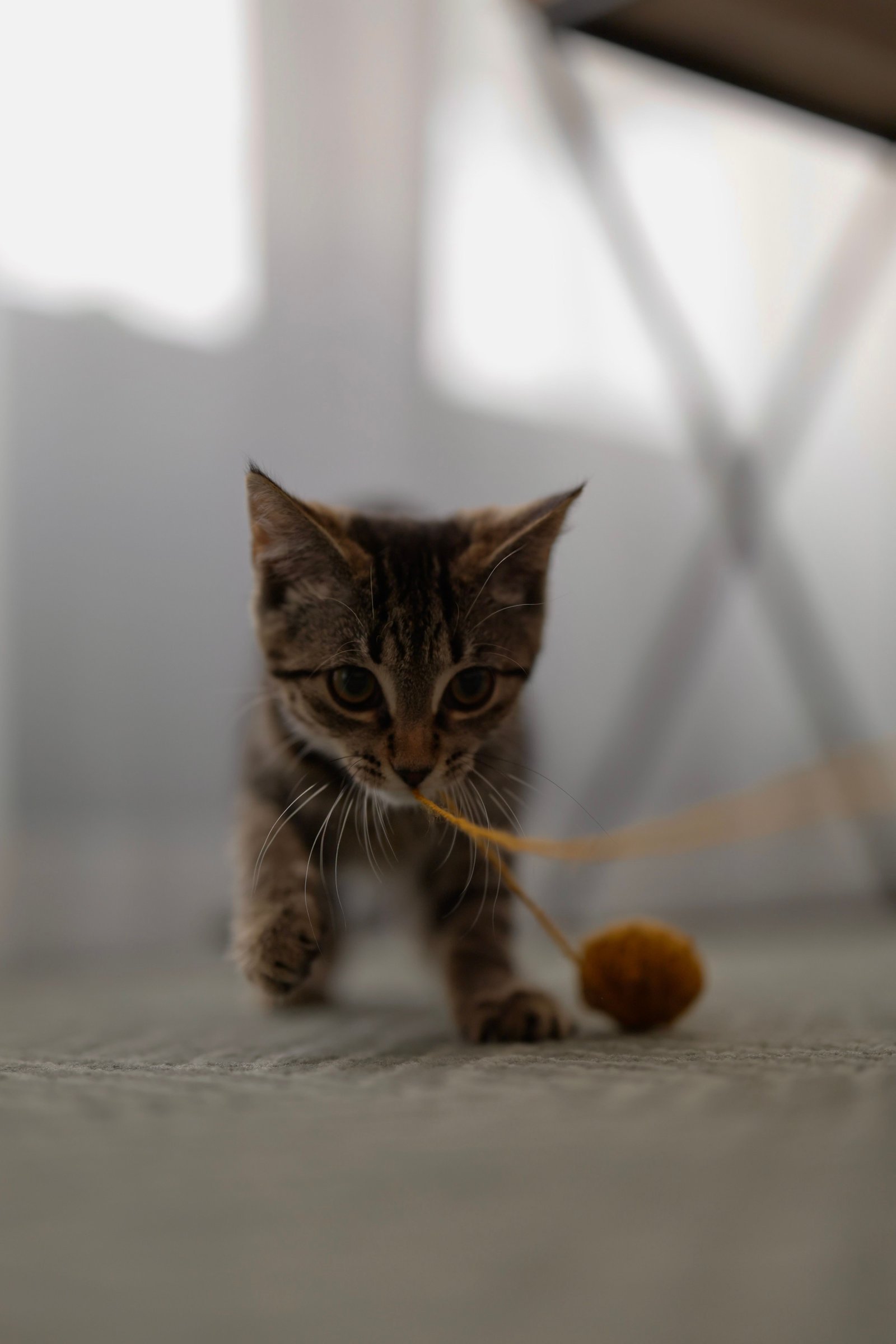
A chase with no ending is frustrating. If the feather or pom-pom always stays just out of reach, some cats stop the game, and some grab whatever is closer — a hand, a sleeve, or an ankle. Build in wins. Let the cat pounce, hold, and “kill” the toy for a few seconds, then start the movement again.
Drag the toy along the floor, let it pause and flicker, let the cat catch it, and wait while they bite and wrestle the toy itself. That bite belongs on the toy, not on you. After a brief catch, you can start another short burst, or you can end the session there.
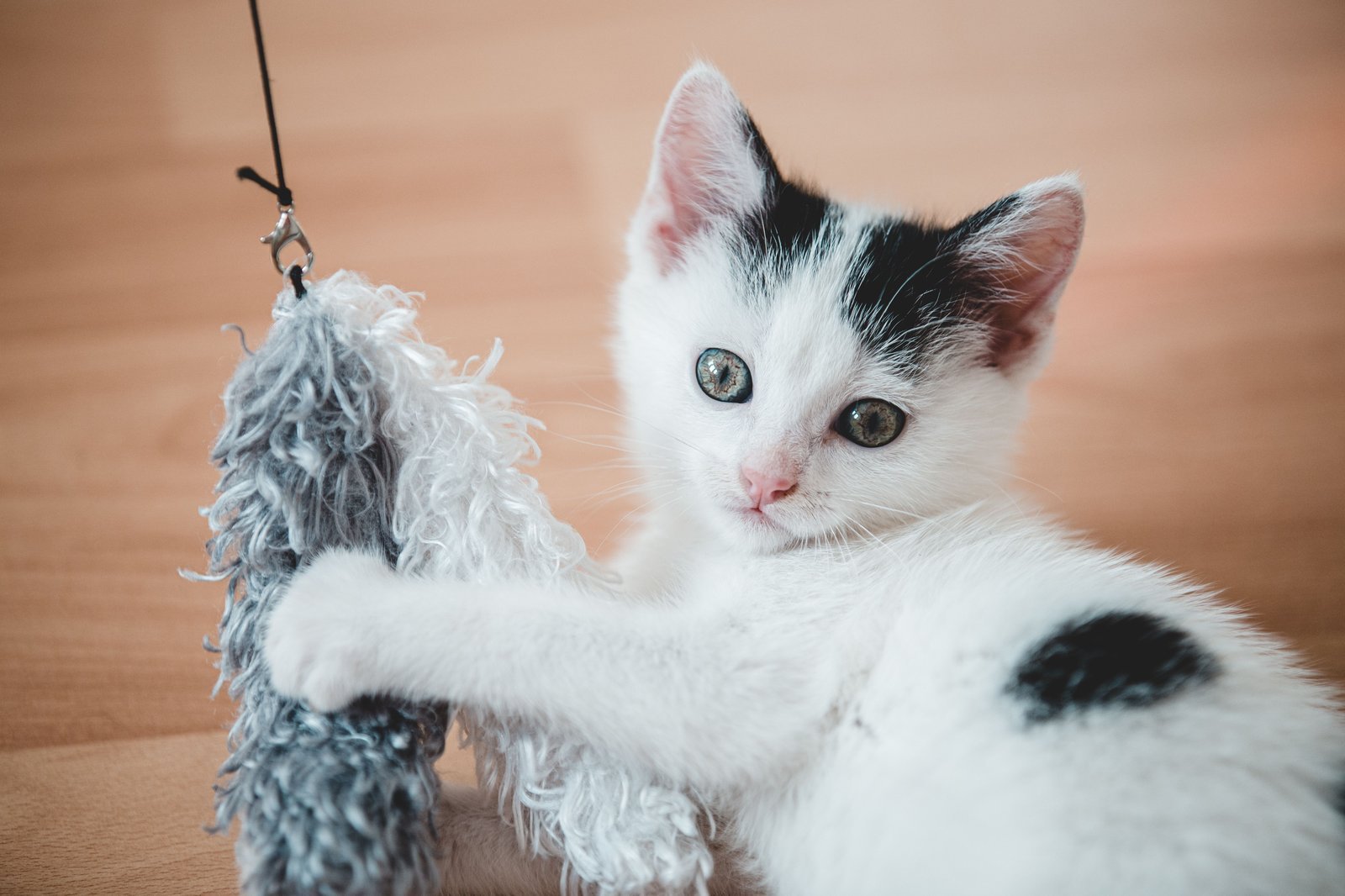
Keep the wand moving like prey, not like a teasing loop over the cat’s face. Wide, low movements along the floor are often easier for the cat to complete than a toy jerked high above their head. The catch is already the reward.
If the cat ignores the toy and keeps going for your hand, stop, take a break, and try again later with the toy moving first. Do not use your fingers to “show them” how to play with the toy. That puts the wrong target back in reach.
Take a short break, then restart later
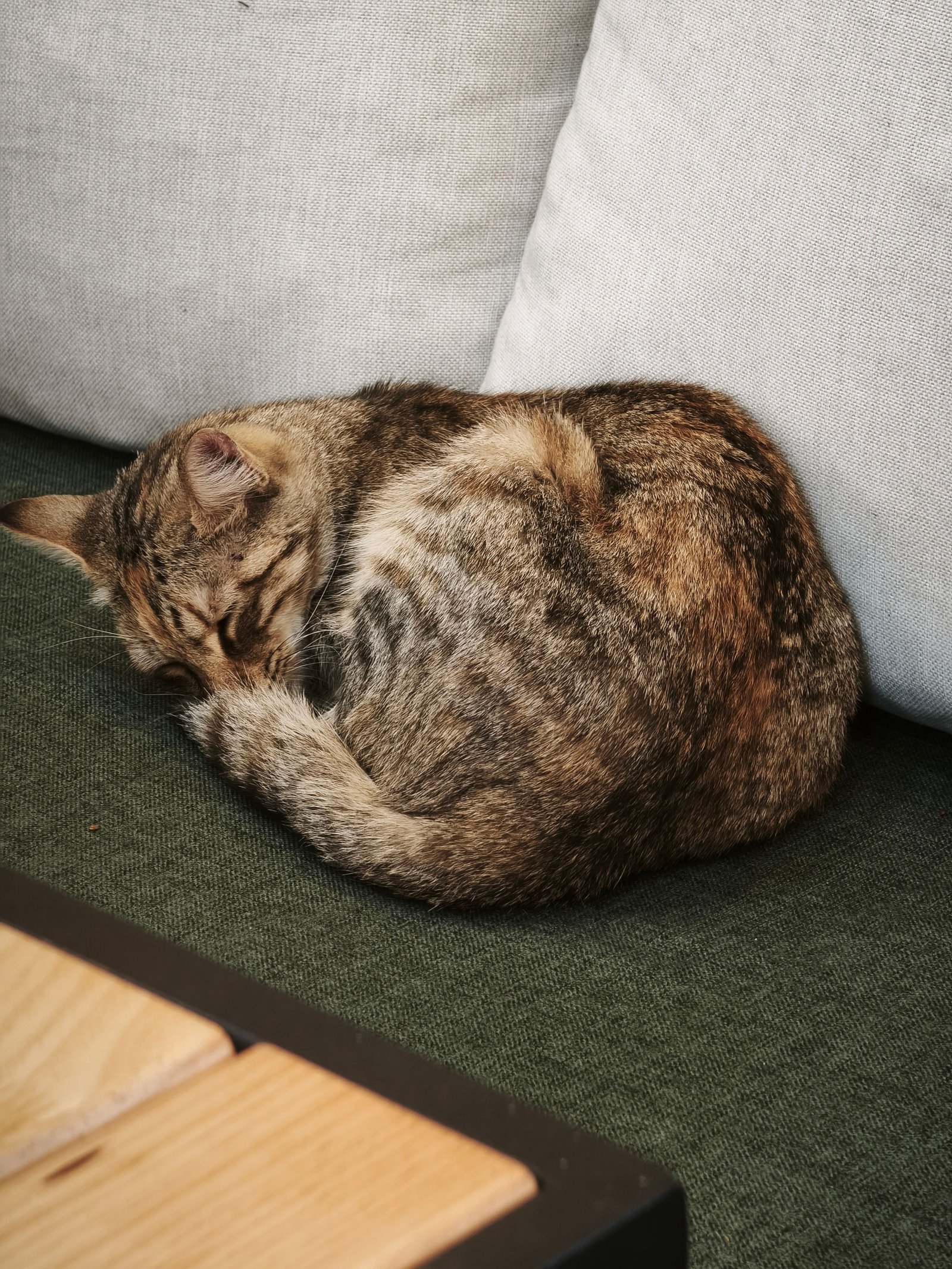
After a few good catches, or as soon as you see the early signs of overstimulation, stop. Put the wand away. Let the cat rest, drink, or settle on a sofa or a perch.
Many indoor cats do well with more than one short session in a day, rather than one long, frantic workout. Two or three brief bursts, with real rest in between, often leave everyone calmer than a single marathon that ends in a bite. The daily play-routine guide can help you place those sessions in a normal day. Enrichment around the rest of the day — climbing, looking out a window, simple foraging — lives in the enrichment guide, and it can take pressure off play time.
If you work typical hours, a play session before you leave and another when you return can help, but the toys you leave out are a different job. Use the guide on keeping an indoor cat busy while you are at work for that part of the day.
When you restart, start more quietly than the moment you stopped. A still-wired cat invited straight back into a fast chase is likely to bite sooner. Let them come to the toy, and end again while it is still going well. There is no honest timetable for when the grabbing will fade. You are repeating a pattern the cat can understand: toys are for biting, hands are not, and games have an ending.
If the cat is waking you at dawn or batting your feet in bed, that is a separate routine problem. Do not use this play-manners plan as a stand-in for how to stop a cat from waking you up at night.
When biting is a reason to get help
Everyday play manners are for nips and grabs that happen in the middle of a game, or when a toy-less cat ambushes a passing ankle.
Contact a veterinarian, and ask about a qualified behavior professional if needed, when:
- Bites break the skin, or play regularly ends in injury.
- A cat who used to play normally suddenly becomes aggressive.
- The cat bites when touched, picked up, or approached away from play.
- The biting comes with hiding, crying, limping, or a clear change in appetite or litter-box habits.
Pain, dental problems, and fear can all change how a cat uses their mouth. This guide cannot sort those out, and it is not a treatment plan. It is kinder to get help than to keep running the same play session around a cat who is hurting or afraid.
If someone in the home is injured, wash the wound and seek medical advice as you normally would for a bite.
A calm starting plan you can repeat
Use this as a first draft, then adjust to your cat:
- Play with a wand or another toy, not with fingers, toes, or dangling hands.
- Watch for a quicker tail, twitching skin, grabbing paws, or a harder stare, and end the session then.
- Let the cat catch, hold, and wrestle the toy, then start another short burst or stop.
- Take a real break. Put the toy away and let the cat settle before you restart.
- If an ankle grab happens in the hallway, redirect to a toy if you can, walk out of range, and do not slap or startle the cat.
- Restart later at a calmer pace, and keep sessions short enough that they still end well.
- If bites break the skin, the cat suddenly becomes aggressive, or the cat bites when touched away from play, contact a veterinarian or a qualified behavior professional.
A calm, repeatable play pattern matters more than a long, exciting game that ends in a nip. The aim is a toy the cat is allowed to catch, a session you can stop in time, and hands that stay out of the hunt — not a claim that the biting will vanish on a timetable.
FAQ
Why does my cat bite during play?
Often the game has gone on too long, the cat has no chance to catch the toy, or hands and ankles have become part of the fun. Excitement rises, and a nip or a grab is the next step in the hunt. Some cats are also more mouthy when they are young. That is not a reason to offer your fingers as a toy, and it is not, by itself, a diagnosis of aggression. Change the game first. If the biting is sudden, severe, or happens away from play, ask a veterinarian to help you sort play from pain or fear.
Should I say no, tap the cat’s nose, or slap them when they bite?
No. A slap, a tap on the nose, a shout, or a sudden startle can frighten the cat, make them defend themselves, or teach them that hands are unpredictable. Go still, end the session, and take the toy and your hands out of reach. The clearer lesson is that play stops when teeth meet skin, and that the toy is the thing they are allowed to bite.
How do I stop a cat from biting my ankles when I walk through the room?
Do not wriggle your feet or kick out. Keep a wand or another toy in the rooms you cross most, redirect to that toy if you can do so safely, and then either play a short proper session or walk out of range and close a door if you need a pause. Regular, planned play earlier in the day can reduce how much leftover energy lands on your ankles, but it is not a promise. The daily play-routine guide can help you make space for those sessions.
Is this the same as aggression?
Not usually, when the biting happens in the middle of play or as an ambush of a moving foot, and the cat can still settle afterward. Aggression, fear, and pain are different problems. A cat who suddenly becomes aggressive, who bites when touched away from play, or who seems unable to calm down needs more than a wand-toy plan. Contact a veterinarian or a qualified behavior professional rather than trying to train through it.
When should I contact a veterinarian or a behavior professional?
Contact a veterinarian if bites break the skin, if the cat’s play style changes suddenly, if the cat bites when touched or picked up away from play, or if you also notice hiding, limping, crying, or changes in eating or the litter box. Ask about a qualified behavior professional if the veterinarian has ruled out medical causes and the biting still looks like a behavior problem rather than ordinary overstimulation. This article cannot make that call for you.