

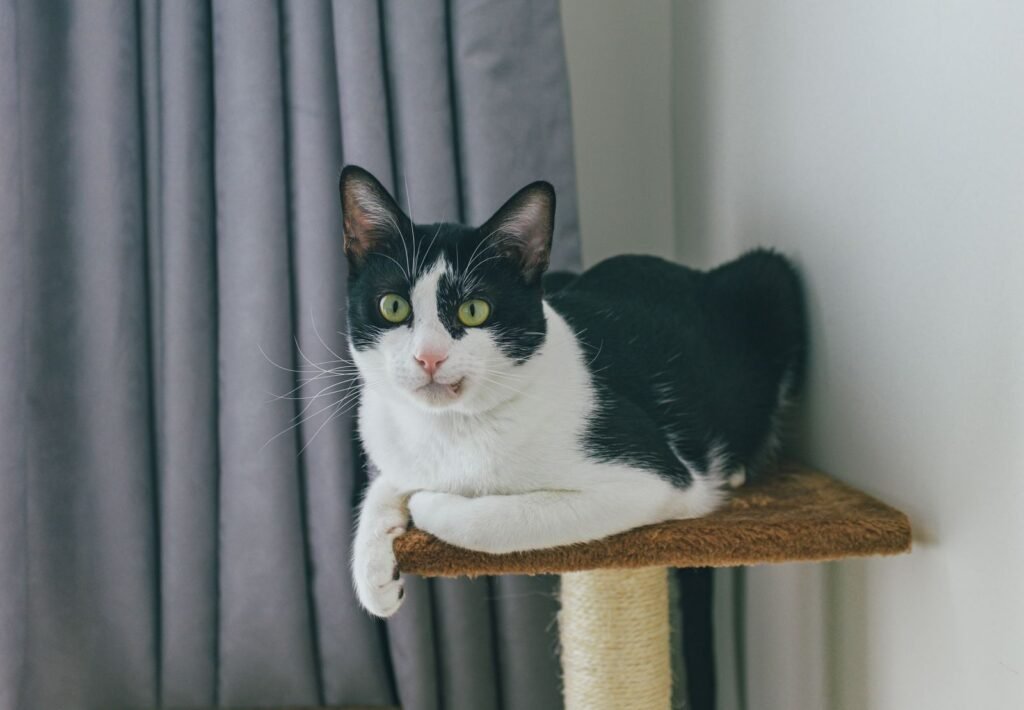
If you are looking up how to stop a cat from scratching furniture, you are probably staring at a frayed sofa arm and wondering whether your cat is angry with you. In most homes, the answer is simpler: scratching is normal. Cats scratch to stretch, to shed the outer layers of their claws, and to leave scent and visual marks. The sofa is not being punished. It is being used as the tallest, most stable, most convenient scratcher in the room.
The goal is not to stop scratching altogether. The goal is to move it onto surfaces you are happy to replace: sisal posts, cardboard scratchers, and the scratching parts of a cat tree. That takes setup, patience, and a short period of furniture protection—not yelling, and not a miracle spray.
This is general information for cat parents in the US and UK, not a veterinary diagnosis. A sudden change in scratching, hiding, appetite, or litter-box use deserves a veterinary check first. Pain and stress can look like “naughtiness.”
Scratching is a need, not a bad habit
A cat who scratches is doing several useful things at once. A full-body stretch down a vertical post keeps muscles and claws in working order. Pulling at a surface helps loosen worn claw sheaths. Paw pads leave scent, so scratching is also a way of marking home.
This is why punishment fails so reliably. If you clap, shout, or spray water, you may interrupt that one moment without removing the need. You may only teach the cat that scratching is risky when you are watching. Many cats then scratch in secret, or become wary of your hands.
Redirection works better. Make the legal surface easy, stable, and satisfying. Make the sofa temporarily less appealing. Reward the post. The new habit can stick because it still meets the original need.
Why the sofa looks like a perfectly good scratcher
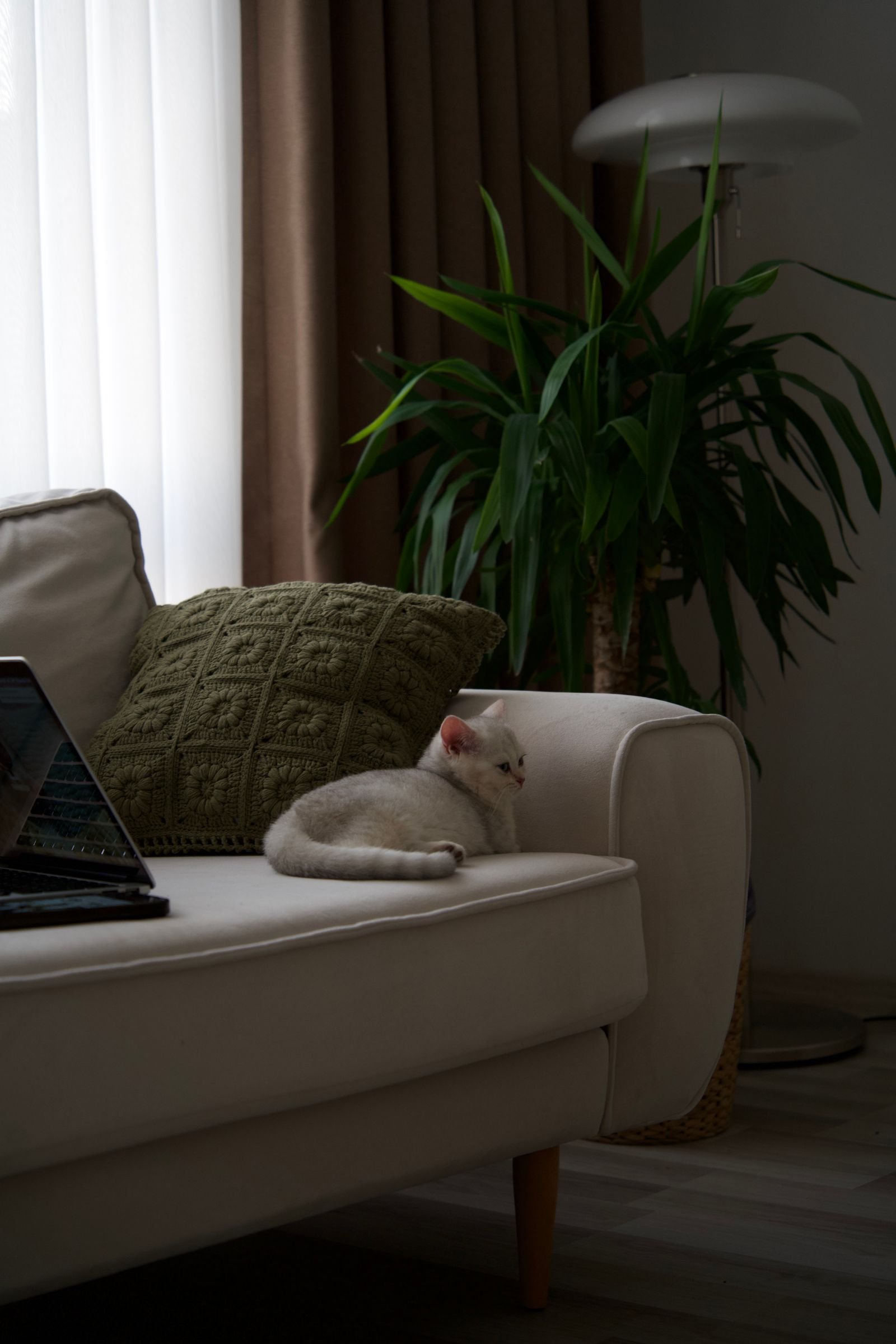
Cats scratch where life already happens: next to a sleeping place, beside a window perch, at the edge of a room they patrol, or on the first tall object they pass after a nap. A sofa arm is the right height, the fabric gives good resistance, and it does not wobble.
If your cat always chooses one corner of one chair, place a scratcher immediately beside that spot—not across the room or in a spare bedroom. A beautiful post in the wrong place will be ignored.
Texture matters too. Some cats prefer vertical sisal they can hook and pull. Others like a horizontal cardboard pad they can rake while lying down. If one style sits unused, try a different orientation before you decide your cat “will not use scratchers.”
In a small apartment, the sofa may be the only tall, sturdy object besides a wobbly pole. A post that tips when a cat leans into it teaches them to go back to the couch.
Redirect to scratchers your cat will actually use

You do not need a catalog of gadgets. You need one or two surfaces that match how your cat already scratches, placed where they already want to scratch.
A tall vertical post should let your cat stretch to full length without feeling flimsy. Sisal rope is a common, replaceable covering. A horizontal cardboard scratcher is inexpensive and simple to replace when shredded—which is success, not waste. Many households do well with both.
Cat trees combine scratching with perching, which helps in apartments where floor space is tight. If you are choosing one for a studio or narrow living room, see best cat trees for small apartments. A wobbly tower next to a solid sofa will lose.
Introduce a new scratcher with play, not a lecture. A wand toy that travels up the post can leave claws on the right surface. Catnip or silvervine helps some cats and does nothing for others. Reward voluntary use with calm praise or a small treat.
If you have more than one cat, one scratcher is often not enough. Two options in two locations prevent a standoff that ends on your armchair.
Placement matters more than buying another post
Move the scratcher to the furniture, not the other way around. Put it so close that your cat almost has to choose. After they use it consistently, you can ease it a short distance away—gradually. A sudden move back to “the nice corner” often restarts sofa scratching.
Good placement ideas include:
- Beside the scratched sofa arm or chair.
- Near a favorite nap spot, because many cats stretch and scratch as they wake.
- Along a hallway or room entrance they patrol.
- By a window perch, if that is part of their daily route.
Avoid unused spare rooms and busy walkways where the post will be kicked aside. A scratcher jammed against a litter box can make both areas less appealing. If you are already solving apartment toileting layout, cat litter box setup for apartments pairs well with this kind of room planning. Keep furniture protected while the new habit forms.
Protect the furniture while the new habit forms
Redirection works better when the sofa is temporarily less satisfying. You are interrupting a practiced loop, not decorating forever.
Simple options include a washable throw, a fitted cover, a scratch guard, or double-sided furniture tape made for this job. Some cats dislike a sticky strip or slippery cover and move to the nearby post. Others need both a cover and an excellent scratcher beside it.
If you try a deterrent spray, choose a product labeled as cat-safe and follow the directions. Do not experiment with essential oils, concentrated citrus mixes, or household cleaners on fabric your cat will later lie on. Many essential oils are unsafe around cats.
Foil or a loosely draped blanket can work as a short-term barrier for some cats and look like a game to others. If a method startles your cat, change tactics. The test is simple: more scratching on the legal surface, less on the sofa, and no new fear.
Once the post is winning, remove barriers one piece at a time. If threads start to disappear again, put the cover back and review placement.
Nail care basics—not a medical treatment
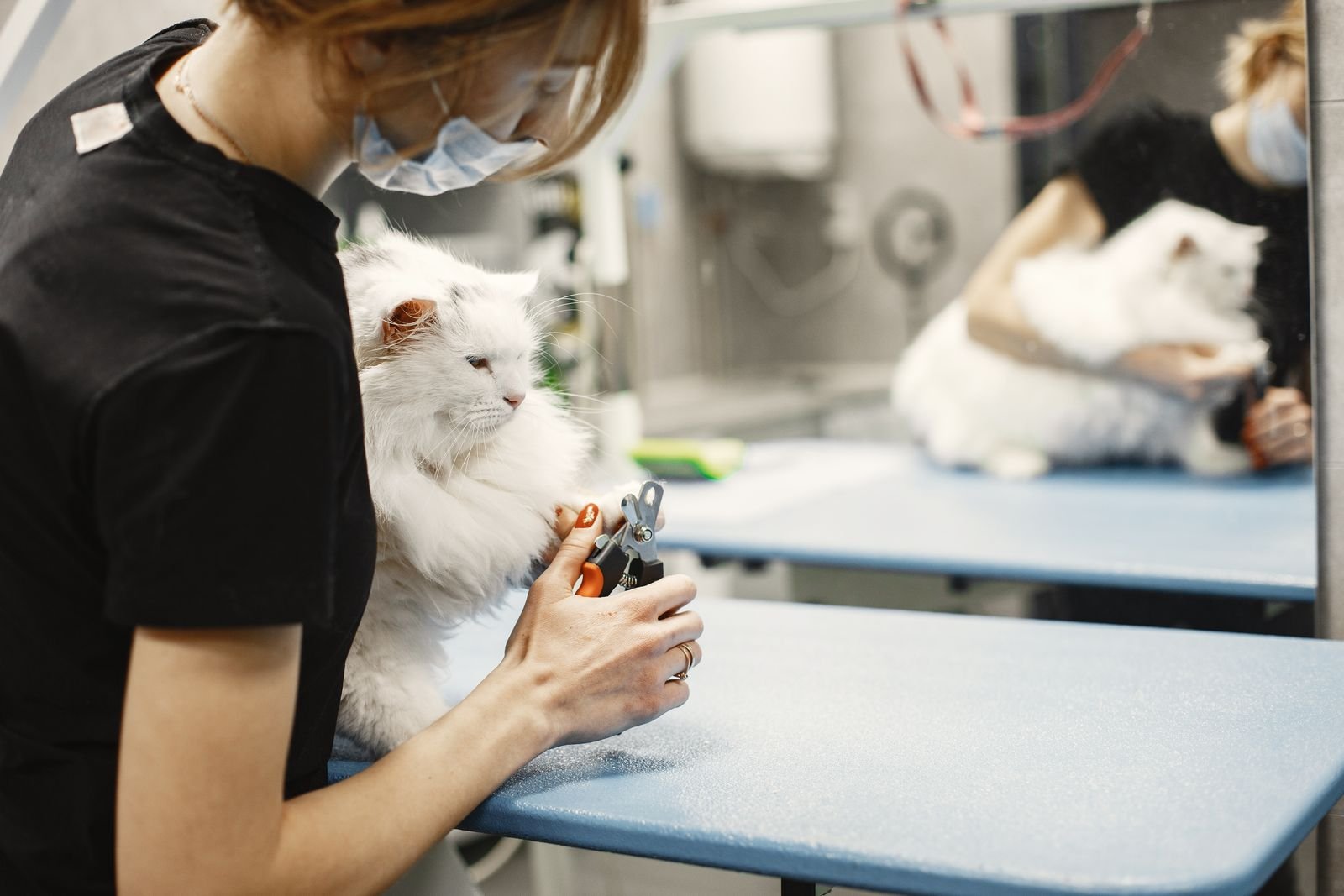
Trimming the sharp tips of your cat’s claws can reduce fabric damage. It does not remove the need to scratch, and it is not a medical treatment.
If you have never trimmed cat nails, ask a veterinarian or groomer to show you once. Cut only the clear, needle-like tip, well away from the pink quick that contains blood supply and nerves. Dark claws make the quick harder to see. Use clippers made for cats or small pets, work in good light, and stop if your cat is struggling.
Handle paws for a second or two on ordinary days; clip one or two nails when your cat is relaxed; pause for a treat; continue later if needed. You do not have to finish all four feet in one sitting. If you nick the quick, apply gentle pressure with a clean cloth and use a pet styptic powder if you have it, then leave the rest for another day.
Soft nail caps are an optional extra, not a substitute for scratchers. Apply them only as directed. If a cap bothers your cat, could be swallowed, or makes walking look uncomfortable, stop and speak with your veterinarian.
Do not file claws down aggressively, and do not ignore a claw that looks torn, swollen, or growing into the pad. Those need professional care.
What not to do
- Do not punish, shout, or spray your cat with water as your main strategy. It may stop the moment and increase stress without teaching an alternative.
- Do not force your cat’s paws onto a scratcher. That can create a lasting dislike of the post and of your hands.
- Do not declaw a cat to save a sofa. Declawing is surgery that removes the last bone of each toe, not a manicure. It is not a behavior solution, it is restricted or outside normal practice in the UK and in a growing number of places, and it deserves a serious conversation with a veterinarian if anyone has suggested it.
- Do not use sticky traps, glue, or anything that could catch a paw or tongue.
- Do not rely on a single unused post in the spare room. If the scratcher is inconvenient, the sofa will remain convenient.
If you feel angry at the furniture, step away and reset the environment. The cat is practicing a normal behavior in the wrong place.
Apartment notes, extras, and when to call the vet

In a studio or one-bedroom, put a post where your cat already lives. Use vertical space—a stable tree, a wall-mounted scratcher, or a post that doubles as a perch—and keep walkways clear enough that the scratcher is not constantly kicked aside.
A cat with nothing to hunt, climb, or watch may put extra energy into marking the sofa. Short play sessions that end with a catch, a window view, and well-placed perches all support the furniture plan. For broader ideas, see indoor cat enrichment ideas.
Give the setup a couple of weeks before you decide it has failed. Replace shredded cardboard. Tighten a leaning post. If one cat blocks another from the tree, add a second option.
See your veterinarian if scratching appears suddenly, becomes frantic, or if your cat limps, hides, vocalizes when jumping, overgrooms, or stops using the litter box. Pain and stress can change how a cat scratches. A behavior plan should not paper over a medical problem.
A calm plan you can follow this week
You do not have to overhaul the apartment in an afternoon:
- Notice which furniture is being used, and whether the motion is vertical or horizontal.
- Put a matching scratcher directly beside that spot, and make sure it does not wobble.
- Cover or guard the damaged area.
- Invite your cat to the new surface with play, and reward use.
- Keep nails trimmed only at the tips, if your cat will allow calm handling or a professional trim.
- Add a second scratcher if you have more than one cat, or if another room is being targeted.
- After the post is preferred, move it only in small steps if needed, and keep watching the sofa.
Give your cat a legal place that feels as good as the sofa, protect the furniture while they learn it, skip the scolding, and ask your veterinarian for help if the behavior changes suddenly or your cat seems sore.
FAQ
Will my cat ever stop scratching completely?
They should not, and you should not aim for that. Scratching is how cats stretch, maintain their claws, and mark familiar places. The realistic goal is to move the behavior onto posts, pads, or a cat tree. If a cat truly stops scratching everywhere, including surfaces they used to enjoy, mention that change at a veterinary visit, because a drop in normal behavior can matter as much as an increase.
What if my cat ignores every scratching post I buy?
The post may be the wrong height, the wrong texture, too wobbly, or in the wrong place. Try a tall sisal post right beside the furniture they already scratch, and add a horizontal cardboard scratcher as a second option. Use a wand toy on the post and reward any voluntary use. Avoid forcing your cat’s paws onto the surface. If several well-placed options still fail and scratching has changed suddenly, ask your veterinarian whether pain or stress could be involved.
Is it okay to cover the sofa while I retrain my cat?
Yes. A throw, a fitted cover, or a scratch guard is a practical way to stop the old habit from repeating while a better surface becomes familiar. This is a temporary training aid, not a confession that you have “given up” your living room. Once the scratcher is clearly preferred, remove barriers gradually and put them back if the sofa starts to lose again.
Does trimming my cat’s nails stop furniture scratching?
Trimming the sharp tips can reduce how much damage a scratch leaves, but it does not remove the urge to scratch. Keep trims conservative, avoid the quick, and ask a veterinarian or groomer to demonstrate if you are unsure. Nail care is ordinary grooming, not a medical treatment and not a substitute for good scratchers.
Should I punish my cat or use a spray bottle when they scratch the couch?
That approach is more likely to create fear than a new habit. Your cat may wait until you leave the room and then scratch the same spot. Redirect to a nearby scratcher, protect the furniture, and reward the surface you want. If you feel stuck or the scratching is accompanied by other behavior changes, a veterinarian can help you rule out pain and, if needed, refer you to a qualified behavior professional.
[…] Counter-surfing is about height, food, and a view. If claws on furniture are the bigger issue, use how to stop a cat from scratching furniture as its own […]
[…] body out of the game, and let the toy be the thing that gets caught. This is not a substitute for how to stop a cat from scratching furniture or for reading signs your cat is stressed. Scratching posts, hiding, and tense body language belong […]