AdvertisementReserved · below header

Category Cat Guides

How to Introduce a Cat and a Dog in a Small Apartment

A black-and-white photograph of a black and white cat and a small dog resting together on a pet bed by a window

How to introduce a cat and a dog in a small apartment is less about one supervised “meeting” and more about a slow, scent-first plan that fits a tight floor plan. Without a spare wing of the house, both animals share the same short hallway, the same living room, and often the same evening routine. This guide helps US and UK cat and dog parents set up separate rooms, swap scent before any face-to-face look, use visual barriers, and keep early meetings short and supervised. You will also see how this differs from introducing a new cat to a home or to another cat. The advice is general and practical, not a promise that they will become friends and not a veterinary behavior-treatment plan. If either animal is fearful, injured, or aggressive, contact a veterinarian or a qualified professional.


How to Cat-Proof a Small Apartment (A Room-by-Room Plan)

A cozy living room scene with a cat asleep on a chair beside a bookshelf

How to cat proof an apartment is less about finding one “dangerous” room and more about a room-by-room pass you can actually keep in a rental. In a small home, cords, houseplants, cleaners, strings, trash, and openable windows share the same few square feet your cat already treats as a climbing frame. This guide helps US and UK cat parents walk the living room, kitchen, bathroom, laundry, and openings, then use renter-friendly fixes rather than a fortress. You will also see where window and balcony safety, and door-dashing, need their own plans, because those are single hazards; this is the whole home. The advice is general and practical, not a veterinary toxicology article and not a guarantee. If your cat chews or swallows something risky, contact a veterinarian or a pet poison helpline; do not guess a dose or try a home remedy.

How to Keep an Indoor Cat Safe Around Windows and Balconies

Graceful black and white cat sitting on a windowsill looking outside

How to keep an indoor cat safe around windows and balconies is less about blocking every view and more about treating each opening as a plan you can actually keep in a rental. In a flat, the glass is often the best “outside” a cat gets, and it is also where a weak insect screen, a sliding door left ajar, or an unsecured balcony can become a fall or an escape. This guide helps US and UK cat parents in apartments and small homes think through screens, sliding doors, plant ledges, supervision, and what not to rig without permission. You will learn how to offer a stable place to watch, when a balcony is only for shared visits, and how a well-placed perch supports safety without becoming a buying guide. The advice is general and practical, not a scare story and not a guarantee. Never leave a cat unattended on an unsecured balcony.

How to Stop a Cat from Door Dashing (Apartment Safety)

Fluffy ginger cat sitting by a glass door, looking outside with a pensive expression

Stopping a cat from door dashing in an apartment is less about a scolding at the threshold and more about making the exit predictable, managed, and less of a hunt. This guide helps US and UK cat parents in flats and small homes set up hallway and elevator safety with barriers, a leash or carrier by the door when needed, and a calm exit routine you can repeat when groceries or guests arrive. You will learn why doorways are so interesting, how to keep the landing clear, and how enrichment and a slower introduction plan can reduce the urge to bolt. The advice is management-first and practical, not a punishment protocol and not a promise that a curious cat will never test a gap again. It is general information, not a veterinary diagnosis. If your cat’s behavior changes suddenly, or they seem unwell, contact a veterinarian.

How to Keep a Cat Off Kitchen Counters (Without Stress)

Cute tabby cat lying on a kitchen counter in a relaxed, playful pose

Keeping a cat off kitchen counters is less about winning a standoff and more about changing what the counter offers—and giving your cat a better high place. This guide helps US and UK cat parents in apartments and small homes use environmental management, not punishment, so the worktop is less rewarding and a tree, shelf, or window perch is the obvious choice. You will learn why counters appeal, how to make food and attention less available up there, and how to build a rhythm of play and meals that reduces “kitchen hunting.” It also covers what not to do, including sprays and startle tactics that often trade a problem for stress, and when counter-surfing is a flag to check health or stress at home. The advice is general and practical, not a training guarantee or a veterinary diagnosis. If your cat’s habits change suddenly, or they seem unwell, contact a veterinarian.

How to Stop a Cat from Waking You Up at Night

A tabby cat lying on a bed in a cozy nighttime indoor setting

A cat who wakes you at night is often following a schedule you accidentally taught, not running a personal campaign against sleep. This guide helps US and UK cat parents in flats and small homes change early-morning meows, pounces, and breakfast demands without yelling or giving in at 5 a.m. You will learn why many cats are naturally more active at dawn, how daytime play and a late-evening wind-down matter more than a new gadget, and how to stop rewarding the 5 a.m. wake-up. The advice is general and practical rather than a training guarantee or a veterinary diagnosis. If the night waking is sudden, intense, or paired with other changes in appetite, litter box use, or comfort, contact your veterinarian.

How to Introduce a New Cat to Your Home (A Slow, Low-Stress Plan)

Two cats relaxing among furniture and houseplants in a cozy living room

How to introduce a new cat to your home is less about a grand unveiling and more about giving the newcomer a quiet base camp, enough hiding places, and a pace that your resident pets can actually handle. This guide helps US and UK cat parents in houses and apartments set up the first room, run a slow scent-and-sight introduction, and open the rest of the home without forcing a meet-and-greet on day one. You will learn what early progress really looks like, how to handle hissing without panicking, and when to pause or call your veterinarian. The advice is general and practical rather than a behavior guarantee or a medical diagnosis. If a cat stops eating, hides without using the litter box, or fights to the point of injury, contact your veterinarian.

Best Cat Litter for Apartments: Low Odor Without the Guesswork

Close-up of a fluffy domestic cat sitting on a tiled floor indoors looking upward

The best cat litter for apartments is the one that controls odor, limits tracking down a shared hallway, and still feels acceptable to your cat—not a single miracle bag with a perfect score. This guide helps US and UK cat parents in flats and small homes compare clumping clay, plant-based, silica crystal, and pellet litters without treating any type as universally superior. You will learn how dust, weight, scooping habits, and box placement change what you smell more than a slogan on the package, how to switch litter without a boycott, and when a “bad litter” problem is actually a box, a cleaning routine, or a health issue. The advice is practical rather than alarmist, with no fake review rankings. It is not a veterinary diagnosis. If your cat suddenly avoids the box, strains, or produces unusual urine or stool, contact your veterinarian.

How to Stop a Cat from Scratching Furniture (Without Stress)

Black and white cat lying comfortably on a scratching post indoors

How to stop a cat from scratching furniture starts with understanding why cats scratch, then giving them a better place to do it. This guide helps US and UK cat parents, including those in apartments and small homes, redirect scratching to posts, pads, and cat trees without punishment or panic. You will learn why the sofa looks like a scratcher, where to place new surfaces so they actually get used, how to protect furniture while a habit changes, and what basic nail care can reasonably do. It also covers what not to do—from scolding to risky home remedies—and a simple weekly setup plan you can follow in a small home. The advice is practical rather than alarmist, and it is not a veterinary diagnosis or a behavior guarantee. If scratching starts suddenly, your cat seems painful, or they stop using the litter box, contact your veterinarian.

Indoor Cat Enrichment Ideas: Practical Ways to Give Your Cat a Fuller Day

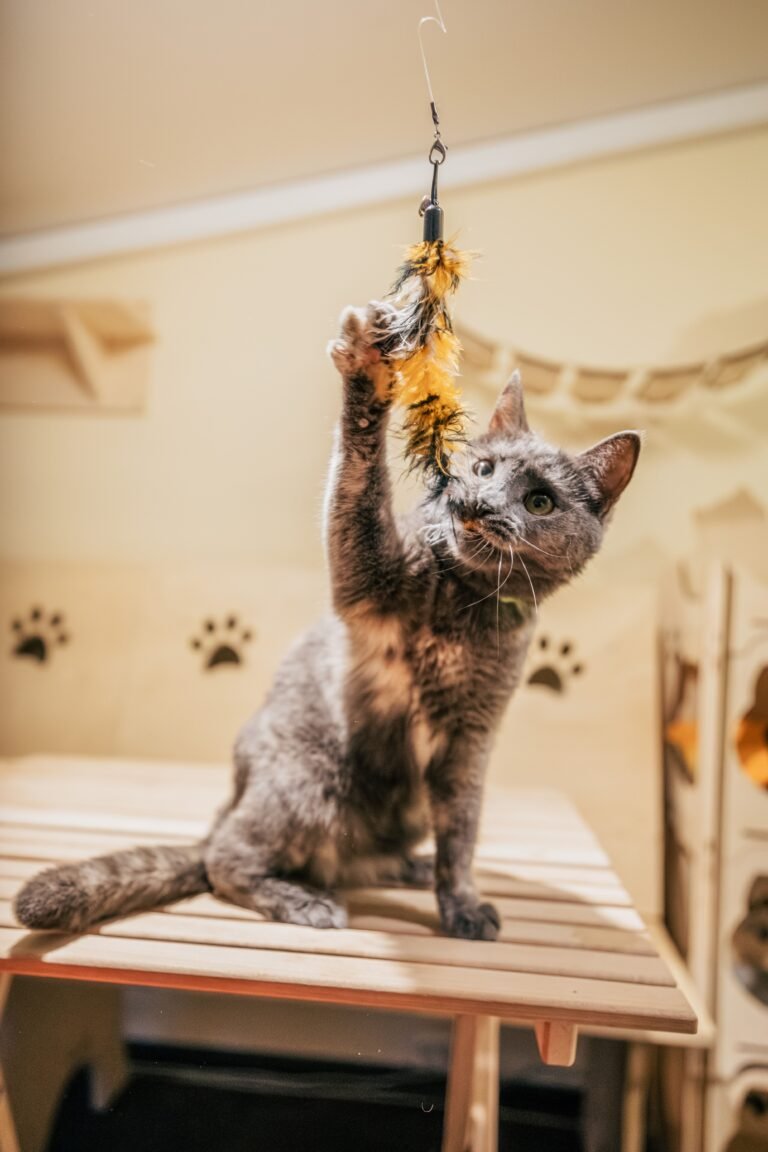
Gray cat playing with a feather toy on a wooden platform indoors

Indoor cat enrichment ideas do not require a catalog of gadgets. They are simple ways to let an indoor cat hunt, climb, scratch, watch, rest, and explore in a home that is already safe. This guide shows US and UK cat parents how to build a fuller day with vertical space, window perches, scratching posts, short hunting-style play sessions, food puzzles, and hiding spots such as cardboard boxes. You will find a realistic daily rhythm that follows a cat’s hunt-eat-groom-sleep cycle, notes for apartments and multi-cat homes, and safety reminders that stay practical rather than alarming. It also explains how feeding style and a secure litter setup support enrichment, because a cat who cannot toilet in peace—or who finishes every meal in seconds—has less of a day to enjoy. This is general information, not a veterinary diagnosis. If your cat suddenly hides, stops playing, or becomes aggressive, contact your veterinarian.