

If you are looking for the best indoor dog potty for apartments, you are probably not hoping for a podium of winning models. You are trying to decide whether a pad, a grass tray, or a balcony setup will help in a real flat — or quietly teach the dog that the living-room floor is close enough.
A useful mindset is this: an indoor potty is a backup, or a tool for a specific living situation. It is not a substitute for walks, and it is not a housetraining plan on its own. In a high-rise, with a very young puppy, in weather you cannot safely go out in, or during a short-term recovery, it can be a practical help. Used all day in a home where outdoor toileting is still the goal, it can blur the lesson.
This is general information for dog parents in the US and the UK, not a ranked review and not a veterinary diagnosis. It does not invent prices, test scores, or a “winner.” If you are choosing an indoor option because a dog is recovering from illness or surgery, treat that as a use-case only; the medical recovery plan belongs with the veterinarian. Check your lease before you put grass or trays on a balcony.
When an indoor potty is actually useful — and when it is not
The schedule and the outdoor habit live in puppy potty training in an apartment. How often a dog should get out, and how to separate a toilet trip from a longer walk, belongs in how often you should walk your dog. This article does not rewrite those. It asks a narrower buying question: when is an indoor toilet worth having, and what should you look for if you need one?
It is most useful when access to a legal outdoor toilet is slow, limited, or occasionally unsafe. A high-rise with a slow lift can turn a two-minute need into a five-minute journey, and a very young puppy may not wait through that journey every time. Bad weather does not cancel a toilet trip, but ice or a storm can make one outing harder; how to walk a dog in cold weather in the city covers the walk itself. An indoor option can be the backup for those hours, not the replacement for the week.
A short-term recovery is another fair use-case: a dog who has been told, by a veterinarian, to limit stairs or outdoor time for a defined stretch. The potty is then a temporary tool, not a confinement protocol, and not a reason to invent your own recovery timetable.
It is less useful when the dog is already learning that toilets belong outside, and a pad in the middle of the rug becomes a second, competing answer. Mixed messages — pad sometimes, balcony sometimes, pavement sometimes — are what slow everyone down. An indoor potty is also not a way to leave a dog all day without a walk. If you are planning time out of the flat, use how to leave a dog home alone in an apartment rather than hoping a tray will do the job.

Be honest about your long-term goal before you buy. If outdoor toileting is the aim, choose the smallest indoor setup you can keep clean, put it in one place, and reward the outdoor trips more clearly than the indoor ones. If you have decided on a long-term indoor system, consistency matters more than the name on the box.
Pads versus a tray with real or artificial grass

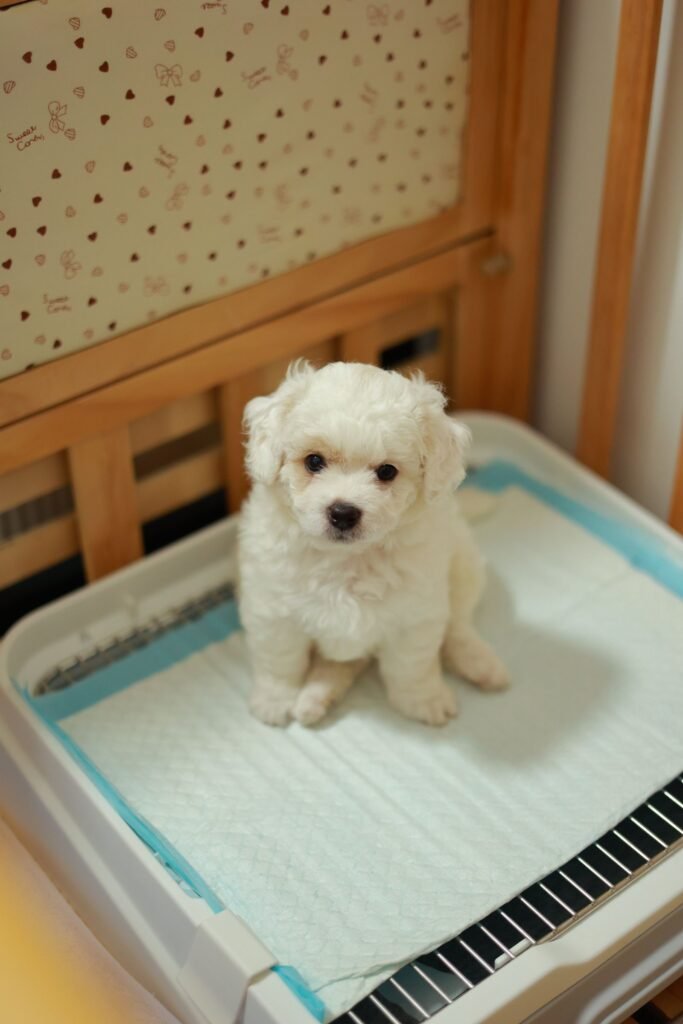
Most indoor options fall into a few practical types. Disposable pads are the simplest: a pad on a waterproof layer, sometimes held in a shallow tray. They are easy to start with. The trade-offs are familiar in a small home. A pad that is not changed soon enough smells. A thin pad can wrinkle, leak, or be shredded by a puppy. If pads live wherever the last accident happened, some dogs treat any fabric as near enough.
A tray with real grass aims to feel more like an outdoor toilet. For some dogs already used to lawn, that helps. It also asks more of you in an apartment: a way to contain runoff, and a plan for replacing or rinsing the turf. Real grass that stays wet in a warm room will not stay fresh on its own. If you cannot commit to that cleaning rhythm, it is a poor fit, however “natural” it sounds.
Artificial grass in a tray is the middle path many flat-dwellers consider. It can be rinsed, and it does not need to be replaced as often as a living patch. It still needs a washable, leak-proof base and regular cleaning. If urine sits in the fibers or in a tray you never empty, the smell will settle into the room. A pretty green surface is not the same thing as a system you can actually wash.
None of these types is “the best” in the abstract. The useful questions are smaller. Can the dog tell this is the toilet, and not the bath mat or the rug? Can you change or wash it on the days you actually have? In a studio, measure the corner you can spare. A tray that blocks a door swing or sits next to a food bowl is harder to live with than a slightly smaller one the dog will still use. Buy the one you can keep clean, on the floor you have.
Balcony setups that stay lease- and neighbor-safe

A balcony can look like an obvious toilet, especially in a high-rise where the lift is the main delay. It is also the place where leases, neighbors, and safety show up quickly.
Read the lease, the building rules, and any balcony or pet clause before you put grass, a tray, or a potty stand outside. Some buildings forbid turf or toileting on balconies; some allow plants but not pet waste. “Nobody has complained yet” is not the same as permission. If the rules are unclear, ask in writing rather than discovering the answer after a complaint.
Neighbor-safety is practical, not polite extra credit. Waste, rinse water, and drips can travel through railings or drain holes onto a balcony or window below. A tray needs a solid, waterproof base that does not overflow in rain. Pick up feces promptly, and do not hose waste off the edge.
Safety for the dog comes first. A balcony used as a toilet still needs secure railings, no climbable furniture under the rail, and a door habit that does not leave the dog unsupervised. A potty on the balcony is not a reason to leave a dog out there while you go to work. If the balcony is not safely contained, keep the indoor potty inside.
Weight and waterproofing matter on rental structures too. A heavy grass box plus soaked substrate is a lot to set on older decking, and a tray that puddles at the door threshold can stain a rental floor. If you cannot keep the setup contained, it does not belong on the balcony, even if the lease allows it.
Odor, washability, and a waterproof layer that protects rental floors

In a small apartment, smell is usually the first thing that fails, and the floor is the thing you can least afford to damage. Plan the layers: a waterproof barrier on the floor, the pad or tray on top, and a way to wash or replace the part the dog actually stands on.
The waterproof layer is not optional on wood, laminate, vinyl, or anyone else’s carpet. A single leaky pad can leave a mark you will pay for at move-out. Choose a layer that is impermeable, large enough to catch overshoots, and easy to wipe. A decorative bath mat is the wrong tool; it can hide a leak and hold odor.
Washability decides whether you will keep using the system. Removable grates, rinseable turf, and a tray that fits in your sink or shower are more useful than a shape you cannot clean. Change disposable pads as soon as they are used. Clean the tray with an enzymatic cleaner meant for pet urine, and dry it before the next use. Ordinary perfume spray can hide the smell from you and still leave a scent the dog reads as a toilet.
Place the potty in one easy-to-clean spot, away from the food and water bowls, and not in the middle of the only walkway. A bathroom corner, a tiled entry, or a section of vinyl is easier to live with than a pad on a pale rug.
Ventilation helps, but it will not rescue a tray you do not empty. Take used pads out promptly, and do not store soiled turf on the balcony “until the weekend.” If odor is already a problem, look at cleaning frequency before you look at a different product.
How to use one without undermining an outdoor habit
If your long-term plan is outdoor toileting, the indoor option has to stay in its lane. Put it in one place. Take the dog there after waking, after meals, and when you cannot get outside quickly enough. Reward outdoor toilets more clearly than indoor ones, if outside is still the goal. When the dog is succeeding outdoors, shrink the indoor habit rather than leaving a permanent second toilet in the room.
Do not turn the potty into the whole day. The dog still needs walks and time outside when those are possible. An indoor toilet can cover a gap; it cannot replace the job described in the walking and housetraining guides. If bad weather is the reason you bought one, keep the shorter, safer outdoor trip when you can, and use the indoor option when the street is a poor idea.
If you have decided that an indoor system is the long-term toilet, because of the building or the dog’s circumstances, be consistent: one setup, one location, and a cleaning rhythm you can keep.
Watch for signs that the tool is not working: the dog pees beside the pad, avoids the tray, or starts using rugs again after a stretch of success. Sometimes the tray is slippery or too small. Sometimes the gap between opportunities is still too long. And sometimes a sudden change in toileting is medical, which belongs with a veterinarian, not with a different pad.
What this purchase will not do
An indoor potty will not housetrain a puppy by itself, tire a dog out, or make a full workday alone a kind plan. It will not protect a rental floor unless you add a waterproof layer and clean leaks promptly. It will not make a balcony legal or safe if the lease forbids it or the railings are not secure.
It is a tool for a specific problem: a slow exit, a young bladder, bad weather, or a short-term recovery your veterinarian has already defined. Used that way, it can make apartment life more livable. Used as a substitute for walks, it usually creates a second toilet you did not mean to teach.
FAQ
What is the best indoor dog potty for apartments?
There is no honest single winner. The best indoor dog potty for apartments is the one that fits your space, that you can wash or change on real days, and that sits on a waterproof layer your rental floor can survive. Pads are simple to start with. A tray with real or artificial grass can work if you will actually clean it. A balcony setup only belongs in the picture if the lease allows it and neighbors below are protected. Choose for your building and your cleaning habits, not for a ranked list.
Will an indoor potty replace walks or housetraining?
No. An indoor potty is a backup or a specific living-situation tool, not a substitute for walks and not a housetraining plan on its own. Keep the outdoor schedule you are trying to teach, and use the walking and puppy potty-training guides for that work. If you cannot get outside for a stretch, the indoor option can cover the gap. It should not become the only toilet by default.
Can I put a grass tray on my balcony?
Only if the lease and building rules allow it, the balcony is safe for the dog, and you can keep waste and rinse water from traveling to anyone below. Check before you buy. Use a waterproof, leak-proof base, pick up feces promptly, and do not hose waste off the edge. A balcony potty is also not a reason to leave a dog unsupervised outdoors.
How do I keep odor down with pads or a grass tray?
Change used pads promptly, empty and rinse trays, and clean with an enzymatic cleaner meant for pet urine. Give the setup a waterproof layer so leaks do not soak into a rental floor, where odor lingers. Wash or replace turf before it stays wet in a warm room. Perfume spray is not a cleaning plan. If the smell is already in the room, look at how often you are cleaning before you look at a new product.
Is an indoor potty all right during a short-term recovery?
It can be a reasonable use-case when a veterinarian has asked you to limit stairs or outdoor time for a defined period. The potty is then a temporary tool. It is not a medical recovery plan, and it is not a confinement protocol. Ask the veterinarian how long the indoor toilet should be used, and do not invent your own downtime timetable from a buying guide.