
Your dog slips out the gate. Your heart stops. You call their name into the empty backyard, then the street, then the neighborhood. Every minute feels like an hour.
This scenario happens to thousands of pet owners every year. While microchips help identify found dogs, they don’t help you find your dog in the first place.
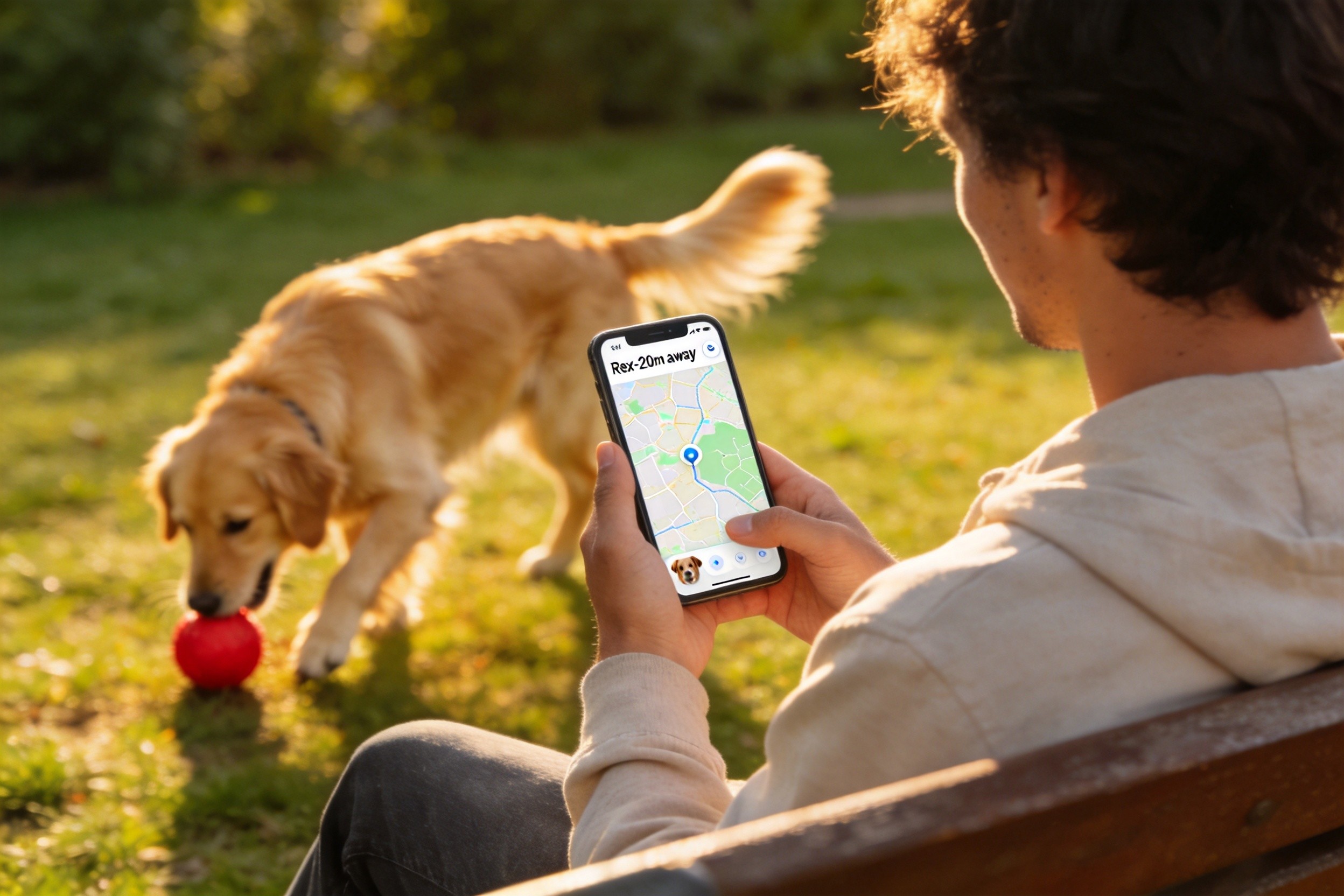
GPS dog trackers do. They let you see your dog’s location in real-time, set safe zones, and get alerts the moment your furry escape artist leaves your yard.
But not all GPS trackers are created equal. Some need expensive subscriptions. Others drain battery in hours. And some simply don’t work well in rural areas or thick forests.
This guide helps you find the right GPS tracker for your situation.
How Dog GPS Trackers Work
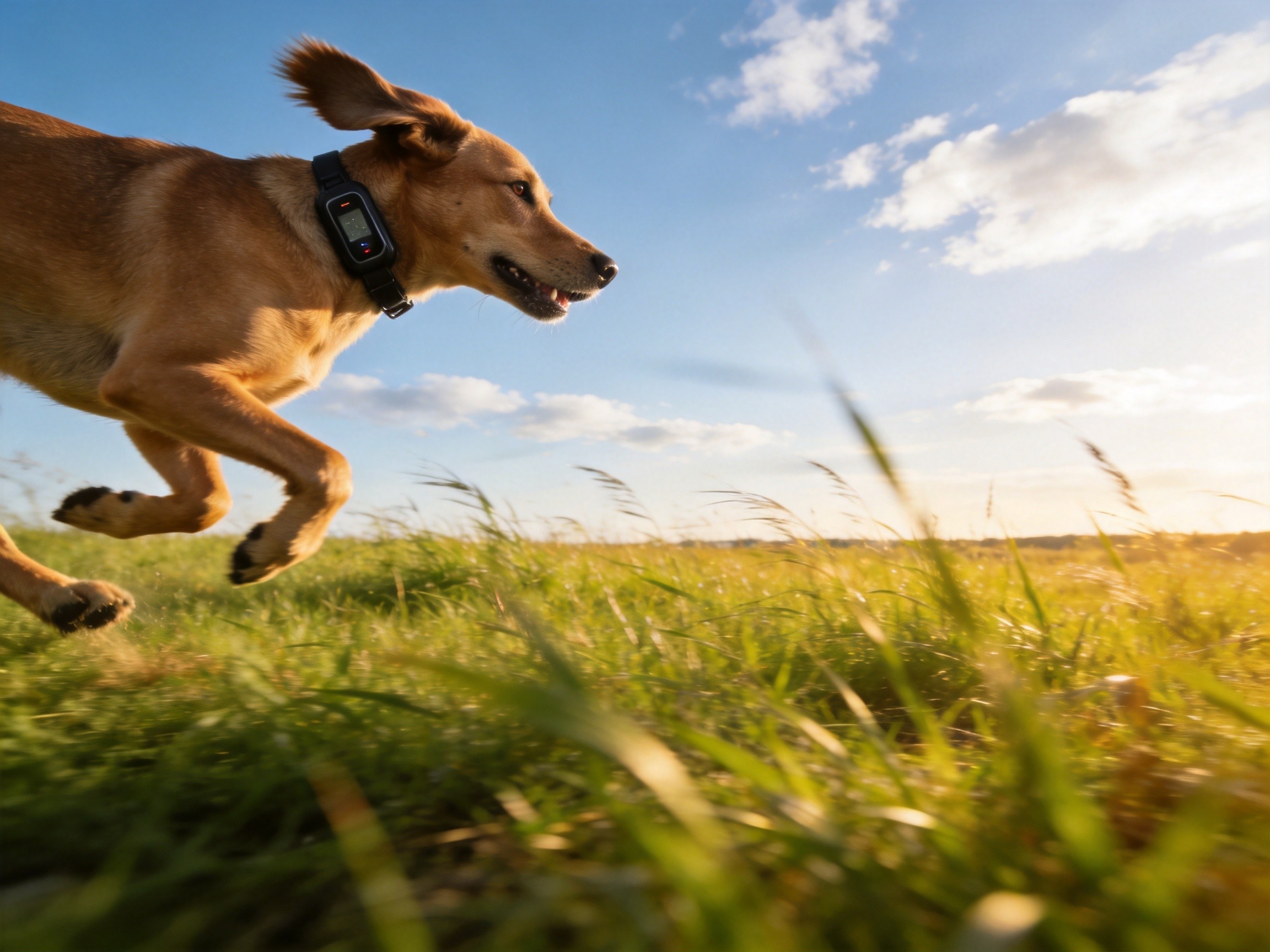
GPS (Global Positioning System) uses satellites to determine location. Your phone or dedicated device receives signals from multiple satellites and calculates your dog’s position.
Key terms to know:
- Real-time tracking: Updates location constantly, like Google Maps
- Refresh rate: How often the tracker updates (every few seconds vs. every few minutes)
- Geofencing: Virtual boundaries you set; alerts when crossed
- Cellular connectivity: Most trackers use cellular networks (like AT&T or Verizon)
- Subscription: Monthly/annual fees for cellular service
Do All GPS Trackers Require Subscriptions?
Almost all quality GPS trackers require monthly subscriptions because they use cellular networks. However, costs range from $7/month to $25/month.
The main exception: Airtags and similar Bluetooth trackers work without subscription but have severe limitations (more on this below).
What to Look for in a Dog GPS Tracker
Battery Life
This matters more than most people think. A tracker that dies in 8 hours is useless overnight or during long adventures.
- Premium models: 20+ hours
- Standard models: 8-16 hours
- Budget models: 4-8 hours
Range and Coverage
Cellular GPS works anywhere there’s cell service. However, coverage varies by carrier and location. Some areas have dead zones.
If you spend time in remote areas, look for:
- Satellite communication (like Garmin)
- Extended coverage networks
Water Resistance
Dogs play hard. Your tracker needs to handle rain, puddles, and maybe the occasional full submersion.
- Water-resistant: Survives splashes
- Waterproof: Handles rain and puddles
- Submersible: Survives swimming
Size and Weight
Too heavy and your dog will hate wearing it. Most trackers work best for dogs 15+ pounds.
Subscription Costs
Factor this into your decision. A $50 tracker with $25/month subscription costs more over two years than a $150 tracker with $7/month subscription.
Best Dog GPS Trackers 2026
1. Best Overall: Whistle Go Explore
Best for: Most dog owners wanting reliable everyday tracking
The Whistle Go Explore hits the sweet spot of features, battery life, and price. It’s been refined over multiple generations and consistently performs well.
Key Features:
- Real-time GPS tracking
- Activity monitoring (steps, rest, scratching)
- Geofencing with customizable zones
- 20-hour battery life
- Waterproof design
- Lightweight (1.4 oz for small/medium, 2.1 oz for large)
- Health alerts (changes in activity can indicate issues)
Pros:
- Excellent track record of reliability
- Good battery life for all-day use
- Helpful activity and health insights
- Works nationwide with AT&T/T-Mobile networks
- Easy-to-use app (iOS and Android)
- Monthly subscription reasonable ($10-13/month)
Cons:
- Some latency in updates (every 15-60 seconds)
- Requires subscription (no free option)
- Bulky on very small dogs
- Slightly slower refresh than premium competitors
2. Best Premium: Garmin Astro 430/K 5 Collar System
Best for: Serious outdoorsmen and dog hunters
Garmin makes professional-grade tracking equipment. The Astro 430 system offers unmatched range and reliability for outdoor adventures.
Key Features:
- Up to 9-mile range (line of sight)
- Real-time tracking with 2.5-second update rate
- Preloaded TOPO maps
- Compatible with multiple collars
- Hunt metrics and dog trail
- Two devices in one: handheld + collar unit
Pros:
- Incredible range without cellular service
- Works in areas with no cell coverage
- Professional-grade accuracy
- Extremely durable construction
- No subscription fees
- Multiple dog tracking (up to 20 dogs)
Cons:
- Very expensive ($400-500+)
- Requires carrying a separate handheld unit
- Complex setup
- Bulkier than cellular options
- Technology feels dated compared to smart trackers
3. Best Value: Tractive GPS Dog LTE
Best for: Budget-conscious owners who still want solid features
Tractive offers many premium features at a lower price point. The subscription is one of the cheapest available.
Key Features:
- Real-time tracking (unlimited distance)
- Virtual fence creation
- Location history (up to 365 days)
- Waterproof design
- Lightweight (under 1 oz)
- Battery life up to 5 days
- LIVE tracking mode
Pros:
- Very affordable subscription ($6-9/month)
- Lightest tracker on the market
- Good battery life
- Works in over 150 countries
- Small enough for small dogs
- No cell network restrictions
Cons:
- Some coverage gaps in rural areas
- Update frequency lower than premium options
- App can be slow at times
- Build quality slightly less durable
- Occasional connectivity drops reported
4. Best for Multi-Dog Households: Fi Series 3 Smart Dog Collar
Best for: Dog owners with multiple dogs or those wanting Apple Find My integration
The Fi Series 3 is stylish, functional, and integrates with Apple devices. It’s also one of the few trackers with built-in social features.
Key Features:
- Real-time GPS tracking
- Apple Find My network compatibility
- Activity tracking and goals
- Geofencing alerts
- Battery life: 1-3 months (depends on usage mode)
- Lost dog mode for extended battery
- Social sharing for community finding
Pros:
- Excellent battery life in battery-saver mode
- Integrates with Apple ecosystem
- Stylish design options
- Good for escape artists (community finding)
- Share tracking access with family
- Escape alerts are reliable
Cons:
- Premium collar price ($80-180)
- Monthly subscription required ($10-13/month)
- Less durable than rugged alternatives
- Not waterproof, only water-resistant
- Bulky on small dogs
5. Best for Remote Areas: Garmin inReach Explorer+
Best for: Hikers and adventurers in truly remote locations
Not specifically a dog tracker, but with an affordable dog mount, the Garmin inReach offers satellite communication where cell service fails completely.
Key Features:
- 100% global satellite coverage (Iridium network)
- Two-way messaging
- SOS function
- GPS tracking and navigation
- Weather forecasts
- Up to 100-hour battery life
Pros:
- Works absolutely everywhere
- Emergency SOS capability
- Messaging when off-grid
- Longest battery life available
- Detailed maps and navigation
Cons:
- Not designed for dogs (requires mounting solution)
- Expensive ($400+)
- Monthly subscription or pay-as-you-go
- Heavy and bulky for everyday dog use
- Overkill for casual pet owners
6. Best No-Subscription Option: Tile Pro
Best for: Owners wanting no-subscription tracking for urban areas
Technically not a GPS tracker (it uses Bluetooth), but for close-range finding, Tile Pro works in a pinch.
Key Features:
- Bluetooth range up to 400 feet
- Works with Apple Find My network
- Loud ring to locate
- User replacement battery
- No monthly fee
- Tile app compatibility
Pros:
- No subscription ever
- Works with existing Apple/Android devices
- Good for finding lost keys/dogs nearby
- Loud ring helps locate hidden pets
- Long battery life (CR2032, replaceable)
Cons:
- Only works within Bluetooth range
- Not true GPS (can’t track across town)
- Easy for dogs to leave range
- No geofencing alerts
- Only useful if dog stays nearby
Quick Comparison
Whistle Go Explore — Cellular, 20hrs battery, Unlimited range, $10-13/mo — Best overall
Garmin Astro 430 — Radio, 20hrs battery, 9-mile range, No subscription — Best for hunters
Tractive — Cellular, 5-day battery, Unlimited range, $6-9/mo — Best value
Fi Series 3 — Cellular, 1-3 month battery, Unlimited range, $10-13/mo — Best for multi-dog
Garmin inReach — Satellite, 100hrs battery, Global range, $15+/mo — Best for remote
Tile Pro — Bluetooth, 1-year battery, 400ft range, No fee — Best no-subscription
Should You Use Apple AirTags for Dogs?
Apple AirTags are popular because they’re cheap ($29) and require no subscription. But they’re not ideal for dog tracking:
Pros:
- No monthly fee
- Precise location in known areas
- Good for urban environments
- Loud sound for finding nearby dogs
Cons:
- Limited range (~30 feet directly, ~120 feet with Find My network)
- No real-time tracking across a city
- Easy to lose—their battery and build aren’t dog-proof
- No geofencing alerts
- Dog could wander out of range before you’re notified
Recommendation: AirTags work for close-range finding, but don’t rely on them as your primary dog safety device. Use them as a backup alongside a proper GPS tracker.
Setting Up Safe Zones (Geofencing)
Most GPS trackers let you create “safe zones”—virtual boundaries around your home, yard, or dog park.
Tips for effective geofencing:
- Start small: Create a boundary slightly larger than your yard
- Add buffer zones: Dogs can be right at the edge and still be safe
- Multiple zones: Set up zones for home, dog park, and vet
- Test regularly: Walk to the boundary and verify you get alerts
FAQ: Dog GPS Tracker Questions
Do GPS trackers work without cell service?
Most don’t—they use cellular networks. The Garmin Astro uses radio signals and works without cell service. The Garmin inReach uses satellites. But most consumer trackers require cellular coverage.
How accurate are dog GPS trackers?
Most are accurate within 10-25 feet under good conditions. Accuracy decreases in dense forests, urban canyons (between tall buildings), and inside buildings.
Can GPS trackers be used on cats?
Yes, many work for cats too. Look for lightweight options (under 1 oz) and ensure the collar attachment works for smaller sizes. The Tractive GPS is popular for cats.
What happens if my tracker loses signal?
Most trackers cache location data and upload when connection restores. You won’t see your dog’s location during the gap, but you won’t lose recent history.
Are GPS trackers safe for dogs?
Yes. GPS is passive—it receives signals, doesn’t transmit harmful radiation. The weight may bother some dogs initially, but most adapt within a few days.
What’s the monthly cost of GPS trackers?
Subscriptions typically range from $6/month to $25/month. Some (Garmin) have no monthly fees; others (Tractive) offer very affordable plans.
Our Recommendation
For most dog owners, the Whistle Go Explore offers the best combination of reliability, features, and battery life. It covers the bases for everyday tracking without overcomplicating things.
If you’re an outdoor enthusiast or hunter, the Garmin Astro 430 is worth the investment for its unmatched range and reliability.
For budget-conscious owners, the Tractive GPS delivers solid tracking at the lowest monthly cost.
Whatever you choose, a GPS tracker won’t prevent your dog from escaping—but it will mean finding them within minutes instead of hours of desperate searching.
Your peace of mind is worth it.