

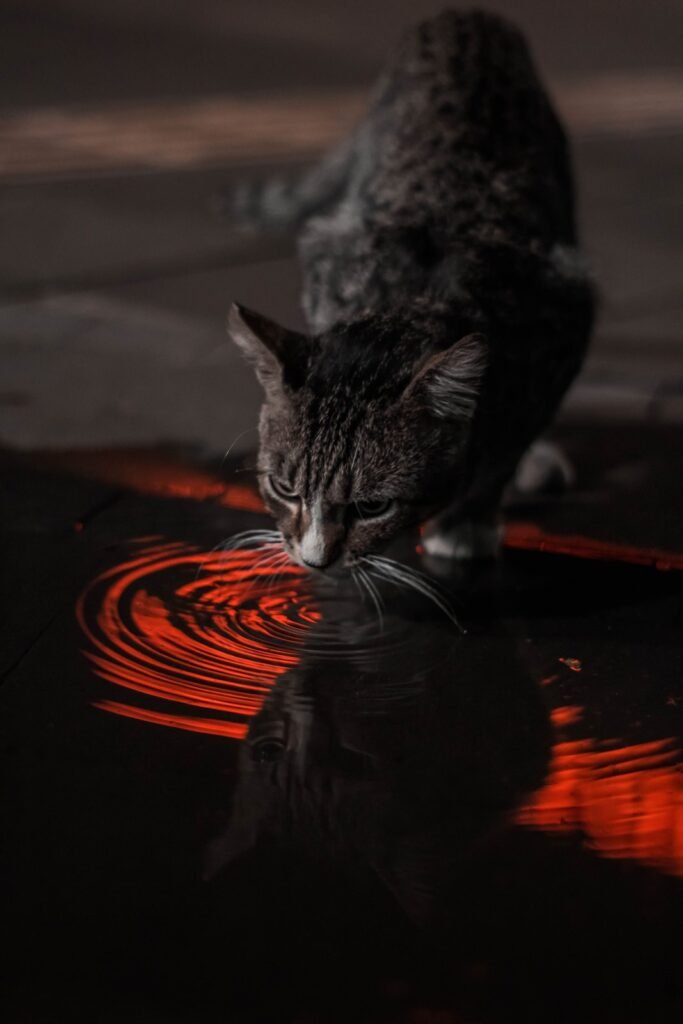
If you want to get a cat to drink more water at home, start with placement and bowl type, not with a medical target you invented from a chart. Many indoor cats eat mostly dry food and walk past a single bowl that sits beside the litter box or the food dish. In a small apartment, that one bowl may also be in a hallway, next to a noisy appliance, or in a corner the cat only visits at mealtime. The job is to make clean water easy to find and easy to use, in more than one place.
A cat who “never drinks” may be taking quiet sips when you are not in the room, or may be getting some moisture from food, or may truly be using the bowl too little. You cannot count every sip in a studio, and you should not invent a daily number as medical advice. You can still make the station easier, then watch for changes in habit, in the box, and in energy. Those changes matter more than a guess about ounces.
This is general household advice for cat parents in the US and UK, not a veterinary diagnosis, and not a treatment plan for kidney disease, crystals, or a urinary infection. A fountain, a second bowl, or wet food does not prevent those problems, and this guide does not promise a daily ounce or milliliter number. A good result is simple: the cat has clean water in more than one quiet spot, and some moisture in the diet if wet food already fits. A sudden jump in drinking, almost no drinking, straining in the box, or not eating is a reason to call a veterinarian, not a reason to “try a new bowl for a week.”
Start with where the water lives
If the only water bowl shares a mat with the food, or sits beside the litter box, many cats will drink less than they might in a quieter, cleaner spot. Scent, litter dust, and the feeling of being boxed in at a narrow station all get in the way. Move the main water bowl away from the box first. If the cat still ignores it, move it away from the food as well, even if that means the water lives in a hallway nook or on a low, stable shelf the cat already uses.
In a small home you may not have a spare room. You still have more than one corner. A wide window ledge is usually a poor place for an open bowl, because it can spill and because window safety is a separate job. A quiet floor spot with a little space around the bowl is enough. The cat should be able to approach from the side, not only by squeezing between a wall and a bin.
Think about traffic in the room, not only about furniture. A bowl behind a door that swings, or in the only path to the litter box, will get bumped, spilled, or avoided. A slightly out-of-the-way spot that stays put is better than a “convenient” spot you trip over. If you have a dog as well, place at least one cat water bowl where the dog cannot empty it as soon as it is filled.

Add a second bowl, and think about shape
A second bowl in another quiet spot is often more useful than a bigger bowl in the same crowded station. One water point in the kitchen and one in the bedroom or living room gives the cat a choice when someone is cooking, vacuuming, or using the litter box. Keep both bowls full, and wash both. A forgotten second bowl that goes stale will not help. If the cat already has a favorite nap area, a small, stable bowl nearby can be easier to accept than a new station in a part of the home the cat rarely visits.
Shape matters more than a decorative pattern. Many cats prefer a wide, shallow bowl that does not press on their whiskers, rather than a deep, narrow cup. Stainless steel or ceramic is easier to wash than a scratched plastic bowl that holds film and odor. Whatever you use, it should sit still on your floor and be simple to clean. This is not a product test, and a pretty bowl that tips or is hard to wash is a poor choice. If you try a new shape, keep the old bowl in its usual place for a few days so the cat is not suddenly without a familiar station.
If the cat already likes moving water, a fountain can be a useful extra station. It is not required, and it is not a medical device. If you buy one, choose it for cleaning access and quiet operation in a small home, then follow a buying guide such as best cat water fountains rather than treating this article as that guide. A fountain still has to be washed, and a dirty fountain is worse than a plain, clean bowl.

Wash the bowls often, and skip risky flavoring
Stale, dusty, or film-coated water is a common reason a cat walks away. Wash bowls often in hot, soapy water, rinse well, and refill with fresh water. Fountains need the same habit, including the filter and the hidden parts, which is why cleaning cat bowls and fountains at home is a separate, useful skill. In a small apartment, it is easy to top off a bowl for days. That is how the water starts to smell like the room. A quick daily rinse and a fuller wash on a regular rhythm is enough for most homes. You do not need a special cleaner, and you should not leave soap film in the bowl.
Do not flavor the water with milk, essential oils, or a broth that is salty or onion-based. Those add-ins can be unsafe, and they turn a hydration habit into a new food experiment. If a clinic has already approved a specific flavoring for your cat, follow that advice. Do not invent a recipe because the cat ignored a bowl once. Do not push the cat’s face into the bowl. That makes the station something to avoid. Ice cubes, dripping taps, and “just a splash of milk” are not a plan, especially if they leave puddles on a kitchen floor or add food the cat should not have.

Use wet food as a moisture source only if it already fits
Wet food can add moisture for a cat who already accepts it. It is one moisture source, not a treatment, and not a requirement for every cat. If the cat already eats wet food, serving it well in a small home still follows how to serve wet cat food in a small apartment. If you are thinking about a change from dry to wet, that is a slower food transition, covered in how to switch a cat from dry to wet food and in a broader look at wet vs dry cat food. Do not make a sudden switch only because you are worried about water intake, and do not treat wet food as a treatment for kidney disease.
How much to feed is still a feeding question, not a hydration number. Use your usual plan from how much you should feed your cat and from choosing food for an indoor cat. If the cat is a picky eater, that problem has its own guide, how to get a picky cat to eat, and it should not be solved by pouring broth into the water bowl. Senior cats can have changing thirst and changing food needs; choosing food for a senior cat is the food side of that, not a license to ignore a sudden change in drinking.
If you feed two cats, keep water plentiful for both, in spots that a more confident cat cannot easily guard. The wider meal plan lives in feeding two cats in a small apartment. Water should not become another resource only one cat can reach. A second bowl in a quieter room can give the less confident cat a station they will actually use, which is more useful than watching a single kitchen bowl and hoping both cats share it.

What good enough looks like, and when to call a veterinarian
Good enough is clean, easy water in more than one place, a bowl shape the cat will actually use, and some moisture in the diet if wet food already fits. You may not see a dramatic change in a week, and you do not need a guaranteed intake number. You should see the cat visit a bowl or a fountain without being crowded, and you should see the bowls emptied and washed on a regular rhythm. If one station is always ignored, move it or retire it rather than leaving two messy bowls out of habit.
Watch for changes that do not belong to a bowl experiment. A sudden jump in drinking, almost no drinking, straining or crying in the box, blood in the urine, vomiting, hiding, or not eating is a veterinary problem. Call a veterinarian. Do not wait to see if the fountain helps, and do not assume a new bowl will treat an illness. This guide cannot diagnose the cause, and it cannot tell you that water, a fountain, or wet food will prevent kidney disease, crystals, or a urinary tract infection. If a veterinarian already has your cat on a specific diet or fluid plan, follow that plan and use this article only for the household side: clean bowls, better placement, and no unsafe add-ins.
FAQ
Where should I put a cat’s water bowl in a small apartment?
Start with a quiet, open floor spot away from the litter box. If the cat still ignores the bowl, move it away from the food as well, and add a second bowl in another room or corner. Avoid cramped stations and spots that are easy to knock over.
Do I need a water fountain to get my cat to drink more?
No. A fountain can help if the cat already likes moving water, but a second clean bowl and a wider, shallower dish are often enough. A fountain is not a medical device, and it still has to be washed often.
Can I add milk, broth, or flavoring to the water?
Do not use milk, essential oils, or a broth that is salty or onion-based. If a clinic has already approved a specific flavoring for your cat, follow that advice. Do not invent a home recipe, and do not push the cat’s face into the bowl.
Does wet food help with hydration?
Wet food can add moisture if the cat already accepts it, as one source in the diet. It is not a treatment for kidney or urinary disease, and a sudden food switch is a separate job from adding a second water bowl.
When is drinking a reason to call a veterinarian?
Call a veterinarian if there is a sudden jump in drinking, almost no drinking, straining in the box, blood in the urine, vomiting, hiding, or not eating. Those signs are not a “try a new bowl for a week” problem.