


If you need to feed two cats in a small apartment, the hard part is not the idea of “put down two bowls.” It is the narrow kitchen where both dishes end up in the same corner, the faster eater who finishes and then moves in, and the fact that a studio or one-bedroom often has nowhere obvious to put a second station. Houses with a utility room can hide a lot of that overlap. Many flats cannot.
A useful mindset is this: you are building a small-space feeding system, not hoping two cats will take turns at one dish. Separate stations, enough space that one cat cannot easily guard both, a meal rhythm that protects a slower eater, and a cleanup habit that fits a tight kitchen will do more than a prettier bowl in the same cramped spot.
This is general information for cat parents in the US and UK, not a veterinary diet article, not a behavior treatment plan, and not a promise that every pair will eat peacefully once the bowls are moved. If you see weight loss, vomiting, or one cat aggressively guarding all the food, contact a veterinarian, and ask about a qualified behavior professional if guarding is intense or getting worse.
This is a feeding system, not a diet rewrite
The job here is the setup: where the food goes, how far apart the stations are, when meals happen, and how you keep a slower cat from being pushed off. It is not a substitute for how much you should feed a cat. Portions and body condition belong in that guide.
What to offer is also a different question. Wet versus dry, and how to read a label, are covered in wet vs dry cat food and how to read a cat food label. If one cat sniffs and walks away, use how to get a picky cat to eat rather than turning this system into a picky-eating rewrite. A new cat needs its own, slower introduction: how to introduce a new cat. Where the bags and tins live is how to store cat food in a small apartment.
Think of three jobs, not one:
- Separation. Each cat has a bowl or station of their own, far enough apart that one cat cannot easily stand over both.
- Timing. Meals are set up so a slower eater can finish, and leftovers are not left as a prize for the faster cat.
- A livable kitchen. Cleanup is quick, and any feeder you add is an option, not a project that takes over the room.
The goal is a repeatable two-cat routine, not a claim that the right dish ends every scuffle.
Give each cat a separate bowl or station — and enough space
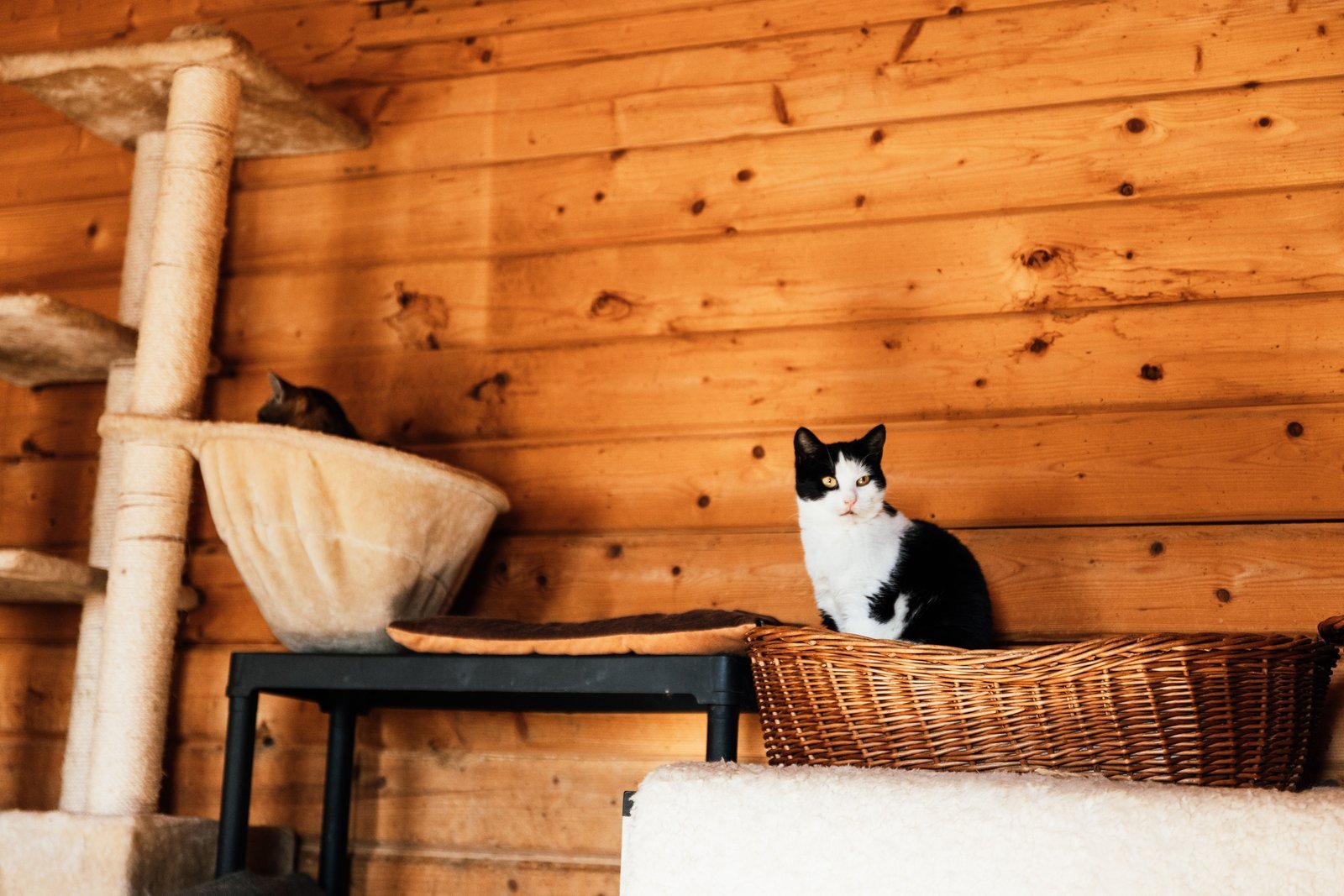
Two cats can share a home and still need their own food. A single shared bowl, or two bowls touching in the same corner, makes it easy for one cat to hover, eat first, and keep the other from settling. Start with two clearly separate stations, even in a small kitchen.
“Enough space” is less about a perfect measurement and more about whether one cat can easily guard both spots at once. If the faster cat can stand in the middle and cover both dishes with a few steps, the stations are too close. In a galley kitchen, that may mean one station at one end and the second around a corner, in a hallway niche, or just inside an adjoining room, as long as you can still see how the meal is going.
Use the real geography of the flat. A doorway, a kitchen peninsula, or a short run of wall can create a visual break. The point is a gap the guarding cat cannot casually control, not a decorative layout.
Do not put food next to the litter box, in a busy doorway, or where one cat has to squeeze past the other to leave. Each station should have a clear exit. If you have only just brought a second cat home, follow the introduction guide first rather than feeding them side by side too early.
Water can stay in a shared, easy-to-reach place, unless one cat is also guarding the water.
Time meals so a slower eater can finish

Once the stations are apart, the next job is time. Free-feeding a big bowl of dry food for both cats can hide who is eating what, and it gives a faster or bolder cat more chances to push in. Scheduled meals make it easier to watch, step in, and pick up what is left.
Put both meals down at the same time, in their separate places, and stay nearby for the first few minutes. Let the slower cat start. If the faster cat finishes and heads for the other station, calmly intercept and guide that cat away, or close a door for a short, supervised finish. You are protecting the slower eater’s chance to complete the meal, not punishing anyone.
Leave the food down long enough for the slower cat to eat at a normal pace, but not so long that leftovers become a second buffet for the first cat. When the meal is done, pick up both bowls.
If one cat consistently leaves food, or one consistently finishes the other’s, look again at portions and at picky eating if the issue is refusal rather than interruption. A puzzle feeder can slow an individual cat down, but it is a different tool: best puzzle feeders for cats. This plan is about two stations and a fair finish.
Watch how the meal goes, not only whether the bowls empty. A cat who bolts, freezes, or keeps looking over their shoulder may need more distance or a quieter corner. If the slower cat is also losing weight, or starts vomiting, stop treating it as a manners issue and contact a veterinarian.
Clean up in a tight kitchen without letting mess take over

In a small apartment, feeding often happens in the same few feet where you cook and wash up. The system falls apart if bowls stay crusted in the sink or wet food sits out on a worktop.
Keep the kit simple and close to hand: two bowls you can actually wash, a mat or wipeable tray under each station if the floor is hard to clean, a cloth for spills, and a place to dry the bowls. You do not need a large utility room. A dish rack or a corner of a narrow draining board will do, as long as you use it every time.
Wash bowls after meals, especially after wet food, and wipe the mat or floor around the stations. Pick up leftover food rather than leaving it “for later,” which often means the faster cat gets a second helping and the kitchen smells of food for hours.
Store opened tins and bags where the cats cannot raid them; that storage question already lives in the small-apartment food-storage guide. If a bowl has to live in a hallway to get enough space, still bring it back to the sink to wash.
A short cleanup after every meal is kinder than a weekly scrub of a corner that has been ignored.
A covered or microchip feeder is an option, not a required upgrade

Sometimes spacing and timing are not enough. If one cat still raids the other’s bowl the moment you step away, a covered feeder or a microchip feeder can be worth considering as an option. It is not a must, and this is not a feeder buying guide.
A covered or box-style feeder can slow a thief down, but only if the rightful cat will use it and the other cat cannot simply wait at the opening. A microchip or collar-tag feeder is designed so only the assigned cat can get the meal. That can be useful when you need two different foods, or when one cat is on a veterinarian-directed diet the other should not eat. Follow the veterinarian’s instructions for the diet itself, and treat the feeder as a way to keep the meals separate, not as treatment.
Before you buy anything, try two stations with real space, meals you can supervise, and picking the bowls up when the slower cat is done. Many pairs improve once the faster cat cannot casually reach both dishes. If you still need a machine, choose one that fits the room, is straightforward to clean, and does not block a walkway. How to choose an automatic feeder, including timed models, is a separate buying question in best automatic cat feeders.
Do not use a feeder to avoid watching a tense meal at the start. You still need to know whether both cats are eating. A gadget that dispenses food into the same crowded corner will not fix a spacing problem. No brand, price, or ranking belongs here.
When mealtime problems belong with a veterinarian
A little hovering or a brief stare is common when two cats eat in a small space, especially at the beginning of a new setup. Some problems are not “just a feeding routine.”
Contact a veterinarian if either cat is losing weight, vomiting, suddenly refusing food, or seems painful around meals. Contact a veterinarian, and ask about a qualified behavior professional, if one cat aggressively guards all the food — blocking access, stalking the other cat to the bowl, or escalating to swats or bites. This guide cannot tell you whether the cause is diet, illness, or behavior, and it is not a treatment for aggression or a medical condition.
A checkup is the right first step when the change is new, when weight is dropping, or when meals look frightening rather than merely messy.
A calm starting plan you can repeat
Use this as a first draft, then adjust to your cats and your kitchen:
- Give each cat their own bowl or station, far enough apart that one cat cannot easily guard both.
- Use a doorway, corner, or adjoining room if the kitchen alone is too tight.
- Feed at scheduled meals you can watch, rather than leaving a shared bowl out all day.
- Stay nearby at the start, and keep the faster cat from moving in on the slower eater’s dish.
- Pick up both bowls when the slower cat has had a fair chance to finish.
- Wash bowls and wipe the station after meals, even in a small kitchen.
- Consider a covered or microchip feeder only if spacing and timing still cannot keep one cat out of the other’s food.
- If you see weight loss, vomiting, or one cat aggressively guarding all the food, contact a veterinarian, and ask about a qualified behavior professional if the guarding is intense.
Feeding two cats in a small apartment rewards a repeatable system more than a new bowl in the same crowded corner. The aim is two stations with real space, a meal the slower cat can finish, and a kitchen you can tidy — not a claim that every pair will eat side by side without a glance.
FAQ
Can two cats share one bowl in a small apartment?
They can be made to, but it is a poor starting point. A shared bowl, or two bowls placed so close that they function as one station, makes it easy for one cat to finish first and keep the other from eating in peace. Separate bowls or stations, with enough space that one cat cannot easily guard both, are the more reliable setup in a small home.
How far apart should two feeding stations be?
Far enough that one cat cannot casually control both spots. If the faster cat can stand in the middle and reach both dishes in a few steps, move one station around a corner, into a hallway niche, or just inside an adjoining room. There is no honest single measurement that fits every kitchen. Watch whether the slower cat can start, stay, and finish.
Should I free-feed two cats or use scheduled meals?
Scheduled meals are usually easier to manage in a small apartment, because you can see who is eating, protect a slower eater, and pick up leftovers. Free-feeding a shared supply often hides portions and gives a bolder cat more chances to push in. If you need help with amounts, use the “how much to feed” guide rather than leaving a larger bowl out as a workaround.
When is a covered or microchip feeder worth considering?
When you have already given the cats separate, well-spaced stations and a supervised meal routine, and one cat still raids the other’s food, or the cats need different diets. It is an option, not a requirement, and this is not a buying guide. Choosing a timed automatic feeder is a separate question. A feeder will not fix two bowls that still sit in the same corner.
When should I contact a veterinarian about two cats and food?
Contact a veterinarian if either cat is losing weight, vomiting, suddenly not eating, or seems uncomfortable around meals. Also get help if one cat aggressively guards all the food, blocks the other from a station, or if meals are escalating. This plan is general information, not a veterinary diet and not a treatment for guarding or illness. A qualified behavior professional may be needed if aggression is part of the picture.