


If you are trying to learn how to read a cat food label, you are usually not looking for a typography lesson. You are in a shop aisle, or you have a bag or a stack of cans on a small kitchen counter, and you want to know which lines of print actually help you choose and feed a food — and which lines are mostly there to sell the package.
A useful mindset is this: the front of a bag or can is advertising. The more helpful details are usually on the back, the side, or the lid: an ingredient list, a guaranteed analysis or similar nutrient snapshot, feeding directions, and a statement about whether the food is meant as a complete diet or only as a complementary food or treat. Those panels will not diagnose a urinary problem or name the one best food. They will help you ask better questions.
This is general information for cat parents in the US and the UK, not a veterinary diagnosis and not a nutrition prescription. Label rules and exact wording differ by country, and this guide does not invent official legal text, nutrient percentages, or brand rankings. If your cat has a medical condition, or your veterinarian has already recommended a specific diet, follow that plan.
Start with the job of the package, not the slogan
The front of a bag or can is designed to be noticed. Photos of fish or roasted meat, words such as “premium,” “natural,” or “recipe,” and a lifestyle story can all be legitimate marketing. They are not a substitute for the information on the back. A handsome fillet on the front does not tell you how the food was made, or whether it is intended as a full meal.
Treat pouches, toppers, and complete foods often use the same visual language. A glossy pouch can look official and still be a complementary food or a snack rather than a day’s meals. Read the whole package before you decide what job it is meant to do.

Before you compare ingredients, look for the practical facts that tell you what you are holding:
- The product name and the form: dry food, wet food in a can, tray, or pouch, or a treat.
- A statement, if one is present, about whether the food is intended as a complete diet or only as a complementary food or treat. The exact wording and the rules behind it differ in the US and the UK, so read the phrase on this package rather than assuming a slogan on the front has settled the question.
- The life stage the maker says the food is for, such as adult, kitten, or senior, when that is stated.
- A net weight, a best-before or use-by date, and a batch or lot code, which matter if you need to contact the maker or store the food carefully, a separate job covered in how to store cat food in a small apartment.
If two cans both look “high quality” on the shelf, the quieter panel on the back is usually the more useful place to compare them.
The ingredient list is listed by weight
On most packages, ingredients are listed in descending order by weight, as they go into the recipe. That includes the water in fresh or wet ingredients. A meat or fish listed first can look impressive, but water weight can move a moist ingredient higher than a drier one. A food that uses a meat meal is not automatically worse, and a food that lists a fresh meat first is not automatically better. The list is a starting clue, not a scorecard.

Read the list as a whole rather than hunting for a hero or a villain. A single ingredient rarely tells you whether the finished food will suit your cat. Named meats, meals, grains, common fats, and familiar binders all appear in many ordinary complete foods. That is not a reason to fear a familiar ingredient, or to treat one line as a cause of an allergy or a urinary issue. If your cat has a medical problem, ask your veterinarian rather than trying to diagnose it from one word on the bag.
Ingredients also do not settle the wet-versus-dry question. A can and a bag can both list recognizable foods and still be different formats with different moisture levels, storage needs, and feeding habits. For that comparison, use wet vs dry cat food rather than trying to force the entire choice into one line of an ingredient list.
If you need to change foods after you have read a label, do that as a planned transition. The label can tell you what is in the new bag or can; it cannot, by itself, tell you how quickly this cat should switch. That process belongs in how to switch cat food.
The guaranteed analysis is a starting snapshot
Many packages include a guaranteed analysis or a similar nutrient panel. In plain terms, it is a snapshot of a few nutrients the maker lists, often as minimums or maximums — typically items such as protein, fat, fiber, and moisture. It is not a complete report on the diet, and it is not a personalized target for your cat.
Two foods can show similar headline numbers and still be built differently. You should not treat one percentage as proof that a food is “high protein,” “low fat,” or suitable as a treatment for weight problems, kidney disease, or urinary issues. Those questions belong with a veterinarian, who can read the label in the context of this cat. This guide does not invent official nutrient percentages, legal thresholds, or a ranking of formulas. The panel is a starting snapshot, not a diagnosis and not a score.
Wet food’s moisture changes how the same numbers feel in practice
Wet food is where many label comparisons go sideways. A can, tray, or pouch holds more water than a dry kibble. That moisture is real food, in the sense that it is part of what the cat eats, but it also changes how the same headline numbers look on the panel. A protein or fat figure on a wet label is not directly comparable to the same line on a dry label unless moisture has been accounted for.

You do not need to do that math in the aisle. You do need to avoid a false contest between a wet food and a dry food that seem to “win” on a single number. The bowl will also feel different in practice: wet food is already moist, dry food is not, and many cats eat a mix of both. If you are choosing a format, use wet vs dry cat food for that comparison. This article stays with what the label can tell you, including how moisture changes the same numbers once the food is in the bowl.
Feeding directions are a starting point
The feeding guide on a bag or can is usually based on weight, and sometimes on life stage or activity. It is a starting point, not a promise that this exact cup, pouch, or can amount will keep your cat in good condition. Cats of the same weight can need different amounts. Treats, extra toppers, and a quieter apartment day all change the picture.
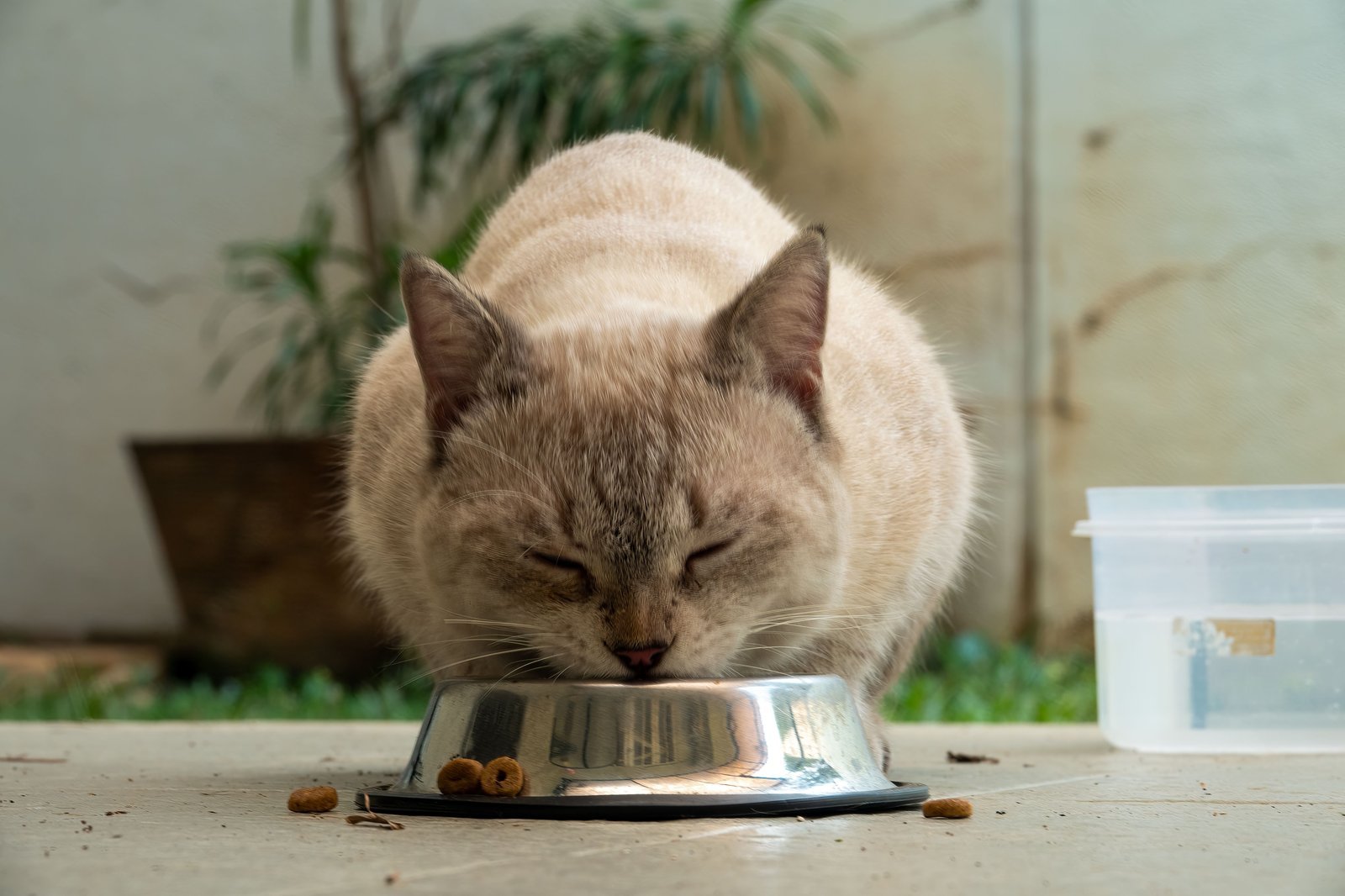
Use the guide to get a first portion, then watch energy, stools, and body condition over a few weeks. A measuring cup, a marked scoop, or a kitchen scale is more repeatable than pouring or spooning by eye, especially in a small kitchen. For a calmer walk through portions, use how much you should feed your cat rather than treating the chart as a finished prescription.
If the cat is a fussy eater, the label will not solve the bowl by itself. Picky eating has its own calm plan in how to get a picky cat to eat. An automatic feeder can help with timing in a small home, but you still choose the food and set the portion; that buying decision is covered in best automatic cat feeders. If weight or appetite changes unexpectedly, or the cat stops eating, contact a veterinarian rather than inventing a new number from the front of the pack.
What a label cannot tell you
A label cannot tell you whether this cat will thrive on a formula, leave food in the bowl, or develop loose stools. Individual cats vary, and a previous food “working” is information, not a guarantee about the next bag or can. A label also cannot confirm an allergy, treat a urinary issue, manage kidney disease, or set a medical weight plan. If you suspect a food problem, or the cat is unwell, that belongs with a veterinarian, not a homemade diagnosis from one ingredient.
A label cannot choose a format for you, pace a switch, fix picky eating, or store the bag safely in a small apartment. Those are neighboring decisions, and the linked guides above are the place for them. If you also need the dog-food version of this walkthrough, use how to read a dog food label rather than assuming the two packages work in exactly the same way.
A label is not a ranking. “Best” is not a number on the back of a can, and this guide will not invent scores, prices, or a shortlist of winners. The honest use of a label is quieter: understand what you are buying, feed from a starting point, and get help when the question is medical.
A calm way to use a label in a small kitchen
In an apartment or a compact kitchen, you may not have a pantry to spread out bags and cans and compare them like a project. You do not need that. A practical routine is enough:
- Read the front as marketing, then turn the package over.
- Check whether the product is a complete food or a complementary food or treat.
- Scan the ingredient list as a whole, remembering it is listed by weight, including water in moist ingredients.
- Use the guaranteed analysis as a snapshot, not as a verdict or a medical plan, and remember that wet food’s moisture changes how the same numbers feel in practice.
- Treat the feeding guide as a starting point, then adjust with body condition and veterinary advice when needed.
- Keep the date and batch information until the bag or can is finished, and store the food so you can still read that information later.
If the print is hard to read, photograph the panel before you pour the bag into a bin. If you share feeding with a partner or a cat sitter, the label is more useful than a remembered slogan from the shop.
Learning how to read a cat food label will not make shopping trips simple, and it will not replace a veterinarian when the cat is unwell. It will make the package more honest: a few panels that matter, a front that should not do all the talking, and a clearer line between a complete meal, a complementary food, and a treat.
FAQ
What should I look at first when I read a cat food label?
Start by confirming what the product is for. Look for whether it is intended as a complete diet or only as a complementary food or treat, and notice the form, life stage if one is stated, and the date or batch information. Then use the ingredient list and the guaranteed analysis as supporting detail. The front of the bag or can can wait; it is usually marketing, not the most useful panel.
Does the first ingredient tell me if a cat food is good?
No. Ingredients are typically listed by weight, and the water in fresh or wet ingredients can change the order. A meat listed first is not automatically better, and a meat meal is not automatically worse. Read the list as a whole, and do not treat a single ingredient as proof of quality or as a cause of an allergy, a urinary issue, or another medical problem. If your cat has a health concern, ask your veterinarian rather than trying to diagnose it from one line on the package.
Can I compare the numbers on wet and dry cat food directly?
Not in a simple side-by-side way. Wet food contains more moisture, so a protein or fat figure on a wet label is not directly comparable to the same line on a dry label unless moisture has been accounted for. You do not need to do that math in the aisle, but you should avoid treating one percentage as a winner. Use the panel as a snapshot, and see wet vs dry cat food if you are choosing a format.
Can I just follow the feeding guide on the bag or can?
Use it as a starting point, not as a finished prescription. The guide is usually based on weight, and sometimes on life stage or activity, but cats of the same weight can need different amounts. Treats and toppers count too. Watch body condition, energy, and stools, and use a consistent scoop or scale. For a fuller portion guide, see how much you should feed your cat, and contact a veterinarian if weight or appetite changes unexpectedly.
When should I ask a veterinarian instead of comparing labels myself?
Ask a veterinarian if your cat has a medical condition, if you think food is causing itching, vomiting, diarrhea, urinary signs, or weight change, if a kitten or senior needs a specific plan, or if a diet has already been recommended. A label can help you understand what is in a food. It cannot diagnose an allergy, treat urinary issues, kidney disease, or weight problems, or set a medical feeding plan. This guide is general information, not a veterinary diagnosis.