

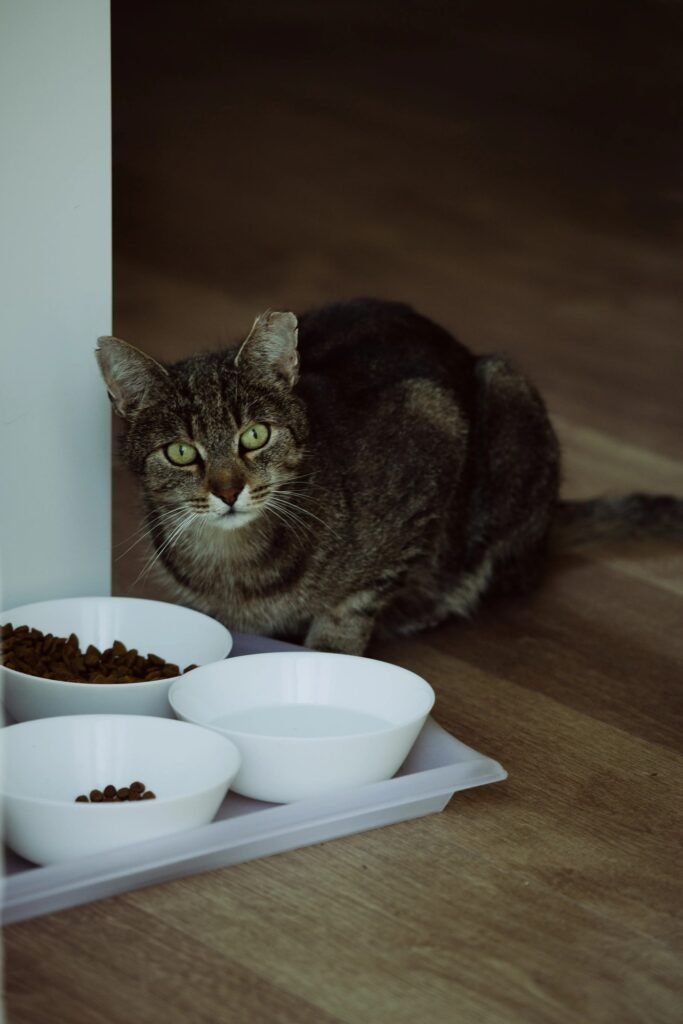
If you want to know how to switch cat food without an upset stomach, the hard part is rarely the new recipe on the label. It is the handover: yesterday’s familiar smell is gone, today’s bowl is entirely new, and the cat’s gut has had no time to adapt.
A useful mindset is this: you are changing one major thing at a time, mixing old and new food in a measured ratio, and watching stools, appetite, and energy before you increase the new portion. A slow overlap will not prevent every soft stool, but it gives you a clearer read and a way to ease off if the litter box tells you to wait.
This is general information for cat parents in the US and UK, not a veterinary nutrition plan, not an allergy diagnosis, and not a promise that every transition will be tidy. Cats vary. If stools stay loose, blood appears in stool or vomit, vomiting continues, or your cat stops eating, contact a veterinarian. Cats should not go long without food; a skipped day is a reason to call, not a strategy.
Why a sudden swap is harder on cats than it looks
A cat’s digestive system gets used to a routine of fat, protein, fiber, moisture, and texture. Change several of those overnight and you may see looser stools, more gas, a quieter appetite, or a complete refusal to eat. A weekend of extra treats or a stressful move can muddy the picture, so it helps to change food when the rest of the week is fairly ordinary.
Apartment life does not make stomachs more delicate, but a litter box in a bathroom or hallway will show a change quickly. Planning the switch when you can check the box—and when you are home to notice who ate what—is kinder than starting on a long workday.
Cats are often more texture-loyal than dogs. A new kibble shape, a pâté instead of shreds, or a jump from dry-only to a mostly wet bowl can look like “they hate this brand” when it is partly unfamiliar mouthfeel. That is a reason to mix, and to go slower than a bag’s marketing might imply.
Some cats sail through a swap. Others need two weeks or more. A cat recovering from illness, or a cat already on a veterinary diet, should only change food with that professional’s guidance.
A practical mixing plan you can actually follow

A widely used starting point is a seven-to-ten-day overlap, stretched toward two weeks if your cat is cautious or the formula is a big change. Keep the old food until the new one has clearly agreed with your cat.
A common pattern looks like this:
- Days 1–2: about 25% new food and 75% old food.
- Days 3–4: about 50% of each.
- Days 5–6: about 75% new food and 25% old food.
- Days 7–10: all new food, while you still watch stools, thirst, and appetite.
Measure rather than guess, and stir so the cat cannot eat only the familiar pieces. If you are mixing wet foods, combine them in the same dish and serve promptly. Refrigerate leftovers according to the label, and bring the next serving back toward room temperature.
If stools stay well formed and your cat is bright and eating, you can follow the timetable. If stools soften, or your cat starts leaving more of the bowl, pause at the current ratio for a few extra days. Going slower is not a failure. It is the point of a transition.
The mixing percentages are about the handover, not a new calorie target. Keep the total daily amount close to what already maintains a healthy body condition, then adjust after the cat is settled. A richer food fed at the old volume can cause loose stools that look like “intolerance” and are partly just extra food. For a clearer look at portions once the bowl has settled, see how much you should feed your cat.
Wet, dry, and mixed bowls: why texture changes the plan

Switching from dry to wet, wet to dry, or a single texture to a mixed bowl asks the cat to accept a new mouthfeel as well as a new recipe. That can still be done gradually; it may simply need more days at each step.
If you want a fuller comparison of moisture, convenience, and how the two formats fit a small kitchen, use wet vs dry cat food for the destination choice, and keep this article for the handover. Avoid changing format, brand, and feeding schedule all at once.
Practical differences matter in a flat:
- Wet food should be offered, then picked up after a reasonable meal window, rather than left on a warm counter for half the day.
- Dry food is easier to leave out, which can hide a picky response if the cat grazes around the new kibble and fills up later.
- A mixed meal should still be measured as a combined total, not guessed by eye.
If your cat licks the gravy and leaves the meat, or eats the old kibble and walks away from the new, reduce the new percentage and mix more thoroughly. A thin smear of new wet food on a mostly familiar meal can be gentler than a half-and-half bowl on day one. Do not add oil, milk, or leftover gravy “to help them like it” unless your veterinarian has suggested a specific topper. Extra fat is a common reason a careful mix still ends badly.
Treats count. A food transition is a poor week to debut new biscuits, leftover fish, or a rich broth. Stick with familiar treats in modest amounts, or use a few pieces of the current food as rewards. If you use an automatic feeder, run the transition by hand so you can control the ratio. Best automatic cat feeders can help you think about timing once the diet is stable.
How to slow down if stools or appetite change

Mild, brief softness in the litter box, a bit more gas, or a slightly quieter appetite for a day can happen when food changes. Watch, keep water available, hold the rest of the diet steady, and delay the next increase.
A practical slow-down looks like this:
- Return to the last ratio that produced reasonably formed stools and a normal appetite, even if that means going backward.
- Stay there for several days, not one meal, before you try a smaller increase.
- Keep meal times, bowl location, and treats as familiar as you can.
- Note what you see in the litter box: frequency, firmness, mucus, or straining.
Fresh water should stay easy to reach. A bowl is enough for many cats; if your cat already prefers moving water, this is not the week to retire it. Best cat water fountains is a separate buying decision, not a stomach treatment.
More concerning signs include repeated vomiting, watery or frequent diarrhea, blood in vomit or stool, a painful belly, lethargy, or a cat who will not eat. Contact a veterinarian rather than trying a third brand the same week. Do not withhold food to “make them hungry enough.” A cat who stops eating needs professional advice promptly, especially an overweight cat, because going without food is riskier for cats than many people expect.
This article is not an allergy guide. Mention the timeline to your veterinarian if itching, overgrooming, or ear problems appear alongside digestive changes, and do not diagnose a food allergy from a single swap.
Apartment realities: the litter box, picky eaters, and more than one cat
In a small home, the litter box is your daily report. Check it more often during a switch than you might in a settled month. If you are also reviewing box placement or litter type, try not to change those at the same time as the food. Cat litter box setup for apartments can help you keep that side of the home steady.
Picky eating is common. Some cats need a longer overlap, or they accept a new wet texture more readily than a new kibble—or the reverse. Offer the mixed meal, give a calm window to eat, then pick up leftovers rather than leaving a buffet of only the favorite bits. If your cat is usually food-motivated and suddenly refuses even the familiar food, treat that as a health question, not a preference.
Feed cats separately if you can, even if that means a bathroom for one meal, so you know who ate and whose box looks different. A shared bowl makes a loose-stool mystery almost impossible to solve. If you are still introducing a new cat, pause or finish that plan before you also change diets; how to introduce a new cat is a separate, slower job.
Stress can shrink appetite or loosen stools on its own. A move, building work, or tension with another pet can look like “the new food disagreed with them.” If the wider picture seems off, signs your cat is stressed can help you sort ordinary fussiness from a welfare issue, and it still does not replace a veterinary exam.
When to pause, go back, or call the veterinarian
Pause the increase if stools soften, if vomiting happens more than once, or if your cat starts leaving most of the new food. Go back a step if the current ratio is not sitting well, stay there until things look ordinary again, then advance in smaller jumps.
Call a veterinarian promptly if:
- Stools stay loose rather than settling after you have slowed down.
- You see blood in stool or vomit.
- Vomiting continues.
- Your cat stops eating, or eats so little that you are not sure they have taken a real meal.
- They seem painful, very lethargic, or suddenly withdrawn.
- A kitten, a senior, or a cat with an existing medical condition is involved, and the change was not already planned with their veterinarian.
If your veterinarian has prescribed a specific diet, follow their transition advice rather than this general timetable. This guide cannot promise that a slow mix will “cure” an upset stomach.
A calm starting plan you can repeat
Use this as a first draft, then adjust to your cat and your kitchen:
- Keep the old food in the cupboard until the new one has clearly agreed with your cat.
- Mix a measured ratio, starting around one-quarter new food, and stir so the meal is hard to sort.
- Hold meal times, treats, and the litter setup steady while the food is the thing that is changing.
- If stools soften or appetite dips, pause or step back rather than pushing to 100% on a calendar date.
- Watch the litter box and the cat, not only the empty bowl.
- Contact a veterinarian if stools stay loose, blood appears, vomiting continues, or your cat stops eating.
Switching cat food without an upset stomach rewards patience more than a dramatic clean-out of the cupboard. The aim is a bowl your cat will still approach, reasonably formed stools, and a handover you can repeat the next time a recipe changes. If the cat will not eat, seems unwell, or the litter box looks worrying, ask a veterinarian to help sort a fussy transition from a medical problem.
FAQ
How long should I take to switch my cat to a new food?
There is no honest single number that fits every cat and every recipe. A seven-to-ten-day overlap is a common starting plan, and many cats do better if you stretch that toward two weeks, especially when the texture is changing as well as the brand. If stools stay well formed and your cat is eating, you can follow the timetable. If stools soften or appetite dips, stay at the current ratio for several more days, or step back, rather than finishing on a calendar date. A cat who stops eating should not be left on a long “wait and see” plan; contact a veterinarian.
What if my cat only eats the old food and leaves the new food?
Mix more thoroughly so the meal is harder to sort, and drop back to a smaller share of the new food. A thin smear of new wet food on a mostly familiar meal is often easier than a half-and-half bowl on day one. Give a calm window to eat, then pick up leftovers rather than leaving a buffet of only the favorite bits. Keep treats familiar and modest so they do not become the real dinner. If your cat refuses even the old food, or skips meals, contact a veterinarian rather than waiting them out.
Is it okay to switch from dry food to wet food the same way?
Yes, the same gradual mix applies, but texture changes often need more days at each step. Measure the combined portion so you are not accidentally feeding a scoop of dry plus a generous wet meal. Offer wet food, then pick it up after a reasonable meal window, and do not leave mixed wet food sitting out on a warm counter. For help choosing the destination format, use a wet-versus-dry guide; this article is the handover, not a ruling that one texture is always better.
Should I add toppers, broth, or leftovers to help my cat accept the new food?
Usually no, not during the switch, unless your veterinarian has suggested a specific topper. Extra fat, new broths, milk, and table scraps make it harder to know what caused a soft stool, and they can upset a stomach that was otherwise coping with a careful mix. Stick with familiar treats in small amounts, or use a little of the current food as a reward. A slightly warmed wet meal, if the label allows and you do it safely, is a milder way to make aroma more obvious than pouring on extras.
When is a loose stool during a food switch an emergency?
A brief, mild softness that improves when you slow the mix can happen and still deserves watching. Contact a veterinarian if stools stay loose after you have paused or stepped back, if you see blood, if vomiting continues, if diarrhea is watery or frequent, or if your cat seems painful, lethargic, or stops eating. Those signs are not a reason to try another brand the same week. This is general information, not a diagnosis.