

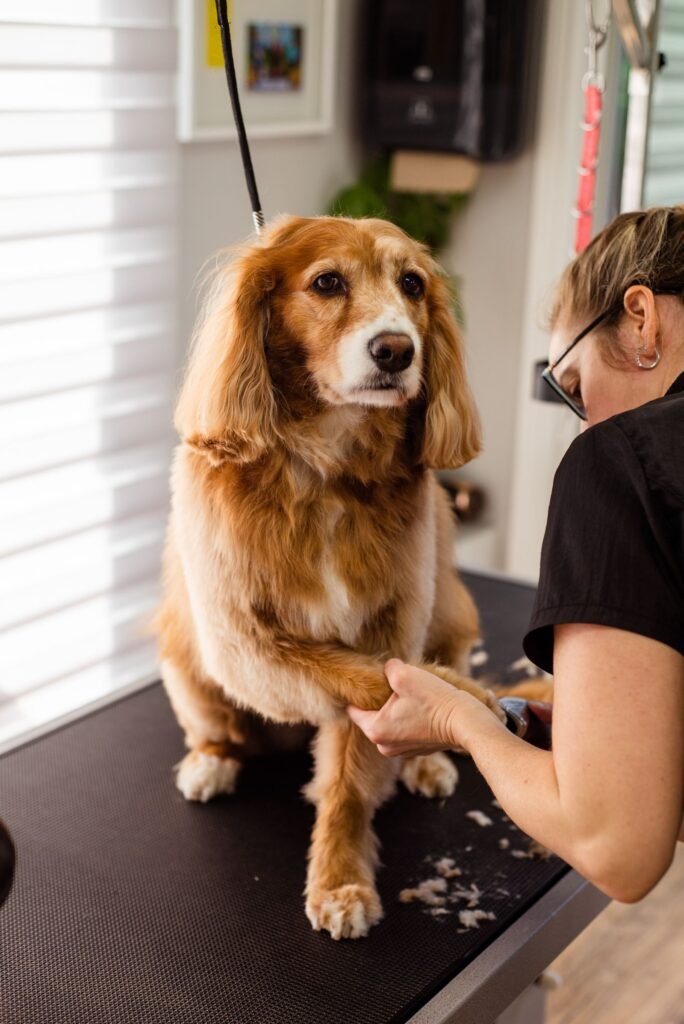
If you have searched how to trim a dog’s nails at home, you probably want a calmer session—not a wrestling match on the bathroom floor. This guide starts with patience rather than with a list of cuts.
Many dogs dislike having their feet handled. In an apartment, long nails also announce themselves: they click across laminate, catch on rugs, and make a slippery hallway feel less secure. Regular walks help wear some nails, but indoor life on carpets and short pavement loops often is not enough. Home trimming can be ordinary care for a relaxed dog with nails you can see clearly. It is not a test you have to pass, and it is not right for every household.
This is general information for dog parents in the US and UK, not a veterinary diagnosis or a substitute for professional grooming. If your dog’s nails are painful, broken, or growing into the skin, if they limp, lick a paw constantly, or will not let you near their feet, contact your veterinarian. If you feel unsure before you start—or you become unsure mid-session—stop and book a groomer or ask the clinic to show you the method they prefer.
Why nail length matters at home
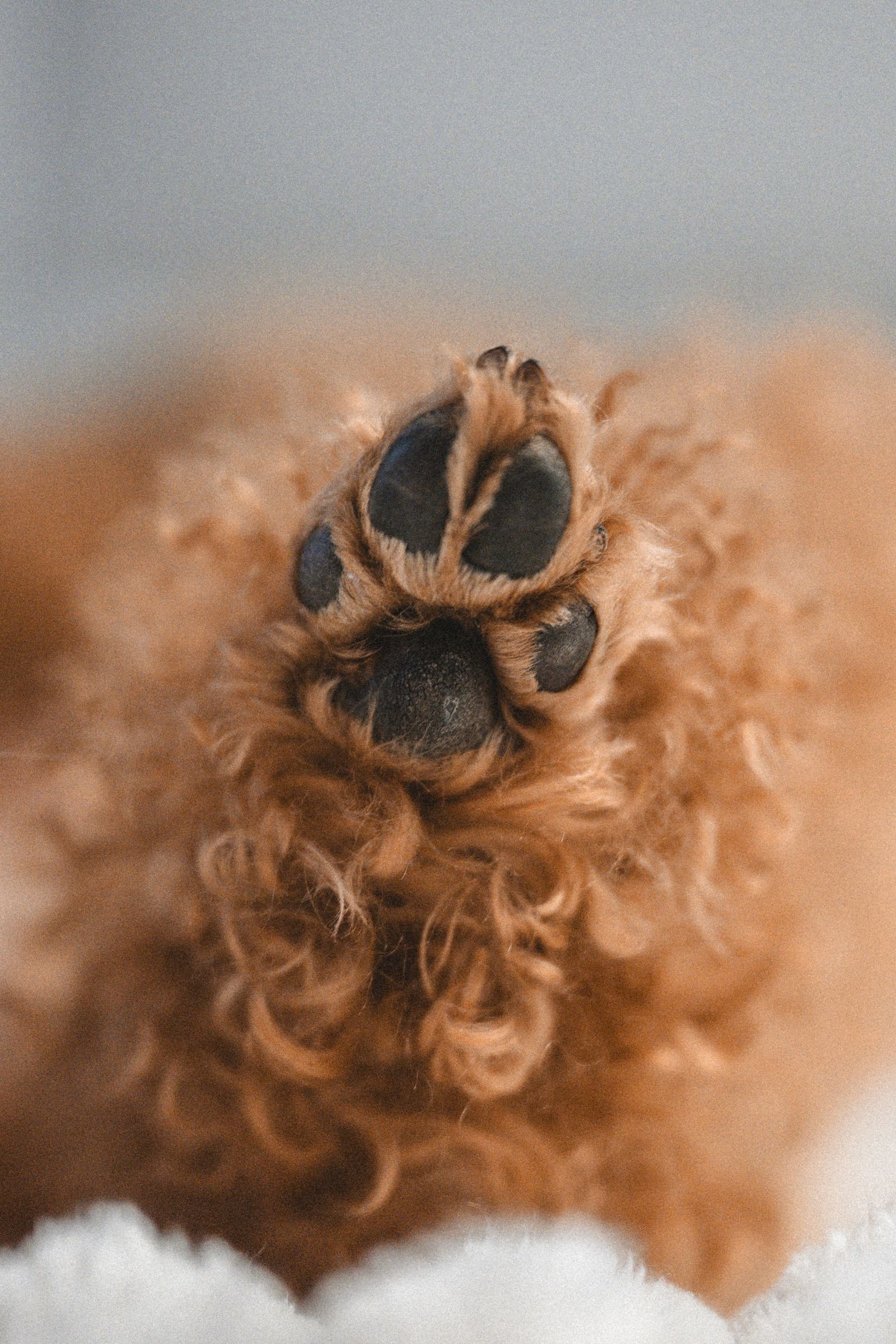
A dog’s nail is living tissue at its core, with a blood supply and nerves in the center commonly called the quick. The visible tip beyond that center is the part people trim. When nails grow long, they can change how a paw meets the floor. The dog may stand a little steeper on the toes, slip more easily on wood or tile, or tap loudly in a shared hallway.
That does not mean every click is an emergency. It does mean length is worth noticing before it becomes uncomfortable. Apartment floors give less natural filing than daily miles on rough pavement. Dewclaws, the nails set higher on the leg, do not wear down from walking, so they can grow long even when the other nails look reasonable.
Comfort is the aim, not a salon-short finish. Nails that just clear the ground when your dog is standing square are a common, gentle visual check—not a medical rule.
Puppies benefit from early, positive paw handling even when there is little to trim. Seniors may need more frequent checks because longer nails can make stiff joints feel harder to manage. If you are reviewing an older dog’s daily comfort, see best dog food for seniors as one piece of the wider picture, and ask your veterinarian before you assume nail length is the only issue.
Clippers or a grinder: a high-level comparison

You do not need a drawer full of tools. You need one method you understand and a dog who will tolerate it.
Scissor-style clippers look like sturdy shears and are often easier for beginners to line up, because you can see where the blade will meet the nail. Guillotine-style clippers have a hole the nail passes through and a blade that slides across. Some people like how compact they feel; others find them harder to position on a thick or curved nail. Either type should be sharp. Dull blades crush rather than cut, which is uncomfortable and quickly costs trust.
A grinder files the nail down instead of snipping it. Used gently, it can remove a little at a time, which some owners prefer when they are nervous about taking too much. The trade-off is noise, vibration, and warmth if you linger in one spot. Many dogs need a slower introduction to a grinder than to quiet clippers.
Neither tool is automatically kinder. A brief clip can be easier for a noise-sensitive dog. A gradual grind can feel safer for a person who wants to sneak up on length. Choose based on your dog’s temperament and your own hands, not on a ranking chart. Skip human nail clippers and kitchen scissors; they are usually the wrong shape and strength.
Teach your dog that paws can be boring
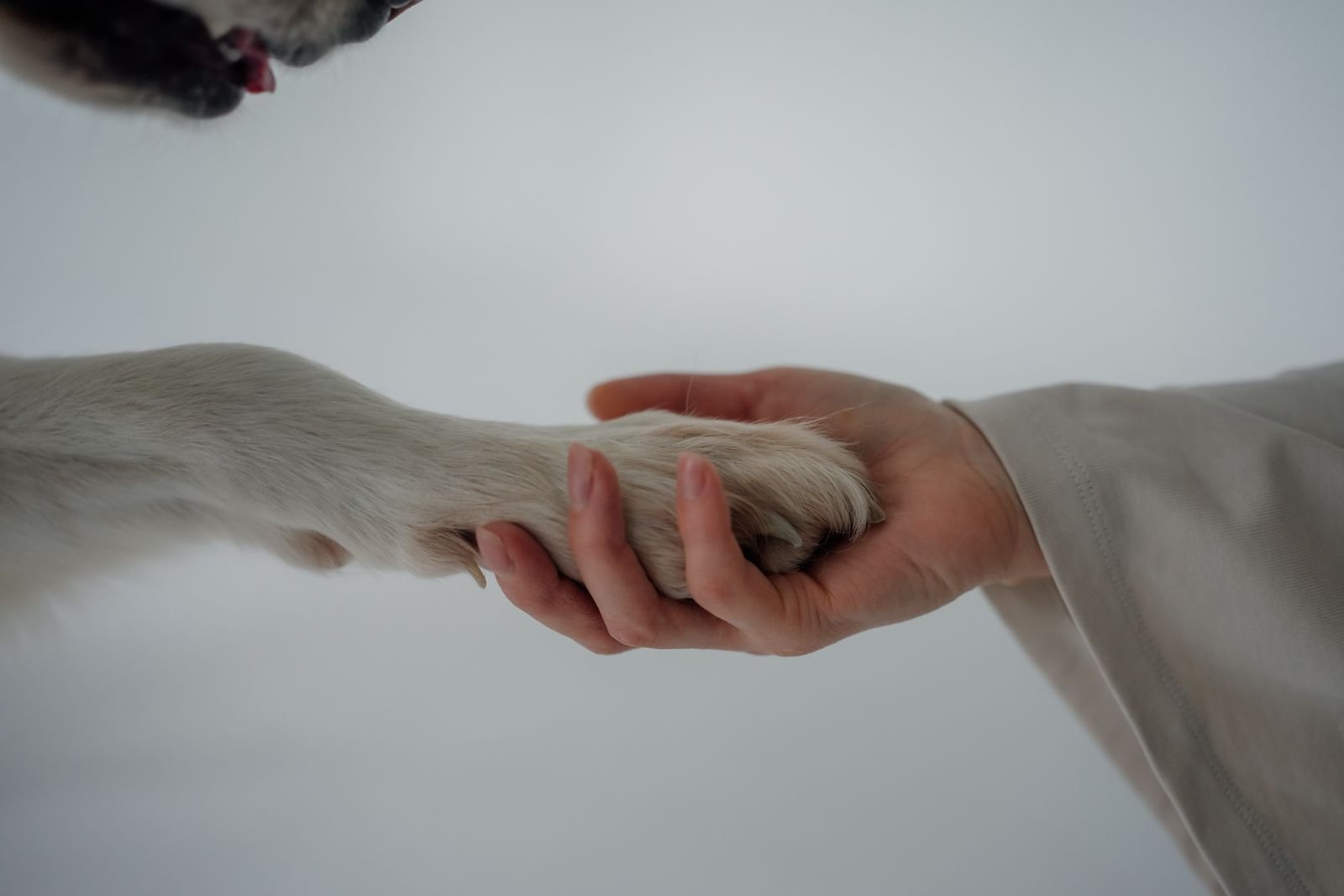
The most useful work often happens on days you do not cut anything. Dogs who accept nail care usually learned that a paw touch predicts a small reward and a short ending, not a wrestle.
Start when the house is quiet. Sit so you are not looming. Touch a shoulder, then a leg, then a paw, and stop while your dog is still comfortable. Offer a small, dog-safe treat. Repeat over several days until lifting a paw is ordinary. Then show the tool without using it. Let your dog sniff the clippers or hear the grinder farther away, then closer, then briefly while you hold a paw and pay them.
Keep sessions shorter than you think. One paw, or even one nail, is a success at the beginning. If your dog freezes, shows the whites of their eyes, tucks a paw hard, growls, or tries to leave, go back a step or stop for the day. Never pin a dog on their back or trap them between your knees to “get it done.” That can turn a handling problem into a fear problem, and it is a poor plan in a small home where the next session will happen in the same room.
The same slow approach helps with other home care. If you are also building tolerance for ear handling or toothbrushing, the habits support each other: see dog ear cleaning at home and dog dental care at home.
Lighting, angle, and taking less than you think
Good light is not a luxury. Sit near a window or use a bright lamp aimed at the paw, not into your dog’s eyes. Hold the paw the way your dog already offers it, without twisting the wrist or toes. Press fur back if it hides the nail, and look from more than one angle before you do anything.
On a light-colored nail, many people can see a pinker center toward the base. That pink area is a reason to stay well away, not a line to cut toward. If a home trim is appropriate, take a tiny amount from the tip—a sliver, not a redesign. Check the cut surface. If it still looks like hard nail with no moist or pink center, you may consider another sliver or move on. If the color changes toward the center, stop on that nail.
Dewclaws need the same caution; they are easy to overlook and easy to cut too short if you rush. After each paw, pause for a treat or a break. Walks on rough pavement can reduce how much you need to take, but they are not a complete substitute indoors. A realistic walking rhythm still matters for overall comfort; see how often you should walk your dog.
A special caution for dark nails
Black or very dark nails hide the quick. That is a built-in limit of home trimming, not a failure of your eyesight. Take less than you would on a pale nail, stop while you are still looking at a dry, solid tip, and do not keep slicing in hope that the next millimeter will reveal a map. Strong light can make some nails easier to inspect, but it does not reliably show the quick through a dark nail, and it should not tempt you to cut closer.
If your dog has mixed colors, use a pale nail only as a rough sense of typical length, not as a guarantee that every dark nail matches it. When you cannot tell where the living center begins, leave more nail or let a veterinarian or groomer handle the trim. That is especially true if the nails are already very long, because the quick often grows out with them. Do not try to recreate a professional shortening plan at home.
When to stop and call a veterinarian or groomer
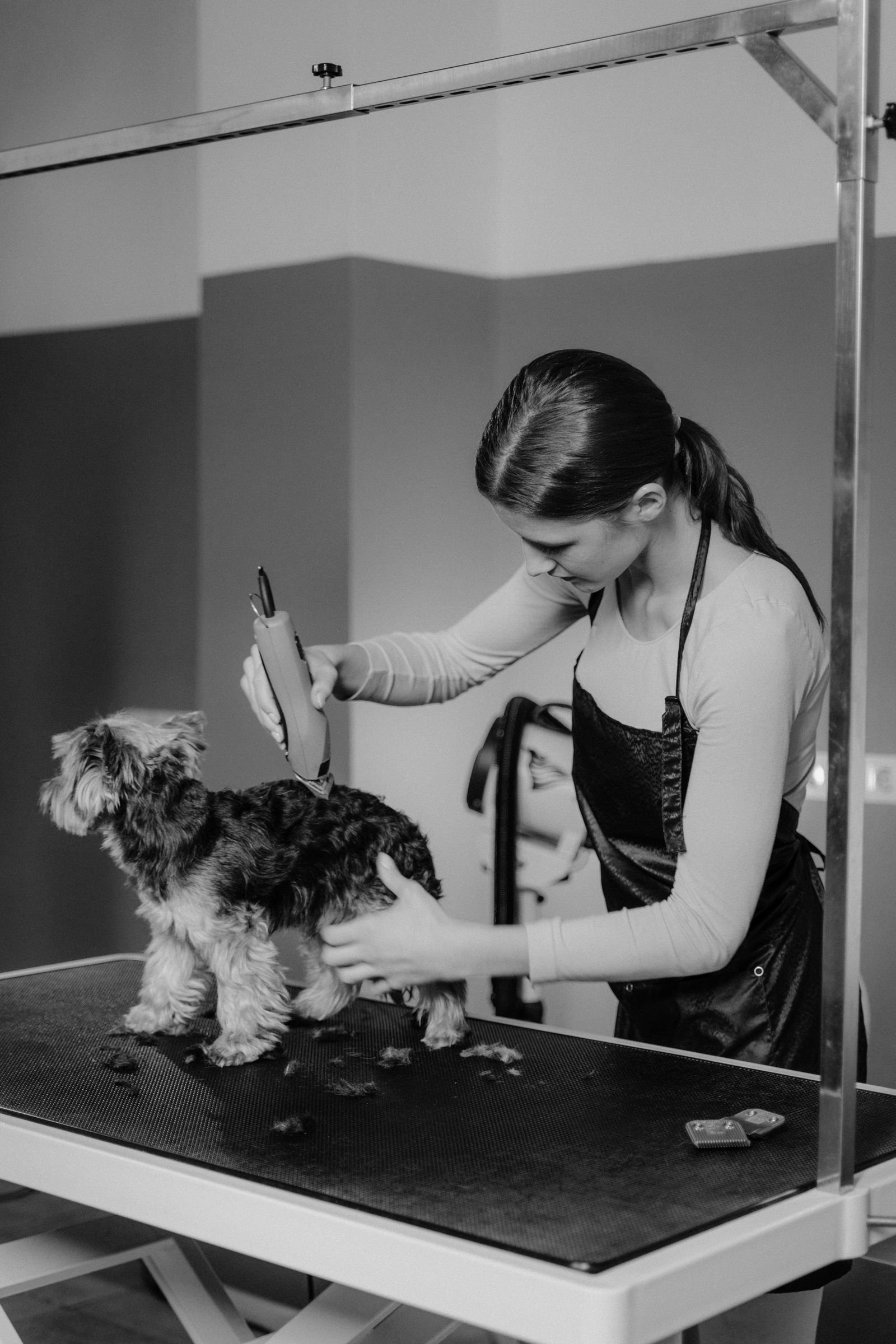
Stopping is not quitting. It is part of safe care.
Stop if your dog shows pain, panic, or a sudden change in behavior; if you cannot see what you are cutting; if a nail looks split, oddly discolored, or grown into the pad; or if the next action would be a guess. Stop if you reach the moist or pink center of a nail—the quick.
If a nail bleeds, stay calm. Apply gentle pressure with a clean cloth or gauze and contact your veterinarian or a groomer for advice. Do not keep trimming “since you are already there.” Do not pack the nail with kitchen powders unless a veterinarian has told you what to use for your dog. Bleeding that does not settle, swelling, limping, or a broken-looking nail are reasons to call the clinic.
A professional is also the better first choice if your dog has snapped at hands, if you cannot safely manage a large frightened dog alone, or if arthritis makes it hard for them to offer a paw. Booking help is responsible ownership. The same “stop and ask” rule applies to other grooming; a bath is not the moment to add a rushed nail session if your dog is already unsettled—see how often to bathe a dog.
A routine that fits real apartment life
You do not need a grooming table. You need a non-slip spot, good light, and a plan you can repeat. A towel on your lap or a mat on laminate can keep paws from sliding. Keep tools somewhere familiar so the clippers do not appear only when something unpleasant is about to happen.
Little and often beats a rare marathon. Checking paws weekly—even if you only wipe them after a walk—tells you when a tip has grown. Some dogs need attention every few weeks; others go longer if they walk on abrasive surfaces. There is no single calendar that fits every dog or every building.
If you share thin walls, keep grinder sessions brief or use quieter clippers. Pair the habit with something your dog already likes, and if one session goes poorly, make the next one shorter, not longer.
How to trim a dog’s nails at home, done well, looks almost uneventful: a few calm touches, a tiny amount off a tip you can see, and a willing stop when you cannot. The rest—shortening a neglected nail, helping a fearful dog, or judging a dark quick—belongs to people who do this work every day. Your job is to keep your dog comfortable and to ask for help before a small worry becomes a painful memory.
FAQ
How often should I trim my dog’s nails?
There is no single schedule. Many pet dogs need a check every few weeks, but growth depends on the individual, their age, and how much time they spend on abrasive ground. Indoor apartment dogs often need more frequent trims than dogs who walk daily on rough pavement. Look at standing posture and listen for clicking on hard floors rather than following a date on the calendar. If you are unsure whether the length is affecting comfort, ask your veterinarian or groomer to look during an ordinary visit.
What if my dog has black nails?
Treat dark nails with extra caution because the quick is usually hidden. Take only a tiny amount from the tip, or skip home trimming on those nails and book a professional. Do not rely on internet tricks that promise to reveal the quick through a black nail. If even a small cut makes you guess, stop. A groomer or veterinary team can handle dark nails more safely than a nervous first attempt at home.
Are grinders safer than clippers?
Not automatically. A grinder removes less nail at a time, which some beginners find reassuring, but it is noisy, vibrates, and can warm the nail if you hold it in place. Clippers are quieter and quicker when they are sharp and well lined up, but a single deep cut can reach the quick. Safety depends more on light, a tiny bite of nail, a relaxed dog, and your willingness to stop than on which tool you bought.
What should I do if I cut the quick?
Stop trimming at once and stay calm. Apply gentle pressure with a clean cloth or gauze and contact your veterinarian or a groomer for guidance. Do not try another nail “to finish the job,” and do not improvise treatments unless a veterinarian has advised you. If bleeding continues, the nail looks broken, or your dog is in pain or lame, seek professional care rather than waiting it out at home.
My dog hates having their paws touched. Should I still try at home?
Not if the session becomes a fight. Go back to short, paid paw touches with no tools, or ask a trainer who uses kind methods to help with handling. Many fearful dogs do better with a calm groomer or a veterinary nurse than with repeated stressful attempts in the living room. Home practice can support that work later. Forcing a trim can make the next haircut, vet visit, and even a simple paw wipe much harder.