


If you want to teach loose-leash walking on city sidewalks, the goal is not a dog who never notices a pigeon. It is a walk you can actually take from your building: a slack-enough leash through a block or two, a way to pause when the pavement gets busy, and a habit you can repeat on a Tuesday after work. A country lane hides a tight leash. A sidewalk does not.
A useful mindset is this: you are teaching your dog that walking near you, with a loose leash, is the way forward, and you are designing sessions short enough that they can succeed. Treat timing and a clear reset will do more than a longer march “to tire the pulling out.”
This is general information for dog parents in the US and UK, not a veterinary diagnosis and not a promise that pulling will end forever after one weekend. Dogs vary. If your dog suddenly refuses to walk, yelps when the collar or harness moves, licks or chews at their paws after outings, or seems painful, contact your veterinarian. Discomfort can look like “they just pull.”
What loose-leash walking can and cannot do on a city sidewalk
Loose-leash walking means there is slack in the lead most of the time—not a perfectly straight heel for forty minutes, and not a dog who is never interested in the world. In a flat, the walk often starts in a corridor and a lift, then meets buses, food smells, and other leashes on the pavement.
A better sidewalk habit can make daily outings less of an arm workout. It cannot replace sniffing, play, or toilet time. If you are mainly trying to figure out how many walks your dog needs, start with how often you should walk your dog and keep formal leash practice as a separate, shorter job.
This is also not a harness buying guide. A comfortable, well-fitted harness can make pulling less harsh on a dog’s neck, but it does not install loose-leash skills by itself. If you are still choosing fit and style, see best dog harnesses for pullers and come back to this plan once the gear sits comfortably.
Think of three jobs, not one:
- Clarity. Forward motion, and the interesting next smell, happen when the leash is slack.
- Timing. You mark and reward the loose leash in the second it appears, not after a long drag.
- Honesty. You stop and reset when the leash goes tight, and you end the session before your dog rehearses a full-block pull.
No yanking, no “alpha” corrections, and no promised forever fix. If a moment feels unsafe—a bike too close, a tight cluster of dogs—manage first. Step aside, create space, and train again when you can actually teach.
Start with short sessions, not a full neighborhood loop
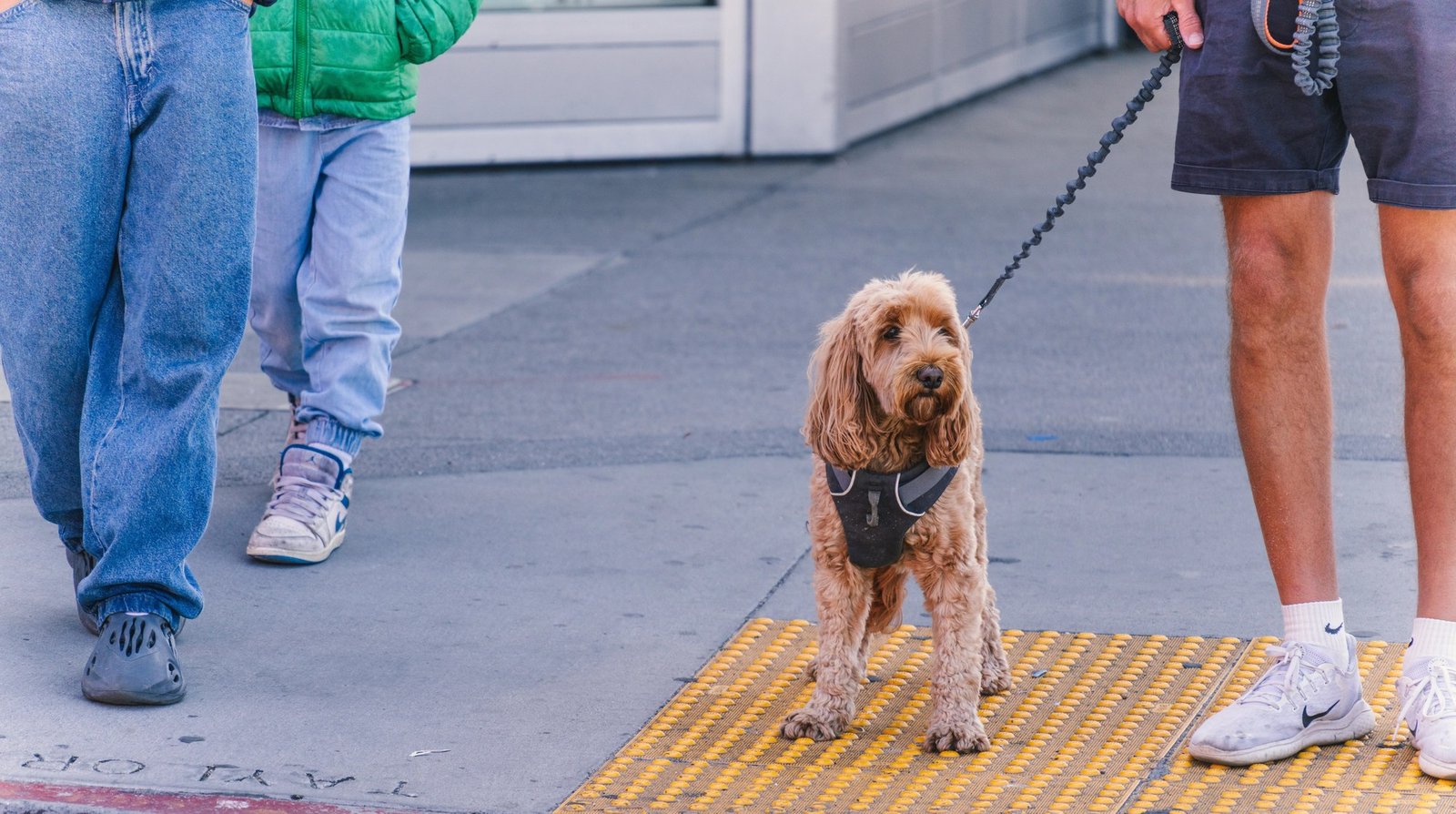
The biggest city mistake is using the only daily walk as the only training session. A twenty-minute outing already includes toilets, other dogs, and the way home. Loose-leash practice works better in short bursts you can end well.
Start on a quiet stretch close to your building, even if that is simply a calmer hour or the wider side of your own block. Two or three minutes of good walking, a reset or two, and a finish while the leash is mostly slack will teach more than a long pull to the park and back.
A simple weekday shape might look like this:
Morning. A short toilet trip first. Then, if your dog still has focus, two or three minutes of loose-leash practice on a familiar stretch.
Midday or after work. One short practice lap—perhaps to the corner and back—before or after a freer sniff walk, not instead of it.
Evening. Skip formal practice if the pavement is chaotic or your dog is already over threshold. A calm reset day is better than a noisy failure on the stoop.
Keep practice separate from a long sniff when you can. A tight heel past every tree is a harder ask than most city dogs need.
If your dog is a young puppy, bladder needs come first. A potty trip should stay short and clear; puppy potty training in an apartment covers that job. Loose-leash work can wait until they have toileted and can offer you a few steps of attention.
Treat timing: reward the slack, not the surge

Treats are information. They only help if they arrive when the leash is loose, or in the instant your dog chooses you instead of forging ahead.
Carry small, easy-to-handle rewards you can deliver with one hand. Soft pieces your dog can swallow quickly work better than large biscuits that turn into a roadside picnic. For size and portioning, best training treats for dogs is a useful companion if you will practice most days. If treats are becoming a second meal, how much you should feed your dog can help you adjust the bowl rather than cutting all rewards on a hard sidewalk.
A practical pattern:
- Start with the leash already slack and treats ready, with your dog at your side or slightly ahead—wherever “loose” actually is for that dog.
- Take a few steps. The moment the leash stays soft, mark it with a short word you can repeat and deliver the treat at your leg, not tossed down the pavement.
- If the leash tightens, stop. Do not lecture and do not drag them back. When the leash softens—when they turn, step back, or glance at you—mark that, reward at your side, and only then walk on.
Deliver the food close to you, on the side you prefer, at a height that does not make them jump. A treat thrown forward teaches a surge. A treat at your knee teaches a return. Early on, reward every few steps if that is what keeps the leash soft, then thin the treats as the habit looks easy on that same quiet stretch.
What not to do: jerk the leash, spike a collar, or “correct” a tight line after the fact. A yank can startle, damage trust, and in some dogs create more lunging, not less. If you feel yourself getting tight in the shoulders, end the session and go home the short way.
When to stop, stand still, and reset
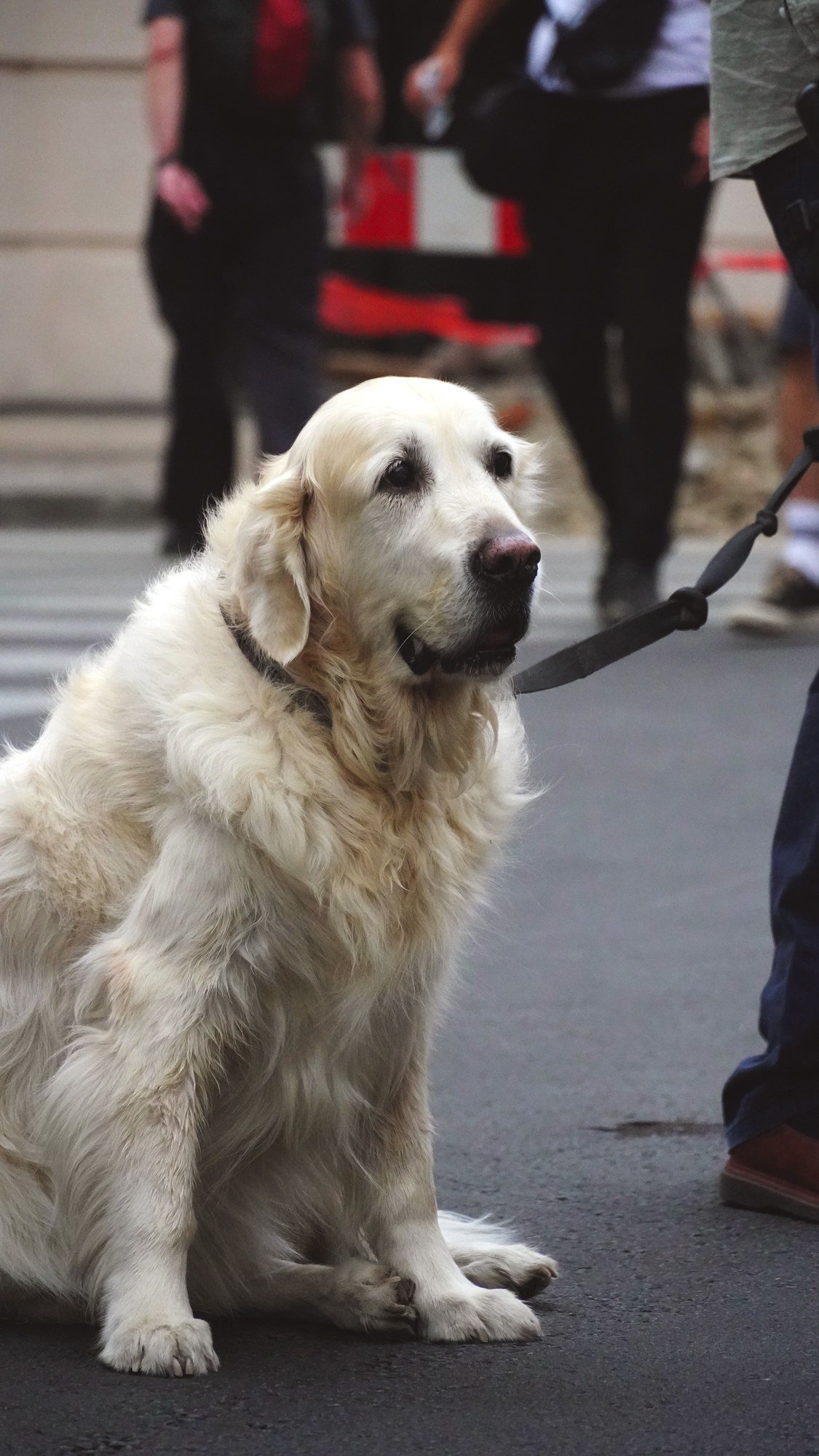
The reset is the heart of city work, because the pavement will keep offering reasons to pull. It is not a punishment. It is a pause that makes a tight leash an ineffective way to get moving.
When the leash goes tight, stop walking. Plant your feet and wait for any softening: a step back, a sit, a look, a looser line. Then mark, reward if you are using food, and walk on only while the leash is slack again.
If the dog keeps hitting the end of the leash, the session is too hard. You may be too close to the park gate, another dog may be in view, or you have already gone past your dog’s current focus. Make it easier: turn and walk the other way, increase the rate of rewards, or end and try a shorter version later.
A sit can be a useful reset if your dog already knows it and the pavement is safe to pause. Some dogs reset better with a step back or a U-turn toward you.
Know when to stop the whole session, not only the step:
- The leash has been tight for most of the last minute, and your rewards are no longer interesting.
- Your dog is over threshold: barking, lunging, or unable to take food they usually love.
- The pavement itself is a poor classroom right now—bin day, a street performer, a tight cluster of dogs.
- You are frustrated. Training while annoyed usually becomes a rehearsal of pulling plus a tense handler.
None of those is a reason to “push through so they learn.” A short walk home, or a pause in a quiet doorway, is a better end than a battle to the corner. If barking or lunging at passers-by is already the main problem, loose-leash walking is not the only plan you need. See how to stop a dog from barking in an apartment for the at-home side, and consider a qualified, reward-based trainer if sidewalk reactivity is strong.
City sidewalk realities: crowds, smells, and crossings
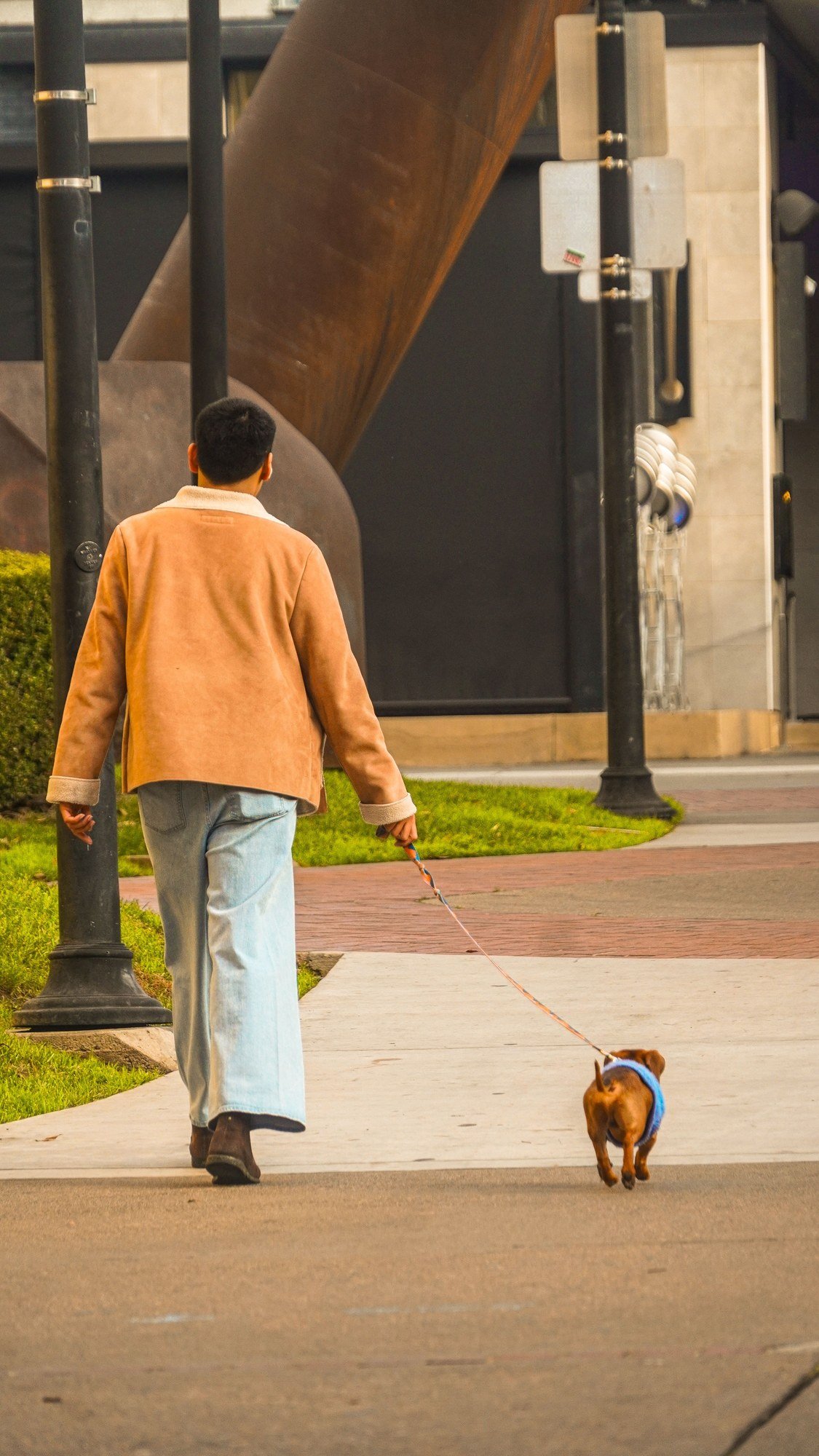
City walking has extra layers a garden path does not. You will share a narrow pavement, meet sudden noises, and stop at crossings where a pull can actually matter.
Give yourself more space than you think you need. Step to the inside of the pavement when a cyclist or scooter passes, and cross early if a tight group of dogs is coming. That is management, and it is allowed.
Crossings deserve their own pause. Arrive at the curb with a slack leash if you can, then wait. If your dog surges when the light changes, reset before you step down. A few rewarded waits at quiet curbs are more useful than a lecture in the middle of a crossing.
Smells are not the enemy. A city sidewalk is a noticeboard. If you never allow sniffing, many dogs will pull harder to reach the next lamppost. Build sniff breaks into the outing, earned by a stretch of loose walking, or offered as a known “go sniff” moment.
Lifts, lobbies, and the first doorway of your building are part of the walk in an apartment. Practice those exits when there is no urgency: leash on, four feet on the floor, then the door. A bouncing hallway launch starts the pulling before you reach the street. If your dog already surges at the threshold, practice that two-metre stretch as its own short session.
Weather and darkness change the plan, too. Wet pavements, winter salt, and evening cyclists all shrink your margins. Shorten practice, choose a quieter block, and keep a light on you and the leash if you walk after dusk. If your dog suddenly avoids a surface, checks a paw, or seems sore after walks, stop and speak with your veterinarian.
A calm starting plan you can repeat
Use this as a first draft, then adjust to your street and your dog:
- Fit a comfortable harness or collar you can use kindly, then treat this as a skills plan, not a shopping project.
- Start on a quiet, familiar stretch for two or three minutes, not a full loop of the neighborhood.
- Reward a slack leash often, with the treat delivered at your side.
- When the leash tightens, stop and wait for a reset; walk on only when there is slack again.
- End while the session still looks mostly easy.
- Keep toilet trips and longer sniff walks in the day; do not ask one outing to do every job.
- Pause or get help if you see pain, panic, or reactivity you cannot safely manage on the pavement.
Loose-leash walking on city sidewalks rewards patience more than intensity. The aim is a walk you can take on a wet Tuesday, a dog who can pause at a curb, and a habit you can keep without turning every outing into an argument. If walking looks painful, frightened, or suddenly different, ask a veterinarian or a qualified trainer to help sort training from health.
FAQ
How long should a loose-leash training session be on a city sidewalk?
There is no honest single number that fits every dog and every street. Short sessions you can end calmly—often two to five minutes of actual practice, sometimes less at the beginning—usually teach more than a full neighborhood loop used as a drill. A toilet trip and a sniff walk can still happen in the same outing, but the formal practice should stay short enough that the leash is mostly slack when you stop. If the last minute has been a tight pull, the session was already too long or too hard.
Will a special harness stop my dog from pulling?
A well-fitted harness can make walks more comfortable and can reduce strain on the neck, which matters on a city pavement. It is not a personality transplant and it will not install loose-leash skills on its own. Use comfortable gear, then train the slack-leash habit in short sessions. If you still need help choosing a style for a dog who pulls, use a dedicated harness guide rather than treating this plan as a shopping list.
What if my dog only pulls on the way to the park?
Then the park is a very strong magnet, and the walk there is a hard classroom. Practice first on a quieter stretch that does not point straight at the gate, and keep those sessions short and well rewarded. You can still go to the park; just do not make the exciting destination the only place you try to teach a loose leash. As the quiet stretch looks easier, add a little more of the route, and reset as soon as the leash goes tight.
Is it okay to let my dog sniff during loose-leash practice?
Yes. Sniffing is part of a useful city walk, not a reward you should ban. Many dogs pull harder if they never get to read the pavement. A practical approach is to reward a stretch of slack-leash walking with a known sniff break, then gather up and walk on. What you want to avoid is a constant forge toward the next smell with a tight leash as the only way to get there.
What if my dog is too excited in the hallway to start calmly?
Treat the corridor and the building door as their own short session, not as a wasted prelude to “real” walking. Practice leash on, four feet on the floor, and a calm exit when there is no urgency, and keep those reps brief. If the launch is already wild, go out, stand still until the leash softens, and only then walk on—or return inside and try a quieter moment. A bouncing hallway start rehearses pulling before you reach the sidewalk.