


If you are shopping for the best dog car harness for city trips, start with the job rather than a pile of similar-looking straps. The job is restraining a dog in a vehicle on a short ride to the veterinarian, a park, or an errand. It is not teaching loose-leash manners on a sidewalk, and it is not the same thing as clipping the walking harness you already own to a seat belt and hoping that is enough.
A vehicle-restraint harness can be a practical tool in a small car or a rideshare when a crate will not fit, or when you need the dog to stay on a seat instead of climbing into a lap. It can also be the wrong tool. Some dogs and some vehicles are better served by a well-secured crate or a carrier. Not every harness marketed for cars is crash-tested. A walking harness clipped to a seat belt is not automatically a car harness.
This is general information for dog parents in the US and UK, not a veterinary diagnosis, and not a lab test of named models. There are no rankings, prices, or scores here. If a dog panics in the car, chews the tether, or has a neck or chest injury, stop and use a safer setup; injury is a veterinary question. Never leave a dog in a hot or poorly ventilated car, even for a short errand.
A vehicle-restraint harness is for the car, not the sidewalk
A harness built for pulling on city walks is a sidewalk tool. It may have a front clip, a handle, or a design meant to make walking more manageable, which we discuss in dog harnesses for pullers. That is a different job from holding a dog in a moving vehicle.
The walking kit still matters before and after the ride. A city leash habit, covered in leashes for city walks and loose-leash walking on city sidewalks, gets you from the apartment door to the car without a scramble. Once the doors close, though, a sidewalk harness is not automatically qualified for the seat belt.
If a product is sold only as a walking harness, treat it that way. If a product is sold as a vehicle restraint, read what the maker actually claims about use, attachment points, and testing, and do not invent a score from a badge on the packing card.
When a harness helps on short city trips, and when another tool is better
A vehicle-restraint harness is often most useful on short, repeated city trips: a clinic visit, a park drop-off, a grocery stop where the dog cannot come in, or a ride to a friend’s building. It can keep a dog from tumbling off a seat in ordinary braking, from climbing into the driver’s space, and from becoming a loose projectile in a sudden stop. Those are good reasons to restrain a dog. They are not a guarantee that every short trip will feel calm.
A crate can be the better tool when the dog already rests well in one, when the vehicle has room to seat and secure it, or when the dog is safer in an enclosed space than on a bench seat. Apartment crate choice is a separate decision, covered in dog crates for apartments. A carrier or backpack can be the better tool for a small dog, a crowded rideshare, or a trip that includes stairs and a lobby, which we unpack in dog carriers and backpacks for city travel.

A soft travel bed on a seat is not a restraint, even if it looks cozy. A dog sitting loose on a car seat, or perched on a center console, is not using a car harness. If you choose a harness, the point is the connection to the vehicle, not the fact that the dog is simply in the car.
How it should connect to a seat belt or tether
A vehicle-restraint harness should attach to the car in the way the maker designed, usually with a seat-belt strap or a short tether that clicks into a seat-belt buckle or a dedicated anchor. The connection should run to the harness point meant for the car, not to a thin decorative ring, and not to a flat collar. A collar is a poor place to take the force of a sudden stop, and a walking leash clipped around a seat belt is not a careful setup.
Leave only enough slack for the dog to sit or lie down in the intended spot, not enough to climb into the front, squeeze under a seat, or reach the driver. If two dogs ride together, each one needs their own restraint. Do not clip two tethers to one buckle and hope they sort themselves out.
Look at the hardware before you rely on it: stitching, a buckle you can operate under pressure, and an attachment that does not twist loose when the dog turns. If anything looks worn, frayed, or chewed, replace it before the next trip. This is not a setting where a “it still kind of holds” strap is good enough.

A dog hanging out of an open window, even in a harness, is not a picture of a finished restraint. Keep windows at a level that cannot invite a jump or a knock against the frame, and do not treat the harness as permission to let a dog ride with their whole chest outside the glass.
How a car harness should fit
Fit the harness at home, in good light, before you need it for a vet appointment. The straps should sit on the chest and ribcage, not up on the throat like a tight collar, and not so loose that the dog can back out. You should be able to slip two fingers under a strap without leaving a gap the dog can wriggle through. Check the armpits and the shoulders for rubbing after a short wear, not only on the first minute.
A size printed on a website is a starting point, not a promise. Measure the chest, try the harness on, and watch the dog walk, sit, and lie down. If the dog has a deep chest, a thick coat, or a shape that makes standard straps sit oddly, take the time to adjust or choose a different design rather than yanking the dog into the car anyway.
If the dog already has a neck or chest injury, or if a previous restraint caused a sore, that is a veterinary question, not a reason to tighten the same straps and hope for the best. Stop and ask for a safer setup.

An indoor practice session in an ordinary walking harness is still useful. It teaches the dog that straps can go on in the hallway without a struggle. It does not turn that walking harness into a car restraint. When you move to the vehicle-restraint harness, repeat the same calm fitting at home first.
Get the dog used to wearing it before the ride
Do not debut a new restraint on the morning of a stressful clinic visit if you can help it. Put the harness on in the apartment, feed a small treat, and take it off before the dog has a chance to panic. Short, dull repetitions are more useful than one long wrestling match.
How to choose dog treats and training treats for dogs can help you keep those rewards small and easy to handle in a doorway or a parked car. The treats are for teaching the harness, not for stuffing the dog through a scary first ride.
Once the dog will wear the harness indoors, practice in a parked car with the engine off: a sit on the intended seat, the tether clicked, a few quiet seconds, then out again. Add a very short trip around the block only when that parked practice looks ordinary. If the dog freezes, tries to chew the tether, or thrashes, stop. Go back to a shorter step, or switch to a crate or carrier if that is the calmer option. Forcing the setup can make the next ride harder, and a chewed tether is no longer a safe restraint.
Safety limits you should take seriously
Not every harness with the word “car” on the label has been crash-tested, and a test you have not read is not a score this article can invent. If testing matters to you, look up what the maker actually published, including what was tested and what was not, and be willing to accept that some products are only meant to limit movement in ordinary driving.
Never leave a dog in a hot or poorly ventilated car. City parking in sun, even for “just a minute,” can become dangerous quickly, and a cracked window is not a reliable fix. If the errand requires leaving the dog, it is usually kinder to leave them at home, or to take turns so someone stays with the vehicle only if it stays cool and safe.
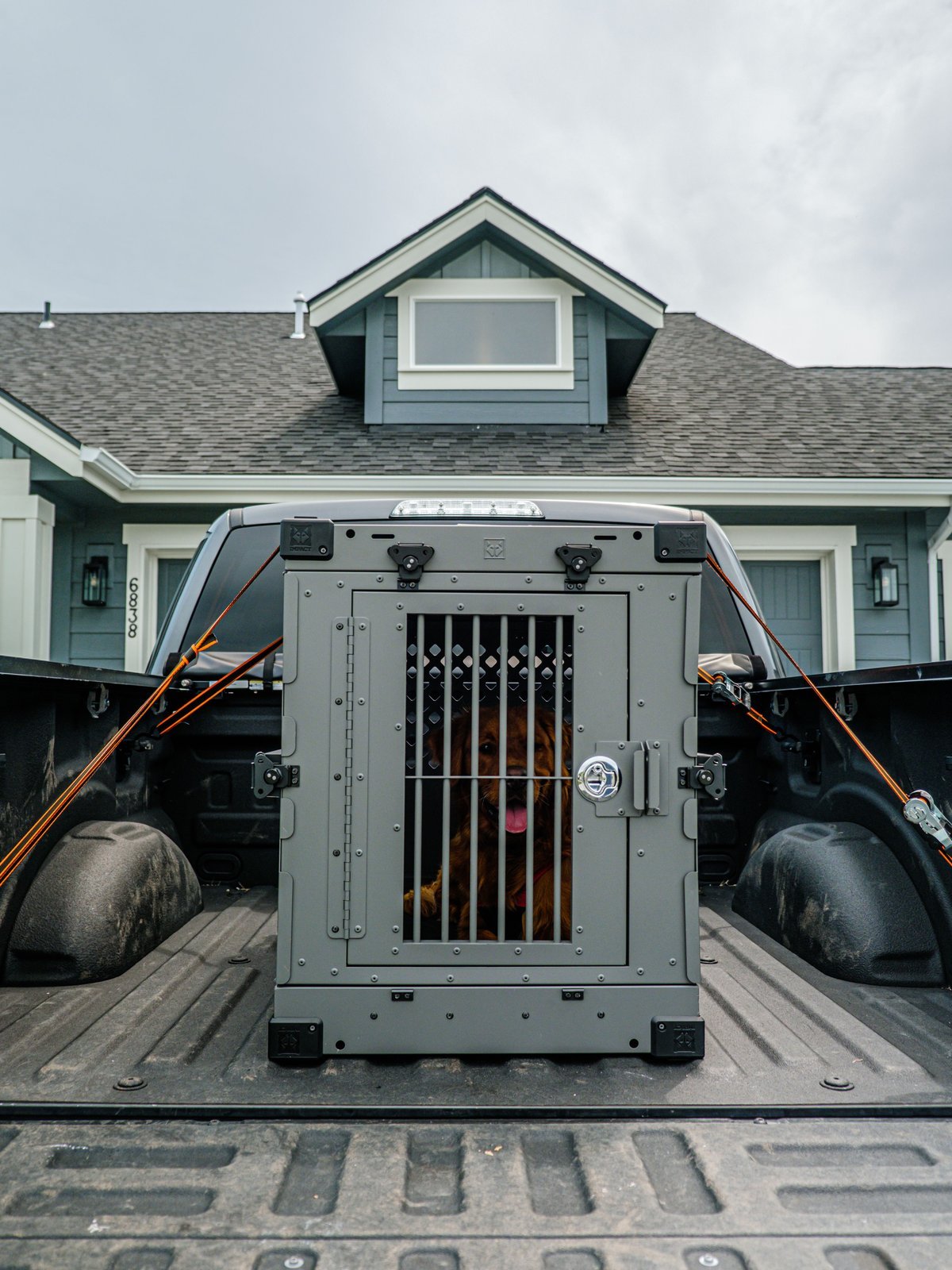
A crate can be the more honest choice for some dogs and some vehicles, including trucks, as long as the crate itself is secured so it cannot slide. The photo above is a crate in a pickup bed, not a passenger-seat harness, and that distinction is the point: pick the tool that actually holds the dog in your vehicle, rather than forcing a seat-belt harness into a space where a crate would do the job better.
If the dog panics, chews through webbing, or shows pain in the neck or chest after a ride, stop using that setup. Check the dog, and contact a veterinarian if there is injury, ongoing pain, or a sudden change in movement. Then choose a different restraint, or skip the trip until you have a plan that does not rely on a damaged strap.
A calm starting plan you can use this week
This week, decide the job for the trips you actually take. If a crate or carrier already works in your car, you may not need a harness at all. If a vehicle-restraint harness is the better fit, buy or adjust one intended for the car, not a sidewalk leftover, and practice putting it on at home with small treats.
Check the seat-belt or tether connection in a parked car before you need it in traffic. Keep the fit snug, keep the slack short, and keep windows from becoming an exit. On the first short rides, stay calm and end the trip if the dog panics or starts to chew the line. When you arrive, attach a leash and unclip the tether before you swing the door wide, especially in a street or a garage. The end of a short trip is easy to rush, and a dog still fastened only to the seat is awkward to lift out safely. Leave no dog unattended in a hot or stale car. A short city trip is safer when the restraint is boring, familiar, and actually attached.
FAQ
Can I clip my dog’s walking harness to the seat belt for a short trip?
Not as an automatic substitute. A walking harness is built for sidewalks, and clipping it to a seat belt does not turn it into a car harness. Use a restraint the maker designed for a vehicle, or choose a secured crate or carrier instead, especially if the walking harness has no intended car attachment point.
Is every harness marketed for cars crash-tested?
No. Not every harness sold for car use has been crash-tested, and this guide does not assign test scores or rank models. If testing matters to you, read what the maker actually published about what was tested. A badge on the package is not the same as a result you have checked.
When is a crate or carrier better than a car harness?
A crate or carrier can be better when the dog already settles in one, when your vehicle can hold and secure it, or when a small dog will travel more calmly in an enclosed space than on a seat. A harness is not the only honest option, and it is not automatically safer in every car.
How should I get my dog used to a car harness?
Fit it at home first, in short, quiet sessions, and reward calm wearing with small treats. Then practice in a parked car with the tether attached before you add a short ride. If the dog panics or chews the tether, stop and return to an easier step, or switch to a safer setup.
When should I contact a veterinarian about car travel?
If the dog has a neck or chest injury, seems painful after a ride, panics in a way you cannot safely manage, or chews gear so the restraint is no longer reliable, stop and get help. Injury and a sudden change in comfort are veterinary questions, not reasons to tighten the same straps and try again.
[…] you think “the cover will hold them.” For restraint in a private car, start with dog car harnesses for city trips. A slick cover can let a dog slide under a seat or into the footwell, so skip anything that makes a […]