

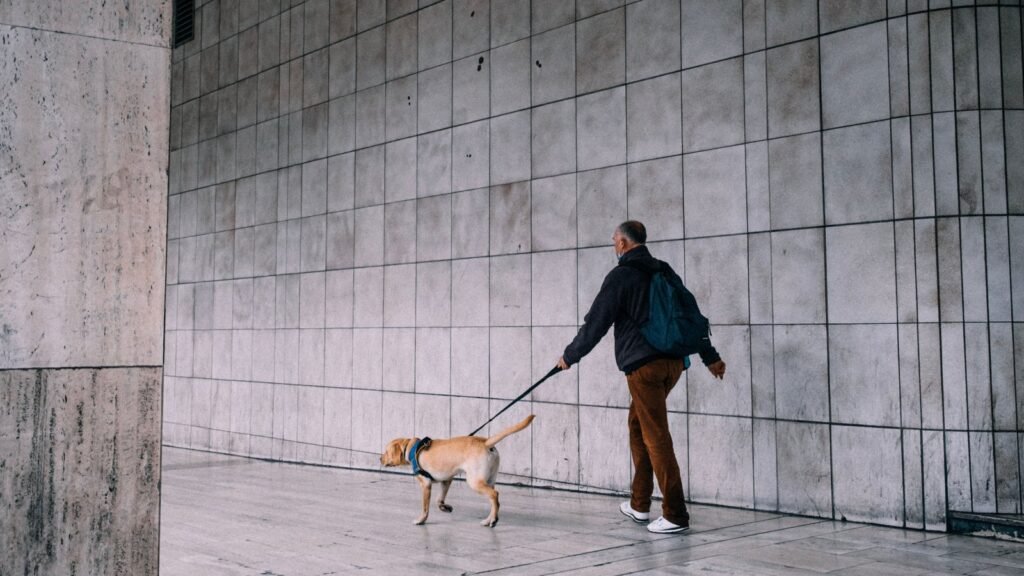
If you are shopping for the best dog leashes for city walks, it helps to drop the idea of a trophy lead. A city leash has a narrower job than a trail line in an empty field. It has to keep a dog in a predictable space on a pavement, leave your other hand free for a door or a bag, and stay comfortable when the walk includes curbs, bike stands, and other people.
A useful mindset is this: you are choosing a handling tool for the streets you actually use, not a personality statement and not a training diploma. Length, material, clasp, and the handle in your hand will do more than a “best of” list that invents winners. A standard walk leash is enough for many everyday outings. A shorter traffic-length leash, or a second handle closer to the clip, can be more practical when the pavement narrows or you need the dog closer at a crossing.
This is general information for dog parents in the US and UK, not a reactivity program, not a veterinary plan, and not a promise that a new leash will stop pulling. If walks feel unsafe, if the dog freezes, snaps, or panics, or if pulling is more than you can hold, contact a veterinarian or a qualified trainer. Gear can make handling clearer. It cannot replace help when safety is the real problem.
A city leash is a handling tool, not a fashion contest
On a city sidewalk, the leash is doing three simple jobs. It keeps the dog out of the road and out of other people’s legs. It gives you a short line of communication when you ask for a pause at the curb. And it has to be something you can hold for the whole loop without the handle cutting into your hand or the clasp surprising you at a doorway.
Those jobs are different from teaching the dog to walk politely, and they are different from choosing a harness. If the main issue is a dog who pulls hard into the equipment, start with dog harnesses for pullers and with fit, not with a heavier lead. If the main issue is slack versus a tight line once you are already moving, that is a training plan; see how to teach loose-leash walking on city sidewalks. This article stays with the leash itself: types, what to look for, and what is a poor match for everyday pavements.
A “best” leash here is the one that matches your streets. A wide promenade, a narrow high street, and a tight block of apartment buildings do not ask for the same length. You do not need a ranked list. You need a length you can keep predictable, hardware you trust, and a handle you will actually want to hold.
Length: when a standard walk leash is enough

A standard walk leash is the mid-length lead many people already own: long enough for the dog to sniff a tree pit or sit at a curb, short enough that the dog is not in the next lane. These are commonly sold in a mid-range length, often around four to six feet, or about 1.2 to 1.8 metres. That range is a type, not a rule, and not a claim that one exact length wins. What matters is whether you can keep the dog in a clear space on your usual pavements without constantly gathering slack.
For a lot of everyday city walks, that standard length is enough. It works well when the sidewalk is reasonably wide and the dog already walks near you for much of the route. It also works in a building corridor and a lift if you shorten it in your hand before you go through a door. You do not automatically need a specialist lead because you live in a flat.
It becomes less enough when the pavement is genuinely tight: outdoor seating, bins, a bike dock, a bus queue, or a crossing where a longer arc would put the dog into traffic. In those moments, people often “make” a shorter leash by choking up on the line. That can work, but only if the handle is still secure and the remaining length does not slip. If you find yourself gathering the leash at every corner, a shorter option, or a leash with a second handle nearer the dog, may simply be easier than improvising every time.
Think about the walk you take most days, not the occasional open park. If most of the route is a standard sidewalk with a few tight spots, a mid-length leash you can shorten in the hand is a calm default. If most of the route is crowded or runs along a road with no verge, a shorter everyday length may be the better default, with a longer leash saved for quieter places.
Traffic-length leashes for tighter sidewalks
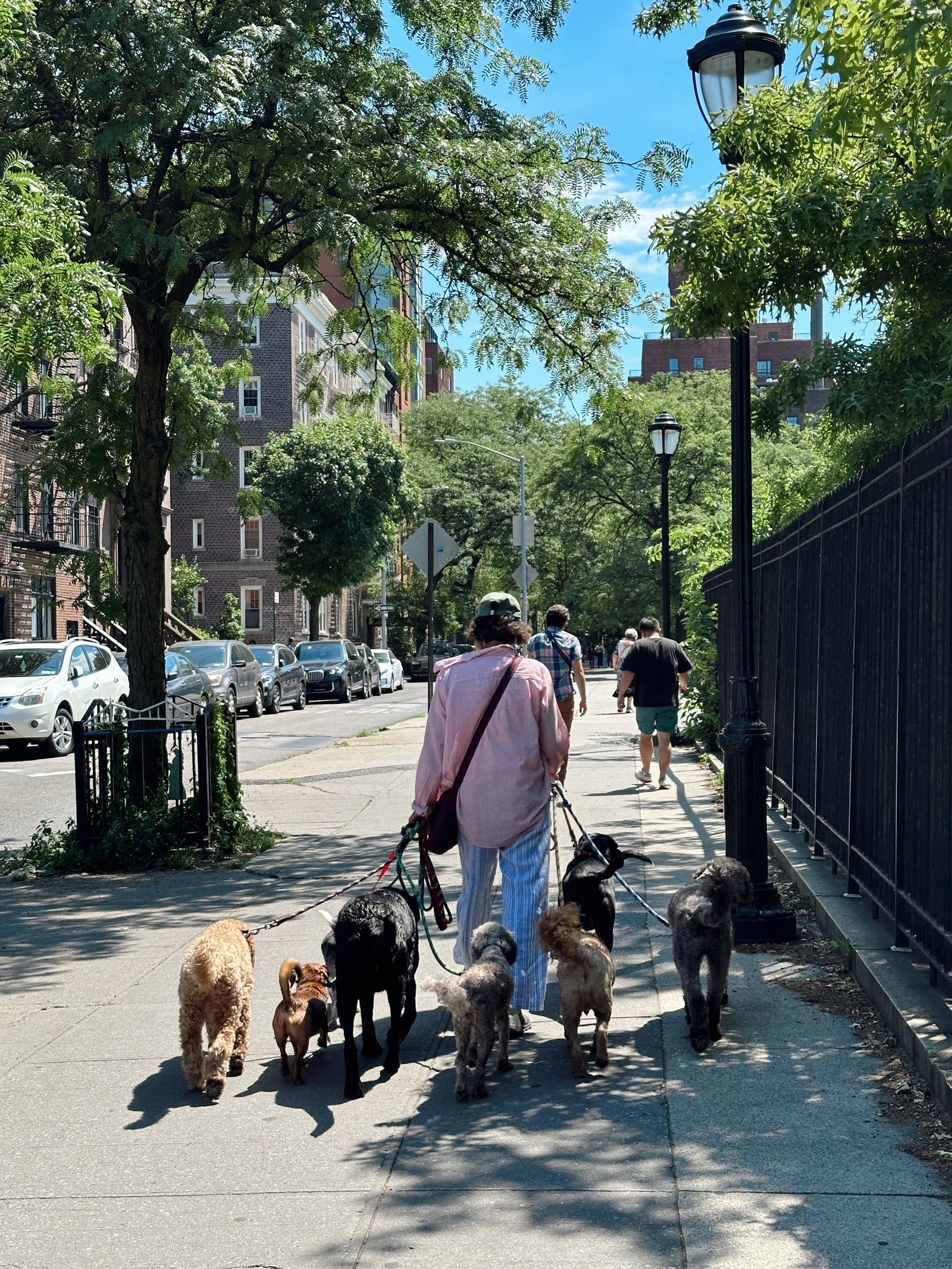
A traffic-length leash is a shorter lead, sometimes only a couple of feet, used when you want the dog close: crossing a street, standing at a light, passing a tight shopfront, or waiting for a lift. Some are sold as standalone short leashes. Others are a standard leash with an extra handle near the clip, so you can switch to a close hold without unclipping.
The point is control of space, not a sharper correction. A short leash should not become a way to yank. It should let you keep the dog beside you when there is no room for a wide sniff. In apartment buildings, that close hold is often more useful in the lobby, the elevator, and the steps than on a quieter residential sidewalk.
You do not always need a separate traffic leash. If your standard lead has a second handle, or if you can gather it securely, one leash may cover both jobs. A second, shorter leash can still be worth having if you regularly walk in crowds, handle more than one dog, or find your mid-length leash awkward to shorten. Clip the one you will actually use before you leave the flat. A shorter leash can make a difficult moment more manageable; it cannot promise that the dog will stay relaxed at a bike, a bus, or another dog. If those moments are the real problem, get training help rather than only buying a shorter line.
Material, clasp, and comfort in the hand

Material is a comfort and weather decision, not a status one. Flat nylon or polyester webbing is common, light, and easy to wash, though thin unpadded webbing can rub or slip in a wet hand. Coated or waterproof-style webbing wipes clean after a rainy pavement and holds less odor than some fabrics. Leather can feel kind in the hand if you maintain it, but it is less forgiving when it stays wet. Rope can be comfortable or can burn a hand if a dog suddenly hits the end, depending on thickness. Chain is durable and hard to chew, but it is heavier, noisier in a hallway, and uncomfortable in cold weather unless the part you hold is a padded or fabric handle. None of these is universally “best.” Choose what you can hold, clean, and inspect.
The clasp is the piece that actually keeps the dog attached. Look for a clip you can open with one hand, that closes fully, and that is not already bent, rusty, or loose. A simple bolt or trigger hook is enough for many people; a locking style can help if you will actually use the lock. Check it before the walk, not after a close call at a curb. The clip should attach to a ring meant for a leash, usually on a well-fitted harness or a collar that will not slip off.
Comfort in the hand is easy to underestimate until the third block. A wider handle, a little padding, or a shape that does not twist can be the difference between a calm grip and a sore palm. A loop large enough for your whole hand is safer than a thin tab you can lose if the dog startles. If you often carry keys, a bag, or a coffee, notice whether you can keep a secure one-handed hold. If a material looks handsome but slips in the rain, it is the wrong material for your city.
What not to use for everyday sidewalks
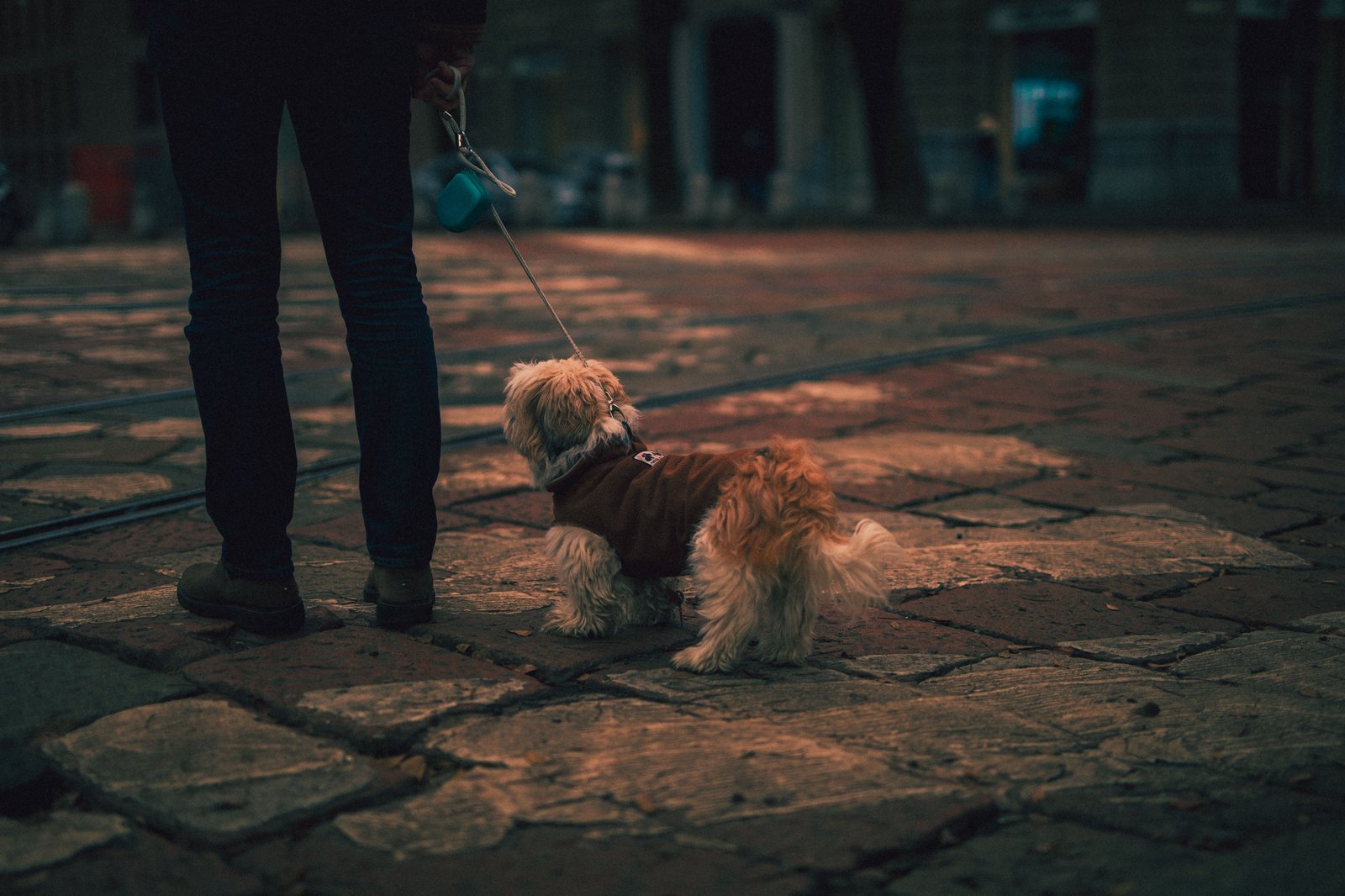
Some tools that are reasonable in an open space are a poor match for a busy pavement. A very long training line, the kind used for recall practice in a quiet field, gives a dog too much room to arc into cyclists, shop doors, or the road. Save it for places where that length is actually safe.
Retractable leashes deserve a calm, practical note rather than a scare story. They can be useful in an open, low-traffic area where you want a longer line and you are paying attention to the lock. On a crowded sidewalk, the same design is harder to manage: the length changes, the thin cord is difficult to share with other pedestrians, and it is easier for a dog to reach a curb, a bicycle, or another dog before you have shortened the line. If you already own one, keep it locked short in crowds, or switch to a fixed-length leash when the pavement is tight. You do not need to throw it away to admit it is a weak everyday sidewalk tool.
Skip anything you cannot inspect or trust: a frayed stitch, a clasp that only half closes, a handle that has torn, or a lightweight clip on a dog who can lunge hard enough to bend it. A chewed lead is a replacement, not a character-building exercise. Visibility on the leash can help at night, but it does not replace a length you can control. Extending handles, waist belts, and double couplers all exist, and some people like them. They still have to pass the same tests: predictable length, a secure clip, and a hold you can keep when the sidewalk gets suddenly narrow.
A calm way to choose
Use this as a shortlist, not a scorecard:
- Choose a fixed length you can keep predictable on your usual sidewalks, often a mid-length standard walk leash, with a way to shorten it at crossings.
- Add a traffic-length leash or a second handle if you regularly need the dog closer in crowds, lobbies, or at the curb.
- Pick a material you can hold in rain and wipe clean after a city walk.
- Check the clasp with one hand, and replace it if it is bent, rusty, or reluctant to close.
- Make sure the handle is comfortable for a full loop and secure if the dog startles.
- Pair the leash with a well-fitted harness or collar meant for walking, and keep training separate from shopping.
If you are still deciding between two similar types, take the one that is easier to hold and easier to shorten. Style can come second. The best dog leashes for city walks are the ones that disappear into a routine: clipped on in the hallway, held comfortably, shortened when the pavement tightens, and checked often enough that the hardware never becomes the surprise. Choose a type that fits your streets, and let training live in its own plan rather than in a product title.
FAQ
What length of leash is best for city walks?
There is no single winning length. A standard mid-length walk leash, often around four to six feet or about 1.2 to 1.8 metres, is enough for many everyday sidewalks if you can shorten it in your hand at crossings. A shorter traffic-length leash is more useful when the pavement is tight or you need the dog close in a lobby or at a curb. Choose the length that keeps the dog in a predictable space on the routes you actually walk, not a number from a ranked list.
Do I need a separate traffic leash if I already have a standard one?
Not always. If you can gather your standard leash securely, or if it already has a second handle nearer the clip, you may already have a close-hold option. A separate short leash is worth considering if you regularly walk in crowds, handle more than one dog, or find your mid-length lead awkward to shorten. Clip on the length you will need before you leave the building, especially in a tight hallway or lift.
Are retractable leashes all right for city sidewalks?
They are a weak match for a crowded pavement, even if they are useful in a more open space. The length changes, the cord is thin, and it is easier for a dog to reach a road, a bicycle, or another person before you lock the line short. If you use one, keep it locked short in crowds or switch to a fixed-length leash on busy sidewalks. This is a practical limit, not a claim that retractable leads are never appropriate anywhere.
Should a city leash clip to a harness or to a collar?
Either can be used if the equipment fits and is meant to take a leash. Many city walkers prefer a well-fitted harness, especially if the dog pulls, because it spreads pressure away from the neck; that is a fitting question covered in dog harnesses for pullers. A collar should not be able to slip off, and a clip should attach to a proper ring. The leash cannot fix a poor fit. If you are unsure, have someone show you the attachment on your own dog before you rely on it at a curb.
Will a better leash stop my dog from pulling?
No honest gear guide can promise that. A comfortable handle, a predictable length, and a secure clasp make pulling easier to manage, and a well-fitted harness can change how the pull feels, but the walking habit itself is a training job. Use loose-leash walking on city sidewalks for that work, and get qualified help if walks feel unsafe. A new leash is a tool, not a cure and not a deadline for perfect manners.
[…] should be replaced, not just washed. For choosing a leash that suits pavements and lifts, use best dog leashes for city walks. Hang the leash to dry so the metal is not sitting in a puddle. A shower hook or a door hanger is […]