


If you are shopping for the best GPS tracker for city dogs, start with the job rather than a drawer of similar-looking gadgets. The job is a location device that rides on the dog when you need a better idea of where they are. It is not a camera that watches the apartment, and it is not a replacement for a leash, an ID tag, or a microchip.
A GPS or similar tracker can be useful for an escape-prone dog, a travel day, or an off-leash park visit. It can also be the wrong tool. Many city dogs are better served, day to day, by a well-fitted ID tag, an up-to-date microchip, and a solid leash habit. A tracker is not a guarantee a lost dog will be found. Service plans, a charged battery, and a snug fit all matter, and city buildings or underground parking can limit a signal.
This is general information for dog parents in the US and UK, not a veterinary diagnosis, and not a lab test of named models. There are no rankings, prices, scores, or range claims here, and this guide does not pretend to have tested devices.
A tracker rides on the dog; a camera watches the apartment
A pet camera is a home tool. It can tell you whether the dog is on the sofa, at the door, or barking at a delivery in the hall. That is a different job from locating a dog who has already left the building. If you are mainly worried about what happens while you are out, start with pet cameras for apartments, along with a plan for leaving a dog home alone in an apartment. A camera does not follow the dog down the elevator.
A tracker, by contrast, is meant to travel with the collar or harness. It is only as useful as its fit, its charge, and the service that actually reports a location. It does not make an open door safe, and it does not teach the dog to come back.
When a location tracker actually helps a city dog
The clearest uses are specific, not vague “peace of mind” shopping.
An escape-prone dog is one honest case. Some dogs slip a collar, push past a guest, or bolt when a lobby door opens. A tracker cannot undo that moment, and it is not a substitute for management at the threshold. Teaching a dog to wait at the door remains the safer everyday habit. If your dog already tends to dart, tighten the setup first: leash on before the latch, a body block, a second person when you have guests. A tracker may add a location clue if the worst happens. It does not give you permission to “see if they come back” in a hallway, stairwell, or street.
A travel day is another. Hotels, family homes, new sidewalks, and transit stations are full of openings a familiar apartment does not have. A tracker can be a backup on a trip if the dog is already used to wearing it, the battery is charged, and you know how to open the app before you need it in a panic. It still does not replace a leash in a new place, an ID tag with a reachable number, or a microchip registered to your current contact details.
An off-leash park visit is a third. If you use a securely fenced area, or a place where off-leash time is allowed and your dog has a reliable recall, a tracker can help if the dog slips out of sight behind a hill, a parked car, or a group of people. It is a supplement to teaching recall in a city park, not a substitute for it. If recall is shaky, keep the leash on. A flashing dot on a phone is slower than a dog who already comes when called.
If a dog is already missing, use every ordinary tool at once: call, check the last place you saw them, tell nearby people, and contact local lost-pet resources. Open the tracker app if you have one, but do not wait on a single pin if the signal looks stale. A dog who was hit, seems injured, or is unwell after being found needs a veterinarian, not a wait-and-see.
When a tag, a microchip, a leash, or a camera is the more honest tool

A well-fitted ID tag is still the tool a stranger can use without an app. If your dog is found by a neighbor, a shop worker, or a veterinary clinic, a current phone number on the collar can matter more than a device the finder does not know how to read. Check that the tag is legible, attached, and up to date after you move or change numbers.
A microchip is the tool that still works if the collar comes off. Keep the registration current. A chip does not report live location, and a tracker does not make a chip optional. Use both if you use a tracker at all.
A solid leash habit is the tool that prevents most city losses in the first place. Choose a leash you can hold in crowds and around building doors, which we discuss in leashes for city walks, and use it until you are in a place that is actually safe for the dog to be loose. A tracker is not a long-distance leash.
A crate can be the right management tool at home, on a travel day, or when the door will be busy, which is a separate skill from tracking; see crate training a dog in an apartment. And as already noted, a camera is the right tool for watching the home, not the sidewalk.
If your main fear is “what if they run,” start with the door, the leash, the tag, and the chip. Add a tracker only when you have a clear situation it would actually help, not because a product page made everyday life sound incomplete without one.
Collar versus harness mounting, and a snug fit

Where the tracker sits matters as much as whether you bought one. Some devices clip to a collar ring. Some slide onto the collar. Some ride on a harness, in a pouch, or on a dedicated attachment point. Follow the maker’s mounting instructions, and choose the place the dog cannot easily chew, paw off, or snag on a crate door or a bush.
A collar mount is simple, but it is a poor idea if the collar is loose enough to slip over the head, or if a heavy device unbalances a small dog or rubs the throat. A harness mount can be more stable on a dog who pulls, slips collars, or has a neck that should not carry extra weight. A walking harness is still a walking tool; fit advice for pullers lives in dog harnesses for pullers. Do not assume a bulky “tactical” harness is a tracker, and do not hang so much gear on one set of straps that the fit changes.
Snug is the test, not tight. You should be able to slip two fingers under the collar or harness strap without leaving a gap the dog can wriggle out of. Check again after a walk, when fur has shifted. If the dog has a neck or chest injury, or the device causes a sore, stop and ask a veterinarian how to proceed. A tracker that does not stay on is not doing its job, and a tracker that rubs raw skin is not a reasonable trade.
Introduce the device at home. Let the dog wear the empty collar or harness, then the device, for short, dull sessions before you rely on it in a park or on a trip. If the dog paws at it constantly, hides, or cannot settle, the setup is not ready, no matter how attractive the app looks.
Battery life, service plans, and city signal limits
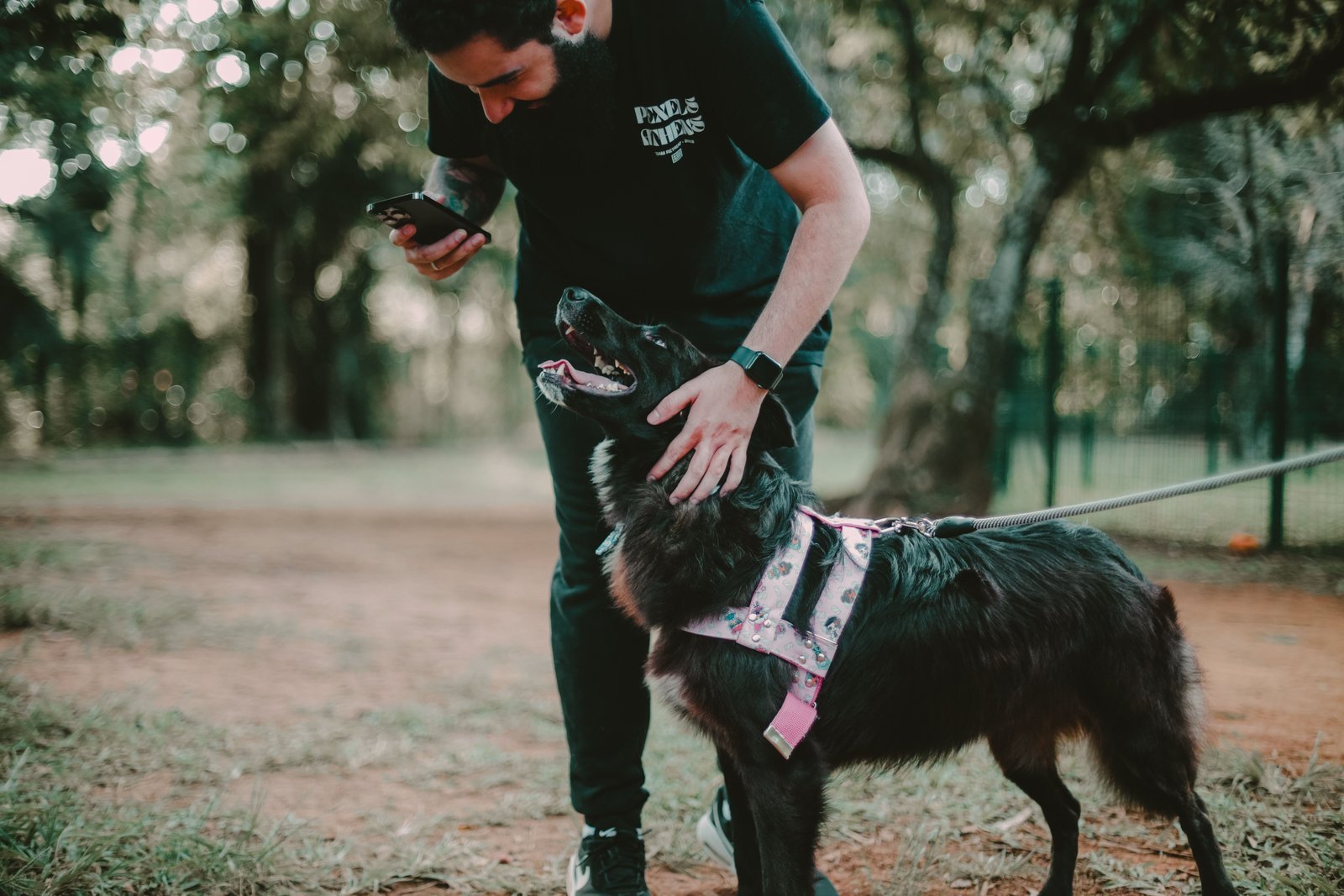
A tracker without a charged battery is jewelry. Before you rely on one, learn how long a charge lasts in ordinary use, how you will remember to charge it, and what the device does when the battery is low. Live tracking, frequent location pings, and cold weather can drain a battery faster than a weekend on a shelf. This guide does not invent run-times or compare brands. Read what the maker actually says, then confirm it in your own week, not on the first afternoon.
Many GPS-style trackers also need a service plan or a paid connection to report a location. Some work only when another person’s phone is nearby. Those are different designs, and they fail in different ways. A plan you have not set up, a lapsed subscription, or an app you cannot log into in a stairwell is not a tracking system. Look at the ongoing requirements before you buy, including whether coverage works in the city you actually live in. No prices are listed here because they change and because this is not a product test.
City buildings and underground parking are hard on signals. Concrete, steel, subway stations, and basement garages can delay, distort, or drop a location. A last known point near a parkade entrance may be the best the system can do until the dog, or you, is above ground again. Do not treat a map pin as a precise, always-current address, especially indoors. If you are searching, use the information as a clue, then look and ask in the real place.
Practice the app at home: opening it, seeing a location, and knowing who else in the household can log in. The first time you need it should not be the first time you try to remember the password. If the device sits in a drawer all week, check the battery before a park visit or a trip, not after the dog is already out of sight.
Privacy and always-on tracking, kept practical

A tracker that reports a live location is also a record of where you and the dog go. That can be useful on a travel day. It can also be more information than you meant to share. Keep the account under a password you control, share access only with people who actually need it, and review whether the device must stay on every ordinary leash walk. Some owners use a tracker for off-leash time or trips and take a different approach for the daily sidewalk loop. This is a practical household choice, not a legal memo.
Always-on tracking is not automatically safer. If the battery is dead by the one hour you needed it, constant use has not helped. If the fit is poor, the device is in the park and the dog is not. The honest extras remain the same: a leash you hold, a tag a stranger can read, a microchip that is registered, and skills at the door and in the park. A tracker can ride along. It should not be the only plan.
FAQ
Is a GPS tracker a substitute for a leash, an ID tag, or a microchip?
No. A tracker is not a substitute for any of those, and it is not a guarantee a lost dog will be found. Use a leash in unsafe places, keep a readable ID tag and an up-to-date microchip, and treat a tracker as an extra source of location information, not the whole safety plan.
When does a tracker actually help a city dog?
It is most useful in specific situations: an escape-prone dog, a travel day in an unfamiliar place, or an off-leash park visit where the dog could slip out of sight. For everyday time at home, a pet camera, a solid door habit, and a leash are often the more honest tools.
Should I mount a tracker on a collar or a harness?
Follow the maker’s instructions and choose the option that stays on without rubbing. A collar is simple but a poor choice if it can slip off or if the device is heavy on a small dog’s neck. A harness can be more stable for some dogs. In either case, the fit should be snug, and you should introduce the device at home first.
Do I need a paid service plan, and what about the battery?
Many GPS-style trackers need a service plan or another kind of paid or network connection, and all of them need a charged battery. This guide does not list prices or tested run-times. Read the maker’s requirements, set the plan up before you need it, and charge the device as part of your ordinary routine.
Will a tracker work inside city buildings or underground parking?
Not always, and not always precisely. Concrete, steel, and underground areas can delay or drop a signal, so a map pin may be a last known point rather than a live, exact location. Use it as a clue, and do not assume the app can see through every garage or lobby.