


If you are looking for the best automatic litter boxes for apartments, the hard part is not a shortage of impressive units online. It is a tight corner, a motor you can hear through a wall, a waste drawer you still have to empty, and the question of whether the machine will actually make your week easier. A house can sometimes hide a bulky unit in a utility room; many flats cannot.
A useful mindset is this: you are choosing a way to manage a litter box that fits your floor plan and your cleaning habits, not hunting for one official winner. Footprint, noise, how waste is stored, and how much work remains after the scooping is automated matter more than a ranked list. For some households, a simple box, scooped often, is still the better tool.
This is general, practical information for cat parents in the US and UK, not a product test and not a veterinary treatment plan. An automatic box will not fix litter-box avoidance, and it will not treat a urinary problem. If your cat suddenly stops using the box, strains to urinate, visits the box far more often than usual, or you see blood in the litter, contact a veterinarian. This guide will not invent model rankings, prices, or test scores, and it will not crown a single “best” product.
Ordinary box shapes and sizes are a separate shopping brief; start with best litter boxes for small apartments if you are still choosing among open pans, covered boxes, and other simple designs. This article stays with self-cleaning units, and with when you do not need one.
An automatic box is optional, and a simple box is often enough
Many cats use a straightforward box perfectly well when it is the right size, is placed thoughtfully, and is scooped every day. If that is already working—the cat goes where you want, the smell is manageable, and scooping fits your routine—you do not need a machine to be a conscientious owner.
A self-cleaning box can still be useful. Some people find daily scooping difficult because of time, mobility, or a busy work pattern. A unit that moves clumps into a drawer can reduce how often you put a scoop in the litter, which some households notice most in a studio where the box is never far from the sofa. Those are convenience questions, not medical ones.
Keep a simple box in the plan even if you buy an automatic unit. You will need a backup when the machine is being deep-cleaned, when a part jams, when the power is off, or when you want a second location. Setup and the number of boxes a household may need are covered in cat litter box setup for apartments; an automatic unit does not replace that thinking, and it does not shrink a multi-cat home down to one gadget by default.
Who a self-cleaning box actually helps
The better match is a household that will still do the remaining work: emptying a waste drawer or bag on a reliable schedule, refilling litter, and taking the unit apart for a real clean. Automation is not a “set it and forget it” promise, however the listing is written.
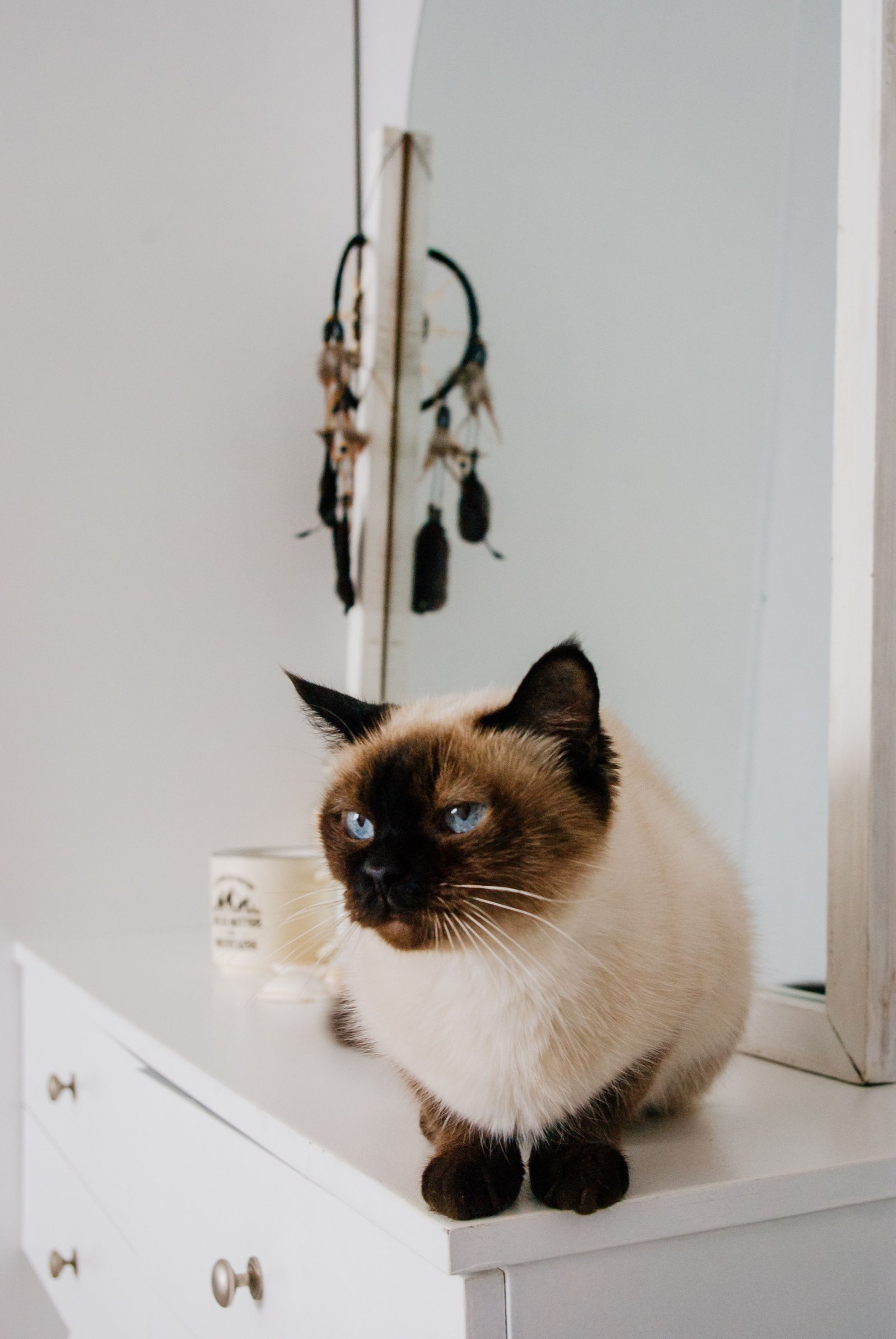
In a small home, the box is never far from the rest of the room, as the dresser scene above suggests, even though that photograph is a cat on furniture, not a litter box. A self-cleaning unit can help if scooping is the part that slips, and if your cat already uses a box without fuss. It is a weaker match if the real problem is a cat who is already avoiding the box, urinating outside it, or crying in the tray. Those are reasons to call a veterinarian, not reasons to add a motor. A new unit can even make a worried cat less willing to enter, especially if it moves, beeps, or closes around them.
It can also be a weaker match if you need to see every clump as soon as it appears. Some people prefer scooping because they notice changes in urine or stool quickly. A drawer that hides waste can make that harder. Noticing a change is not a diagnosis, but hiding the evidence is not a health plan.
If you have more than one cat, do not assume a single automatic unit will serve everyone. Cats differ in how they share, and a unit that is busy, noisy, or slow to reset may be a bottleneck. Capacity, access, and a backup tray still matter, and the setup guide above is the place to plan the room.
Footprint and noise in a small home
Measure the actual corner, not the floor in the product photograph. Many self-cleaning units are taller, deeper, or wider than a simple pan, and some need extra space for a lid, a rake, a rotating globe, or a cable. In a bathroom or the end of a hall, that extra volume is the difference between a passable walkway and a box you shave your shins on.

The photograph above is not an automatic litter box. It is two cats in a tight indoor corner beside a bulky storage bin, and it is a fair reminder of how much floor a large plastic box already uses. An automatic unit is often at least that kind of object, and sometimes more of one. If your only free patch is already doing other storage work, a slimmer, simple box may be the more honest fit.
Then listen. Rakes, belts, and rotating globes make noise. In an apartment, a cycle you barely notice at noon can be a problem at midnight, especially if the unit sits on the other side of a bedroom wall. Some units wait a few minutes after the cat leaves before they start, which is useful if your cat lingers, and still a sound when they do start. A sensitive cat may jump out and not return.
Place the unit on a level, wipeable surface, with enough room for the cat to enter and turn, and keep it away from food and water. If the only possible spot is a bathroom or a hall, walk the route and see whether the box still leaves a path.
Scooping versus self-cleaning: what you are really buying
“Self-cleaning” usually means that after the cat leaves, a mechanism sifts or rakes clumps, or a rotating chamber dumps waste into a drawer or a bag. You are buying a delay and a transfer, not the end of maintenance.
Scooping by hand is direct. You see what came out, you remove it, and you can top up litter in the same minute. The trade-off is the daily task, which some people dislike and some people do not mind once it is a short habit.
A self-cleaning unit can take that daily scoop off your hands. The trade-offs are size, power, noise, cost of liners or bags, and a more complicated clean when something sticks. If the sensor misses a visit, or the rake meets a clump it cannot move, you are back to a scoop anyway—or to a stalled machine and an uninviting box.
Neither type is morally superior. Choose the one you will actually maintain. A neglected automatic box, with a full drawer and a dirty rake, is not cleaner than a simple pan you empty every day.
Liners, waste drawers, and the cleaning you still have to do
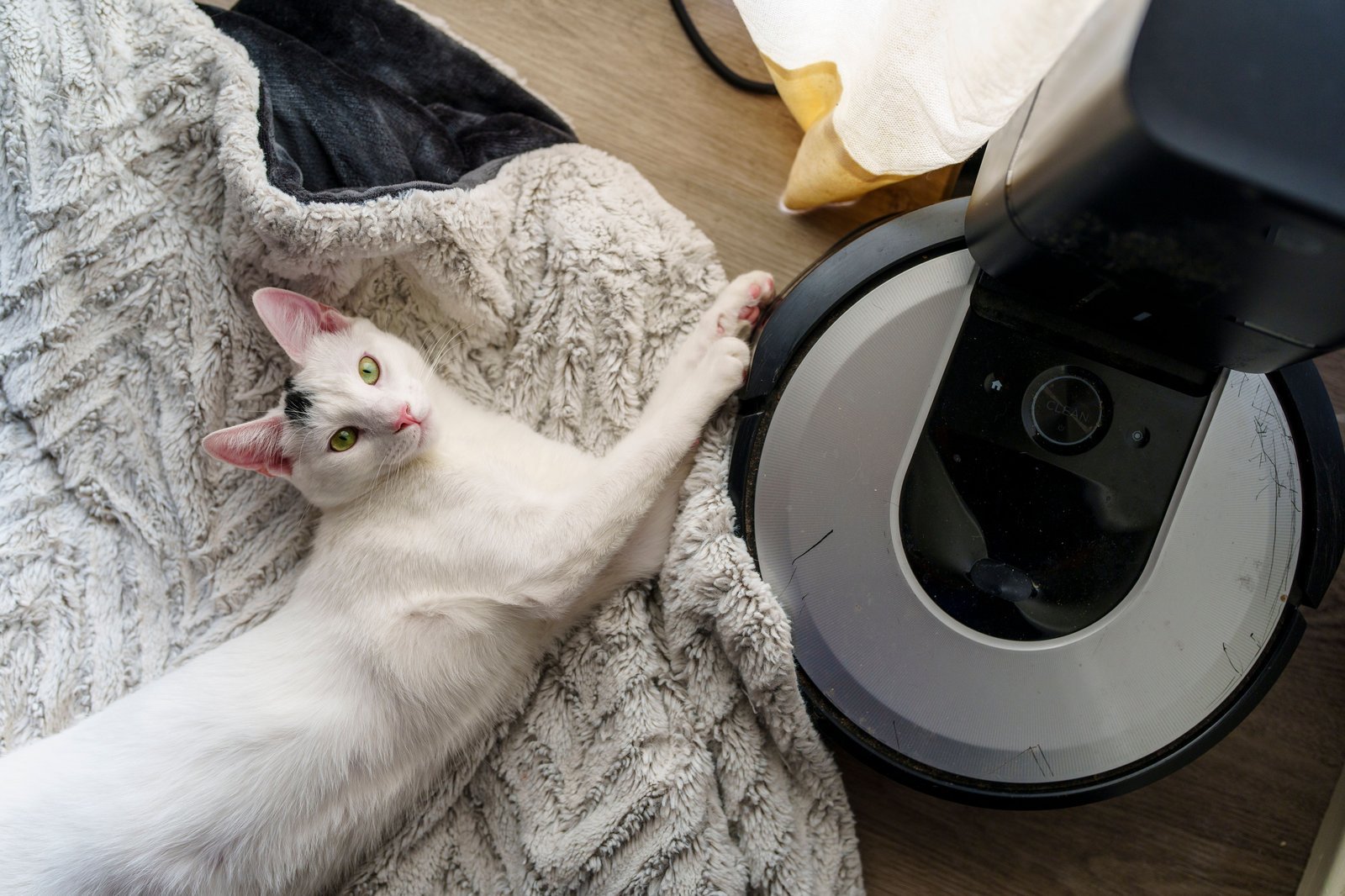
Cleaning is the feature people underestimate, just as they do with other home gadgets. The photograph here is a robot vacuum in a living room, not a litter box, and it is a reminder that “automatic” still leaves work: emptying, wiping, and the odd jam. A self-cleaning litter box has more parts than a pan, which means more disassembly.
Waste typically collects in a drawer, a bin, or a bag. A reasonably sealed drawer can help with odor if you empty it on a schedule you will keep. Leave it for too long and you have a more concentrated problem, not a solved one. Liners and bags, where the design uses them, are ongoing supplies. This guide will not invent prices or a set number of days a drawer should last; follow the maker’s guidance, and empty sooner if you can smell it or the drawer is full.
The litter itself still matters. Some mechanisms work more reliably with a clumping litter of a certain texture, and some struggle with lights, crystals, or very fine dust. That is a compatibility question, not a reason to rewrite a litter review. For odor, tracking, and apartment-friendly litter types, see best cat litter for apartments, then check whether the unit you are considering is designed to work with the litter you actually want to use.
Take the unit apart for a full wash on a frequent, regular schedule, not only when it looks grim. Sensors, rakes, and globe tracks collect litter film. If that rhythm already sounds unlikely in your week, a simple box you will actually scoop and wash may be the more honest choice.
When a simple box is the better buy
A simple box is often the better buy when floor space is already tight, when you or your cat will be bothered by motor noise, or when you already scoop reliably and do not need the extra parts. It is also the better buy when your cat has refused enclosed or moving boxes before, or when you want a clear daily look at what is in the tray.
A simple box is easier to replace, easier to travel with, and easier to add as a second station. It does not need a socket. It does not have a rake to jam. It still needs scooping, a sensible location, and litter you will refresh, but the job is visible and familiar.
None of that makes automatic units a poor idea for every small home. It means “best” here is a good match for your cat, your floor plan, and the cleaning you will actually do—not a star score. If you are buying one to solve hiding, crying in the box, or accidents outside it, pause and speak to a veterinarian first.
A calm way to decide
Bathrooms are a common place to put a box in a small apartment, which is why a bathroom scene belongs in the thinking, even when the photograph is a cat in a sink rather than in a litter box. Walk the room and measure the footprint.
A calm decision can look like this:
- Be honest about whether scooping is the real problem, or whether placement, box count, or a health issue is.
- Measure the height, depth, and width of the corner, including space to enter and to pull out a drawer.
- Listen to a cycle, or choose a design you can return if the sound carries.
- Read the cleaning steps and the liner or bag routine before you buy, not after the unit is in the hall.
- Keep a simple box as a backup, and do not throw out a working tray until the new one is clearly in use.
You do not owe anyone a high-tech tray. You owe the cat a clean, reachable box they will actually use, in a home you can live in too.
FAQ
What is the best automatic litter box for a small apartment?
There is no single best model in this guide, and this article does not invent rankings, prices, or test scores. Look for a unit whose footprint fits a measured corner, whose cycle is quiet enough for your walls, and whose drawer, liner, and cleaning routine you will actually keep. For some households, a simple box that is scooped every day is still the better buy. “Best” here means a good match for this cat and this home, not a crowned winner.
Are automatic litter boxes quieter than scooping by hand?
Not necessarily, and not in the way that matters at night. Scooping makes a short, occasional sound you control. A self-cleaning unit can add a motor, a rake, or a rotating globe that starts after the cat leaves, and that sound can travel through a small apartment. Some designs are milder than others, but you should treat noise as a feature to check, not as a problem the word “automatic” solves.
Do I still have to clean a self-cleaning litter box?
Yes. Waste still collects in a drawer, bin, or bag, liners or bags may need replacing, and the mechanism still needs a full wash on a regular schedule. Sensors and rakes collect film. If you will not empty the drawer or take the unit apart, a simple box you will actually scoop may be the more honest choice. Follow the maker’s cleaning guidance rather than a calendar invented here.
Can an automatic litter box fix litter-box avoidance or urinary problems?
No. A self-cleaning box is not a medical treatment, and it will not cure avoidance, straining, or urinary disease. If your cat suddenly stops using the box, urinates outside it, visits far more often than usual, cries in the tray, or you see blood in the litter, contact a veterinarian. A moving or noisy unit can even make a worried cat less willing to enter.
When is a simple litter box the better buy?
A simple box is often the better buy when floor space is already tight, when motor noise would bother you or the cat, when you already scoop reliably, or when you want a clear daily look at what is in the tray. It is also the better buy if your cat has refused enclosed or moving boxes before. Keep a simple box as a backup even if you later add a self-cleaning unit.