


If you are searching for the best cat scratching posts for small apartments, you may be picturing a slim upright in a corner, hoping it is enough to keep claws off the sofa. That is a fair hope in a studio or one-bedroom, where every square foot is already doing two jobs.
A useful mindset is this: a scratching post is a legal place to claw, stretch, and leave a scent mark, not a piece of magic furniture. The best one is stable enough not to topple, tall or long enough for a real stretch, covered in a surface your cat will use, and placed where the scratching already happens.
This is general information for cat parents in the US and UK, not a product test and not a promise that any post will stop furniture damage. FurSift is not a veterinarian. Scratching is normal. If the habit changes suddenly, or the paws look sore, contact a veterinarian rather than buying a second post and hoping the problem is only boredom.
Why cats scratch, and how a post differs from a tree
Cats scratch to condition the claw sheath, stretch the muscles through the shoulders and back, and leave both a visual mark and a scent mark from the paws. That is why a post that wobbles, slides, or sits in a forgotten hallway often loses to the sofa: the sofa is sturdy, textured, and already in the middle of life.
A scratching post, in this guide, means a dedicated scratching surface: an upright, a corner post, a ramp, or a flat pad. A [cat tree for a small apartment](/best-cat-trees-for-small-apartments/) is a different purchase. A tree is climbing furniture, usually with more than one platform, and sometimes a hideaway. If your cat mainly needs a place to claw, a post or pad is the more compact choice. If the cat also wants to sit up high, a compact tree may be the better fit, and a post can still sit beside it.
You do not have to choose only one outlet. Many indoor cats use more than one texture or angle. A slim upright near the sofa plus a low pad by a window is a realistic apartment plan. A post is only one part of a fuller indoor day, so keep [practical indoor enrichment](/indoor-cat-enrichment-ideas/) in the picture too.
Sisal, cardboard, and wood: start with the surface

The covering is not a style detail. It is the thing your cat’s claws will either accept or ignore. The three materials you will see most often are sisal, cardboard, and wood, sometimes with carpet or fabric mixed in.
Sisal, usually a tight rope wrap or a sisal-covered board, is a common first choice for a vertical post. It gives good purchase, wears in a fairly predictable way, and can be replaced on some designs when the wrap shreds. Look for a wrap that is tight and even, and a post thick enough that the rope has something solid underneath.
Corrugated cardboard is more often used on pads, ramps, and low loungers than on a tall, slim post. Many cats like the way it shreds. It is also usually cheaper to replace than a whole upright, and it sits low, which helps in a tight room or under a window. The trade-off is wear. Cardboard flattens and crumbles, and loose pieces should be cleared so they are not eaten or tracked through the flat.
Wood, including bark-style posts or unfinished boards, appeals to some cats and looks simpler in a small living room. The surface needs to be genuinely scratchable, not a varnished pole a claw cannot catch. Check for splinters, loose bark, and finishes you would not want on the floor.
Carpet-wrapped posts are easy to find and can look “soft,” but they are a mixed bag. If your sofa or stair carpet is a similar texture, some cats treat the post and the furniture as the same invitation.
If you already have a post that is being ignored, change one thing at a time: the texture, the angle, or the place, not all three in a single afternoon.
Height, stability, and shapes that fit a small home
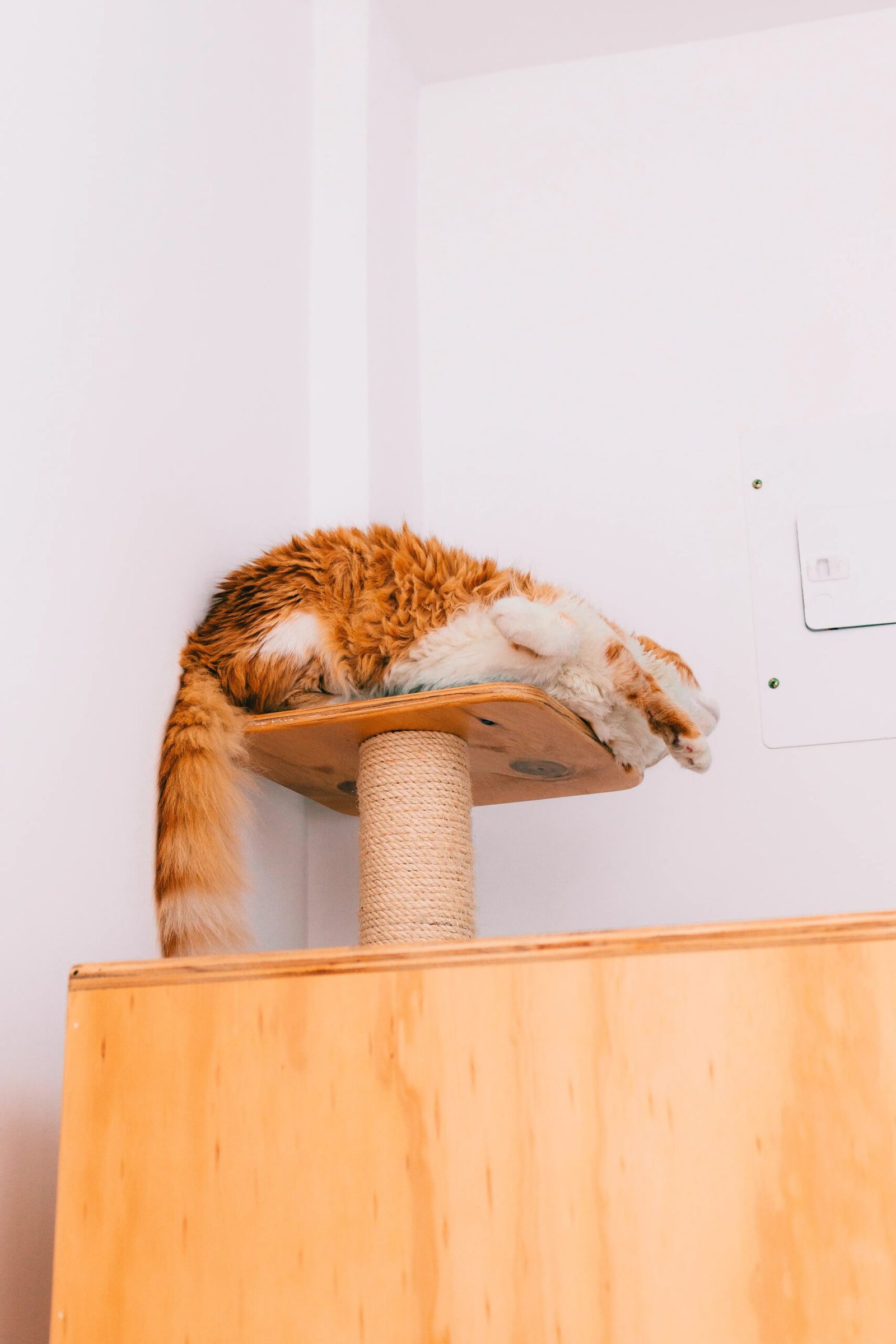
In an apartment, the two measurements that matter most are the height of the scratching surface and the stability of the base. A post that is too short invites a half-stretch and then a return to the taller sofa arm.
For a vertical post, a useful test is whether your cat can reach up into a full stretch, including the front legs, without the post rocking. Adult cats vary in size, so “tall enough” is about the cat in front of you. If you live with a large or hard-pulling cat, favor a wider, heavier base, or a design that can sit tight into a corner so the walls share the load.
Corner posts can be a good small-home compromise. They use a dead corner, and the walls can help brace the unit if the design is meant to sit snugly there. Measure the corner, including skirting boards and radiators, before you buy.
Flat pads and low ramps earn their place when floor area is tight, when a tall post would block a walkway, or when the cat already scratches downward or sideways. They should still have enough length for a stretch and a non-slip underside so they do not skate across laminate or vinyl.
A compact tower with a small platform on top sits in a gray area between a post and a tree. If the main job is scratching, and the top is only a modest perch, it can still be the right small-apartment object, especially when it tucks against a wall.
Stability also includes how the post meets the floor. On smooth flooring, a rubberized or weighted base helps. Give the post a firm shove with your hand before you invite the cat to use it. If it rocks for you, it will rock for a pulling cat.
Placement matters as much as the post you buy

A well-chosen post in the wrong place will lose to a mediocre post in the right place. Put the first post where the scratching is already happening, not where the room would look tidiest.
In a small apartment, try to keep the post in the social part of the home. A scratching object hidden in a spare bathroom is easy to forget and easy to ignore. If the sofa is the current target, place a tall, stable post right next to that corner, close enough that it is the easier reach. Do not block a walkway or a fire escape route; a post that people keep bumping will also get moved, and a moved post stops being a habit.
Keep some distance from the litter box and from food and water. In a studio, that may mean using opposite ends of the same room rather than a true separate space.
If you have more than one cat, do not assume a single post will be shared happily. A second surface, even a simple cardboard pad, can reduce competition.
A new post is easier to accept if it is already a little inviting. Some people rub a bit of catnip on a sisal wrap, or dangle a wand toy up the post so the cat stretches toward it. If the furniture is still taking the brunt, the companion piece is [how to stop a cat from scratching furniture](/how-to-stop-a-cat-from-scratching-furniture/) without turning the room into a conflict: protect the current target, and make the post the easier option, rather than expecting the post to win from across the room.
A calm way to choose, and when a post is not the whole answer

Start with what you already know about your cat. Do they scratch up, down, or both? Do they prefer a tight, ropey texture or something that shreds? Is the current damage on a tall sofa corner, a low rug edge, or a door frame? Buy for that pattern first. A tall sisal post for a vertical scratcher, a long cardboard pad or ramp for a horizontal scratcher, and enough stability that a full pull does not topple the object.
Then check the room. Measure the corner or wall space, including the swing of a door and the width of a walkway. Confirm the base will sit flat. If you rent, avoid anything that needs to be screwed into a wall unless you have permission; a freestanding post with a proper base is the simpler path in many flats.
Introduce the post, leave it in place, and give it a fair week in the right location before you decide it has failed. If it is ignored, move it closer to the real target, or add a second texture, rather than immediately buying the tallest model you can find.
A post is not a complete indoor life, and it is not a treatment. It will not solve stress on its own. If furniture scratching comes with hiding, changes in appetite, or other [signs your cat may be stressed](/signs-your-cat-is-stressed/), deal with the wider day: play, hiding places, predictable routines, and veterinary advice if you are worried.
A calm starting plan looks like this:
- Decide whether you need a scratching post or pad, a compact tower, or a full cat tree, and do not treat those as the same object.
- Match the surface to the cat: sisal for many vertical scratchers, cardboard for many horizontal ones, wood only if the surface is genuinely scratchable and safe.
- Choose height for a real stretch, and a base that does not rock on your floor.
- Place the post where the scratching already happens, usually in the main room, not in a forgotten corner.
- Protect the furniture you care about while the new habit forms, and give the post time to be used.
- Add a second surface if you have more than one cat, or if your cat clearly uses two angles.
- Contact your veterinarian if scratching changes suddenly, if the paws look sore, or if your cat seems to be in pain.
The best cat scratching posts for small apartments are the ones that stay upright, fit the wall or corner you actually have, and feel more satisfying to use than the sofa arm. You need a surface your cat will claw, a place that already belongs to the habit, and enough stability that a full stretch feels safe. If the scratching worries you, or if it arrives with other changes in behavior, ask your veterinarian for individual advice.
FAQ
Will a scratching post stop my cat from scratching the sofa?
Not on its own, and not always. A good post gives your cat a legal place to stretch and mark, which is the foundation. You still need to put that post beside the furniture that is already being used, and you may need to protect the sofa while the new habit forms. Some cats use both for a while. If the post is unstable, too short, or made of a surface your cat ignores, the sofa will usually win.
Is a scratching post the same thing as a cat tree?
No. A scratching post or pad is mainly a surface for clawing: an upright, a corner post, a ramp, or a flat scratcher. A cat tree is climbing furniture with platforms, and often a larger footprint. Some compact towers blur the line because they have a small perch on top, but if you are buying for scratching in a tight room, start with a stable post or pad. If your cat also wants height and a sitting place, compare compact trees as a separate decision.
Sisal, cardboard, or wood: which is best in a small apartment?
There is no honest single winner. Sisal is a strong all-round choice for many vertical posts. Cardboard is often better for low pads and for cats who like a shreddable, horizontal surface, though it wears faster. Wood can work if the surface is scratchable and not heavily varnished, and a heavier wooden base can help with stability. Watch what your cat already chooses in the room, then match that texture and angle.
How tall should a scratching post be?
Tall enough that your cat can stretch the front legs fully without the post tipping. That height depends on the cat, so a post that suits a small adult may be too short for a large one. If your cat currently uses a sofa arm, the post should offer a comparable stretch. Stability matters as much as height: a tall, narrow post with a small base is a poor fit on a smooth apartment floor.
Where should I put a scratching post in a studio or one-bedroom?
Put it where the scratching already happens, usually beside the sofa, a favorite sleep spot, or a doorway the cat uses to stretch. Keep it in the main living area rather than tucked in a bathroom. Leave some distance from the litter box and from food. Make sure it does not block a walkway or a door. If space is very tight, a low pad or a corner post can do the job that a mid-room upright cannot.