


If you have ever searched “how often to bathe a dog” after a muddy walk—or after a friend insisted on weekly baths—you have met the real problem: there is no single calendar that fits every dog. Coat, skin, age, health, and lifestyle matter more than a round number copied from a grooming tip.
A useful starting point for many healthy adult dogs is a bath every four to eight weeks, or whenever brushing and a wipe-down will not fix the dirt or smell. Some short-coated house dogs go longer; curly coats, allergy-care plans, or muddy hobbies may need a different rhythm.
This is general information for dog parents in the US and UK, not a veterinary diagnosis or a substitute for professional advice. If your dog has raw skin, open sores, sudden hair loss, intense itching, a strong yeasty or foul odor, or seems unwell, contact your veterinarian before you add more shampoo.
There is no universal bathing schedule
“How often” is a matching problem, not a moral one. A sofa Beagle and a Labrador who swims twice a week are both normal dogs with different cleaning needs.
Think in three layers:
- Baseline care. Regular brushing, paw wipes, and occasional spot-cleaning prevent a lot of full baths.
- True bath days. Shampoo when the dog is dirty, greasy, or has an odor that brushing cannot fix.
- Special situations. Rolling in something awful, a messy accident, or a veterinarian-directed medicated bath.
A schedule is a reminder, not a rule. If the coat still feels clean, skip the bath. If the dog just rolled in something foul, do not wait for “bath week.”
Why too many baths—and too few—both cause trouble
Bathing more often than the skin can handle can strip natural oils. The coat may look dull, the skin may feel tight or flaky, and some dogs then scratch more—which makes owners reach for the shampoo again.
Going too long between washes is not automatically “more natural.” Dirt, pollen, and dried mud can matt a longer coat, irritate skin folds, and leave a lingering odor. The aim is comfortable skin and a coat that smells like a clean dog, not a scented candle.
How coat type changes the calendar

Short, smooth coats—the kind you see on many Beagles, Boxers, and Dachshunds—shed dirt fairly easily. A wipe after a wet walk and a bath every six to eight weeks, or less, often works unless the dog is truly filthy.
Double coats, including those on Golden Retrievers, Huskies, and German Shepherds, have a denser undercoat. Brushing is the main event; bathing is support. Every six to twelve weeks is a common starting range, plus extra baths after heavy mud. Always brush the undercoat afterward, or the fur can feel worse.
Curly or continuously growing coats, such as those on Poodles and many Poodle mixes, hold dirt and form mats if neglected. They often do well with a bath every three to six weeks, paired with combing. The bath does not replace the brush.
Wire-coated terriers can lose their texture if they are shampooed very often or with a product meant to make hair silky. Ask your groomer about a sensible rhythm.
Skin folds may need gentle, separate care more often than a full-body bath. If a fold looks red, sore, or smells unpleasant, ask your veterinarian how to care for it.
Coat labels on mixed-breed dogs are only a clue. Look at whether water rolls off or soaks in, and whether the coat mats behind the ears. Those answers should shape the calendar more than the name on the paperwork.
Lifestyle matters as much as the breed label
An apartment dog on dry park paths needs fewer baths than a dog who hikes boggy trails. After a muddy day, let the mud dry and brush it out, then wash only what is still stained or smelly.
Swimmers need a plan. Lake, sea, and pool water can leave residue or dry the coat. A thorough freshwater rinse is often enough; save shampooing for when the coat feels coated or smells off, unless your veterinarian says otherwise.
Dogs with environmental allergies are sometimes prescribed more frequent baths with a specific product. That is a medical plan, not a trend—do not copy another owner’s routine unless it was recommended for your dog.
Puppies benefit from short, positive, infrequent baths so they learn that water is boring and well paid. Senior dogs may still need baths, but they tire and chill faster and may struggle with slippery tubs. Keep sessions short, use a non-slip mat, and dry them completely.
How to tell your dog actually needs a bath
Use your senses before you fill the tub:
- A noticeable odor that is more than faint “dog,” especially after the dog has been dry indoors.
- Visible dirt, sticky residue, or a coat that feels greasy.
- Mud or debris that brushing cannot remove.
- A coat that still looks flat and unclean after a good brush-through.
Do not treat every odor as a shampoo problem. A sweet, musty, or yeasty smell, a sudden skin-odor change, or an itchy red underside can point to infection, parasites, dental disease, or another medical cause. Extra perfume shampoo will not solve those, and bad breath after a clean bath is another clue that the coat was never the whole story.
If you live with a strong chewer, inspect toys and bedding too. A sour stuffed toy or grimy chew can perfume a freshly washed dog by afternoon, so choose tougher toys you can clean.
A calm way to bathe a dog at home
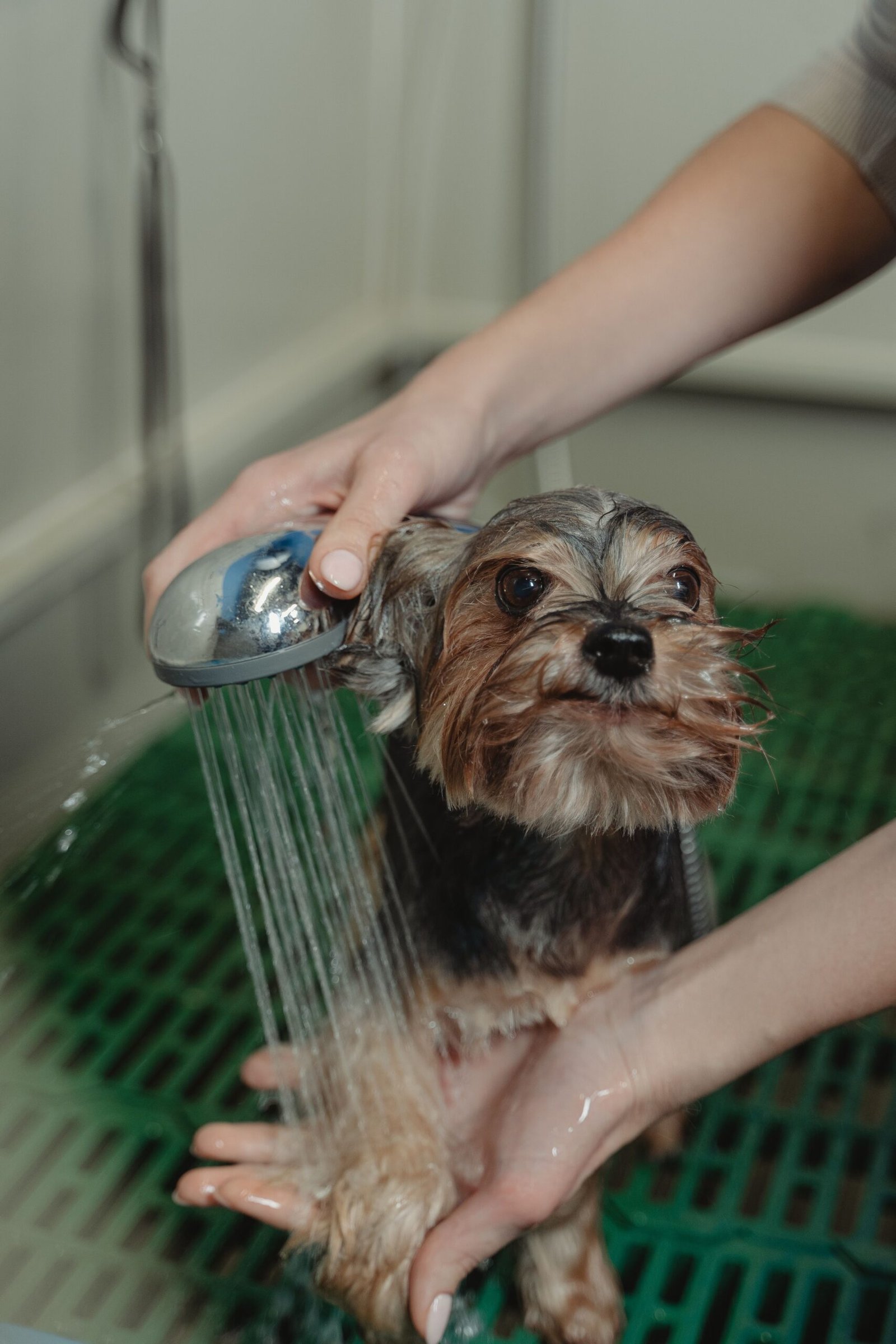
Preparation prevents most bath-time chaos.
- Brush first, especially on medium and long coats, so mats do not tighten in water.
- Set out towels, a non-slip mat, treats, and a dog shampoo—not a human hair product.
- Use lukewarm water. Hot water is uncomfortable and can worsen itch.
- Wet the coat thoroughly, working from the neck back. Keep water out of the eyes and ears; you do not need to dunk the head.
- Work in a small amount of dog shampoo, then rinse until the water runs clear and the coat no longer feels slippery. Leftover soap often makes dogs itch the next day.
- Clean the face with a damp cloth rather than a blast of spray.
- Stop while your dog is still coping. A slightly imperfect bath is better than a thorough battle.
If your dog panics, freezes, snaps, or tries to leap out, the problem may be the setup, pain, or a past scare—not “stubbornness.” Lower the water pressure, try a handheld sprayer, or ask a groomer for help. A professional bath is a valid choice for heavy coats, anxious dogs, or anyone who cannot safely lift their dog into the tub.
Drying is part of the bath
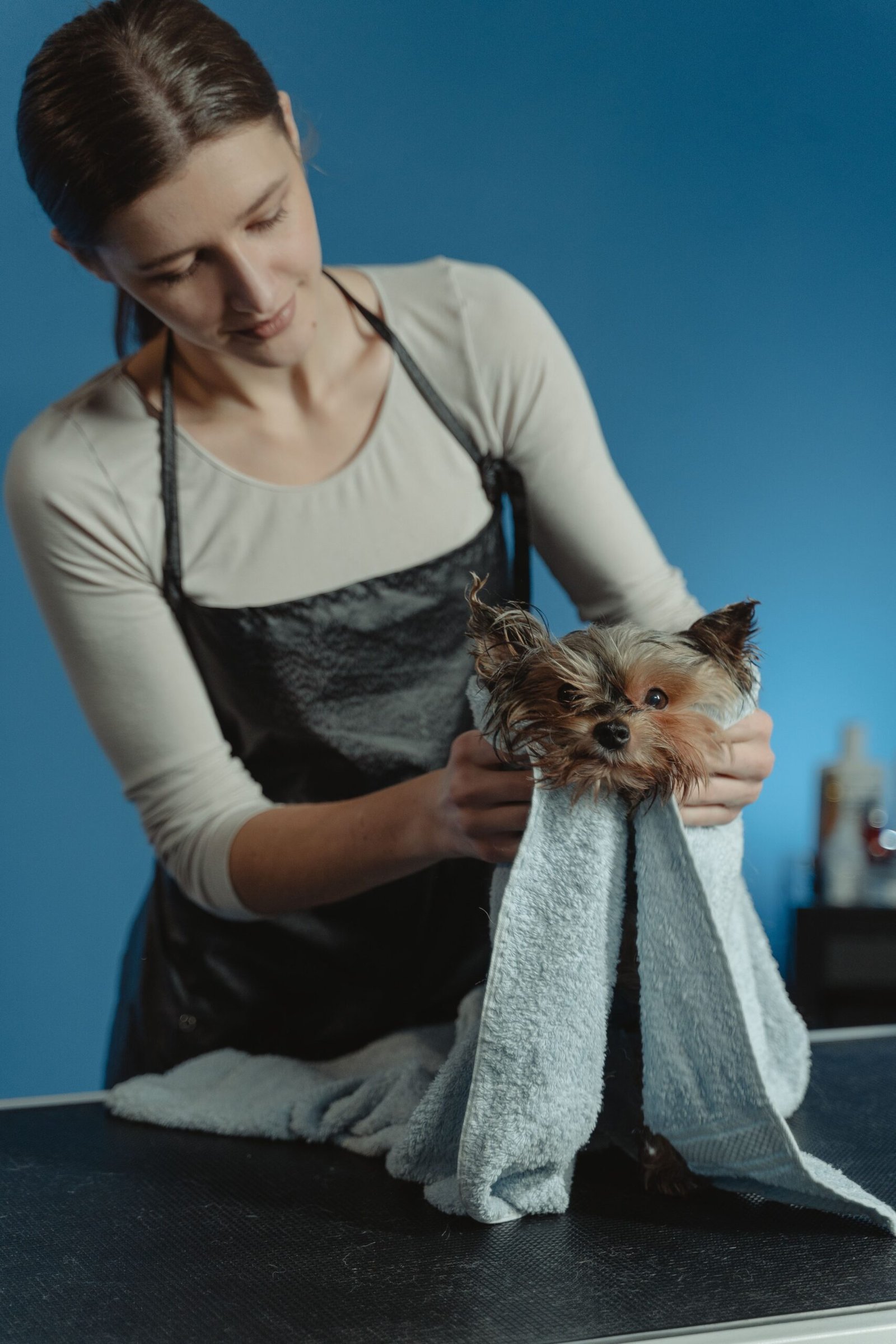
A damp dog left on a cold floor can chill, and a damp double coat can stay wet down to the skin for a long time. Towel thoroughly, squeezing water out rather than rough-rubbing tangled fur. If your dog accepts a dryer, use a low, cool-to-warm setting, keep it moving, and never leave the dog unattended.
Brush again once the coat is dry enough to separate, and keep small dogs, puppies, and seniors in a draft-free room until they are fully dry. After-bath zoomies are common: let your dog shake in a safe space, and offer an appropriate chew so wet towels are not the entertainment.
What to put on the coat—and what to skip
Use a shampoo labeled for dogs. Sensitive-skin or oatmeal-style formulas can be reasonable for dry, itchy dogs if the rest of the routine is gentle. Conditioners can help longer coats detangle; rinse them well.
Medicated shampoos belong to a veterinary plan. Follow the contact time you were given—washing it off too soon, or using it daily “just in case,” can irritate skin.
Skip human shampoo as a habit, dishwashing liquid except in a rare emergency directed by a veterinarian or poison specialist, and homemade mixes with essential oils, tea tree oil, or kitchen acids. “Natural” is not the same as safe on skin that will be licked. Between full baths, water rinses, paw wipes, and brushing often keep a dog comfortable.
The habits that let you bathe less often
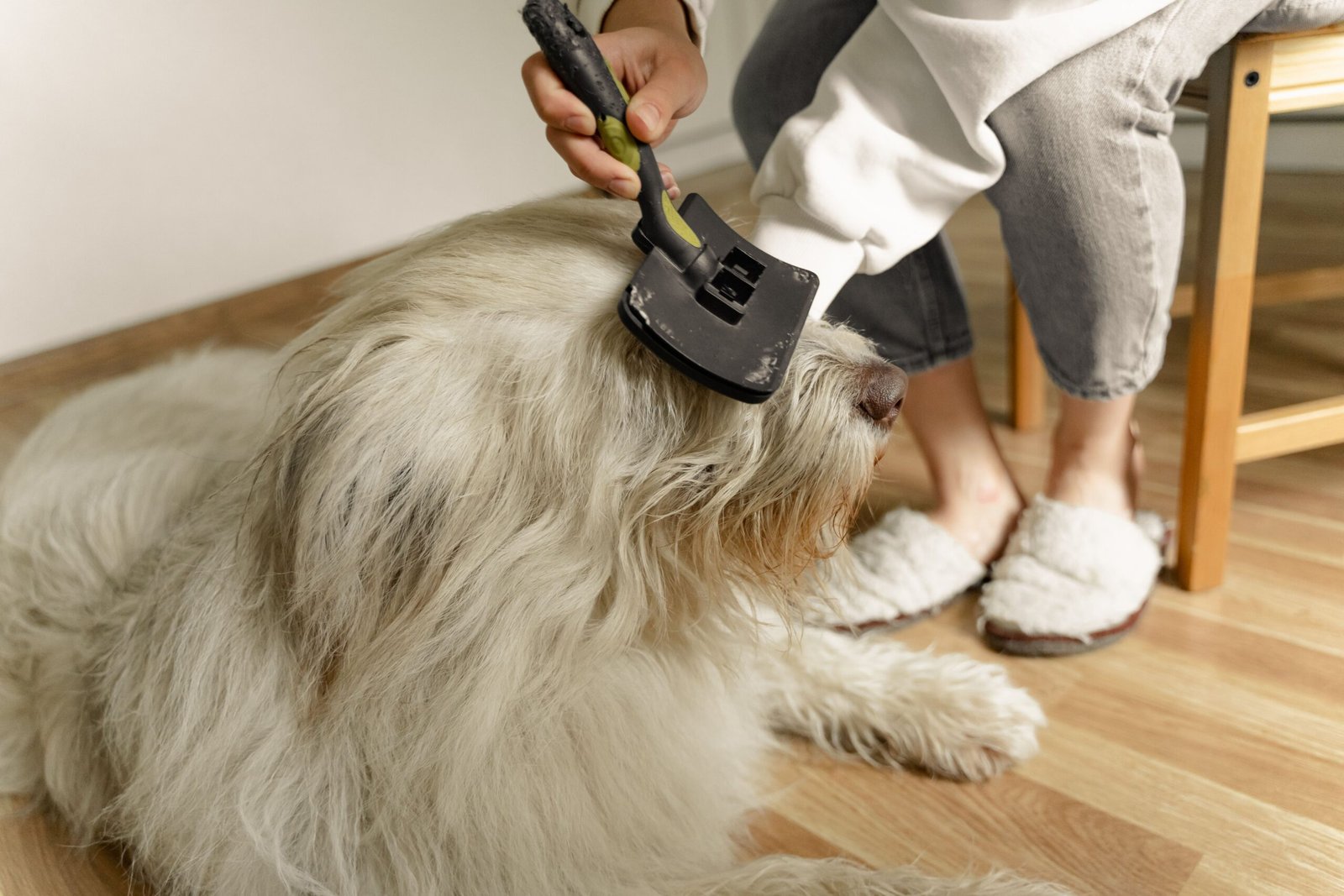
If you want a longer gap between baths, invest in the unglamorous middle:
- Brush on a schedule that matches the coat—daily or every other day for many long and double coats, a few times a week for shorter coats.
- Wipe paws and undercarriage after wet or muddy walks.
- Wash bedding regularly. A clean dog on a sour blanket will not stay fresh.
- Check ears, paws, and skin folds during ordinary cuddles. Do not deep-clean ear canals unless your veterinarian has shown you how.
Coat quality also comes from overall health, parasite prevention as advised by your vet, dental comfort, and nutrition that fits the dog’s age and body condition. Mouth pain can look like “needs a bath” when the real issue is breath or resistance to face washing. In older dogs, a dull coat can be a wellness issue rather than a sign you have under-bathed them.
When you should not just add another bath
Contact your veterinarian promptly—and ask before bathing—if you notice widespread redness, open wounds, sudden bald spots, intense scratching, visible parasites, facial swelling, or a smell that returns within a day or two of a thorough wash. After surgery or stitches, wait for veterinary approval before any soak. This article cannot examine your dog’s skin or say that a particular shampoo is medically appropriate.
A practical starting schedule
Use this as a first draft, then adjust:
- Most indoor short-coated pets: every six to eight weeks, or when dirty.
- Most household double-coated pets: every six to twelve weeks, plus baths after heavy soiling.
- Poodle-type and many mixed longer coats: often every three to six weeks, with combing.
- Frequent swimmers: rinse after swims; shampoo less often unless the coat feels filmy.
- Allergy or skin-treatment plans: follow the product and frequency your veterinarian prescribed.
- Puppies and seniors: as needed, in shorter, warmer sessions.
- Emergency messes: bathe when the mess happens, then return to the regular rhythm.
Reassess after a few cycles. If the skin looks happier, the odor stays away, and bathing is not a weekly wrestling match, you have found a frequency that fits. How often to bathe a dog is less about a perfect number and more about reading the coat in front of you. Start conservatively, rinse thoroughly, brush more than you shampoo, and let your veterinarian handle anything that looks like skin disease.
FAQ
Can I bathe my dog every week?
Weekly baths are too frequent for many healthy dogs and can dry the skin, especially if you use an ordinary shampoo and rinse quickly. Some dogs on a veterinarian-directed allergy or skin plan do have more frequent baths with a specific product and a set contact time. If you are bathing weekly because the smell comes back immediately, ask your veterinarian what is driving the odor instead of simply washing again.
Is it okay to use human shampoo just once?
It is better not to. Human shampoos are made for human skin and hair, and leftover fragrance or detergents can irritate a dog who will lick the coat dry. If you have nothing else in a true mess emergency, rinse extremely well and switch to a dog-formulated shampoo next time. Do not make human shampoo part of the regular routine.
Do puppies need baths more often than adult dogs?
Usually no. Puppies get dirty, but their skin can be sensitive and they chill quickly. Aim for brief, positive baths when they are actually messy, and rely on wiping and brushing the rest of the time. The bigger job in puppyhood is teaching calm handling so adult bath days stay easy.
My dog still smells after a bath. What should I do?
First confirm the rinse was complete and the coat, ears, and underside are fully dry. Wash bedding and check toys. If a sour, musty, or unusual odor returns quickly, or if the skin looks red or itchy, book a veterinary visit. The problem may be infection, dental disease, anal glands, parasites, or another issue no household shampoo will fix.
Should I bathe my dog after every muddy walk?
Not always. Let mud dry and brush it out when you can, then wash the dog if dirt, odor, or residue remains. A full shampoo after every damp outing can be harder on the skin than the mud itself. Paw wipes and a targeted rinse of the belly and legs are often enough between true bath days.
Related reading
- Dog Dental Care At Home — A calm home dental routine; useful when “dog smell” is coming from the mouth rather than the coat, and when face handling during baths is difficult
- Best Dog Food For Seniors — How diet, body condition, and age affect coat and skin in older dogs, which matters more than adding extra baths
- Best Toys For Aggressive Chewers — Choosing cleanable, tougher toys so shredded fabric and grimy chews do not undo a fresh bath, and so after-bath zoomies have a safer outlet
[…] the dog. A full wash is a different job, with its own timing and skin considerations, which is why how often to bathe a dog is a separate […]
[…] of a shinier coat. It does not tell you how often to bathe; that is a separate question, covered in how often to bathe a dog. If your dog has open sores, intense itching, ear problems, or is in real distress, stop and […]