


If you need to pack food water and treats for a day out with a city dog, start with the day you are actually going to have. A short park loop, a string of errands, a patio lunch, or a longer outing each needs a different bag. The goal is not to pack “just in case” until the bag is heavy and the dog is overfed. It is to bring water that will not soak your things, a bowl you can actually use, measured food if you will miss a meal, a modest handful of treats, and waste bags.
This is general information for dog parents in the US and UK, not a veterinary diagnosis and not a set of medical hours for food left in a backpack. In warm weather, keep food in the shade, skip wet food that will sit in a hot bag, and refill water when you can. If your dog seems unwell, overheats, or will not drink, contact your veterinarian.
Match the bag to the day, not to every possible day
A two-hour park visit and a full day of transit, errands, and a late supper are different jobs. Before you pack, answer three questions. Will you miss a regular meal? How long will you be away from a tap or a cafe that will refill a bottle? How much training or settling will you actually do?
If the answer is a neighborhood walk and a sit on the grass, water, a bowl, a few treats, and waste bags may be enough. If you will be out through a meal, add a measured portion of the food the dog already eats at home. If you will ride in a taxi or on a train, the same packing list still applies, but the bag has to stay closed and leak-free in a tight seat. A bottle on its side under a backpack strap is a common spill. Those trips have their own skills, covered in how to help a dog ride in a taxi or rideshare and how to take a dog on public transit. This article is only the day’s food-and-water plan.
Write the plan down if the day is long. “Park first, errands after lunch, last meal at 6” is easier to pack for than a vague idea that you might stay out. If plans change, you can always offer water and skip the extra food. You cannot un-feed a second lunch packed because you were unsure.
A carrier or backpack can be part of the kit when the dog needs a lift, a rest, or a way through a crowded station, but choosing one is a separate decision. See best dog carriers and backpacks for city travel if you still need the bag itself. Once you have one, pack it the same way you would pack a tote: water upright, food sealed, treats portioned, and nothing wet and open.

Water first, then a bowl you will actually use
Water is the item most people under-pack, and the item most likely to leak. Bring more than you think you need for the hours you will be out, especially on a warm day or after a long play session. A bottle that stays closed in a bag is more useful than a pretty bottle that drips onto the treats. If you are still choosing a bottle, best travel water bottles for city dogs covers the product questions. For the day’s plan, test the cap at home, keep the bottle upright, and refill when you pass a tap.
If you carry a spare bottle, fill it before you leave rather than hoping you will find a fountain later. City parks are uneven: some have working taps, some do not, and some are closed for repair. A cafe may refill a bottle if you ask, but that is a bonus, not a plan. In cold weather, a smaller volume may be enough; in heat, pack the second bottle even if it makes the bag heavier.
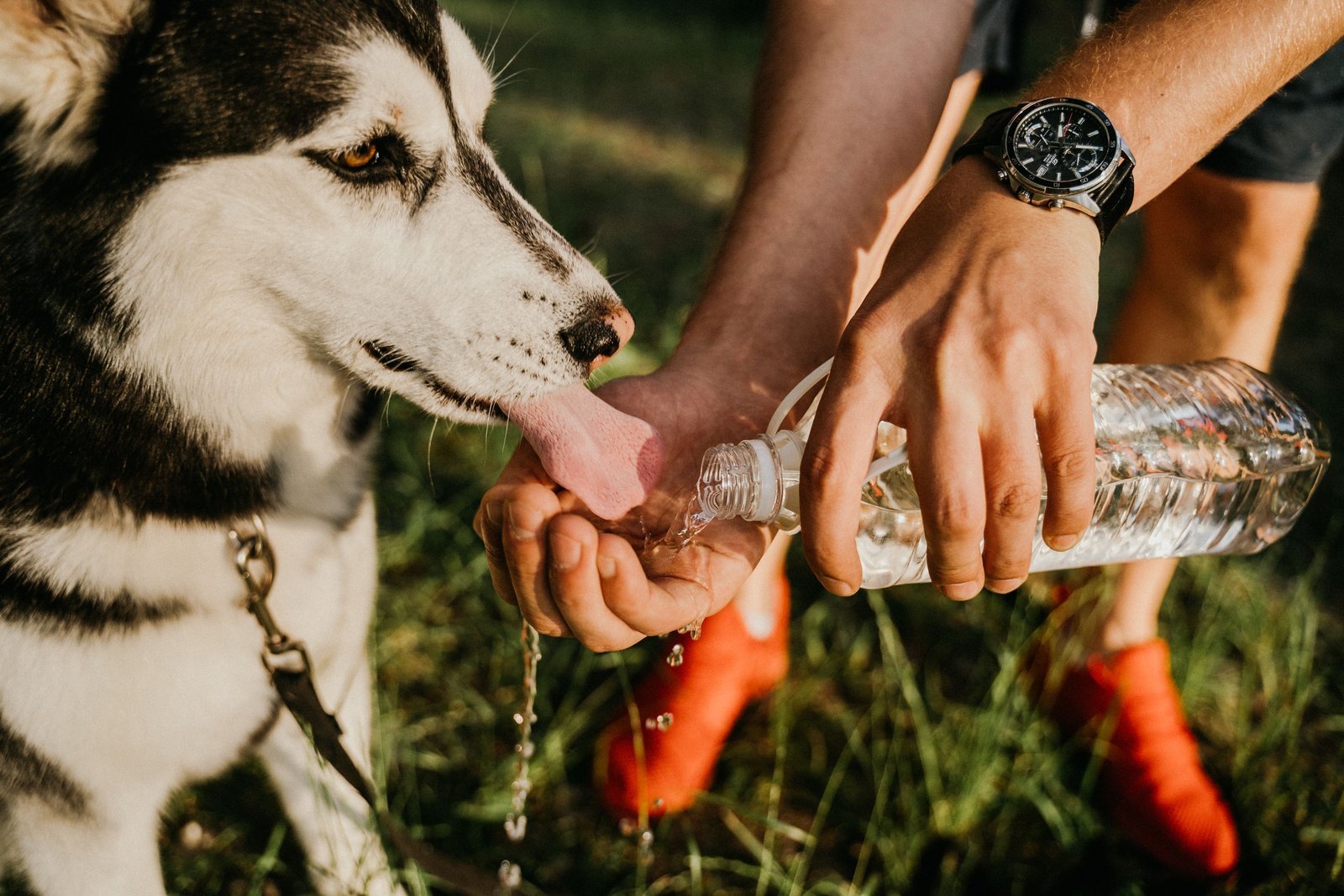
A bowl matters because pouring water into your palm works in a pinch and wastes a lot on the grass. A collapsible bowl that clips to a bag is easy to pack and easy to dump and shake dry. It does not need to be large; it needs to be stable enough that the dog can drink without chasing it across the pavement. For a buying comparison, see best collapsible dog bowls for city walks. On the day itself, pack the bowl where you can reach it without unpacking the whole bag, and rinse it if you also use it for food.
Offer water before the dog is frantic. A short pause in the shade, the bowl on a level bit of pavement, and a calm drink will do more than chasing the dog with a trickle from a bottle while they pull toward the next smell. After play, after a long wait outside a shop, and before a ride, check again. If the dog refuses water, keep offering in a quieter spot, and do not assume a panting dog is “fine because we just went out.”

Pack a measured meal only if you will miss one
If you will be home for the usual breakfast and supper, you do not need a full meal in the bag. Extra food “for later” often becomes extra calories, or it sits in a warm bag until it is no longer pleasant to eat. If you will miss a meal, pack the same food the dog already eats, in the amount you would serve at home, in a closed container or a sealed bag. How much you should feed your dog is the portion guide; this packing plan only asks you to measure before you leave, not to guess on a park bench.
Dry food is usually the simpler travel option because it does not spill and it does not need a fridge for a short outing. Wet food can be packed for a dog that will not eat dry, but only if you have a plan: a sealed single portion, a way to serve it, and a way to carry the empty tin or pouch home. An open tin with no plan is a leak, a smell, and a food-safety problem in a warm backpack. The broader choice between textures belongs in wet versus dry dog food, not in a last-minute sweep of the kitchen.
If you pack dry food, use a container you can open with one hand on a bench, and bring only the scoop you need. A whole day’s kibble “in case we stay for dinner” is how portions creep. If you are meeting friends and the timing of supper is unclear, pack one meal, not two, and feed at the usual time as soon as you can. A late meal at home is kinder than a second guess in the bag.
At home, keep the main supply in its usual closed container so you are packing from a measured scoop, not from a torn bag. How to store dog food in a small apartment is the household system; the day bag should only carry what you will use before you return.
Treats are a budget, not a second pantry
Treats earn a place in the bag when you will ask the dog to wait outside a shop, settle on a patio, or come away from another dog. They do not earn a place as a second meal. Portion a small amount into a pouch or a closed container before you leave, and stop when that portion is gone. A treat pouch keeps your pockets clean and makes it easier to notice how fast the supply is disappearing.
Choose treats you already know the dog can eat, in a size you can break or feed quickly. Soft training treats are useful for many short rewards; a slightly more filling chew is only useful if you truly need the dog to settle for a stretch and you can watch them. For types and ingredients, use how to choose dog treats and best training treats for dogs. On the outing, the only new rule is quantity: pack a modest set, not a pile “in case the day runs long.”
Leftover human food does not belong in the dog’s bag. A crust, a handful of chips, or a leftover sandwich is not a calm, measured treat, and it can upset a stomach on a warm afternoon. If someone offers the dog a bite at a patio, it is easier to decline when you already have a plan in the pouch.
Practice the packing the night before if mornings are rushed. Fill the bottle, portion the treats, put waste bags in the same pocket every time, and leave the food container empty until you know whether you will miss a meal. A bag that is almost ready is less likely to collect yesterday’s crumbs, an open tin, or a handful of leftovers from your own plate.

Warm days, shade, and what to leave out
On a warm city day, water and shade matter more than extra snacks. Offer drinks more often, keep the bottle out of direct sun when you can, and do not leave wet food sitting in a hot backpack. If the pavement is hot or the dog is panting hard, shorten the outing rather than adding another treat. How to walk a dog in hot weather is the walking plan; this packing list simply follows it: more water, less food sitting in the heat, and no invented “safe hours” for a tin in a bag.
Leave out the things that make a bag worse: an open wet-food tin, a second bag of treats you do not need, last night’s leftovers, and a bottle you have never tested for leaks. Add the things that quietly matter: waste bags in a side pocket, a paper towel or a small cloth for a spilled bowl, and a way to close everything when you get on a bus.
When you get home, empty the bag the same day. Wash the bowl, refill the waste bags, and put unused dry food back into its usual container rather than leaving it in a warm tote until the next outing. A bag that is reset after one day is easier to pack honestly the next morning, because you can see what you actually used.
If a lot of food came home uneaten, pack less next time. If the water ran out early, pack more or plan a refill stop. The bag should teach you about the day you had, not stay stuffed from a habit of packing for a trip you did not take.
FAQ
Do I need to pack a full meal for a two-hour park visit?
Usually not, if the dog will still get their regular meals at home. For a short outing, water, a bowl, a modest handful of treats, and waste bags are typically enough. Pack a measured meal only if you will miss a feeding. Extra food “just in case” often becomes extra calories or a warm, uneaten portion at the bottom of the bag.
How much water should I bring?
Bring more than you think you need for the hours you will be out, and refill when you pass a tap or a cafe that will fill a bottle. A warm day, a long play session, or a trip with little shade all increase how often you should offer a drink. There is no honest single volume that fits every dog and every city. Watch the dog, keep the bottle in the shade when you can, and do not wait until they are desperate to offer water.
Is wet food all right to pack for a day out?
It can be, if you pack a sealed single portion, have a bowl, and can carry the empty tin or pouch home. Do not pack an open tin with no plan, and do not leave wet food sitting in a hot backpack. For many short outings, the dry food the dog already eats is simpler. If the dog refuses dry food, keep the wet portion small and serve it when you are ready, not at the start of a long, warm walk.
What treats should I put in the bag?
Pack a small, pre-portioned amount of treats you already use at home, in a size you can feed quickly. Training or calm treats are useful when you need the dog to wait, come away, or settle. Leave leftover human food out of the bag, and resist adding a second stash “in case the day runs long.” When the portion you packed is gone, switch to praise, a pause in the shade, or heading home.
What should I leave out of the bag?
Leave out an open wet-food tin, a pile of extra treats, leftover human food, and any bottle or container you have not tested for leaks. Those items create mess, extra calories, or food that is unpleasant to eat after a few warm hours. A closed bottle, a collapsible bowl, a measured meal only if you will miss one, a modest treat portion, and waste bags will cover most city days.