


If you want to take a dog on public transit, you are already thinking about more than a walk around the block. You are thinking about a bus stop, a subway or underground platform, closing doors, and a ride shared with people who did not plan to share their commute with a dog. That is a different job from a sidewalk stroll, a lift ride in your building, or a trip in a private car.
A useful mindset is this: the ride goes well when you choose the trip carefully, follow the rules that actually apply, and give the dog a clear place to wait, board, and settle. A short handheld leash, space away from the doors, and a willingness to skip a packed car will do more than a complicated cue used once.
This is general information for dog parents in the US and UK, not a veterinary diagnosis and not a promise that every dog will stay relaxed after a certain number of rides. If your dog is panicking, overheating, or unwell, do not force the dog onto a crowded car. If a dog has lunged, snapped, or bitten on a platform or in a car, contact a veterinarian or a qualified behavior professional.
When a bus or subway is a reasonable choice
Transit is one option, not the default. A walk may be kinder when the distance is short and the dog still needs a neighborhood route. A taxi, rideshare, or a friend’s car may be kinder when the dog cannot settle in a tight public space, when you would be traveling at peak hour, or when a tight timetable would make a missed train stressful. Sometimes the honest choice is to go later.
The sidewalk portion of the day is still a sidewalk job. Calmer walking on city pavements belongs in loose-leash walking on city sidewalks, not on the platform edge. If the outing is after dark, the walk to the stop is covered in how to walk a dog at night in the city. If a private car is the better tool, see dog car harnesses for city trips. This article stays with the bus, the subway or underground, the platform or stop, and the ride.
Before you leave the flat, ask whether the dog is well enough to travel, has already toileted, and can take a later departure if the first car is packed. If any answer is shaky, walking or choosing a car may be kinder.
Check the rules for this network, on this date
Do not invent the rules from memory or from what you saw one person do last year. Transit agencies set their own pet policies, and those policies can change. Leash, carrier, muzzle, fare, and peak-hour rules vary by city and sometimes by line or time of day. A dog who may ride on a short handheld leash at midday may need a carrier at rush hour, or may not be allowed at all. Some networks treat assistance dogs differently from pets, and some ask you to pay a fare for the dog. Check the current notice for the agency you will use, and follow what it says that day.
If a rule requires a carrier, use one the dog can already accept at home, and treat it as one management tool rather than a shopping project. A practical overview lives in dog carriers and backpacks for city travel. If a stroller is how you cover a long walk to a station, keep that as a way to arrive, then follow the agency’s boarding rules; gear questions are in pet strollers for city apartments. This guide will not rank models or invent a policy that a stroller is always allowed on board.
When the written rule is unclear, choose the more conservative option: a later train, a quieter bus, a carrier if one is required, or a different way of making the trip. Other passengers still need the doors and the aisle.
Prepare the dog, the leash or carrier, and a short settle

Preparation starts at home, not at the ticket gate. Let the dog toilet before you leave, and carry a waste bag plus a little food the dog already likes. If the dog wears a walking harness, use the fit you already trust. For a dog who pulls hard, see dog harnesses for pullers and dog leashes for city walks. On transit you need a short handheld leash you can shorten at the doors, even if you sometimes use a hands-free leash on the sidewalk.
A retractable lead is a poor match for a platform edge or a crowded doorway. If the dog will ride in a carrier, practice opening, settling, and closing it at home on a quiet day, not for the first time on a moving bus.
A short settle before you board is worth more than a rushed dash through the doors. Pause in a quieter corner of the station, ask for a sit or a stand at your side, and reward calm attention. This is not the same skill as waiting at your own front door, which we cover in teaching a dog to wait at the door. Getting from your flat to the street, including shared lifts and corridors, is a separate problem, unpacked in helping a dog stay calm in elevators and hallways. Use those skills to leave the building, then slow down again at the stop or platform.
Do not use a shock collar, a prong collar, or a citronella spray to keep a dog quiet on public transport. Those tools startle, can increase fear, and do not teach the dog where to stand when the doors open. If the dog cannot settle with ordinary management, choose a quieter trip, a different mode of travel, or professional help, not a stronger collar.
Waiting on a platform or at a stop
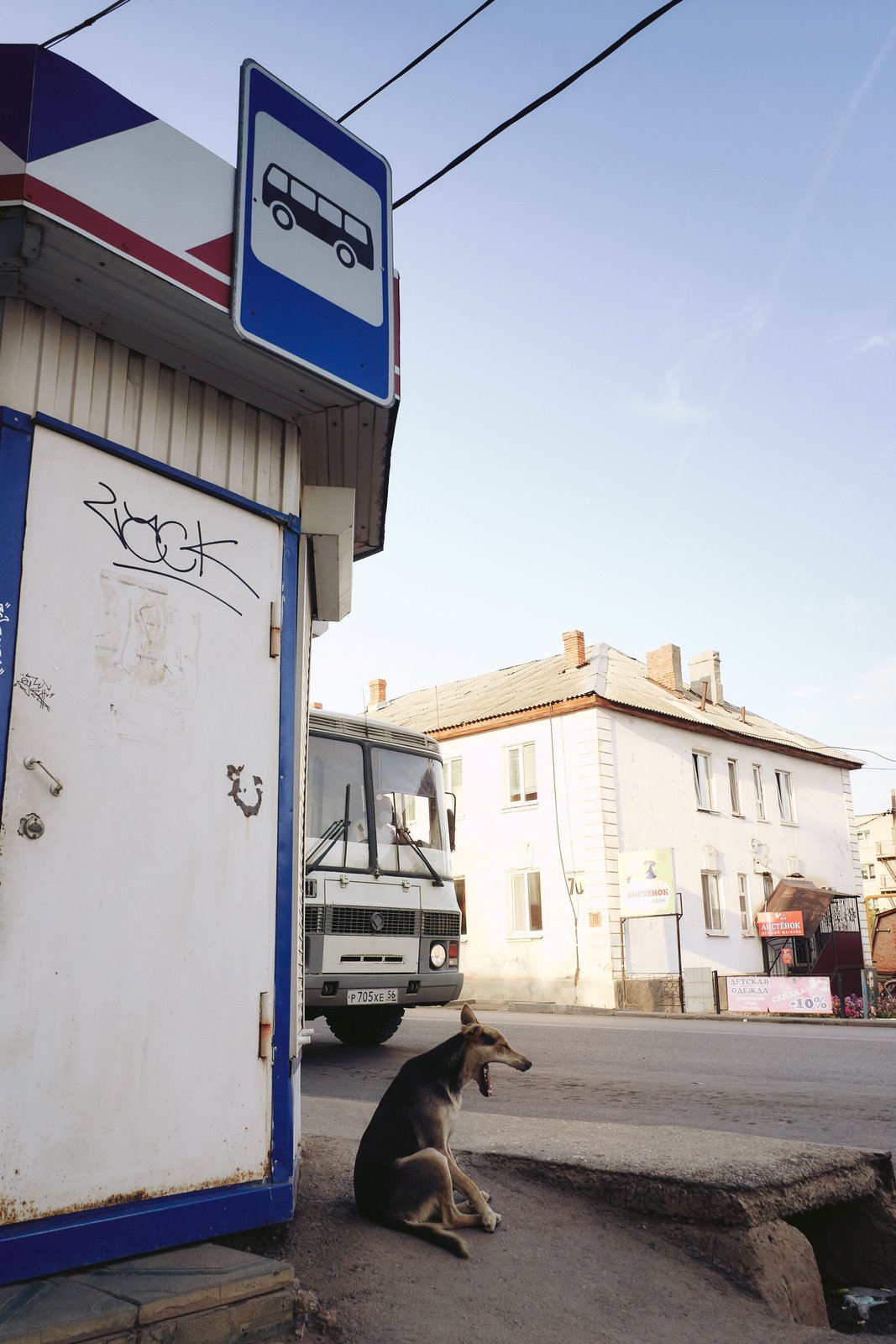
The wait is often harder than the ride. Platforms are narrow and noisy, and buses arrive with a crowd that all wants the same door. Stand well back from the platform edge and from the curb. Keep the dog on your side, on a short leash, and out of the path of people who need to pass. If the dog is in a carrier, set it down only if you can still keep a hand on it, and not in a flow of passengers.
Watch the dog as much as you watch the arrivals board. Panting that is not about heat, a tucked tail, frozen staring, or a sudden refusal to move closer are useful information. Broader patterns are covered in signs your dog is stressed. If the dog is already over the threshold before the vehicle arrives, step away, take a later departure, walk, or go home.
Leave a gap at the doorway when the bus or train opens. Let people get off first, then walk in only if there is a clear space for both of you. If there is not, wait for the next one. Blocking a door is how leashes get trapped.
Where the dog should sit or stand in the car

Once you are on, pick a place that keeps the dog out of the aisle and away from the doors. A spot by a sidewall or a quieter end of the car, with the dog at your feet, is often the most practical option, as long as people can still pass. Some agencies require the dog to stay on the floor, in a carrier, or off the seat. Follow that rule even if you have seen a dog ride on a lap on another network. A lap may be allowed in one city and forbidden in another. Do not invent a standard.
Keep the leash short enough that the dog cannot wander under seats, into a doorway, or toward a passing stranger’s food. Sit or stand so you can still see the dog’s face and the next set of doors. If someone needs the priority space, move. If another dog boards, create a little distance rather than forcing a greeting in a narrow aisle.
Crowded doorways, aisles, and rush hour

Rush hour is a poor classroom. Packed doorways and sudden surges toward a single opening are a lot to ask of a dog who is still learning the pattern. Skip peak times until the dog can settle in a quieter car. If you arrive and the only space is in the doorway, let that vehicle go. Standing in the opening, even for one stop, blocks people and puts the dog in the most chaotic part of the car.
When you do board a busy service, move in far enough that the doors can close without catching a lead, a tail, or a carrier, then stay put. If you need to get off, start shifting toward the door one stop early. Heat matters in a crowded car, especially in summer or underground stations with little airflow. If the dog is panting hard, drooling, or looking for a way out, get off at the next stop.
When this is a veterinary or behavior question
Some problems are bigger than a transit routine. A dog who has lunged, snapped, or bitten on a platform or in a car needs a veterinarian or a qualified behavior professional, not another attempt at a busier line. The same is true of a dog who trembles, tries to flee, or seems unwell before you reach the gate. Medical pain, nausea, noise sensitivity, and fear can all look like “the dog is being difficult on the subway.”
If the reason for the trip is a clinic appointment, make the journey as calm and direct as you can, and use a plan the dog already knows for the waiting room. That separate skill is covered in getting a dog comfortable at the vet. Transit is only the path to that appointment. This article cannot diagnose a medical problem or design a behavior plan for a dog who has already hurt or frightened someone in public.
A calm starting plan you can repeat
You can keep the first practice trips small.
- Check the current rules. Confirm leash, carrier, fare, and peak-hour policies for the agency you will use that day.
- Choose a quiet window. An off-peak ride is usually kinder than a commute crush.
- Toilet, then settle. Leave time for a bathroom stop and a short sit or stand beside you before you approach the doors.
- Use a short handheld leash, or a carrier if the rules require one. Keep the dog close, then pick a place out of the aisle once you are on.
- Let a packed car go. Wait for space rather than blocking a doorway.
- End the trip if the dog cannot cope. Walk, take a later ride, call a car, or go home.
None of this is a promise that a dog will love the subway after a handful of outings. Some dogs become ordinary commuters with slow practice. Some will always do better walking or riding in a private car, and that is a reasonable outcome. Keep the plan kind, follow the posted rules, and treat a hard day as information.
FAQ
Do all city buses and subways allow dogs?
No. Pet rules differ by transit agency and can change, including leash, carrier, muzzle, fare, and peak-hour limits. Check the current policy for the network you will actually use, and do not rely on what is allowed in another city or what you saw one passenger do on a different day.
Should I use a shock collar, a prong collar, or citronella to keep my dog quiet on the ride?
No. Do not use shock, prong, or citronella collars to manage a dog on a platform or in a car. If the dog cannot settle with a short leash or a familiar carrier and a quieter departure time, change the trip or speak with a veterinarian or a qualified behavior professional.
What should I do if the car is packed or my dog starts to panic?
Do not force a panicked, overheated, or unwell dog onto a crowded car, and do not stand in the doorway. Let that vehicle go, step aside, and choose a later ride, a walk, a taxi, or going home. A delayed plan is kinder than blocking an aisle or pushing the dog through a dense crowd.
Is a carrier better than a leash for public transit?
It depends on the agency’s current rules and on the dog. Some networks require a carrier at certain hours or for certain sizes of dog; others allow a leashed dog. Use the option the rules ask for, and only use a carrier the dog can already accept. This is a management choice, not a ranking of products.
When is riding transit a veterinary or qualified-behavior issue?
If the dog has lunged, snapped, or bitten on a platform or in a car, or if the dog seems panicked, in pain, or unwell, contact a veterinarian or a qualified behavior professional. Those situations are not a training gap you should try to close by repeating a busy commute.
[…] dog can walk it, a walk is often simpler. If you already have a working plan for buses or subways, taking a dog on public transit may be the better regular option. A pet stroller can make a crowded sidewalk stretch easier for a […]
[…] wash plans. Moving to a new apartment with a cat, helping a dog ride in a taxi or rideshare, and taking a dog on public transit cover the journey. After you get home, the carrier still needs to be emptied, washed, and […]
[…] there may involve public transit or a taxi or rideshare. Those are separate skills. The patio visit starts after you arrive, and a […]