

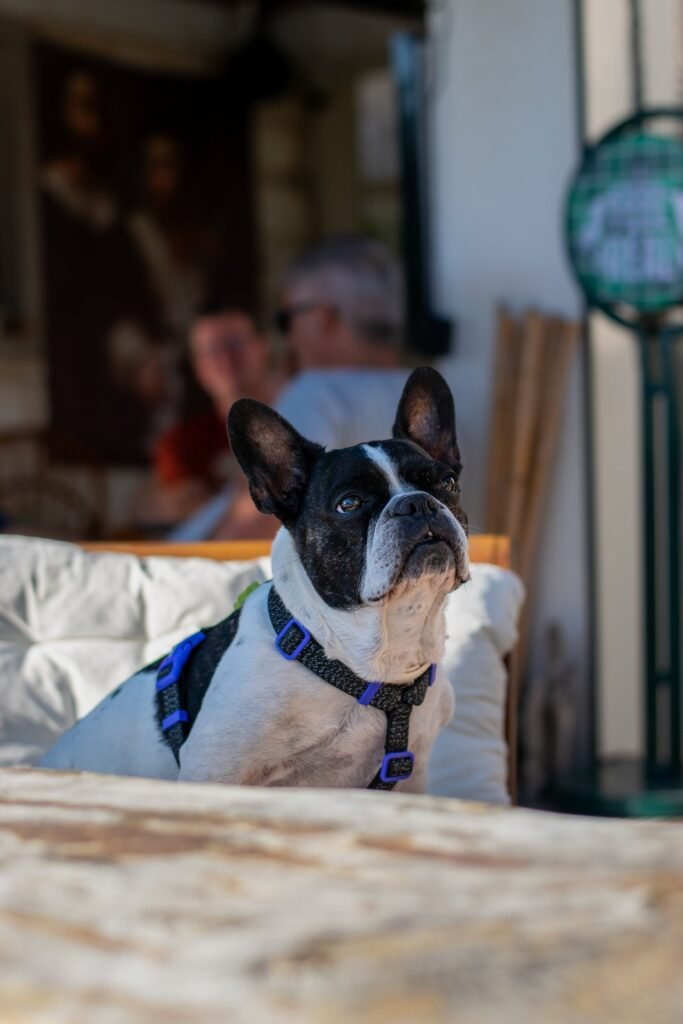
If you want to take a dog to an outdoor café or patio in the city, treat it as a short public stay at a sidewalk table, not as indoor restaurant dining and not as a settle session on your own rug. The useful goal is a calm coffee on a quiet morning, with the dog tucked out of the aisle, not a two-hour weekend brunch in week one.
This is general information for city dog parents in the US and UK, not a veterinary diagnosis and not a promise that any dog will be café-ready in three days. Do not use shock, prong, or citronella collars. If the dog seems panicked, in pain, or unable to take food, leave and, if that is new, contact your veterinarian.
Why a city patio is a different skill
A patio packs several hard pieces into a small space. Tables sit close together. Food ends up on the ground. Other dogs pass on the sidewalk. Servers move plates through a narrow gap. Your visit may be short, and the dog still has to stay put while you sit. That is different from teaching a dog to settle in a small apartment, which is a home skill, and different from helping a dog stay calm around other dogs on city walks, which is about passing, not staying under a table.
It also sits next to, but is not the same as, teaching a dog to ignore food and trash on city sidewalks and stopping a dog from begging at the table at home. Use those skills if you have them. This article is the short, public, food-service patio stay.
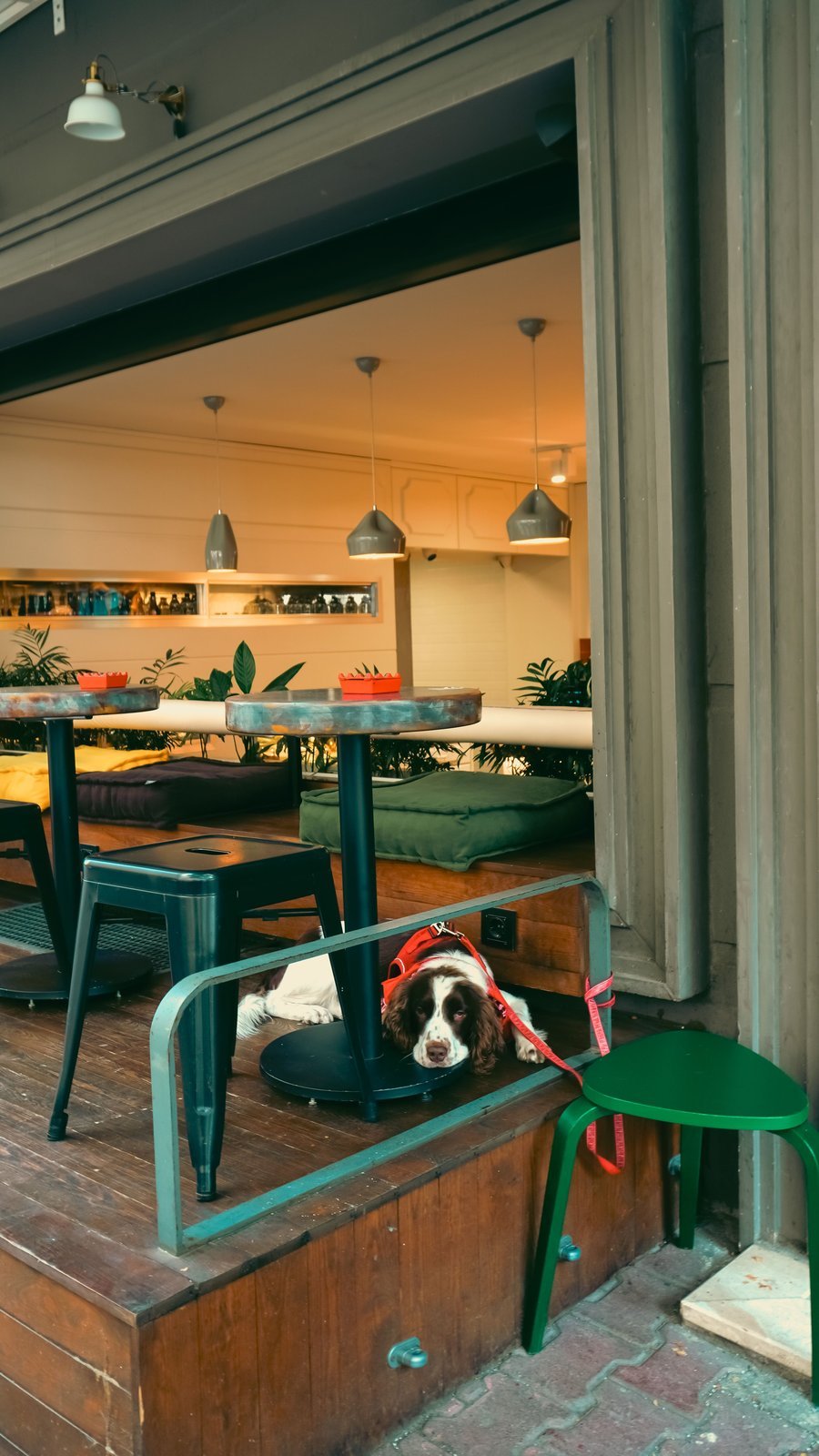
A dog lying at the edge of an open cafe terrace, on leash, is closer to the job than a portrait on a park bench. The official title mentions a tied dog near a cafe table; what you can see is a red harness and a leash running to a stool, and the dog is on a wooden platform rather than fully under a table. That tucked, out-of-the-aisle position is still the idea.
Prep that actually helps
Potty first. A dog that still needs to go will fidget, pull toward a tree, or stand up every time someone walks by. Take a short walk before you sit, not after you have already ordered.
Use a short leash and keep it in your hand or under a chair leg so it cannot snag a server or a passing dog. A long, loose line on a crowded patio becomes a trip hazard. Best dog leashes for city walks is the leash-choice article; for this job, shorter is usually easier to manage than a long hands-free line.
Pick a tucked position. Under the table, beside your chair, or on a small settle mat that stays out of the aisle all work if the dog can actually lie there. Do not let the dog block the path or sit at the next table’s feet. If the only open seat is in the tightest corner of a busy brunch, wait for a quieter hour.
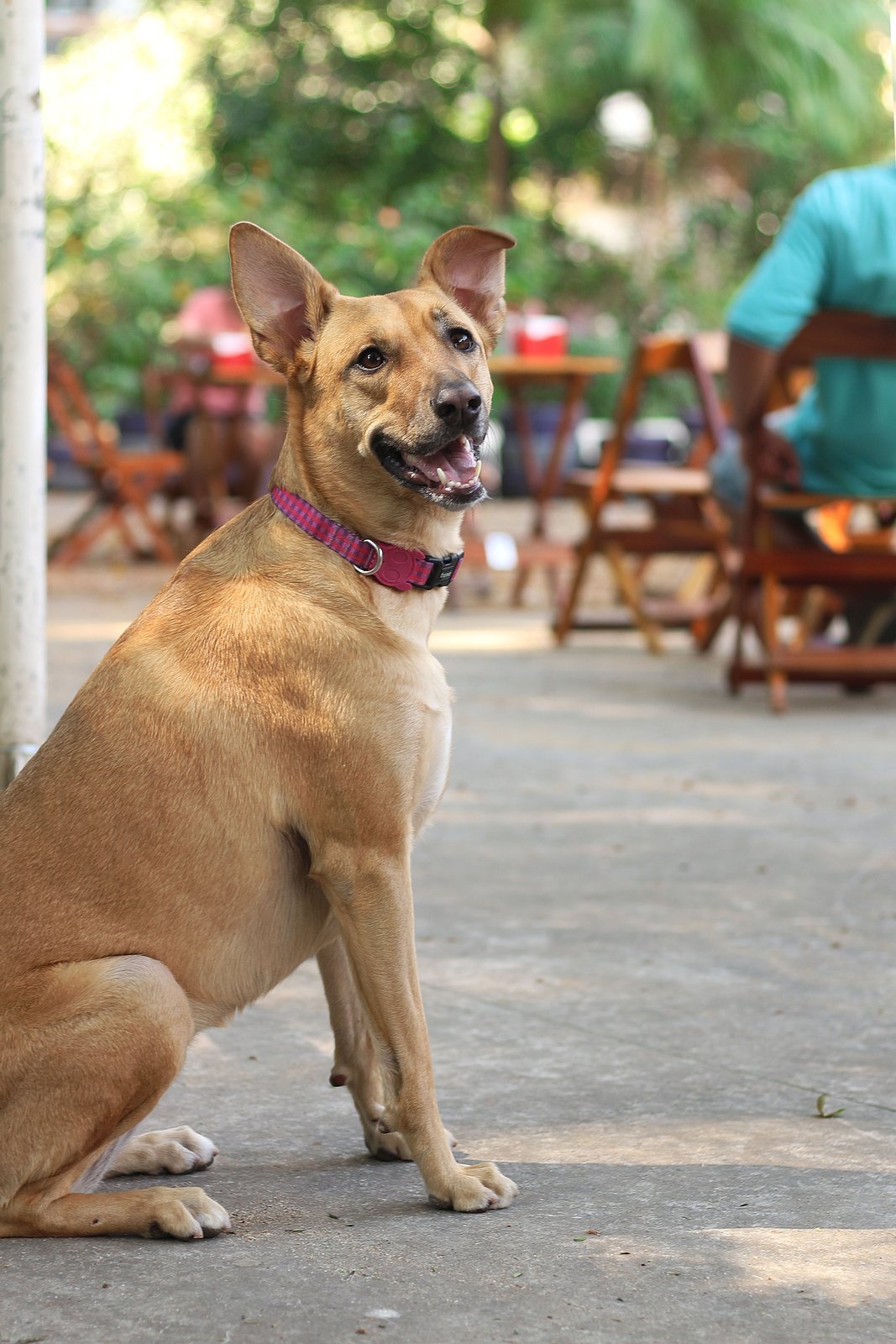
This dog is sitting on a patio, not lying under a table, and the seating behind it is a casual outdoor area rather than a formal restaurant dining room. It is still a useful picture of the setting: people, chairs, and a dog sharing a small paved space. Week-one visits are often this simple, and the dog does not need to look posed.
Bring a quiet chew or a few soft treats that do not shower crumbs onto the next table. A noisy toy, a messy stuffed chew, or a rain of small biscuits will make staff less glad you came. Best treat pouches for city dog walks can keep rewards in one place, and a travel water bottle helps on a warm day. Offer water, but do not turn the visit into a picnic for the dog.
Have a leave-when-it-stops-working rule before you sit down. If the dog cannot settle, keeps lunging at passing dogs, or starts vocalizing, you leave. You can pay, pack up, and try a shorter visit another morning. Ending early is not a failure. It is the rule that keeps the patio a place the dog can learn, and it is kinder than asking the dog to “just wait it out” through a long meal.
Check the policy first. Some places do not allow dogs, even outdoors. A quick look at a posted sign, a website note, or a calm question to staff is enough. Do not argue with staff, and do not bring the dog inside because the patio is full. If they say no, go somewhere else.
Getting there may involve public transit or a taxi or rideshare. Those are separate skills. The patio visit starts after you arrive, and a hard trip can use up the patience you need for the table. Build the trip and the stay as two pieces, not as one long test.
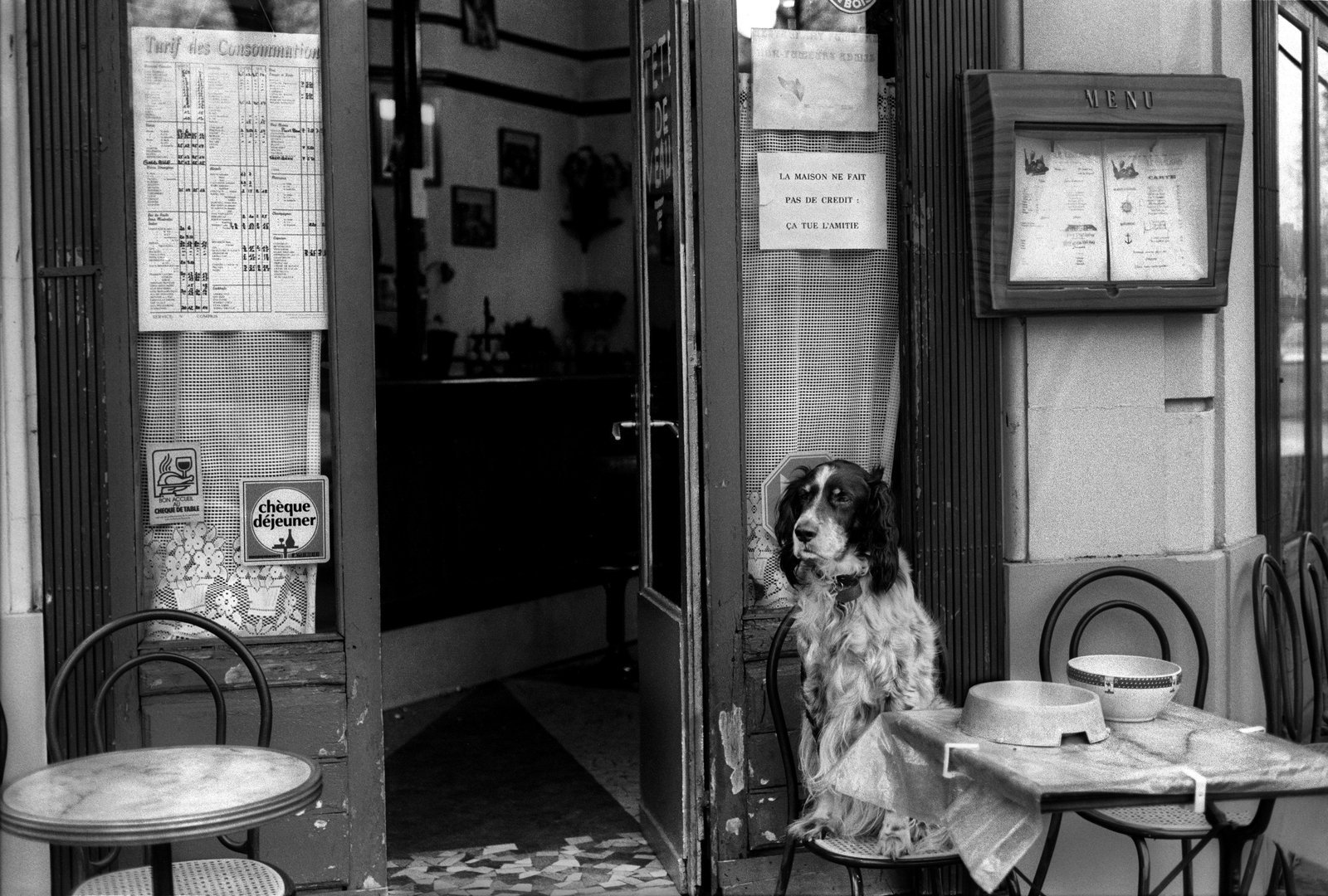
This is a dog on a chair at a sidewalk table, not tucked underneath it, and the bowls on the table belong to the setting, not to a feeding plan. The photograph is still a clear outdoor cafe. If you let a dog sit on a chair, make sure the place allows it and that the dog is not taking up a seat a person needs. For most first visits, the floor or a mat under the table is easier.
What good enough looks like, and how to handle the hard parts
Good enough in week one is a short, calm coffee on a quieter morning: the dog lies or sits out of the aisle, takes a treat, and leaves with you before it unravels. It is not a long weekend brunch, a crowded late lunch, or a test of whether the dog can ignore every passing dog and every dropped crumb for two hours.
A tight patio will still have food on the ground. Ask for a drop or a leave-it if you have one, and move your feet or your chair rather than letting the dog lunge under the next table. Loose-leash walking in the city helps you arrive without a tight leash, and waiting at curbs and crosswalks helps you get to the door without a dash into the street. Neither one replaces a tucked position once you sit.
If the dog jumps on staff or on people at the next table, you leave. How to stop a dog from jumping on guests is the home-greeting article; a patio is not the place to practice a long jumping plan. Stand up, get the dog off, and end the visit.
Watch the leash around servers and passing dogs. Keep it short enough that it cannot stretch across the aisle. If another dog approaches the table, you can ask for space, stand between the dogs, or leave. You do not have to finish your drink.
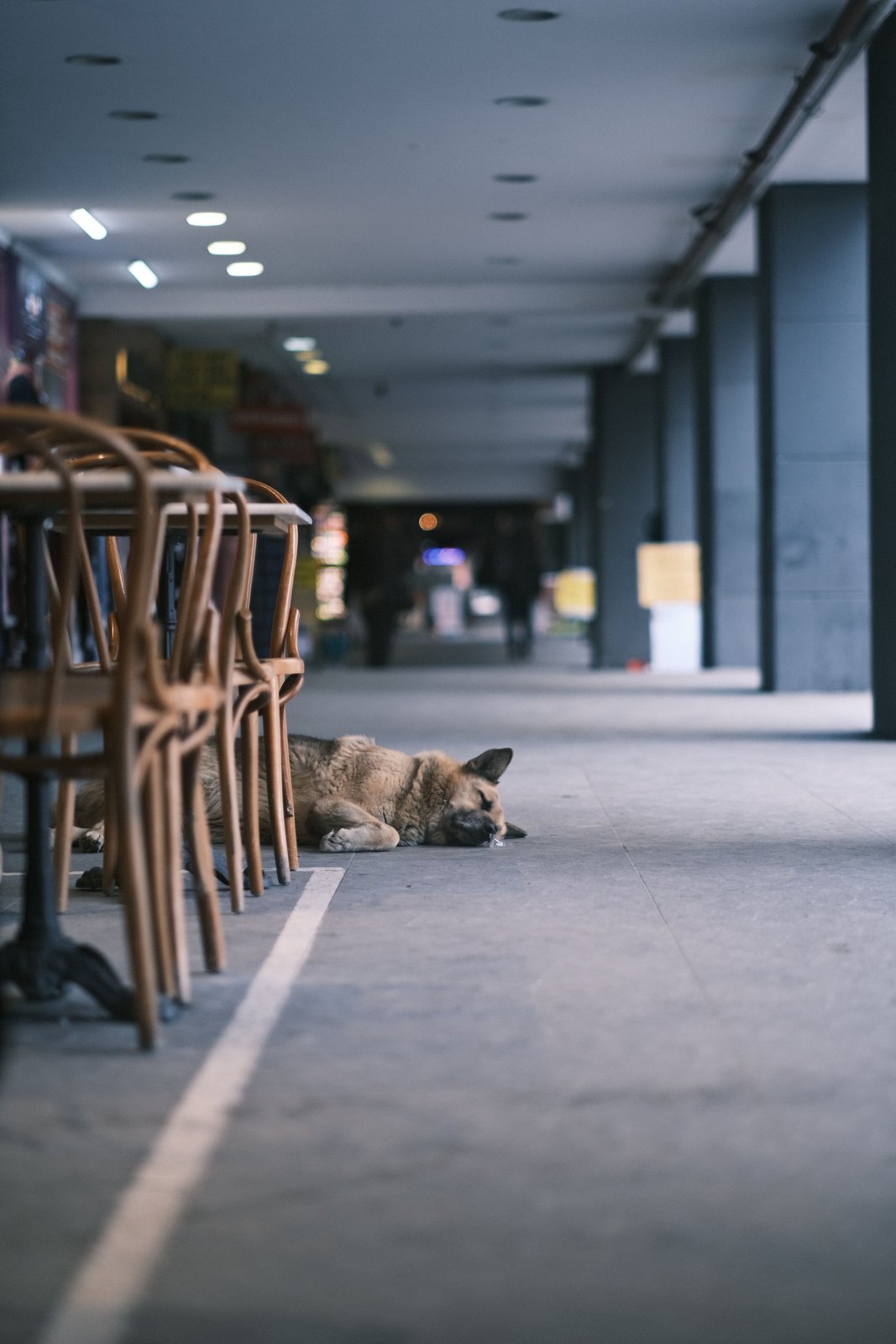
This dog is sleeping beside a row of cafe chairs on a covered walkway, with no person or leash in the frame, so it is not a photograph of a handled patio stay. It is still a useful picture of the tucked-out-of-the-aisle idea: the dog is next to the seating, not in the walking path. On a real visit, keep the leash in your hand and stay with the dog.
Do not promise yourself a three-day transformation, and do not add a collar that uses shock, prong, or citronella to “make” the dog stay. If the dog is not ready, shorten the visit, pick a quieter hour, or practice a settle at home first and come back to the patio later. A few short, uneventful coffees are worth more than one long visit the dog cannot handle.
Choose an easier first patio, then review the visit
The first visit should be the easiest table you can reasonably find, not the most fun one on your list. A weekday mid-morning, a corner or end seat, and a place that already has dogs on the patio will usually ask less of the dog than a packed Saturday brunch in a narrow alley. If every table is in the walking path, pick another hour or another block.
A large dog still needs a tucked spot, just a bigger one. Ask for a table with enough floor that the dog can lie without blocking the aisle, and be ready to decline a tiny two-top. A small dog can disappear under a table and still be in the way of a server’s feet; keep the leash short so you know where the dog is.
If the weather is rough, postpone. A wet, crowded, or very hot patio adds work you do not need on visit one. You can come back when the seating is calmer. After you leave, take a short, ordinary walk home rather than heading straight into a second stop. Let the visit be one event.
If the visit went well, repeat something similar before you upgrade the difficulty. If it did not, shrink the next try: a shorter stay, a quieter hour, or a bench near the cafe first, then a table. The dog should arrive already pottied and a little exercised, not hungry for a fight or a full meal of dropped food. A successful five-minute sit is a better first data point than a long stay you had to leave in a hurry, and it is easier to build on the next morning.
Dropped food will still happen. You can step on a napkin, stand up and move the dog, or ask for a leave-it if you have one. What you should not do is let the dog cruise from table to table. That is the moment many patios become unwelcome, and it is also the moment to use your leave rule if the dog will not come back to your side.
A passing dog may stop at your table. You can stand, shorten the leash, ask for space, or leave. You do not owe the other person a greeting, and your dog does not have to “say hi” in order to be well behaved. If your dog is friendly but the patio is tight, a cheerful no is still a good answer.
FAQ
Can I bring my dog to any outdoor cafe or patio?
No. Some places do not allow dogs, even outdoors. Check a sign, a website note, or ask staff first, and do not argue if the answer is no.
How long should the first visit be?
Keep week one short. A calm coffee on a quieter morning is enough. A two-hour weekend brunch is a later goal, not a first test.
Where should the dog sit?
Tuck the dog under the table, beside your chair, or on a small mat that stays out of the aisle. Do not block the path, and do not let the dog sit at the next table’s feet.
What should I bring?
A short leash, a quiet chew or a few soft treats that do not shower crumbs, and water if the weather is warm. Potty the dog before you sit.
What if the dog cannot settle?
Leave. Pay, pack up, and try a shorter visit another day. Ending early is the rule that keeps the patio a place the dog can learn, not a failure.