


If you want to teach a dog to settle in a small apartment, the hard part is not the idea of “lie down.” It is the thin walls, the shared sofa, and a dog who still wants a job after you have already closed your laptop. A house with a spare room can send a restless dog somewhere else. Many flats cannot.
A useful mindset is this: you are teaching a “place” or mat settle—a clear spot where your dog can park and be rewarded for being still—so tight spaces, guests, and evening downtime are easier to share. You are not emptying a tank of energy in one go. You are building a skill you can ask for in the room you actually live in.
This is general information for dog parents in the US and UK, not a veterinary diagnosis and not a promise that a restless dog will become calm in a set number of days. Dogs vary by age, health, and what the rest of the day already includes. If panting, pacing, or hiding is new, or if behavior changes suddenly, contact a veterinarian or a qualified trainer.
What “settle” actually means in a small apartment
In a studio or one-bedroom, settle is not the same as being tired, and it is not the same as being shut away. A useful outcome is a dog who can go to a mat, a bed, or a defined corner, stay there while life continues a few feet away, and get up when you release them. Think dinner at the coffee table, a friend on the sofa, or a film at a volume your neighbors can live with.
Exercise still matters for many dogs, but that is a different job. If your dog is bouncing off the furniture because they have had no real outlet, start with how to tire out a high-energy dog in a small apartment and treat the settle work here as the downshift after that, not a replacement. A crate can be a rest tool, but crate training is its own plan; see how to crate train a dog in an apartment. Being left home alone is another skill entirely; do not use a mat settle as a shortcut for leaving a dog home alone in an apartment. If hallway noise or alarm barking is the main problem, use how to stop a dog from barking in an apartment rather than asking the mat to solve a different issue.
Think of three jobs, not one:
- A clear place. One mat or bed that means “this is your station,” not every cushion in the room.
- Short, kind practice. Brief sessions that reward stillness, then a release, so the dog learns the pattern.
- The right moment. You ask for a settle when the dog can succeed, and you pause when they cannot.
The goal is a repeatable skill, not a guarantee and not a cure for anxiety.
Choose a place that fits a tight floor plan

Pick one station and keep it boringly consistent. A washable mat, a low-profile dog bed, or a folded towel with a non-slip backing can all work if they stay put on hard floors and do not block the only path to the kitchen. In a studio, place it where the dog can still see you—beside the sofa, at the edge of the rug, or just off the walkway—so “settle” does not feel like exile behind a door.
Avoid the middle of a high-traffic strip. A place that gets stepped on or folded up every time someone needs the bathroom will never become a rest cue. If you use a crate for naps, keep the mat as a separate, open option for when you want the dog in the room with you. The crate is for rest and management; the mat is for settling in company.
You do not need a large “place” bed. You need a surface the dog can lie on fully, that guests will not treat as a spare cushion, and that can stay in the real geography of the flat—near the coffee table if that is where evenings happen, and out of the path of a desk chair. Consistency matters more than a perfect aesthetic.
Teach a mat or “place” settle in short sessions
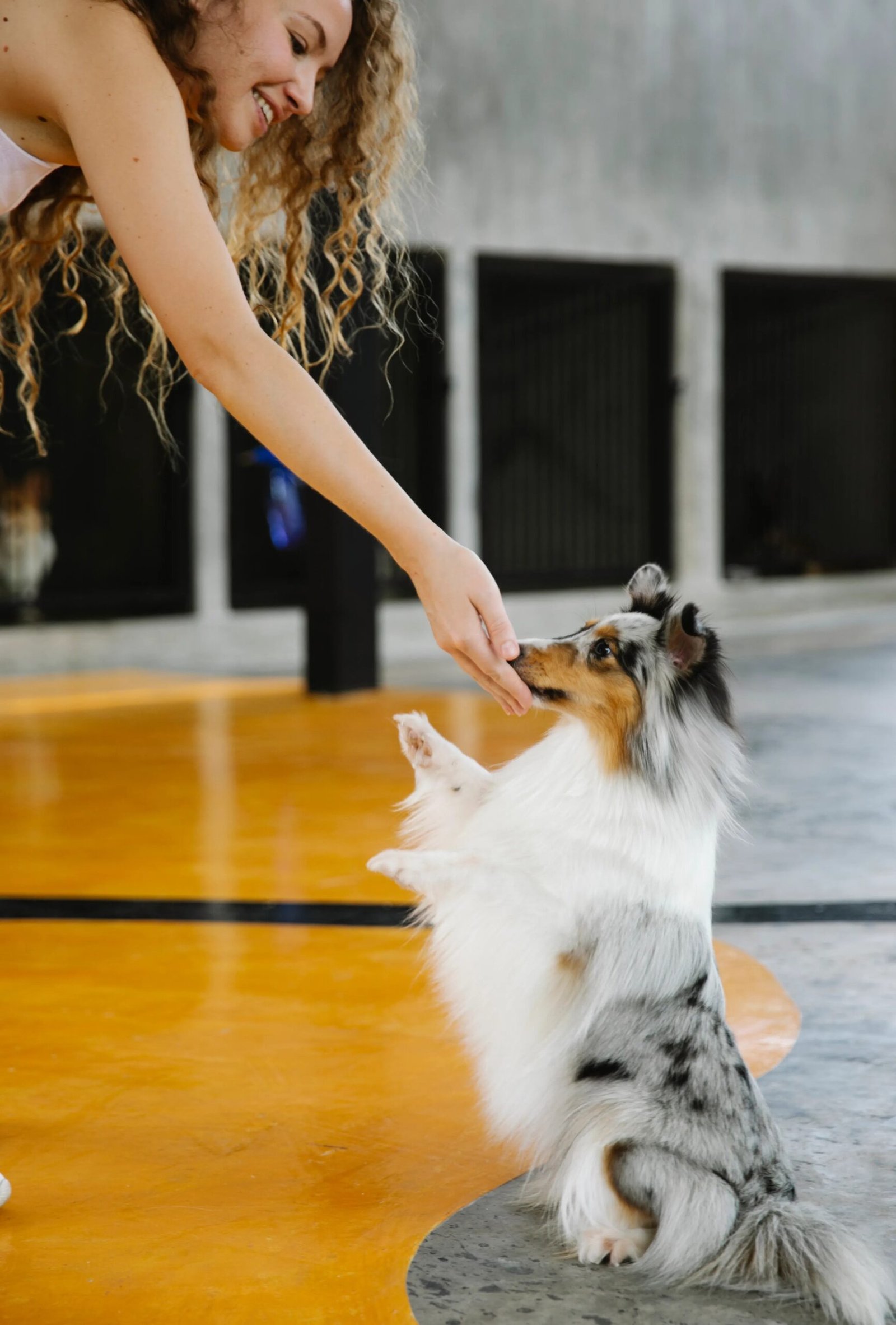
Keep early sessions short enough that you can end while the dog is still succeeding. A few minutes is plenty. You are showing them that going to the mat, and then relaxing there, pays. You are not holding a dog in a down until they submit.
A simple starting pattern looks like this:
- Walk the dog to the mat, or toss a treat onto it so they step on.
- When four paws are on the mat, mark that moment with a quiet word you already use, and feed on the mat, not in the air a foot away.
- If they sit or lie down, feed again on the mat. If they only stand at first, reward the feet on the place, then wait for a slightly calmer posture.
- Release with a clear word, toss a treat off the mat, and let them get up. Without a release, the dog never knows when the job is over.
Do a handful of these cycles, then stop. Two or three short sessions in a day will usually teach more than one long drill you both start to resent. If your dog is flying around the room, end and try again later.
Lure without force. Do not push a rump down, pin a shoulder, or stand over the dog until they collapse. If they leave the mat, invite them back, or pause. A dog who is pulled onto a place and held there has learned that the mat is a trap, not how to settle.
As the pattern gets familiar, wait a beat longer before the next treat, and build duration in seconds rather than hoping they will stay for the whole film tonight. Add a verbal cue such as “place” or “mat” only once the dog is already offering the behavior reasonably often.
Reward calm, not just the first sit
The first sit on the mat is a start, not the skill. Many dogs will sit, take a treat, and bounce up as if the job is done. That is normal. Your job is to pay the quieter moments that follow: a shift from sit to a hip down, a slower breath, a chin that lowers, a dog who stays after you take one step away.
Feed on the mat so the dog is not lured off it to collect payment. Soft, small treats help you reward often without turning the session into a meal. If each treat makes the dog more excited, slow down. Use a calmer voice and a slightly slower delivery.
You can also reward settle outside of formal drills. When your dog already chooses the mat in the evening, quietly drop a treat between their paws and leave them there. Do not make a fuss that pops them up. If the dog is too restless to lie down, go back to rewarding four paws on the mat, or end the session. You want a dog who can actually rest, not a dog who is waiting to explode.
Guests, doorbells, and a shared living room

Guests are the reason many apartment dogs “know place at 7 p.m. and forget it at 7:05.” New people, coats, and voices raise the temperature of a small room. Do not test the skill for the first time when someone is already at the door with bags.
Practice the easy version first: a familiar person sits on the sofa while you run a short place session, then a knock you staged yourself, then a friend who will ignore the dog at first. The dog should already have a way to succeed—mat down, a few treats, a release—before the room fills up.
When people arrive, you have two honest options. One is to put the dog on the mat, reward generously for staying, and only release when the initial rush has passed. The other, if the dog cannot succeed yet, is management: a leash, a brief visit to another room, or a known rest space, then a calmer re-entry. Management is not failure. It is how you protect the skill while it is still new.
Ask guests not to loom, squeal, or pat the dog the moment they step in. People can say hello once the dog is on the mat or after you have released them. If barking is the doorbell commentary, that still belongs in the barking guide. Keep the mat where it usually lives, at the edge of the gathering, not in the only path to the kitchen.
Evening downtime when the flat gets quiet
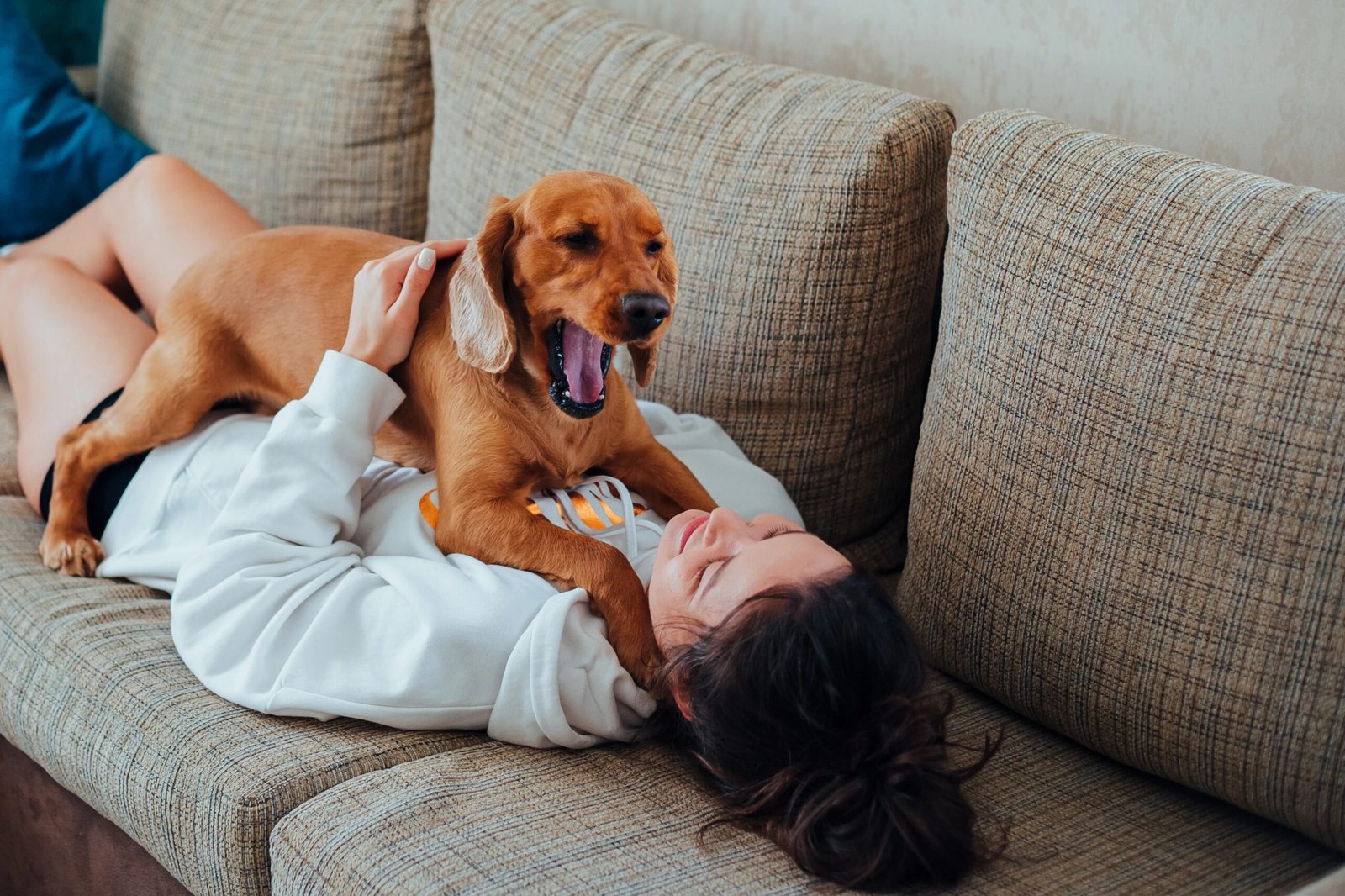
Evening is when a small apartment asks the most of this skill. You want to sit down. The dog may want a second shift. A settle works better if the evening has a shape: a last toilet trip, a short sniff or chew, then the mat while you cook or watch something, with occasional quiet rewards at first.
Do not wait until you are already irritated. Cue place while you can still be patient, start with a duration you have actually practiced, then release and ask again. Over ordinary evenings, you can fade the treats as the mat becomes a habit, especially if you still pay the nicest, quietest rests now and then.
Chews can help some dogs stay on the station, as long as the item is appropriate and you are nearby, but a chew is not a substitute for the cue. If it turns into a parade around the room, take it away or end the session. If you bounce up every thirty seconds, the dog will too. If you sit and occasionally reward a dog who is already lying there, stillness becomes more likely—not guaranteed, but more likely.
When to pause, and what this skill is not
Pause if the dog is panting hard, showing the whites of their eyes, leaving the mat repeatedly, or getting sharper rather than softer. Pause if you feel yourself getting tight or loud. A short break or ending for the night is kinder than one more “just stay.” Puppies, adolescents, and newly adopted dogs need even shorter work.
Pause also if something looks like pain or fear: reluctance to lie down, stiffness getting up, sudden snapping when approached on the mat, or a dog who cannot rest in any context. Those are reasons to speak with a veterinarian, and often with a qualified trainer, not reasons to drill harder.
This skill will not “cure anxiety,” and it will not replace the other parts of apartment life. A dog who is under-exercised, left too long, or worried when you leave needs those plans handled separately.
Teaching a dog to settle in a small apartment rewards patience more than intensity. The aim is a place your dog understands, short sessions you can actually repeat, and a way to share guests and evenings without a wrestling match in the only living room you have. If restlessness is new, painful, or extreme, ask a veterinarian to help you sort training from health.
FAQ
How long does it take to teach a dog to settle on a mat in an apartment?
There is no honest single date. Some dogs start offering a short settle within a few practice days; others need weeks of brief, easy sessions before they can stay while people move around the room. Apartment life can slow the process simply because guests, hallway noise, and a tight floor plan keep raising the stakes. Focus on slightly longer, calmer rests you can repeat, rather than a promise that the skill will be finished by a certain weekend.
Is a settle the same as crate training?
No. A mat or “place” settle is an open station in the room with you, used for guests, meals, and evening downtime. A crate can be a rest and management tool, especially for naps or short periods when you cannot watch, but it is a separate plan and should never be used as punishment or as a full-workday substitute for company. You can use both, as long as the dog understands which cue is which.
What if my dog gets up every time I walk away from the mat?
You probably asked for more distance or duration than they have practiced. Go back to feeding on the mat while you are still close, then take one small step, return, and reward if they stay. Release often so getting up on cue stays legal. If they pop up, skip the frustration and reset with an easier version. If they only leave when they look sore, worried, or over-aroused, pause and, if the pattern is new, speak with a veterinarian or a qualified trainer.
Can I use a settle when guests come over?
Yes, once the dog can already succeed in a quieter version of the same room. Practice with a familiar person first, then a staged knock, then a guest who will ignore the dog at the door. If the dog cannot stay, use management—a leash or a brief spell in another space—and try again when the greeting rush has passed. Do not debut the skill at a crowded party, and do not ask visitors to reward jumping.
When should I pause the training or get extra help?
Pause if the dog is getting more agitated, leaving the mat repeatedly, or looking uncomfortable, and pause if you are getting tense. End the session rather than pushing through. Contact a veterinarian if restlessness is new, if lying down or getting up looks painful, or if behavior changes suddenly. A qualified trainer is a good next step if fear, barrier frustration, or a history of snapping is part of the picture. A settle is not a treatment for anxiety.
[…] then give the dog a place to rest. A settle on a bed or mat after play is a useful follow-on skill; how to teach a dog to settle in a small apartment covers that job more […]
[…] Chewing often shows up when a new dog is left with too much unsupervised space. If furniture and shoes start to look like toys, tighten the area and see how to stop a dog from chewing furniture and shoes in a small apartment. A fuller settle is a later skill, covered in how to teach a dog to settle in a small apartment. […]