

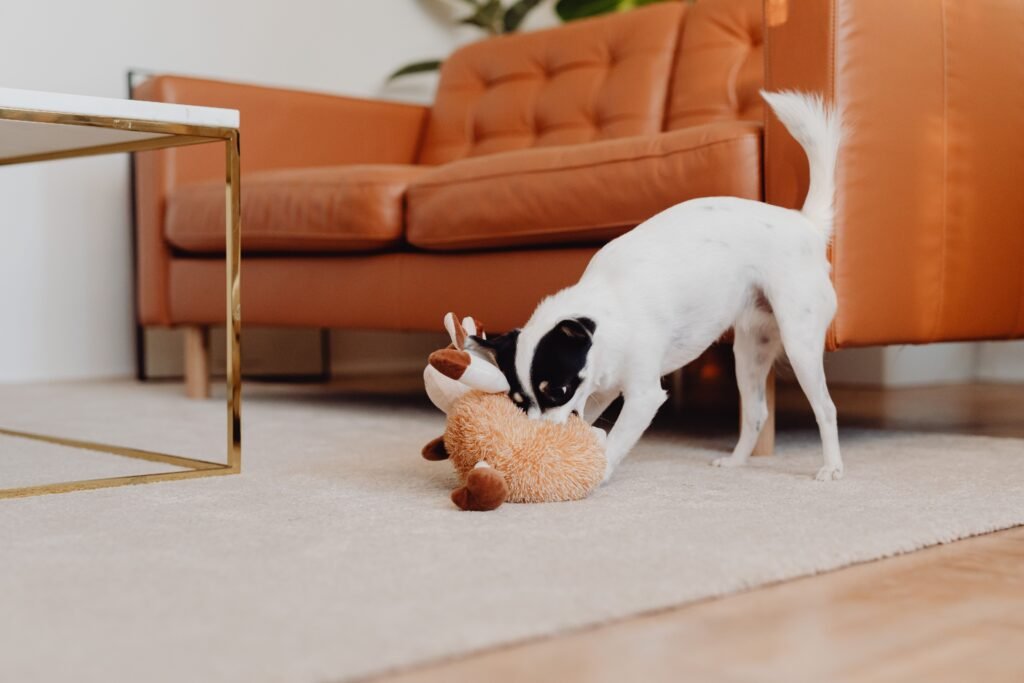
If you are trying to tire out a high-energy dog in a small apartment, the hard part is not the idea of “exercise.” It is the missing yard, the downstairs neighbor, and a dog who still wants a job after you have already walked around the block. A house with a garden can improvise a second outing in the rain. Many flats cannot.
A useful mindset is this: you are not trying to empty a tank in one heroic session. You are stacking mental work, short physical outlets, and real rest so the day has a shape your dog can settle into. A longer march will not always be kinder, and it will not always be possible between work, weather, and a building with stairs.
This is general information for dog parents in the US and UK, not a veterinary diagnosis and not a promise that a restless dog will be calm in seven days. Dogs vary by age, breed mix, health, and what their day already includes. If restless pacing is new, if your dog cannot settle after a normal day, or if behavior changes suddenly, contact a veterinarian or a qualified trainer. Discomfort, pain, and anxiety can look like “they just need more exercise.”
What “tired out” can honestly mean in a flat
In a small home, “tire them out” often gets treated as a mileage problem. High-energy dogs do need movement. They also need something to think about, and a chance to come down afterward. A useful outcome is not a dog who never wants to play again. It is a dog who can do a job, then use a bed, a crate, or a quiet corner without pacing the same loop around the sofa.
Walks still matter for most dogs who live without a yard. This article is not a walk-frequency guide; for how often outings might fit a real week, start with how often you should walk your dog and treat the indoor work here as a complement, not a replacement. Formal sidewalk practice is a separate, shorter job, which we unpack in loose-leash walking on city sidewalks.
Think of three jobs, not one:
- Mental work. Sniffing, searching, and short training sessions use a dog’s brain in a small footprint.
- Physical outlets that fit the building. Play and walks that do not turn the hallway into a racetrack.
- Recovery. Rest is part of the plan. A dog who never gets a quiet period often stays wound up, even after a long outing.
The goal is a repeatable mix, not a guarantee.
Indoor outlets you can repeat on a workday
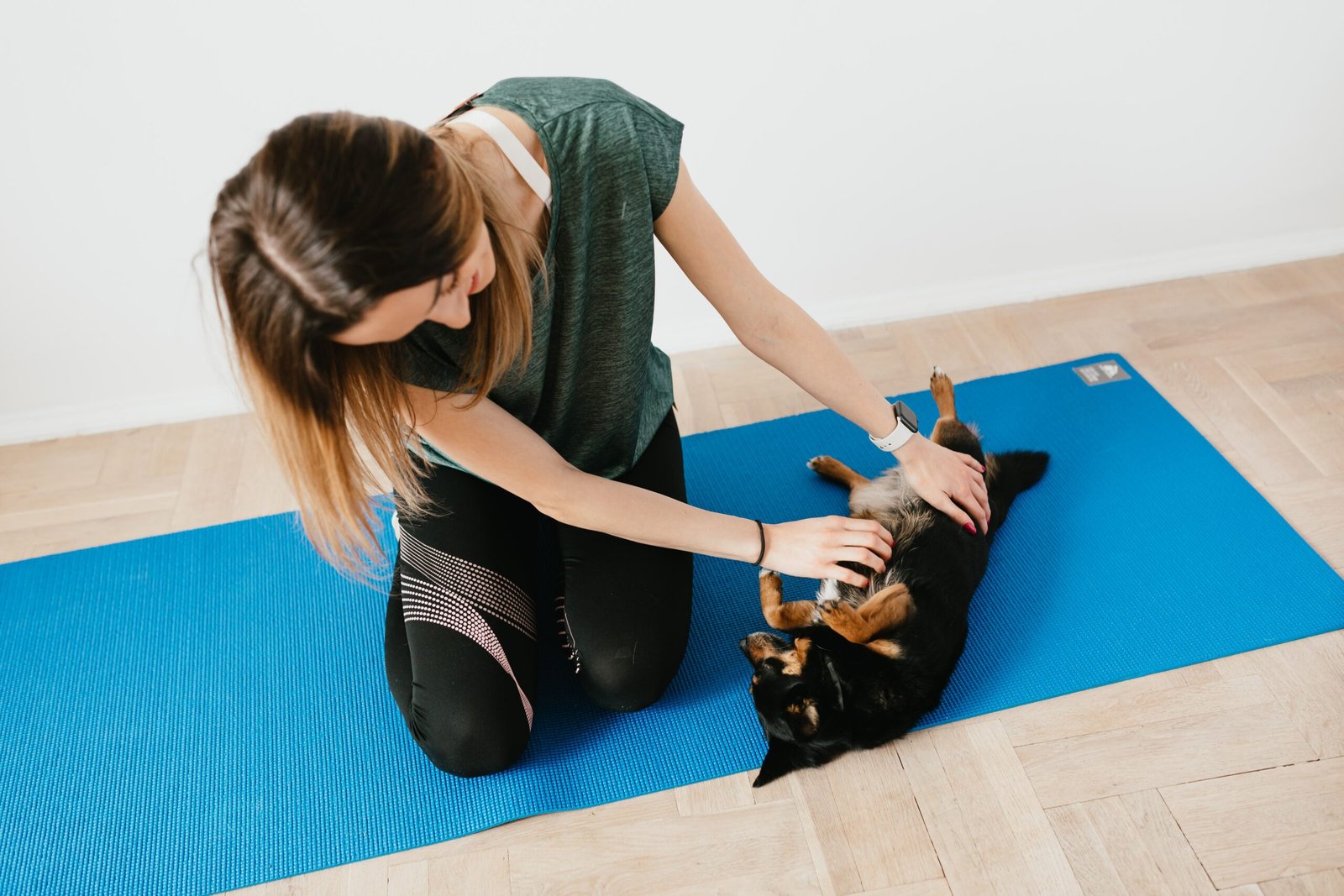
The most useful indoor work is short, obvious to the dog, and easy to tidy. A long wrestling match in a studio can leave everyone more aroused.
Sniff work is the easiest place to start because it does not need a garden. Scatter a portion of the day’s kibble across a towel, a snuffle-style mat, or a clear patch of floor, and let your dog search. Hide a few pieces in a cardboard box and ask for a “find it,” keeping the setup boring enough that the dog works with their nose, not by shredding the room.
Keep indoor play in the same honest category. A short game of tug on a mat, or a few rolls of a ball that you ask the dog to bring back, can take the edge off. End while the game is still controlled, and skip hallway fetch. If you share walls, keep play on the rug and mind the volume.
A settle after play matters as much as the play itself. A quiet minute on a leash, a chew on a mat, or a known rest spot gives the nervous system a way down. If you already use a crate as a rest tool rather than a workday holding pen, crate training in an apartment can sit beside this plan. The crate is not a substitute for a walk or for company.
Short training bursts beat a frustrated marathon

Five useful minutes on the living-room floor will usually teach more, and tire a brain more kindly, than a twenty-minute session you both start to resent. Training is a job you can give without leaving the building.
Keep the list small and the rewards easy to deliver. A handful of sits, downs, hand targets, or a “place” on a mat is enough for one burst. Ask, mark, feed, and reset. If your dog is flying around the room, you have already gone too long or started when they were too wound up. Step back to something easier, or end and try again after a sniff search or a toilet trip.
Treats should be small. Indoor training adds up quickly in a flat where the bowl is already measured. For rewards that are easy to portion, see best training treats for dogs, and adjust the main meal if you run several sessions a day.
Two or three bursts—morning, after work, and a last quiet one before the evening settle—often change a weekday more than one long “training project” on Sunday. Practice the exit as its own brief session too: leash on, four feet on the floor, then the door. A bouncing launch into the corridor spends energy your neighbors will notice, and it rehearses the opposite of a settled walk.
Puzzle toys are work, not background television

A puzzle or a stuffed toy can be genuine mental work. It can also become noisy plastic in the corner if you leave the same one down all afternoon. This is not a buying guide; for types and difficulty, use best puzzle toys for dogs and come back to how those tools fit a small-home day.
Use a puzzle when you can notice how your dog is working: after a walk, during a call you can still interrupt, or as part of a settle after play. Start easier than you think. Put it away when the food is gone or when the dog walks off. Rotation matters more than owning many. One or two well-timed sessions beat a basket of toys that have already been solved.
Chews can support a down-shift, but they are not automatically safe because they last a long time. Choose something appropriate for your dog’s chewing style, watch the first uses, and pick up pieces that become small enough to swallow. If your dog destroys most toys, toys for aggressive chewers is the more specific companion.
If you leave your dog home during the workday, a puzzle is a helper at departure, not a full plan. For a calmer alone-time setup in a flat, see how to leave a dog home alone in an apartment. A toy does not replace a midday break for a young or unsettled dog, and it does not fix panic when you walk out the door.
Hallway, stair, and elevator rules
Shared spaces are not a private training field. Fetch down a corridor, recall races on the stairs, and wrestling in the lift may feel like efficient exercise. They also startle neighbors, teach your dog that the building is a playground, and can be unsafe on landings or wet floors.
Keep hallway time short and boring: leash on before the apartment door opens, four feet on the floor, a calm walk to the exit. If you need a barrier inside the home so the dog cannot explode toward the threshold, a properly used gate can help; best dog gates for apartments covers fit in a small layout without turning this into a product list.
Repeated stair sprints are a poor default. Puppies with growing joints, senior dogs, and any dog who is sore after exercise should not be asked to pound up and down as a workout. Put extra movement outside, or use indoor games that stay on a clear, non-slip floor.
If barking at the lift or at footsteps is already part of the picture, treat that as its own plan rather than hoping a longer walk will erase it. Dog barking in an apartment is the better starting point for the noise itself.
A realistic walk structure when there is no yard

Indoor work does not replace outdoor time for most high-energy dogs. You do not need to “walk until they are wrecked.” You need a walk that includes toileting, some movement, and enough sniffing to feel like a job, on a route you can actually repeat after work.
Sniffing is work. A tight march around the same block with no pauses often leaves a busy dog less satisfied than a slightly shorter outing with time to read the pavement. If the leash is a constant argument, keep formal slack-leash practice short and separate, as in the city walking guide linked above, and let part of the outing be an ordinary sniff walk.
A weekday shape that is honest
Morning. A toilet trip plus a short sniff close to the building, then breakfast or a scatter feed, then a chance to rest.
Midday. If you work away, this is the gap that often creates the evening zoomies. A pop-in walk, a trusted helper, or a short indoor search if you are home is kinder than hoping a young or athletic dog will hold everything until 6 p.m.
Evening. The main walk: movement and sniffing, then a puzzle or a chew, then a quieter last hour. If the dog still wants a job, another two-minute training burst is usually better than a second chaotic play fight at bedtime.
Weather and dark winter pavements will shrink some outings. That is when indoor sniff and training work earn their place, not a hallway agility course.
When restlessness belongs with a professional
Busy is not the same as unwell. Some signs are not a reason to add another lap of the block.
Contact a veterinarian if restless pacing is new, if your dog cannot settle, pants heavily at rest, seems stiff or sore after ordinary play, suddenly becomes clingy or withdrawn, or if appetite, toileting, or sleep change alongside the energy. Pain and itch can look like a dog who “needs more.” A sudden behavior change is information, not a training failure.
A qualified trainer or a veterinary behavior professional is the right next step when the issue is panic when left alone, reactivity you cannot safely manage on the pavement, or frantic energy that does not respond to a fairer day. This guide cannot diagnose those problems and cannot promise that a new puzzle will resolve them.
You do not need a yard to give a high-energy dog a decent day in a small apartment. You need a mix you can repeat: indoor sniff work, short training bursts, a puzzle used as a job, civil hallway habits, and walks that include sniffing rather than only mileage. That mix will not turn every dog into a quiet roommate on a calendar date. It will give a busy dog honest work, and it will give you a day that can actually end.
FAQ
Can indoor play replace walks if I work long hours?
Not for most dogs, and not as a daily default. Indoor sniff work, training bursts, and puzzles can take the edge off and matter a great deal on wet or busy days, but they are a complement to outdoor toileting and movement, not a full substitute. If your workday is long, plan a realistic midday break—your own pop-in, a trusted helper, or a professional visit—rather than hoping a morning walk and a stuffed toy will cover a young or athletic dog until evening. For a broader outing rhythm, use a walk-frequency guide rather than stretching this article into a schedule promise.
How long should an indoor session last?
Short enough that your dog can still succeed and then settle. Many households do well with a few minutes of sniff work, a five-minute training burst, or a single puzzle session, repeated two or three times in a day, rather than one long blowout. If the game is getting rougher, the toy is being slammed into furniture, or your dog cannot lie down afterward, the session was already too long or too exciting. End while it still looks controlled.
If I tire my dog out, will they be quiet in the apartment?
Not automatically, and not on a seven-day timetable. A fairer mix of mental work, movement, and rest often helps a busy dog settle, but a tired dog can still bark at the lift, pace when left alone, or stay wound up after a chaotic play fight. Quiet is not the only measure of a good day, and “more exercise” is not a fix for pain, panic, or a habit that needs its own plan. If noise is already the main problem, treat barking as a separate question rather than walking farther and hoping.
Are hallway fetch and stair sprints a good way to burn energy?
Usually no. Shared corridors, stairs, and lifts are not a private running track. Those games startle neighbors, teach the dog that the building is a playground, and raise the risk of slips, collisions, and sore joints, especially in puppies and older dogs. Keep hallway trips short and on a leash, and put movement and play in the flat—on a clear, non-slip floor—or outside. Repeated stair sprints should not be the workout plan.
When should I call a trainer or a veterinarian about high energy?
Contact a veterinarian if restless pacing is new, if your dog cannot settle, seems sore, pants heavily at rest, or if behavior, appetite, or toileting change suddenly. Medical issues can look like a dog who simply needs a longer walk. A qualified trainer or a veterinary behavior professional is the better next step for panic when left alone, reactivity you cannot safely manage, or frantic energy that does not ease when the day is already fair. This guide cannot diagnose those problems.
[…] job. If your dog is bouncing off the furniture because they have had no real outlet, start with how to tire out a high-energy dog in a small apartment and treat the settle work here as the downshift after that, not a replacement. A crate can be a […]
[…] A short indoor sniff session can be as simple as scattering a small handful of kibble or training treats across a towel or a patch of floor, or hiding them in boxes the dog already understands. A few minutes of sniffing often takes the edge off more kindly than a frantic game in a tight hallway. If you want a longer energy plan for a small home, that is a different article: how to tire out a high-energy dog in a small apartment. […]
[…] It is especially handy as a rainy-day indoor job. When the pavement is too wet for a long loop, a short toilet trip plus a few minutes of sniffing at home often takes the edge off more kindly than a frantic game in a hallway. A longer indoor energy plan lives in how to tire out a high-energy dog in a small apartment. […]