

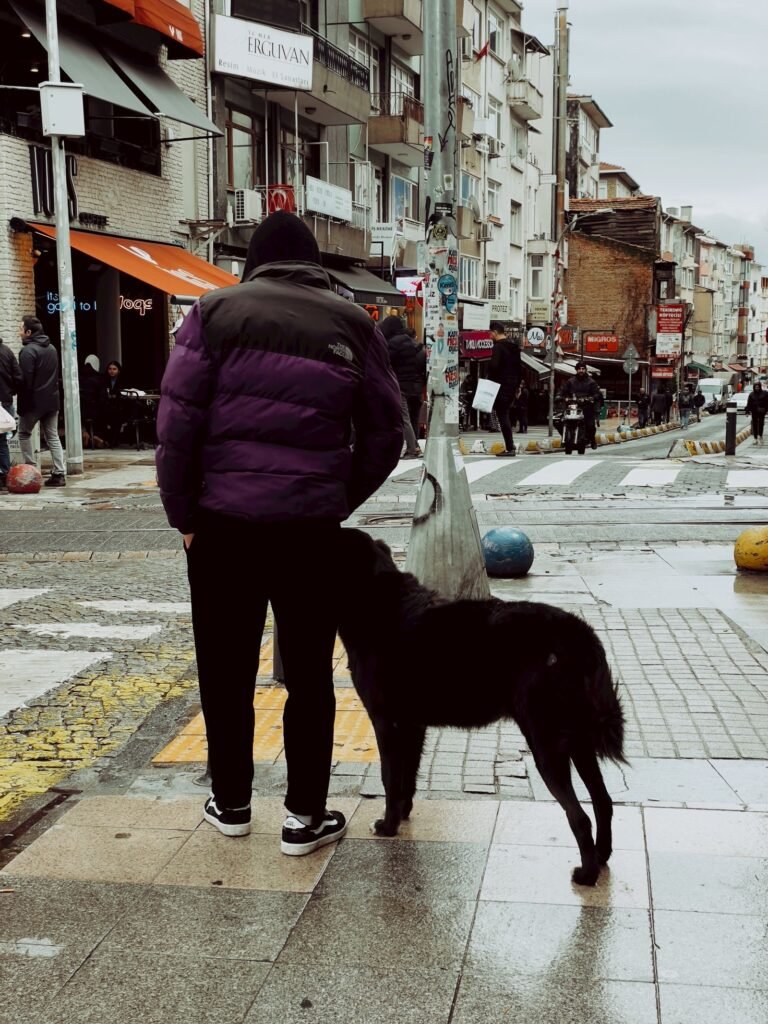
If you need a plan to walk a dog in the rain on city sidewalks and short loops, the hard part is not the idea of “go outside anyway.” It is the wet curb, the puddle that hides a deep edge, the narrow apartment entry with nowhere obvious to put a dripping coat, and a sofa that is only a few steps from the door. Houses with a porch can hide a lot of that mess. Many flats cannot.
A useful mindset is this: you are fitting the outing to the weather you have, and you are planning the doorway as carefully as the sidewalk. A shorter loop that avoids the deepest water, a towel ready in a small entry, and a simple indoor backup when the rain is too heavy will do more than one long, soaked circuit you both regret.
This is general information for dog parents in the US and UK, not a veterinary diagnosis and not a promise that every dog will enjoy every wet walk. This guide does not use hard rainfall or temperature cutoffs. If your dog is limping, licking paws raw, shivering hard, or will not put weight down, go inside. If that does not settle, contact a veterinarian.
This is a wet-weather city plan, not a winter-walk rewrite
Rainy sidewalks have their own job: decide whether this outing should happen, keep the loop short, and stop the wet coat from reaching the sofa. It is not a substitute for how to walk a dog in cold weather on city streets. Ice, short winter days, and ice-melt salt belong in that guide. Aftercare for pads lives in how to care for your dog’s paws after city walks.
How many outings a typical day should hold is covered in how often you should walk your dog. Loose-leash skills and the leash you hold are different topics; see how to teach loose-leash walking on city sidewalks and best dog leashes for city walks. A raincoat is only an option here. Choosing a winter coat is a buying question in best dog coats for cold weather walks.
Think of three jobs, not one:
- Decide. Some rain is a shorter loop. Some rain is a toilet trip and then back in.
- Choose the route. Deep puddles and rushing gutter water are worth walking around.
- Plan the doorway. A towel station in a small entry matters as much as the walk itself.
The goal is a livable wet-weather routine, not a claim that the right kit makes every rainy day pleasant.
Decide whether to go out, and keep the loop short
A light, steady rain is often still a walk, especially if your dog needs a toilet trip and is comfortable moving. A downpour, standing water at the curb, or a dog who already looks miserable may be a reason to keep the outing very short, or to stay in and use an indoor backup. Watch the dog, not a number on a weather app. There is no honest single rainfall cutoff that fits every street and every dog.
Separate the jobs if you can. A toilet trip can be a brief, familiar loop close to the building. An enrichment walk can wait for a break in the weather, or move indoors. If you usually combine both in one longer outing, a wet day is a good time to split them.
In a flat, that decision also includes the corridor and the lift. If getting downstairs already takes a few minutes, a heavy shower may soak the dog before you reach the sidewalk. A slightly earlier window, a covered stretch, or a shorter route can be enough. If the day will stay wet, two shorter outings often work better than one long one.
Choose a shorter route that skips the deepest puddles
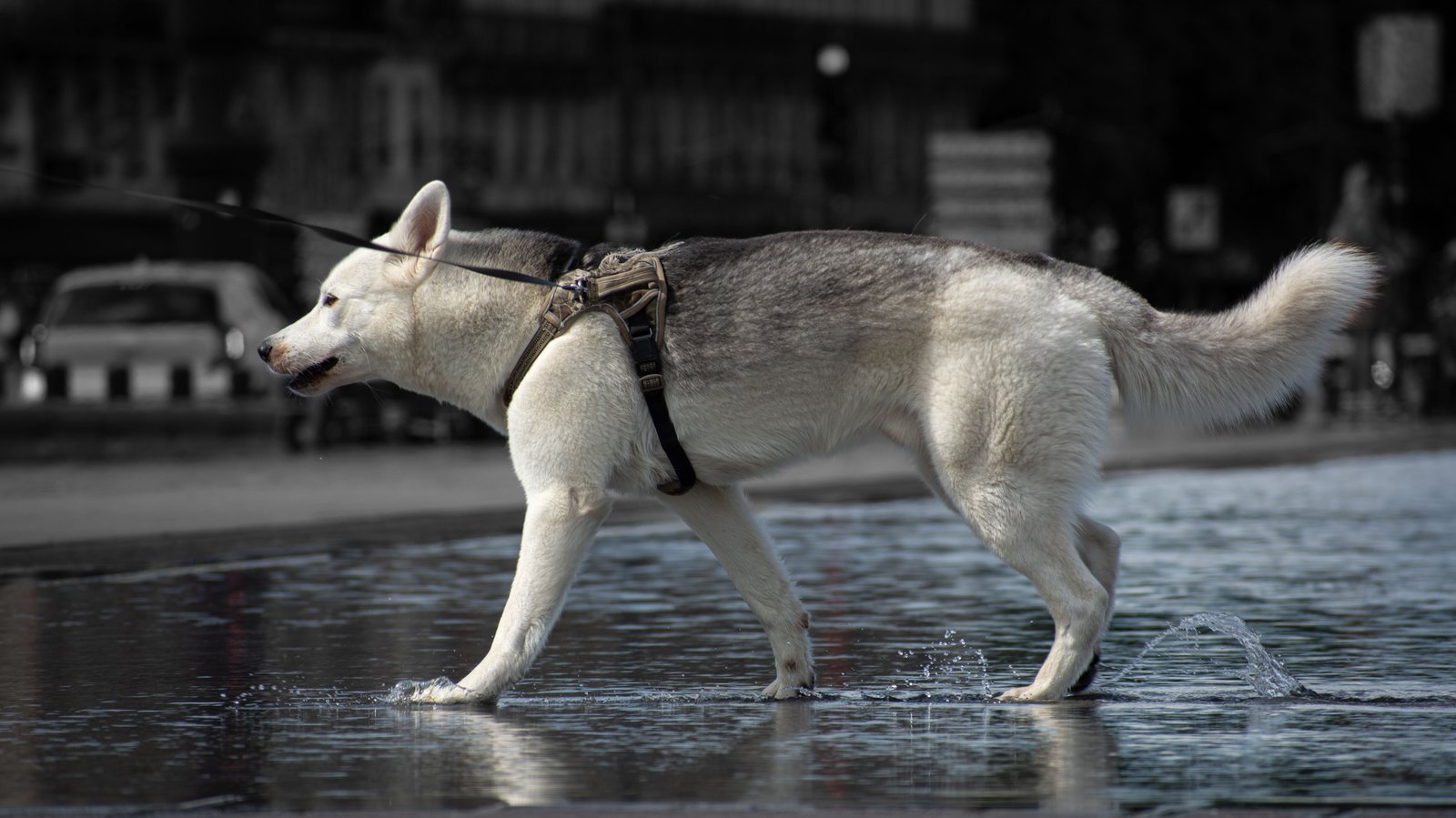
Pick a loop you already know, then edit it. The usual longer circuit past the park or down a busier street can wait. A shorter block that stays on even pavement, with fewer flooded crossings, is often the better rainy-day map. If one corner always collects a deep puddle, turn before you reach it.
Deep water is not only messy. A puddle can hide a broken curb or a sharp edge, and rushing gutter streams can startle a dog or soak a belly that you then carry into a small hallway. You do not need to leap over every damp patch, but you do need a route that lets you walk around the worst of it. If your dog steers into puddles, a shorter leash for those few metres is a management choice, not a new training project.
Stay on the sidewalk or pavement when you can. Wet roads are harder for drivers to see. Use crossings you already trust, and give yourself time rather than jogging through a flooded dip. If the only way out of your building is already underwater, treat that as a toilet trip under the nearest overhang, or a day for the indoor backup.
Set a towel station in a small entry, and dry paws and belly before the sofa

The walk is not finished when you reach the building door. In a small apartment, the sofa is often only a few steps away. Set the towel station before you go out, not after you are standing in the hallway with a dripping dog.
You do not need a large mud room. A washable mat, two towels you can actually reach, and a spot to hang a wet coat will do. Keep that kit by the door you use, even if the “entry” is only the first metre of a studio.
When you come in, pause. Let the dog shake if they will, then towel the paws, the legs, and the belly before anyone wanders off to the sofa. The belly and chest are easy to miss after a puddle. Be gentle, and if the dog hates having paws handled, keep the session short.
This is drying after rain, not a bath. If the dog is muddy, a quick wipe may be enough; a full wash is a different job, and that lives in how to bathe a dog in a small apartment bathroom. Salt, grit, and sore pads have their own aftercare in the paw-care guide. If you see redness, cuts, or licking that does not settle, ask a veterinarian. Hang the wet towels so the next outing has a dry one waiting.
Rain gear is an option, and it is not the same as a winter coat

A raincoat can help some dogs stay more comfortable, and it can keep a wet, dirty coat from soaking your hallway. It is optional. Plenty of dogs walk in light rain without one, and some find a rustling shell more stressful than a damp coat. If your dog stiffens, tries to remove the gear, or will not walk once it is on, skip it and shorten the outing instead.
Rain gear and a winter coat are not automatically the same thing. A coat chosen for cold and wind may not shed water well, and a light rain shell may not offer much warmth. If you are dressing a dog for ice, salt, and winter wind, use the cold-weather walking guide and the coat-buying guide. This is not a raincoat buying guide, and it does not rank models, prices, or brands.
If you do use rain gear, try it on indoors first and check that it does not rub or restrict the shoulders. Take it off in the entry and towel anything still wet underneath. Booties are optional too; a rainy sidewalk is a poor place to start a new gear battle.
Keep an indoor sniff or play backup when the rain is too heavy

Some days the honest plan is to stay in, or to come back after a brief toilet trip. That is not a failed walk. It is the backup you prepared so the dog still has a job.
A short indoor sniff session can be as simple as scattering a small handful of kibble or training treats across a towel or a patch of floor, or hiding them in boxes the dog already understands. A few minutes of sniffing often takes the edge off more kindly than a frantic game in a tight hallway. If you want a longer energy plan for a small home, that is a different article: how to tire out a high-energy dog in a small apartment.
A short play session works too, as long as it fits the space. A tug toy, a gentle indoor retrieve, or a familiar training game is enough. Keep it brief, stop before the dog is over-aroused, and let them settle afterward. You do not need to “make up” a cancelled long walk with an exhausting indoor marathon. If the rain eases later, you can still go out for a short loop.
When to go inside — and when to call a veterinarian
Go inside if the dog is limping, lifting paws, licking paws raw, shivering hard, or will not put weight down. Go inside if they suddenly refuse to walk, seem exhausted, or look unlike themselves. A wet, unhappy dog in a busy street is not a problem you have to “push through.”
Once you are home, dry them, offer water, and let them rest. If the limping, raw licking, hard shivering, or refusal to bear weight does not settle, contact a veterinarian. This plan cannot tell you whether a sore paw is a cut, a strain, or something else, and it is not a treatment for injury or illness.
Do not invent a rule such as “never walk below a certain rainfall.” Dogs, streets, and health vary. The safer habit is to watch this dog, on this pavement, and to treat a clear problem as a reason to go in.
A calm starting plan you can repeat
Use this as a first draft, then adjust to your dog and the day:
- Check the street, not only the forecast, and decide whether this is a short loop, a toilet trip, or a stay-in day.
- Choose a familiar route and walk around the deepest puddles.
- Set a towel and a place for wet gear by the door before you leave.
- Keep the outing shorter than your fair-weather walk when the pavement is very wet.
- Use rain gear only if your dog accepts it.
- Dry paws, legs, and belly in the entry before the dog reaches the sofa.
- Keep a simple indoor sniff or play backup ready for heavy rain.
- If the dog is limping, licking paws raw, shivering hard, or will not put weight down, go inside and contact a veterinarian if it does not settle.
A short, repeatable rainy-day plan matters more than a heroic loop in a downpour. The aim is a modest walk, a dry-off that protects a small home, and a backup when the weather is too much — not a claim that the right coat makes every wet day easy.
FAQ
Should I walk my dog in heavy rain?
Not always. A light, steady rain is often still a short walk or a toilet trip. A downpour, deep standing water, or a dog who already looks miserable can be a reason to stay in, or to go out only briefly and then use an indoor backup. There is no honest single rainfall cutoff. Watch the dog and the street you actually have.
How long should a rainy city walk be?
Shorter than your usual fair-weather loop is a sensible starting point. A familiar block that avoids the deepest puddles is often enough, especially if you can split a toilet trip from a later sniff walk when the rain eases. How many outings a day should hold is a schedule question; this plan is about shaping those outings when the pavement is wet.
Does my dog need a raincoat?
No. A raincoat is an option for some dogs, not a uniform. If it helps your dog stay more comfortable, or it keeps a dirty, wet coat out of a small hallway, it can be useful. If the dog fights the gear or will not walk in it, skip it and shorten the outing. A raincoat is also not automatically the same as a winter coat.
How do I stop a wet dog from soaking my apartment?
Set the towel station before you leave. When you return, pause in the entry, let the dog shake if they will, and dry paws, legs, and belly before they reach the sofa. Hang wet gear and towels so the next walk has a dry set. A full bath is a different job, and it is not required after every rainy walk.
When should I go inside and contact a veterinarian?
Go inside if the dog is limping, licking paws raw, shivering hard, or will not put weight down, or if they suddenly refuse to walk or seem unwell. Dry them and let them rest. If that does not settle, contact a veterinarian. This guide is general information, not a diagnosis and not a treatment for injury or illness.
[…] far, and get back into a small building without a last-minute scramble. It is not a substitute for how to walk a dog in the rain in the city or how to walk a dog in cold weather on city streets. Wet pavement, ice, and winter wind belong in […]
[…] is not a rewrite of how to walk a dog in the rain in the city, which covers the outing itself. Insulation for cold streets belongs in dog coats for cold weather […]