


If you are looking for the best dog coats for cold weather, you are probably not hoping for a podium of winning models. You are standing in a hallway with a lead in one hand, wondering whether this dog will be comfortable on a short city walk, and whether the coat will actually go on without a wrestling match in the lobby.
A useful mindset is this: the coat is a piece of walking gear, not a fashion test and not a medical device. Fit around the chest and neck matters more than a clever pattern. Belly coverage matters more for some dogs than others. A waterproof shell and a light sweater do different jobs. And a healthy double-coated dog may not need a coat at all on an ordinary winter outing.
This is general information for dog parents in the US and the UK, not a veterinary diagnosis and not a ranking of brands or models. It does not invent prices, test scores, or hard temperature cutoffs, and it does not claim that a coat prevents frostbite. If a dog keeps shivering, an older dog has mobility trouble, or a puppy is going out in harsh cold, contact a veterinarian for guidance rather than adding layers and hoping that settles the question.
Start with fit around the chest and neck
A coat a city dog will actually wear has to move with them. The chest is usually the widest part you need to clear, and the neck opening has to be roomy enough that the dog can walk, sniff, and toilet without the fabric pulling tight. If the coat rides up into the armpits, or the collar sits like a stiff funnel, many dogs will freeze, scratch, or try to reverse out of it before you have reached the pavement.
Try the coat on at home, not only in a shop aisle. Fasten it, then watch the dog walk, sit, and turn. You should be able to slide a couple of fingers under the neck and chest fastenings without the coat hanging so loose that it swings or twists. If you already walk on a harness designed for pullers, check that the coat and the harness can work together. Some coats are made to sit under a harness; others need a slit or a different fastening so you are not stacking two tight layers on the same point of the chest.
A coat that looks handsome on a hanger is not automatically the right shape for a deep-chested dog, a narrow sighthound, or a compact city mix. Length along the back matters, but it should not be so long that it covers the tail or soaks up urine when the dog toilets. If the dog will not walk normally in it, the coat is not doing its job.
Belly coverage for short-coated or small dogs
Short-coated dogs, small dogs, lean dogs, and dogs with very little undercoat often feel cold first at the chest and belly, which sit closer to wind and to wet pavements. A coat that only covers the back can leave that underside exposed. This is not a rule that every small dog must be wrapped on every outing, and it is not a temperature chart. It is a reason to look at the dog in front of you, and at whether the coat actually reaches the parts that get the weather.

When you check fit on a short-coated or small dog, look at the chest panel and, if the design has one, the belly strap or panel. It should sit close enough to block wind without rubbing the groin or making it awkward to toilet. A coat that leaves a wide gap under a lean chest may be fine on a still, dry day and much less useful in a windy street. If the dog has a thick coat of their own, extra belly fabric may be unnecessary and can even mat or trap moisture.
City walks add their own weather: wind between buildings, slush at crossings, and wet gutters. A coat will not replace paw care after city walks, and it will not dry a soaked underside if the design never covered that area. Choose coverage for the dog you have, then watch how they move outside.
A waterproof shell versus a light sweater
A light sweater and a waterproof shell are not interchangeable. A sweater can add a comfortable layer on a dry, cold day, especially for a short-coated or small dog who already accepts clothing. It will not do much once rain, sleet, or dirty city slush soaks the knit. A waterproof or water-resistant shell is the more useful choice when the walk is wet, even if the air does not feel bitterly cold.
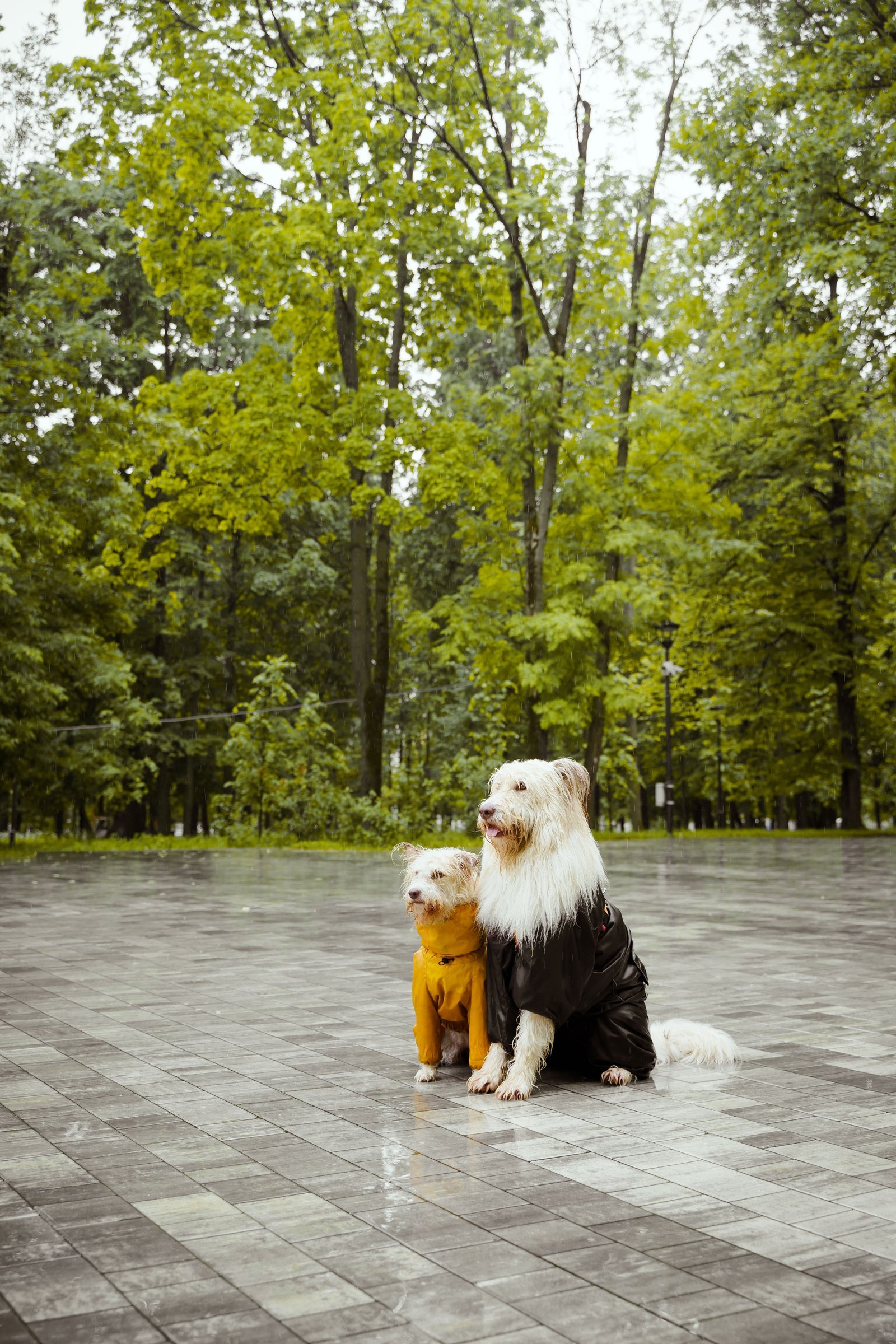
Think about the walk you actually take, not an imagined mountain day. In an apartment, you also have to think about what happens when you get home. A soaked sweater in a small hallway is a mess. A shell that you can wipe down and hang by the door is often easier to live with. Some dogs need both in a winter wardrobe: a soft layer for a dry evening loop, and a shell for rain. Others need only one.
If you already plan cold-weather walks as a routine, the coat is only one part of the outing. How to walk a dog in cold weather covers the walk itself — duration, surfaces, and when to turn back — rather than the garment. Use that guide for the outing, and use this one to decide whether a shell, a sweater, or no coat at all is the right tool.
Easy to put on in a lobby, and reflective trim for early dark
In a house, you can wrestle a wriggly dog into a coat on a doormat. In a flat, the last dry place is often a small lobby, a stairwell, or the space in front of a lift. That is a strong reason to prefer a coat you can put on quickly, with fastenings you can manage with cold fingers, and without a dozen straps. If the coat only works when a second person holds the dog still, it will not get used on a weekday morning.
Practice at home until the sequence is boring: coat, lead, out the door. If the dog finds clothing stressful, keep sessions short and calm, and do not force a garment that clearly frightens them. A coat they will not accept is not a bargain, even if it has every feature on your list. You also need a lead you can handle in gloves and on wet stairs; best dog leashes for city walks is the place for that choice, not this coat guide.
Early dark is a separate, practical problem in winter. Reflective trim, a light-colored shell, or a reflective strip can make a small dog easier to see at a crossing. It is a visibility aid, not a substitute for a lead, for attention at the kerb, or for choosing a quieter route. It also does not make a walk safe in every condition.
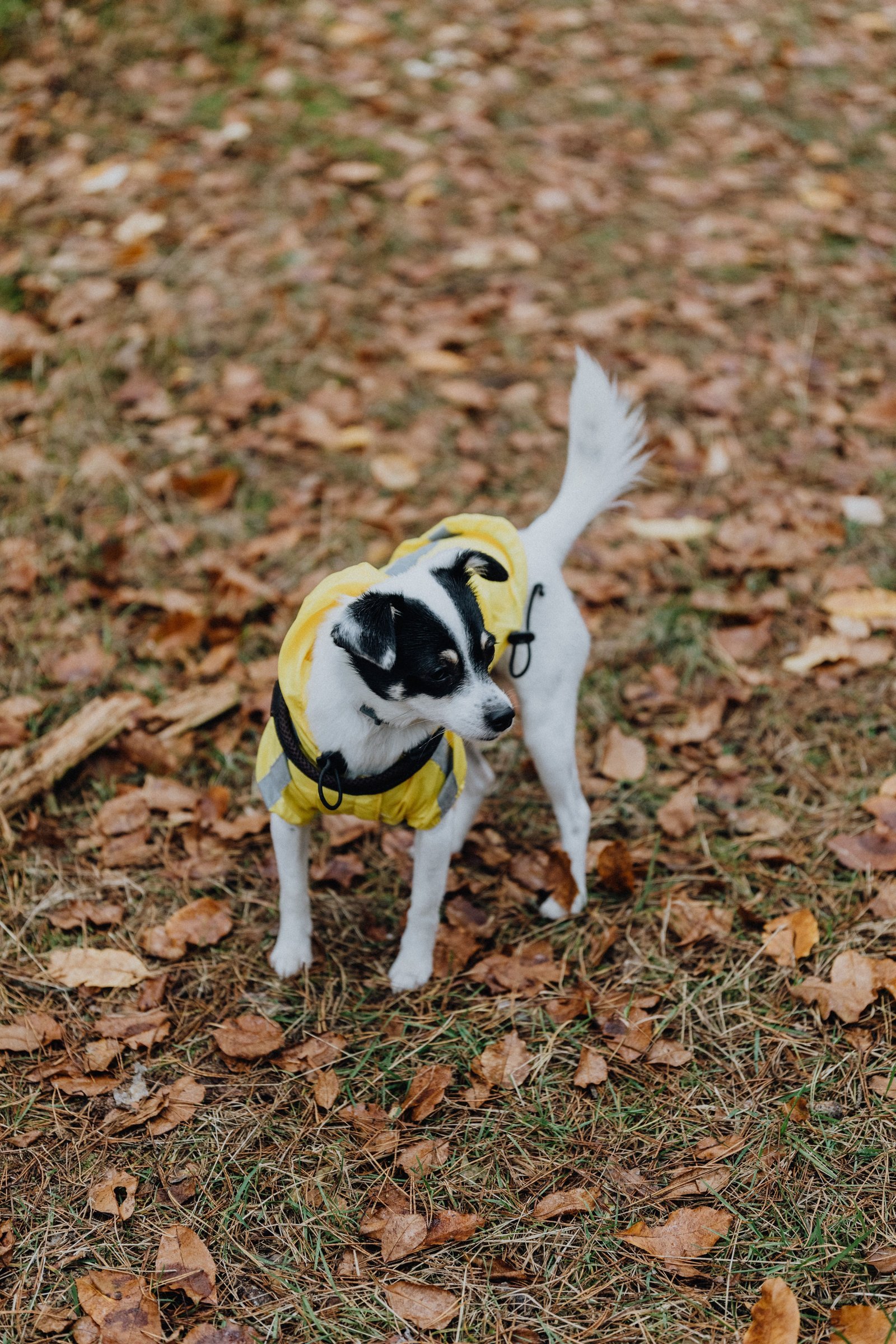
A coat with reflective detail is still only useful if it fits and the dog will wear it. Do not choose a shape you would otherwise reject just because the fabric is bright. Visibility helps on a dim pavement; fit is what keeps the coat on the dog.
When a coat helps, and when a healthy double-coated dog may not need one
A coat is most likely to help a short-coated dog, a small or lean dog, a dog who has been clipped, an older dog who feels the cold, or a dog who clearly tightens, lifts paws, or looks for doorways once you are outside. It can also help on a wet, windy city block even when the air temperature does not sound dramatic. The honest test is the dog in front of you, not a number on a chart. This guide will not invent hard temperature cutoffs.
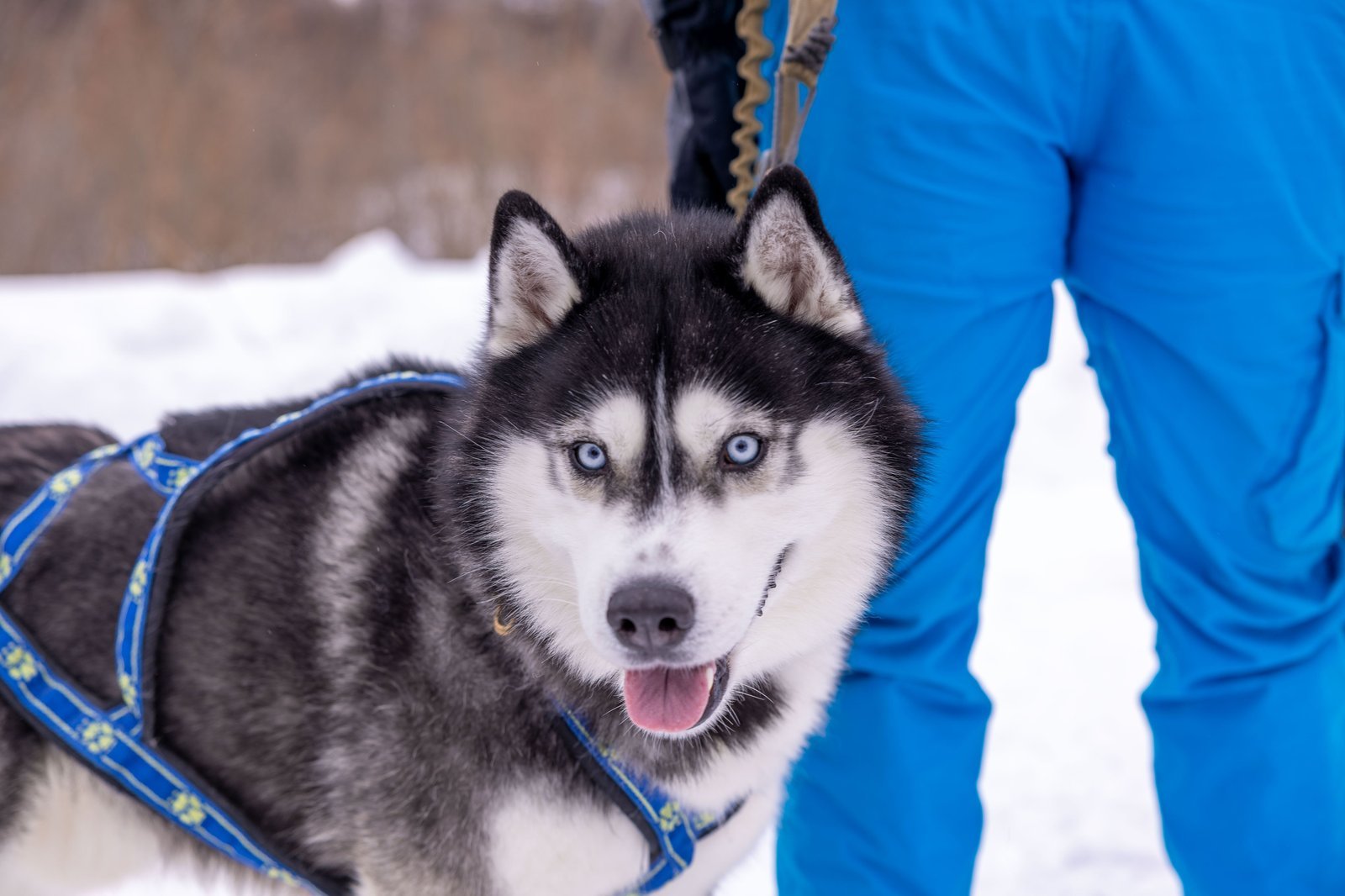
A healthy double-coated dog, such as a Husky or another breed with a dense undercoat, may be comfortable on an ordinary winter walk without a coat. Their coat is already insulation, and an extra layer can be unnecessary or even uncomfortably warm once they start moving. That is not a rule that every double-coated dog must go bare, and it is not permission to ignore a dog who is shivering or struggling. It is a reminder that “more coat” is not automatically better.
Watch for signs that the walk is too much: persistent shivering, reluctance to keep walking, lifting paws, or a dog who wants to turn for home sooner than usual. End the outing and get them dry and warm. A dog that keeps shivering, an older dog with mobility trouble, or a puppy in harsh cold belongs with a veterinarian’s guidance. A coat is not a treatment, and it does not prevent frostbite. If you are unsure whether this dog should be out in the conditions you have, ask a veterinarian rather than adding a garment and pressing on.
The coat is not the whole walk
The coat sits on the dog. The walk still has to be the right length, on a surface you can manage, with paws you can check at home. How often you should walk your dog is the schedule question. How to walk a dog in cold weather is the outing itself. Paw care after city walks is the cleanup. This article stays with the garment: something that fits, that you can put on, and that this dog actually needs.
A calm way to choose a coat
You do not need a ranked shortlist. You need a short set of checks you can repeat in a shop, or with a coat you already own:
- The chest and neck openings let the dog walk, sniff, and toilet without rubbing or slipping.
- Short-coated or small dogs have enough coverage on the chest and, where it is useful, the belly, without blocking toileting.
- You can tell whether you are buying a light sweater for dry cold or a waterproof shell for wet weather, and you can dry it in a small hallway.
- You can put it on in a lobby or by a lift without a long struggle.
- Reflective trim is there if you walk in early dark, but it does not replace a well-fitting coat or a secure lead.
- You have asked whether this dog needs a coat at all, especially if they have a healthy double coat and are comfortable without one.
If the coat fails the fit test, or the dog will not wear it, keep looking. If the dog is unwell, in pain, or unable to get comfortable in conditions that used to be ordinary, skip the gear search and speak with a veterinarian. Choosing the best dog coats for cold weather is a quieter job than the title suggests: a garment that fits, a walk you can still enjoy, and the confidence to leave a coat on the hook when this dog does not need one.
FAQ
Does every dog need a coat for winter walks?
No. A short-coated, small, lean, clipped, or older dog may be more comfortable in a coat on a cold or wet city walk. A healthy double-coated dog may be fine without one on an ordinary outing. Watch the dog rather than a temperature chart. If they keep shivering, seem painful, or a puppy is facing harsh cold, contact a veterinarian rather than assuming a coat will solve it.
How should a dog coat fit around the chest and neck?
The coat should let the dog walk, sit, turn, sniff, and toilet without the neck or chest fastenings pulling tight or rubbing the armpits. You should be able to slide a couple of fingers under the fastenings without the coat hanging so loose that it twists. If you use a harness, check that the two can work together. A coat the dog will not walk normally in is not the right coat.
Is a sweater enough in rain or city slush?
Usually not. A light sweater can help on a dry, cold day, but knit layers soak through in rain, sleet, or dirty slush. A waterproof or water-resistant shell is the more useful choice for wet walks. In a small apartment, a shell you can wipe down is also easier to live with than a soaked sweater in the hallway.
Does reflective trim make a winter walk safer?
Reflective trim, or a light-colored shell, can make a dog easier to see on early-dark streets. It is a visibility aid, not a substitute for a lead, for attention at crossings, or for a coat that actually fits. Choose reflective detail on a coat the dog will wear, rather than buying a poor fit just because the fabric is bright.
When should I ask a veterinarian instead of just adding a coat?
Ask a veterinarian if the dog keeps shivering, if an older dog has mobility trouble, if a puppy will be out in harsh cold, or if the dog seems painful, unwell, or unusually reluctant to walk. This is not a medical article, and a coat does not prevent frostbite or treat a health problem. Guidance from the dog’s veterinarian is the right next step in those cases.