

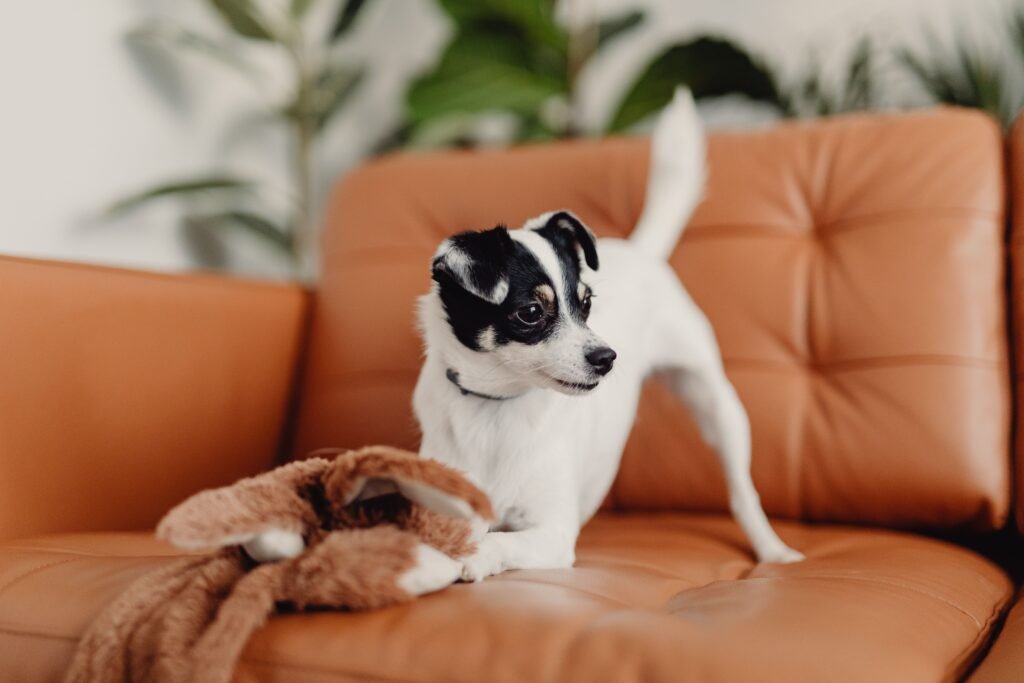
If you are looking for the best quiet dog toys for apartments, you already know the problem is not “a bored dog needs a toy.” It is the squeak that carries through a party wall, the ball that hits a skirting board at 7 a.m., and the hallway you cannot use as a cricket pitch. A house can sometimes absorb a noisy game. Many flats cannot.
A useful mindset is this: you are choosing play that fits a small, shared building, not hunting for one official winner. Softer toys, lick mats and snuffle-style foraging, and short, floor-level games will usually be kinder to neighbors than a loud squeaker or a bouncing fetch down the corridor. “Quiet” is about the toy, the surface, and how you use it.
This is general information for dog parents in the US and UK, not a product test and not a promise that any toy will keep a dog occupied for a set number of hours. Dogs vary by size, age, chew style, and how exciting the apartment already feels. No toy should be left with a dog who can shred it and swallow the pieces. If play turns into frantic chewing, guarding, or a sudden limp, stop and, if needed, contact a veterinarian or a qualified trainer.
Quiet in an apartment is a building problem, not a personality test
A toy that sounds like a mild squeak in a shop can sound like a repeated alarm through plasterboard. Rubber toys dropped on bare floorboards, tennis balls ricocheting off a hallway wall, and electronic toys with beeps all travel. The dog is not being inconsiderate. The building is simply close.
Think of three jobs, not one:
- Lower the volume. Prefer toys that do not squeak, beep, or crack against hard floors.
- Change the game. Swap hallway fetch for foraging, licking, or a short, on-the-spot tug you can end.
- Match the dog in front of you. A gentle mouth can do well with soft fabric. A dog who dismantles stuffing in minutes needs a different type, or a much shorter, supervised session.
The goal is repeatable indoor play your neighbors can live with, not a miracle toy and not a ranked “number one” product. There is no honest single winner, because quiet depends on the dog, the floor, and the hour of the day.
Softer toys, and what to look for
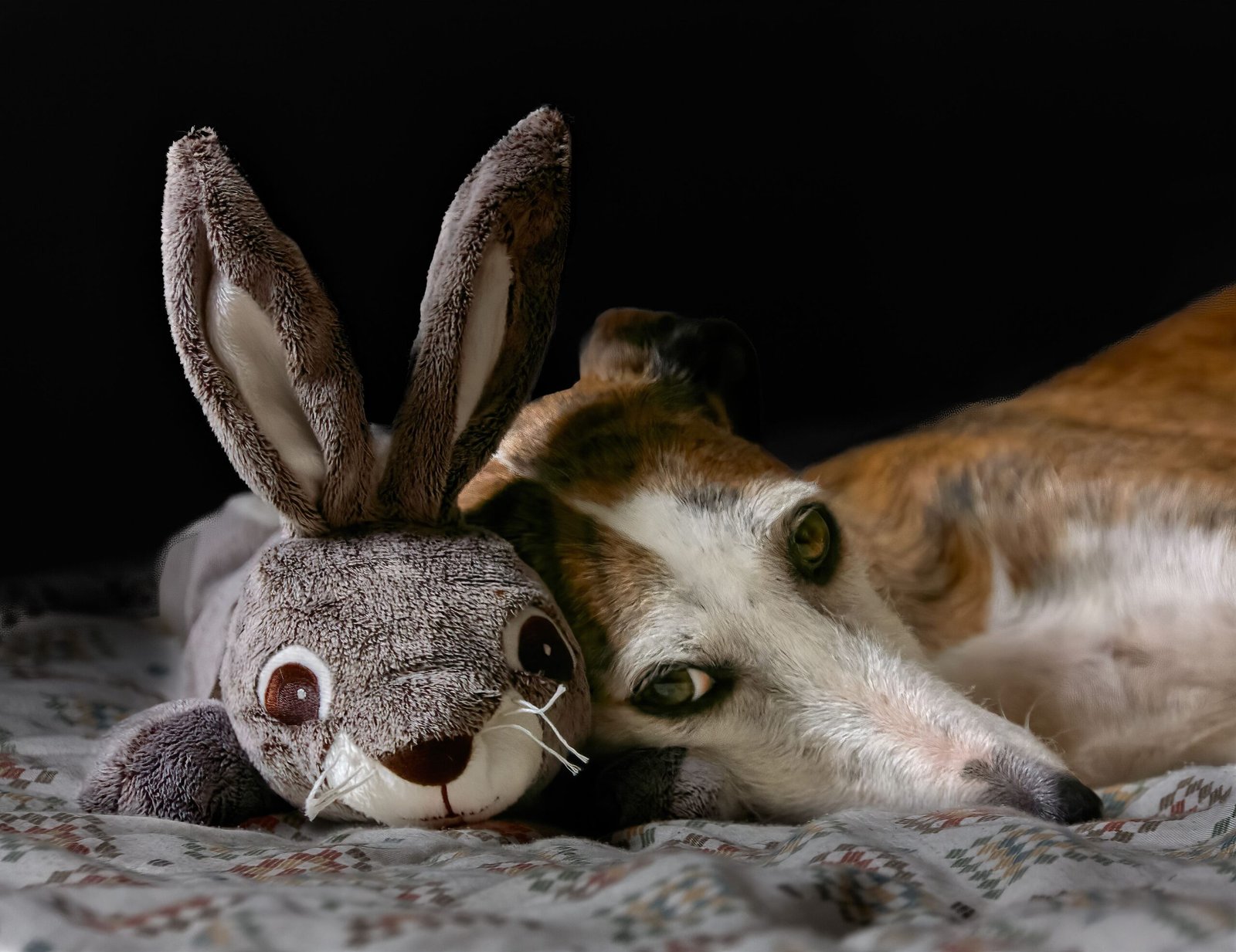
Soft fabric toys—plush, fleece, and similar—are often the first quiet option people reach for, and for a good reason. They do not clatter when they land, and many dogs like to carry, nuzzle, or lie down with them. In a small living room, a soft toy on a sofa or a bed is a calmer picture than a hard ball in a narrow hall.
What to look for matters more than a brand name. Check the seams, the size relative to your dog’s mouth, and whether the filling is likely to come out in one determined chew. A toy with a removable squeaker—or, better, no squeaker at all—is easier to keep quiet. If a soft toy is sold with a squeaker you cannot take out, it may still be useful, but only if you are willing to skip it when the building is asleep or you can hear it through the wall.
Washability is a practical apartment point. A fabric toy that can go in a wash bag is easier to live with than one that has to sit in a corner once it has been well loved. Avoid toys with small plastic eyes, poorly fixed ribbons, or parts that can be pulled off and swallowed. If your dog is a determined shredder, treat plush as a short, sit-with-you activity, not an all-day companion.
When you shop, imagine the toy landing on your actual floor at the hour you usually play. If the thought of the sound makes you wince, it is already the wrong type for that moment.
When to skip loud squeakers

Squeakers are not automatically “bad.” Some dogs find them satisfying, and a brief game in the middle of the day may be fine in a well-insulated building. The problem is repetition, timing, and thin walls. A squeak every few seconds, early in the morning, late at night, or during a neighbor’s work call, is a different object from a two-minute game at noon.
Skip or put away a squeaker when you can hear it clearly from the next room, when the dog will not disengage, or when the only available play window is a quiet-hours stretch. You do not have to throw the toy away. You can keep a quieter stand-in—a soft toy without a squeaker, a lick mat, or a snuffle-style forage—for early and late in the day, and save the squeaker for a walk, a park, or a time when the building is already lively.
If your dog becomes more aroused, not calmer, after a squeaky session, that is useful information. The toy may be winding them up for a bounce you then cannot finish indoors. End the game while it is still going well, swap to a softer item, and offer a drink and a place to lie down. A calmer close is part of keeping the toy “quiet”: the dog settles afterward, instead of racing the hallway.
Electronic toys that beep, roll themselves, or play sounds deserve the same test. If you would not want to hear it through a shared wall, it is not an apartment-first choice.
Lick mats, snuffle-style play, and why they beat hallway fetch
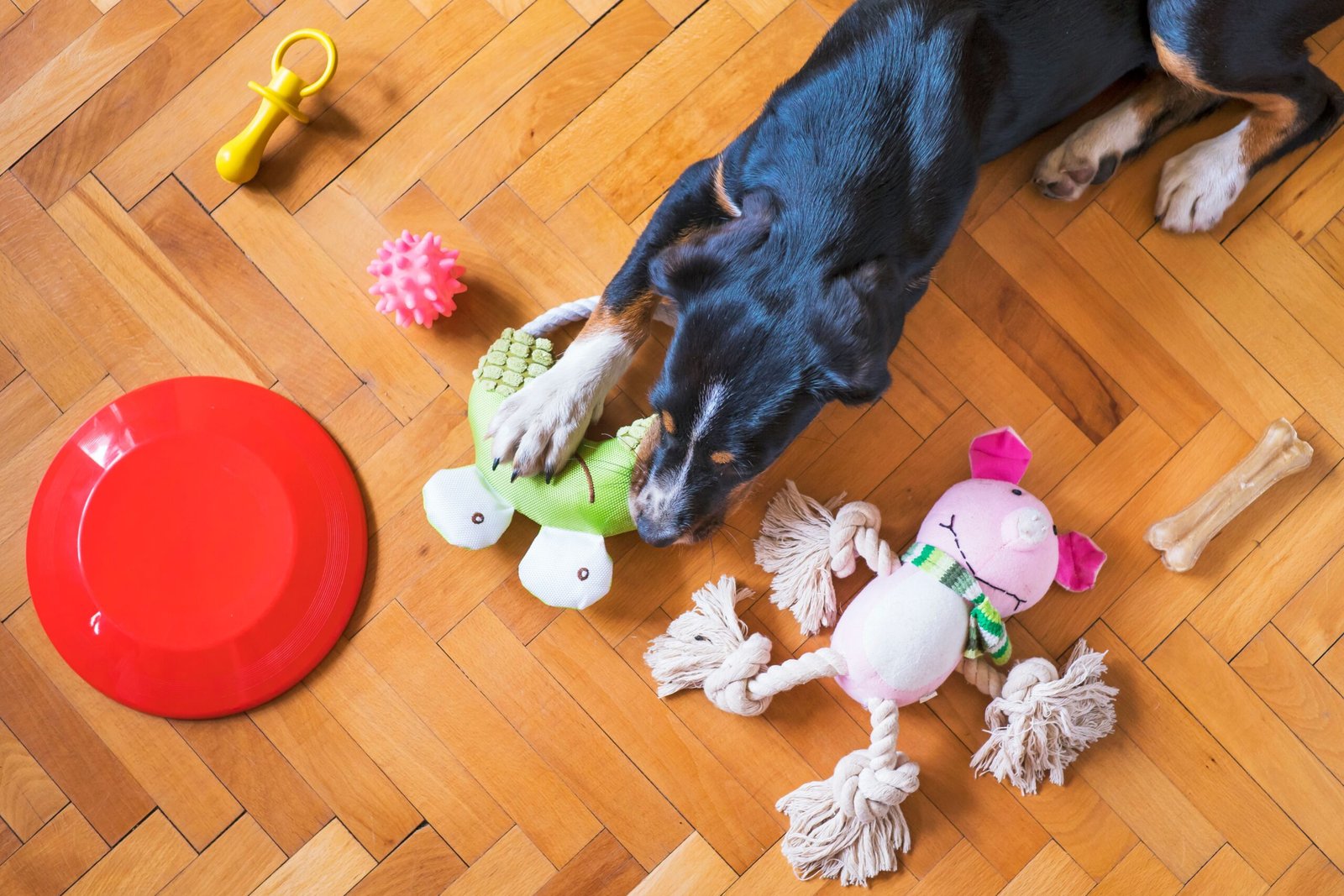
Hallway fetch is tempting in a flat because the corridor looks like a lane. It is also how balls hit doors, dogs skid on hard floors, and neighbors hear a thump every time the toy lands. A short, rolling game on a rug, with a soft ball you can stop at any moment, is a milder version. A full-speed retrieve down a shared hall is usually the wrong tool.
Lick mats and snuffle-style play are useful alternatives because the work is mostly quiet and stays in one spot. A lick mat is a textured surface you spread with a thin layer of a dog-safe food the dog already eats, then offer for licking. A snuffle-style game hides a measured portion of kibble or tiny treats in fabric folds, a snuffle mat, or even a towel you loosely roll, so the dog has to sniff and search. Both can occupy a dog without the soundtrack of a squeaker or a bouncing ball.
You do not need a complicated setup. You do need supervision, especially while you learn how your dog treats fabric and rubber. A dog who eats the mat, swallows towel fibers, or guards the food should not have that game left down—or may need a different activity. Count the food you spread or hide as part of the day’s total, so a “quiet activity” does not become a second meal.
These games are also distinct from more formal puzzle toys, which often have moving parts, sliding lids, or harder difficulty levels. If you want that kind of structured mental work, best puzzle toys for dogs is the better place to compare types. A lick mat or a snuffle forage is usually simpler, quieter, and easier to start with on a weeknight in a small room.
This is not a tough-chewer guide, and not a puzzle round-up
Quiet apartment play and “a toy that survives a strong jaw” are different shopping jobs. A soft toy can be wonderfully quiet and still be a poor choice for a dog who unstuffed the last three in an afternoon. In that case, look at tougher materials meant for chewing, use them under supervision, and keep fabric toys for short, close-up sessions if you use them at all. Best toys for aggressive chewers covers that durability question more directly. A tough chew can still be quiet if it is not a squeaker and if it is used on a mat rather than dropped on bare boards; “tough” and “loud” are not the same trait, but “tough” is still not a reason to leave any toy unsupervised.
Puzzle toys, as above, are a third job: they are about making the dog think, not about keeping the decibels down, although many puzzles are fairly quiet if they are not slammed around. Choose the tool for the problem you actually have. A high-energy evening in a one-bedroom may need a walk plus a short forage, not a squeaky toy and a hope. Indoor play helps, but it does not replace how often you should walk your dog, and it is only one part of how to tire out a high-energy dog in a small apartment.
Safety, supervision, and when to put the toy away
Quiet is not the same as safe. Inspect toys often for ripped seams, exposed stuffing, cracked rubber, and pieces small enough to swallow. Once a toy is damaged, retire it. A swallowed squeaker, a lump of stuffing, or a torn chunk of rubber is a veterinary problem, not a reason to “see if they get bored of it.”
Size the toy to the dog. A ball or plush that can fit entirely in the mouth is a choking risk. If you use a ball indoors, a softer one on a rug, with a clear stop cue and a short session, is easier to control than a hard ball on bare wood.
Do not leave fabric toys, lick mats, or anything with small parts down when you go out, unless you already know from supervised use that your dog cannot destroy them. Food left on a mat can also spoil. A quieter toy is still something to manage, not a babysitter.
If chewing suddenly becomes intense, if the dog yelps or starts favoring a mouth or a paw, or if you think something has been swallowed, contact a veterinarian. This guide cannot diagnose a blockage or a dental problem, and it is not a treatment plan.
A calmer indoor play habit
The easiest apartment pattern is usually a short rotation, not one toy left out all day. Offer a quiet activity when you can watch, end it while it is still going well, then give the dog a place to rest. A settle on a bed or mat after play is a useful follow-on skill; how to teach a dog to settle in a small apartment covers that job more fully.
Keep a small, clearly quiet set for early mornings and late evenings: a soft toy without a squeaker, a lick mat, or a snuffle-style forage with a measured amount of food. Save noisier options, if you use them at all, for daytime or outdoor use. Put balls away when you cannot supervise a rolling game, and reach for the quiet set first if someone is on a call in the next flat.
The “best” quiet dog toys for an apartment are the types you will actually use without cringing at the sound, and the ones your dog can have without shredding them into a hazard. That will look different from home to home. Choose by type, check the toy in your own rooms, and let walks, rest, and a simple routine do the rest of the work.
FAQ
What is the best quiet dog toy for an apartment?
There is no honest single winner. For many households, a soft toy without a squeaker, a lick mat, or a snuffle-style forage is a quieter starting point than a hard ball or a frequent squeaker. The better choice is the type that stays quiet on your floor, that your dog can use without destroying it, and that you can supervise. This guide talks in types and what to look for, not in brand rankings or test scores.
Are squeaky toys always a bad idea in a flat?
No. A short squeaky game in the middle of the day can be fine in some buildings. They become a problem when the sound carries, when the session is long or late, or when the dog gets more wound up instead of settling. Keep a quieter alternative for early mornings, evenings, and work-from-home hours, and put the squeaker away when you can hear it through a wall.
Can a lick mat or snuffle-style game replace a walk?
It can help take the edge off, especially on a wet or busy day, but it should not be the only plan. Most dogs still need toilet access and some outdoor movement and sniffing. Count any food you spread or hide as part of the day’s portion, and supervise fabric or rubber until you know your dog will not eat it. A quiet indoor game is a useful extra, not a full substitute for time outside.
Are soft toys safe if my dog is a strong chewer?
Not as an all-day, unsupervised toy. A determined chewer can open seams, swallow stuffing, or pull off small parts. If that is your dog, use plush only in short, watched sessions, or skip it and look at tougher chew toys instead. Quiet and durable are separate questions; a soft toy can be wonderfully quiet and still be a poor match for a strong jaw.
How do I know a toy is quiet enough for my building?
Try it in the room where you will actually play, at a similar time of day, and listen from the hallway or the far side of the flat. If you can hear a squeak, a beep, or a hard bounce clearly, your neighbors probably can too. Prefer toys that land softly, games that stay in one spot, and a stop point you can use before the sound wears thin. When in doubt, choose the quieter type.