


If you want to stop a dog from jumping on guests in an apartment, the hard part is not the idea of “sit.” It is the narrow hallway, the sudden knock, and a visitor who is already in hugging range before you have found the treat pouch. A house can sometimes send a bouncy dog into the garden. Many flats cannot.
A useful mindset is this: you are teaching a door-and-greeting routine your dog can actually use in a tight space. The aim is four paws on the floor while someone comes in, not a mid-air hello, and not a wrestling match in the only corridor you have. A leash at the door, clear guest instructions, and short practice sessions will do more than a last-second “down” shouted over the doorbell.
This is general information for dog parents in the US and UK, not a veterinary diagnosis and not a promise that jumping will disappear in a set number of days or never return. Dogs vary by age, history, and how exciting the hallway already feels. If jumping is new, if it comes with snapping or a freeze, or if you cannot safely hold the leash, contact a veterinarian or a qualified trainer.
Jumping at the door is a hallway problem, not a character flaw
Most dogs jump because it works. It gets faces closer, hands on their chest, and a burst of noise that feels like a party. In an apartment, there is nowhere to step back: the door opens inward, and a neighbor or delivery person may already be in the corridor. The dog is not being “dominant.” They are practicing a greeting that has paid off.
This plan is about the doorway, not every other apartment skill. Hallway or doorbell barking is a different job; use how to stop a dog from barking in an apartment if noise is the main problem. A mat or “place” settle helps once people are inside; that is how to teach a dog to settle in a small apartment, not a substitute for a door routine. A crate can be a rest and management tool if you need a pause before guests come in, but that is its own plan; see how to crate train a dog in an apartment. And a calmer greeting while you are home is not the same as leaving a dog home alone in an apartment.
Think of three jobs, not one:
- Management at the door. A leash, a clear place to stand, and a door that does not swing into the dog.
- A greeting you can reward. Four paws on the floor, then a calm hello—or no hello until the dog can manage it.
- Practice when nothing is at stake. Short rehearsals with a knock or a familiar person, so the first real guest is not the first lesson.
The goal is a repeatable routine, not a miracle and not a guarantee that jumping ends forever.
Put a leash on before the door opens

In a tight hallway, management comes first. Clip a leash on before you look through the peephole, not after the door is already open and the dog is in the air. Stand the dog to the side of the door swing so they cannot charge the gap. If your layout allows, keep a lightweight leash on a hook by the door so you are not hunting for it while someone waits in the corridor.
A leash is not a punishment and not a way to yank a dog off a guest. It is a short, boring handle so you can prevent rehearsal of the jump and guide the dog back to the floor. Keep slack when the dog is standing or sitting. If they leap, take a small step away or turn so the guest is less available, then wait for four paws down. Do not yank, pin, or knee the dog. Those moves can startle, unbalance a person in a narrow hall, and teach the dog that arrivals are chaotic.
If the dog cannot stay on the floor even on a leash, you need more management, not a louder cue. A baby gate, a familiar crate the dog already rests in happily, or another room with a chew for a minute can be kinder than a failed greeting at the threshold. Return to the door plan when the first rush has passed.
Teach four paws on the floor, not a mid-air greeting
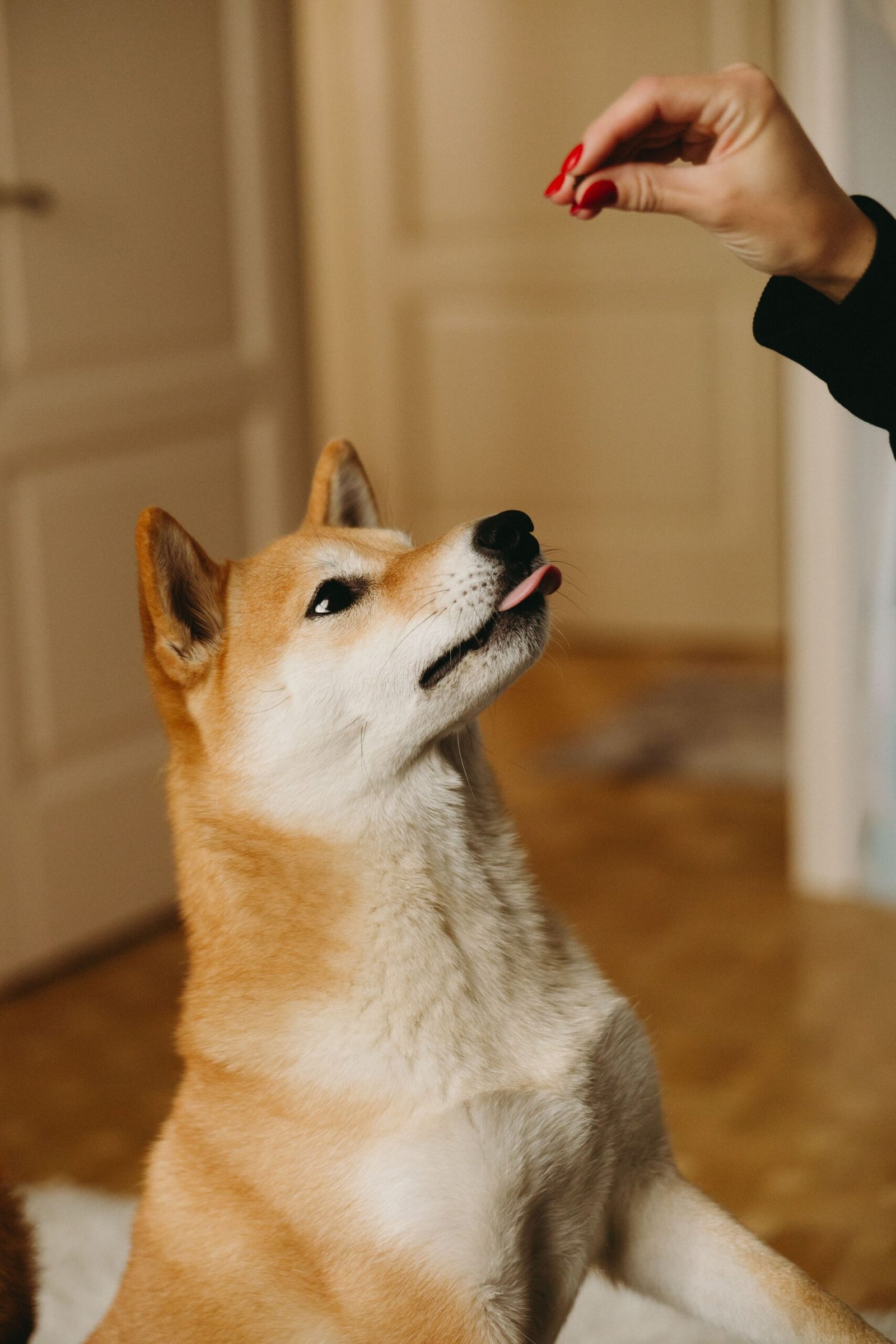
The behavior you want is simple to describe and easy to miss in the moment: all four paws on the floor, even when a person appears. You do not need a formal sit if a relaxed stand is easier for your dog. You do need to pay that moment so it becomes the thing that works.
Start away from the door. A person the dog already knows can walk in from the kitchen, pause, and wait. The instant the paws stay down, mark it with a quiet word and feed a small treat at floor level or just in front of the chest, so you are not luring the dog up toward your hands. If they jump, turn slightly, wait, and try again. The jump simply does not earn the greeting.
Once that is easy, move closer to the real door. Knock once, or rattle the handle, then reward four paws on the floor. Open the door a few inches, close it, and reward again. Only then add a person in the corridor. Keep the first “guest” someone who will follow your script: no excited baby talk, no hands on the dog until paws are down, and a willingness to step back into the hall if the dog leaves the floor.
If your dog already knows a sit or a settle, you can use it at the door once you have practiced it in that exact spot. A dog who can sit in the living room may still leap when the buzzer sounds. Treats should be small and easy to deliver with one hand while the other holds the leash.
Give guests a job, and keep the hallway short

Most jumping continues because guests accidentally reward it. In a hallway, a friendly lean-in is enough to keep the habit going, and it can also knock a child, a smaller adult, or a bag of groceries.
Give people a script before they arrive, not as they are already being jumped on: “Please ignore the dog until all four paws are on the floor. No eye contact, no talking, no hands. I will tell you when a calm hello is okay.” Keep the request even with close friends.
Once the dog is on the floor, the hello should be brief and low. A guest can turn sideways, offer a hand at the dog’s chest or shoulder rather than over the head, and then walk on into the room. If the dog leaves the floor, the greeting stops. In a flat, agree in advance that a guest may wait in the hallway for a few seconds while you reset.
Not every visitor needs to greet the dog. Delivery people, building staff, and guests who are unsure of dogs can come in while the dog stays on the leash, or behind a gate, until the door is shut.
After the threshold, keep the first minutes boring. Let people sit and put bags down. The dog can stay on the leash nearby, or go to a known settle place, until the arrival energy drops.
Practice in short sessions before a real visit

The real doorbell is a poor classroom: too short, too loud, and too important. Build the routine in pieces you can repeat on a quiet evening. Two or three minutes is enough. Leash on, a knock, four paws down, a treat, a release, and a break. Stop while the dog is still thinking clearly.
Stage the difficulty slowly:
- A knock you make yourself, with no one on the other side.
- A familiar person who already knows the script.
- The actual buzzer or intercom, then a pause before the door opens.
- A guest who can wait in the corridor if needed.
If your building has a slow elevator or a long outer corridor, use that extra minute. Put the leash on when you get the intercom call, not when you hear footsteps. A dog already standing quietly beside you has a much easier job than a dog who sprints from the sofa.
If the dog cannot succeed, make the task smaller: a quieter knock, more distance, or a guest who does not come in that time. Ending early is how you avoid rehearsing the jump. You can also practice the opposite of a visit: people already in the room, being pleasantly dull, while the dog is rewarded for staying on the floor.
When to pause, manage, or get extra help
Pause if the dog is getting more aroused, if you are getting tense, or if the hallway no longer feels safe. A gate, a brief rest in another space, or asking a guest to wait are all reasonable. Pushing through “just this once” is how the jump gets practiced again.
Physical corrections do not belong in this plan. Do not knee the dog, stand on the leash to pin them, shake a collar, or use the door as a scare. Those methods are hard to time in a narrow hall and can make a worried dog worse.
Contact a veterinarian if jumping is sudden, if the dog seems sore, or if behavior has changed in other ways. Pain and illness can show up as restlessness or irritability at the door. A qualified trainer or a veterinary behavior professional is a better next step than a stricter homemade routine if you see snapping, a hard freeze, guarding of the doorway, or a dog who cannot be safely leashed when someone knocks. This article is not a treatment plan for fear or aggression.
A calmer greeting will not replace the rest of apartment life. A dog with no walk and no chance to use their brain may arrive at the door already over the threshold of self-control. Handle exercise and downtime as their own jobs, then return to this routine when the dog can learn.
Teaching a dog not to jump on guests in an apartment rewards preparation more than intensity. The aim is a leash you can put on in time, four paws on the floor, guests who know what to do, and short practice that fits a real hallway. If the behavior is new, painful, or unsafe, ask a veterinarian or a qualified trainer to help you sort a training problem from something that needs more support.
FAQ
Will this stop my dog from jumping on guests forever?
No honest plan can promise that. Many dogs improve with a leash at the door, rewards for four paws on the floor, and guests who stop reinforcing the jump, but excitement, new people, and a tight hallway can bring the behavior back. Think in terms of a greeting you can repeat and manage, not a cure and not a date by which jumping will be finished.
Should I ask the dog to sit, or is standing with four paws down enough?
Either can work. A sit is useful if your dog already offers it reliably at the door. A calm stand is enough if sitting falls apart when the buzzer sounds. What matters is that all four paws stay on the floor and that the jump no longer earns the greeting. Choose the position you can actually get in your hallway, then practice it before a real visit.
What should I tell guests when they arrive?
Give them a job before they reach the door: ignore the dog, no talking and no hands, until you say a hello is okay. Once the paws are down, a brief, low greeting is plenty. If the dog jumps, the greeting stops. Delivery people and guests who prefer not to meet the dog do not have to greet them at all. A short explanation that you are practicing a calmer arrival is usually enough.
Can I just put the dog in another room when people come over?
Yes, as management, especially if the dog cannot yet succeed at the door or if a guest is uncomfortable. A familiar room, a gate, or a crate the dog already accepts can prevent rehearsal of the jump. It is not the same as teaching a greeting, and it is not a full-time substitute if you want the dog to be in the room later. Use it when you need it, then return to short practice when you can set the dog up to succeed.
When should I get extra help?
Contact a veterinarian if jumping starts suddenly, if the dog seems painful, or if other behavior changes appear at the same time. Seek a qualified trainer, and in some cases a veterinary behavior professional, if there is snapping, lunging that you cannot safely manage, a freeze at the door, or a dog who cannot be leashed when someone knocks. Pause the greetings and use management until you have that help. This is general information, not a treatment for fear or aggression.
[…] not every other apartment skill. Jumping up at people who arrive is a greeting problem; use how to stop a dog from jumping on guests in an apartment if four paws on the floor during a hello is the main job. Hallway or doorbell barking is a […]