


If you are looking for signs your dog is stressed, the hard part is not the idea of “a scared dog.” It is the ordinary afternoon in a flat: a yawn that is not just sleepiness, a lick of the lips when no food is out, a still body in the hallway, or a dog that suddenly wants to be under the sofa.
A useful mindset is this: you are learning to notice a pattern in this dog, in this room, and you are making the day a little more predictable rather than hunting for a product that will settle everything at once. A calm routine, a quiet place to land, enough movement and mental work, and the habit of pausing a training session when the dog is no longer with you will usually do more than a new gadget.
This is general information for dog parents in the US and UK, not a veterinary diagnosis and not a treatment for anxiety, aggression, or a medical condition. It is not a promise that stress will fade on a timetable. If you see a sudden behavior change, toileting accidents in a previously reliable dog, or a dog that growls or snaps, contact a veterinarian. Medical pain and fear can look like “just stress.”
This is a noticing guide, not a diagnosis
Everyday stress at home is its own topic. It is not the same as signs a cat is stressed, which belong to a different species and a different set of cues. It is also not a full plan for dog barking in an apartment, or a settle-training lesson. Teaching a dog to rest on cue is covered in how to teach a dog to settle in a small apartment. Time alone is a separate skill, laid out in how to leave a dog home alone in an apartment.
A recent move, unused energy, or chewing around the flat can add pressure, but each has its own guide: how to help a dog adjust to a new apartment, how to tire out a high-energy dog in a small apartment, and how to stop a dog from chewing furniture in a small apartment. Vet visits are a separate rehearsal, not a test of whether the dog is “fine at home”; start with how to get a dog comfortable at the vet.
Think of three jobs, not one:
- Notice. Read the small signals and the slower habit changes, not only the obvious panic.
- Adjust. Make the day easier to predict, and give the dog a quiet place and enough work for the body and the brain.
- Pause and get help. Stop a session that is going badly, and contact a veterinarian when the change is sudden, painful, or unsafe.
Everyday body language that is easy to miss
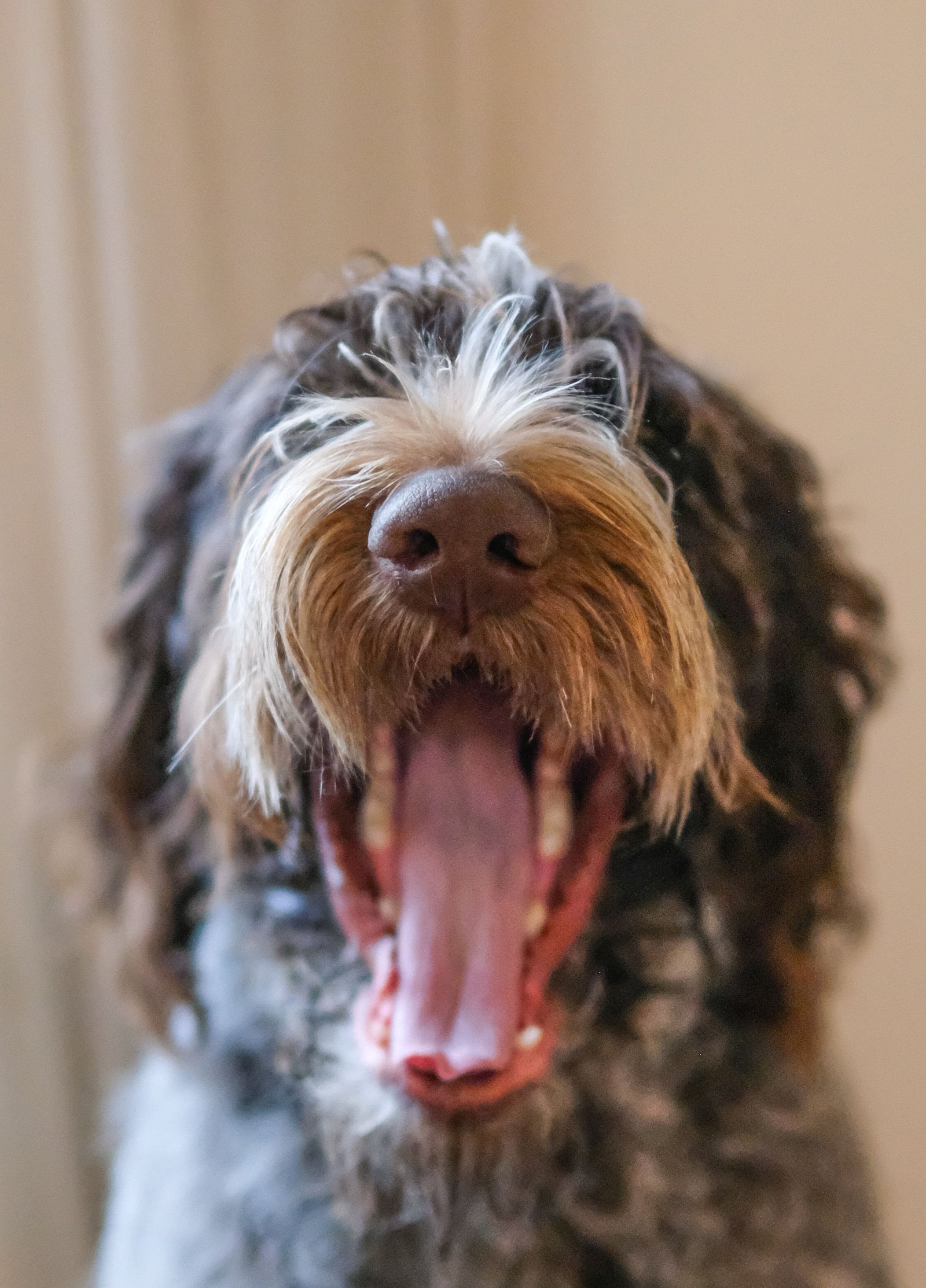
Dogs spend a lot of the day talking with their bodies. A single cue is not a verdict. A cluster, especially in a situation the dog already finds tricky, is worth taking seriously.
A yawn when the dog has just woken up is often rest. A yawn during a greeting, a training rep, or a noisy hallway moment can be a way of saying “this is a bit much.” Lip licking, or a quick tongue swipe over the nose when no food is involved, can be the same kind of small signal. It can also appear after a drink or a snack, so look at the context, not the photo of a tongue on its own.
Whale eye is the look you get when the white of the eye shows at the edge, often because the head is turned away and the gaze is still locked on something. A tucked tail, held tight to the body or curved under, is another sign that the dog would rather be smaller. So is a stiff freeze: four feet planted, mouth closed, movement paused as if the room itself might be safer if nobody moves. That freeze is not “being good.”
None of these pictures, on their own, prove a diagnosis. A tired dog yawns. A wet muzzle gets licked. What you are watching for is a change in this dog, or a stack of signals in the same moment: the yawn, then the lick, then the still body when a guest stands up.
Pacing, hiding, and clinging
Pacing is harder to catch in a still photograph, but it is easy to feel in a studio. The dog walks the same loop, from the door to the window and back, or circles the sofa instead of lying down. In a small floor plan that loop can look like ordinary restlessness. If it does not settle after a drink, a toilet trip, and a short pause, treat it as information, not as a request for another exciting game.
Hiding is clearer. A dog that slips under a table, behind a curtain, or under the sofa is asking for a smaller world. Let them have that space. Do not drag them out to “socialize,” and do not turn the hiding spot into a joke for guests. If you need the dog to move, use a calm cue and a clear path, then let them choose a new corner.
Clinginess can look like love, and sometimes it is simply closeness. It becomes a stress cue when the dog cannot settle unless they are touching you, follows you from room to room, or becomes frantic when you pick up keys. Offer a bed a few feet away, reward the dog for landing there, and avoid turning every departure into a long, emotional scene.
Changes in appetite, rest, or toileting

Body language is only half the picture. Stress also shows up in the quieter habits you already track without thinking: who finishes breakfast, who sleeps through the afternoon, and who asks to go out on the usual schedule.
A dog that suddenly leaves food, or eats only when you stand over the bowl, may be uncomfortable, not “picky.” A dog that cannot settle at night, or that sleeps far more than usual and seems hard to rouse, is also telling you something has changed. So is a house-trained dog who starts having accidents, or who asks to go out again and again without much to show for the trip.
Do not assume these shifts are a training failure. Pain, a urinary problem, a digestive upset, or fear can look the same from the doorway. If toileting habits change in a previously reliable dog, or appetite and rest change suddenly, contact a veterinarian.
Keep a short note if the picture is muddy: what happened before the pacing, or whether an accident came after a long stretch alone. A brief record is more useful than a guess made at midnight.
Simple adjustments that often help at home

You do not need a new personality for the dog. You need a day the dog can predict, and a place that feels like a landing.
A predictable routine is not a military timetable. It is the same general shape most days: meals at familiar times, a walk or toilet trip the dog can expect, a stretch of rest that is actually rest, and a short session of training or sniffing that has a clear end. Warn the dog with your usual cues before you leave, and come back without a big performance.
A quiet landing spot is a bed, a mat, or a corner that is not in the main walkway and not right against the front door. Feed a few calm rewards there when the hallway is noisy, and do not use that spot as a timeout after a scolding. A crate can be part of this if the dog already likes it; it should stay a rest option, not a punishment.
Enough movement and mental work prevents a lot of “mystery” tension, especially in a dog who has had a short, rushed toilet loop and then hours of nothing. A sniff walk, a short training game, or a food-stuffed puzzle can fill that gap. Stop before the dog is overwrought.
Pause a training session when you see the stack of signals: repeated yawns, lip licks, a tucked tail, a freeze, or a dog that starts scanning the room instead of offering the next behavior. End on something easy if you can, then let the dog go to the bed.
Some households use calming aids. This article does not recommend or rank them, and they are not a substitute for veterinary advice. They are also not a replacement for a quieter day, a safe landing spot, or a pause when the dog is done.
When home tweaks are not enough

Home adjustments help with ordinary, everyday pressure. They are not a treatment plan for a dog who is in pain, who cannot feel safe, or who has started to use a growl or a snap to keep space.
Contact a veterinarian if the change is sudden; if a previously reliable dog starts having toileting accidents; if the dog growls, snaps, or bites; or if you also see limping, itching, vomiting, diarrhea, weight loss, or a dog that seems withdrawn or unusually restless. Ask about pain. A dog who is sore will often look “moody” at home before they look lame on the pavement.
If the veterinarian rules out a medical cause and the stress is still large—panic when you leave, inability to rest, or aggression around everyday handling—ask for a referral to a qualified behavior professional who uses kind, evidence-informed methods. That is the next clear step, not a failure of the walk schedule.
Do not wait for a promise that the dog will be calm in a set number of days. Look for slightly easier mornings, softer body language, and a dog who can use the landing spot more often.
A calm starting plan you can repeat
Use this as a first draft, then adjust to your dog:
- Spend a day or two simply noticing: yawns, lip licks, whale eye, a tucked tail or freeze, pacing, hiding, clinginess, and any change in appetite, rest, or toileting.
- If the change is sudden, if accidents appear in a previously reliable dog, or if the dog growls or snaps, contact a veterinarian before you change the training plan.
- Keep a predictable shape to the day: familiar meal times, expected toilet trips, and a clear end to play or training.
- Set up a quiet landing spot away from the front door, and let the dog use it without being pulled out for guests.
- Give enough movement and mental work for this dog, then stop while the session is still going well.
- Pause training when the small signals stack up. Try again later, in a quieter moment.
- Skip hunting for a product that will fix the feeling. Some households use calming aids; this article does not recommend or rank them, and they are not a substitute for veterinary advice.
Noticing is the first kindness. The aim is a dog whose day is easier to read and easier to live, not a claim that stress will disappear on a timetable.
FAQ
What are the most common signs your dog is stressed at home?
Often the early signs are small: a yawn or a lip lick in a tense moment, whale eye, a tucked tail, or a stiff freeze. You may also see pacing, hiding, clinginess, or a change in appetite, rest, or toileting. One cue is not a diagnosis. A cluster, or a change from this dog’s usual pattern, is what is worth taking seriously.
Is yawning or lip licking always a sign of stress?
No. Dogs yawn when they are tired and lick their lips after food or water. Those same movements can also appear when a dog is uncomfortable, especially during a greeting, a training session, or a noisy hallway moment. Look at what else is happening, and whether several signals show up together.
What should I do if my dog hides under the sofa or follows me everywhere?
Let a hiding dog keep a safe corner, and do not drag them out to meet people. For clinginess, offer a bed a little away from you, reward the dog for landing there, and keep arrivals and departures fairly calm. If the dog cannot settle at all, or the pattern appeared suddenly, speak with a veterinarian.
Can I use calming aids, supplements, or pheromone products to fix this?
This article does not recommend or rank calming aids, supplements, or pheromone products, and they are not a substitute for veterinary advice. They also cannot replace a predictable routine, a quiet landing spot, enough movement and mental work, or a pause when the dog is overwhelmed. Ask your veterinarian before adding any product.
When should I contact a veterinarian about stress?
Contact a veterinarian if the behavior change is sudden, if a previously reliable dog starts having toileting accidents, or if the dog growls, snaps, or bites. Also get help if you see signs of pain or illness, such as limping, vomiting, diarrhea, weight loss, or a dog that seems unwell. Everyday home tweaks are not a treatment for a medical problem.