

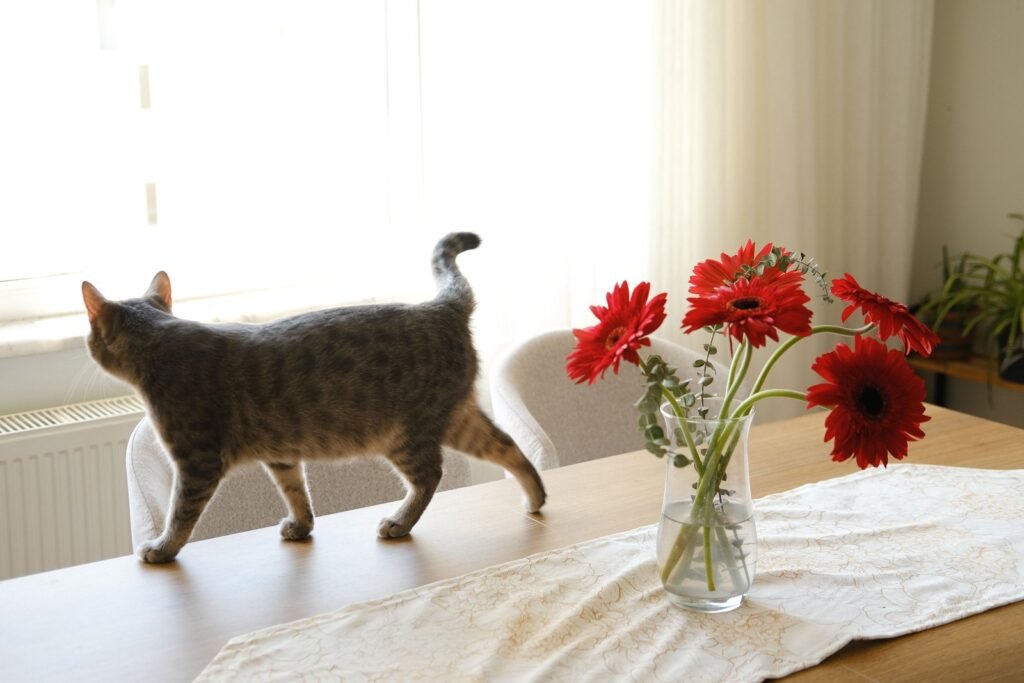
If you need to keep a cat off the holiday table and serving dishes, plan the service, not a new personality for the cat. A dressed holiday table is open, fragrant, and often at jump height in a tight dining nook or living room. That is a different problem than everyday counters during cooking. This is general household advice for cat parents in the US and the UK, not a veterinary diagnosis, and not a promise that the cat will never jump on a table again. A good result is simpler: the cat is not walking through the cranberry sauce.
Finish plating in the kitchen. Bring dishes out just before people sit. Cover food that has to wait. Give the cat a legal meal and a short play session before guests sit down. If the cat will not stay off the table, use a prepared room with litter, water, and food during the meal. Brief guests not to “share” from the platter, and clear dishes promptly. Do not leave a glazed ham or an uncovered roast unattended. Do not use a spray bottle or essential oils as the whole plan, and do not trap the cat in a bare bathroom with no litter box. If the cat eats onions, chocolate, cooked bones, alcohol, xylitol, grapes, or fatty scraps, or if there is sudden vomiting, contact a veterinarian or a pet-poison helpline. Do not use sedatives, CBD, or essential oils as a dinner strategy.
Why a dressed holiday table is its own problem
Everyday kitchen counters are usually cleared, or at least watched, while you cook. A holiday table is the opposite. It may sit dressed for an hour with glasses, serving platters, and a centerpiece in a room the cat already treats as a runway. In a small apartment, that table may also be the only path between the sofa and the kitchen.
A buffet spread or a row of serving platters on a sideboard has the same problem, only wider. The cat does not need a formal place setting. The cat needs a stable, warm-smelling surface that is easy to jump onto while people are in the kitchen. In a studio, the table may already be dressed while you still finish gravy two steps away. That gap is when most raids happen.
This article is not a daily counter lesson. If you want that longer skill, see how to keep a cat off kitchen counters. It is also not a stovetop safety guide; how to keep a cat off the stovetop in a small kitchen covers hot burners, not a buffet. Knocking ornaments or glasses off a shelf is a related habit, unpacked in how to stop a cat from knocking things off shelves, but a set table is a different target: wide, stable, and full of food. A Christmas tree has its own risks, and how to keep a cat safe around a Christmas tree and holiday decorations should stay in that lane. You can have a tree in the same room and still need a table plan.
Holiday scents make the job harder than a Tuesday dinner. A roast, butter, and sweet sides travel through a small room quickly. If the cat already jumps on tables for a better view, a dressed holiday table is an upgrade, not a different habit you can ignore for one night.
Plate in the kitchen, then bring food out late
The most reliable step is also the least glamorous. Do the last of the plating at the counter, not on the dining table, and carry finished dishes out when people are ready to sit. A table that sits empty except for glasses and a centerpiece is less interesting than a table that holds an uncovered roast “to rest.”
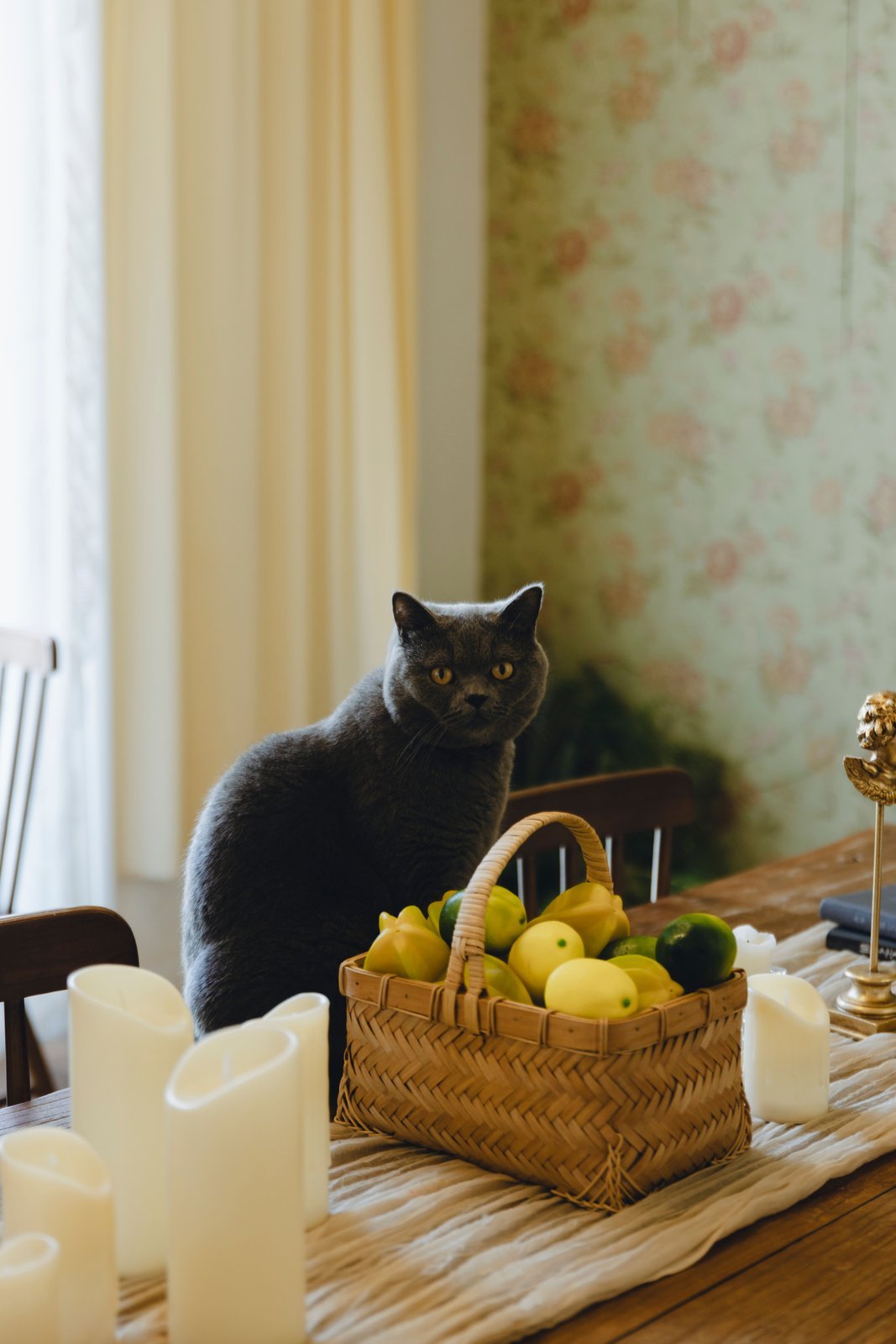
If a dish has to wait, cover it. A lid, a clean towel, or an overturned bowl is enough. Do not leave a glazed ham, an uncovered roast, or a tray of skin and drippings on a sideboard “for a minute.” In a small living room, a minute is plenty of time for a cat to land in the middle of it.
If you are serving family style, keep the extra platter in the kitchen and refill from there, rather than parking every dish on the table for the whole meal. In a tight nook, fewer open dishes also mean fewer landing spots. Put drinks and candles where they are harder to knock, but do not let that be the only step. A candle is a burn risk; an uncovered tray is a food risk. Handle both.
This is a meal-service plan, not a cabinet-proofing rewrite. If the cat also opens doors to get at food, how to stop a cat from opening cabinets and drawers and a broader cat-proofing plan for a small apartment are the right companions, but they do not replace covering the platter in front of you.
Feed and play before people sit
A hungry, bored cat is more likely to jump. Offer the usual meal on time, in the usual place, before guests sit down. Then do a short play session so the cat has a legal way to spend energy. You are not training a formal “stay off” in one afternoon. You are taking the edge off before the room fills with food smells.
Do not use the holiday menu as the cat’s meal. A legal meal is the cat’s ordinary food. Guest “shares” from a platter are how a cat learns that the table pays. Ask people not to offer bites, even as a joke.
If the usual feeding spot is the same table, move that meal to the kitchen floor or to the prepared room for this meal only. You do not want the cat practicing “food appears on this surface” an hour before guests sit. Keep the food itself ordinary. A new holiday recipe for the cat, or a sudden raw project, is outside this plan and can upset a stomach on a busy night.
If guests make the cat uneasy, that is a separate skill from table manners. How to help a cat stay calm when guests visit can help you read the room. If overnight visitors will stay, how to set up a quiet room for a cat when overnight guests stay is the fuller setup. During the meal itself, you only need a prepared option ready if the cat will not stay off the table.
Use a prepared room if the cat will not stay off the table
Good enough is not a cat that never jumps again. If the cat keeps returning to the table, move the cat to a prepared room for the sitting itself. That room needs a litter box, water, and food, plus a familiar bed or hiding spot. A bare bathroom with no litter box is not a kindness and often leads to a mess you then have to clean mid-meal.
In a studio, the “room” may be a bedroom, a bathroom that already holds the litter box, or a corner closed off with a gate if the cat already accepts it. The test is not the label on the door. The test is whether the cat has a litter box, water, food, and a familiar place to hide. Set water down before you close the door, and do not relocate the only litter box at the last minute unless the cat already uses a second box in that space.

Set the room up before guests arrive, not after the first jump. Close the door gently, check on the cat once during the meal, and let the cat back out when dishes are cleared. This is a temporary service choice, not a punishment, and not a substitute for covering food while the table is open.
Brief guests and clear dishes promptly
People who like cats often want to “just give a little.” Tell them before the first course that the cat will not be sharing from the platter or from plates. If someone leaves a plate on a low table or a sofa arm, move it. In a small nook, serving dishes left out after the meal are still a jump target.
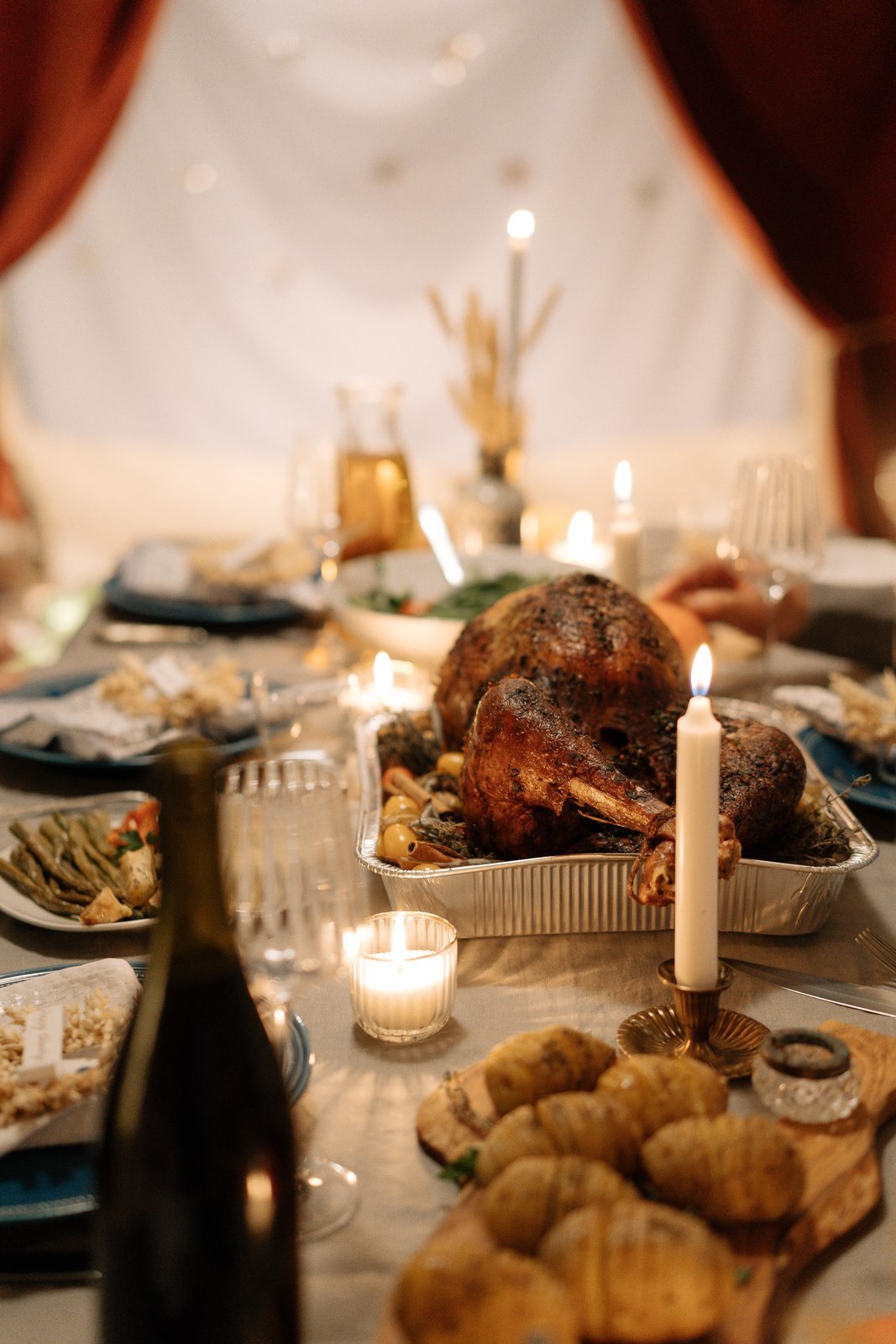
Clear promptly. You do not need a formal butler line. You need platters back in the kitchen, covers on anything that remains, and leftovers put away rather than left at cat height. A longer leftover-safety walk-through is in how to keep pets safe around holiday food and leftovers. For a sense of which human foods are a poor idea even in small amounts, see which human foods are safe for cats. Tonight’s rule can stay short: the cat eats the usual meal, not the table.
A serving dish left “to cool” on the table is still a serving dish. If food must cool, put it on a high, covered spot in the kitchen, or go back to it quickly. Wipe the table if juices or crumbs remain. A sticky table is an invitation even after the platters are gone.
Foods that mean you should get help
This is not a veterinary diagnosis. It is a list of ordinary holiday foods that should send you to a veterinarian or a pet-poison helpline rather than to a wait-and-see plan. Onions and foods cooked with onion or garlic, chocolate, cooked bones, alcohol, xylitol, grapes, and fatty scraps can all be a problem. Sudden vomiting after a raid on the table is also a reason to call, even if you are not sure what was swallowed.
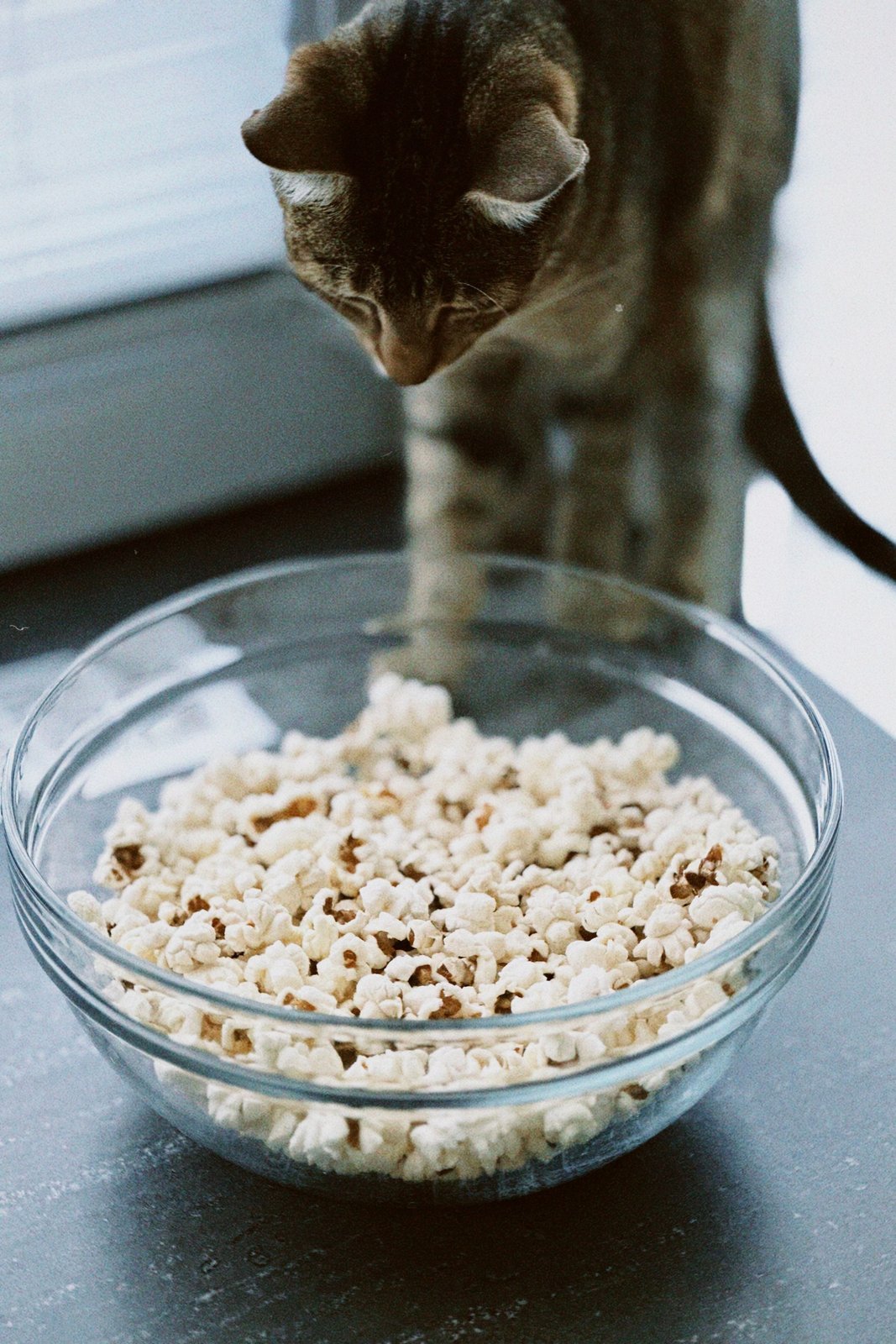
Do not make essential oils, a spray bottle, sedatives, or CBD the plan for keeping a cat off a table. If the cat gets onto a serving dish, remove the cat, cover or clear the food, and reset the room plan. If you think something risky was eaten, get qualified help.
What good enough looks like is modest. The cat is not walking through the cranberry sauce. The table is not unattended while it holds an uncovered roast. Guests know not to share from the platter. If the cat still wants the table, the cat spends the sitting in a prepared room and comes back when the dishes are gone. That is a successful holiday meal in a small home, not a lifetime promise.
FAQ
What is the simplest way to keep food safe during the meal?
Finish plating in the kitchen and bring dishes out just before people sit. Cover anything that has to wait, and clear plates promptly when the course is done.
Should I leave the cat in a bathroom during dinner?
Only if that room is already prepared with a litter box, water, and food. A bare bathroom with no litter box is not a plan.
Can I use a spray bottle or essential oils to keep the cat off the table?
No. Those are not the plan. Use timing, covered dishes, a legal meal and play session before guests sit, and a prepared room if the cat will not stay off the table.
How should I brief guests?
Ask them not to share from the platter or offer bits from a plate. A “quick taste” is how a cat ends up on the table or with a risky scrap.
When should I contact a veterinarian or a pet-poison helpline?
Get help if the cat eats onions, chocolate, cooked bones, alcohol, xylitol, grapes, or fatty scraps, or if there is sudden vomiting. Do not wait to see whether it passes.