


If you need to keep a cat safe around a Christmas tree and holiday decorations, plan for a few weeks of new shiny, dangly, drinkable, and sometimes toxic objects in the one living-room path the cat already uses. A modest tree going up in late November for Thanksgiving-to-New-Year decor is enough to change that path, even if you are not putting out a full display on day one. Holiday food is a separate kitchen job, and this guide stays with the tree and the decor.
This is general household advice for cat parents in the US and UK, not a veterinary diagnosis, and not a promise that the cat will never investigate. A good result is a modest tree that can stand in a small room without a weekly emergency. Do not spray the cat, do not treat a wrap of foil around the trunk as the whole plan, and do not invent a miracle spray that “makes cats ignore trees.” If a cat chews a lily, drinks a lot of tree water and seems unwell, or swallows tinsel or ribbon, contact a veterinarian or a pet poison hotline. Do not give home remedies, and do not wait to “see how they are in the morning” if ingestion is suspected.
Why holiday decor is a different job from everyday cat-proofing
Everyday cat-proofing in a small apartment still matters: windows, cords, breakable shelves, and plants do not stop being issues in December. Holiday decor adds a new pile of temptations in a short season, often in the exact corner the cat already uses as a runway or a lookout. Ornaments swing. Tinsel looks like a toy. Ribbon trails. Water sits in an open reservoir. Lights add new cords along the floor. A tree also gives the cat a tall, unstable climbing frame in a room that may already be short on floor space.
That is why this is not a rewrite of stopping a cat from knocking things off shelves or of stopping a cat from climbing curtains and screens. Those skills can help, but a tree is not a shelf and not a curtain. It can fall. It can spill water. It can shed hooks, needles, and broken glass onto the only rug in a studio. Start with the tree itself, then add the smaller decorations, rather than hanging everything first and hoping the cat will lose interest.

Start with a stable, well-weighted tree and covered water
Choose the most stable stand you can fit, and weight it. A cheap, narrow stand in the middle of a walkway is a wobble waiting for a shoulder bump or a climb. Place the tree out of the main run if you can: not between the sofa and the window the cat already uses, and not in a narrow pass-through to the kitchen. In a small room, “out of the path” may only mean tight to a wall and away from a landing spot on the back of the sofa.
If the tree is in a stand with a water reservoir, cover that water. Cats drink from odd places, and tree water may have preservatives, fallen needles, or bacteria. A fitted cover, a tight tree bag around the base, or another lid the cat cannot hook off is enough. Check the water level through the cover rather than leaving a bowl-like opening “for a minute.” Do not add aspirin, sugar, or home mixtures to the water. You are trying to keep the cat out of the reservoir, not to invent a safer recipe.
A foil wrap around the trunk or the lower branches is not a complete plan. Some cats dislike the feel and walk away. Others treat it as a crinkle toy, or climb above it. If you use a wrap, still weight the stand, cover the water, and keep the lower branches boring.
Skip tinsel, loose ribbon, and breakable ornaments on the lower third
Tinsel and loose ribbon are a swallowing risk. They look like string, they pull easily, and they can bunch in the gut. Skip them, including the loose strands that fall behind a sofa, and put gift bows and curling ribbon in a closed closet until you need them. If a present has to sit under the tree, keep the loose tails short or bag the gift until the morning you open it.
Keep breakable ornaments off the lower third of the tree, or skip low ornaments entirely. In a small room, “lower third” is often the height a cat can reach from the floor or from the sofa arm. Use lighter, unbreakable ornaments up there if you want the tree to look finished, or leave those branches bare. Hooks should close, and nothing chocolate should hang where a jump can reach it. Chocolate ornaments and candy canes on low branches are both a food problem and a climbing lure.
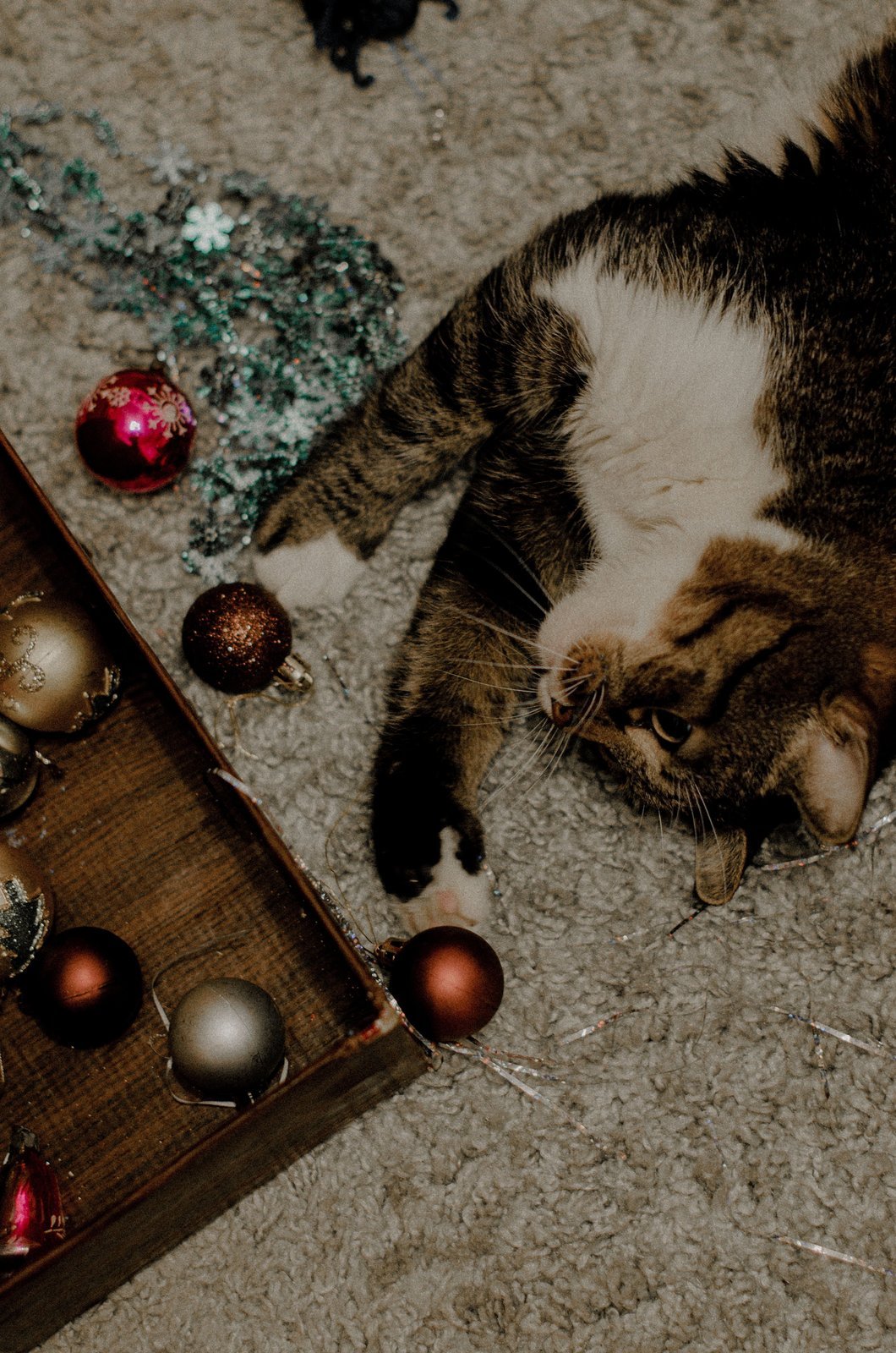
If ornaments do come down, pick them up the same day. A bauble on the rug is a batting toy, and a broken one is a glass problem. The same rule applies to hook packets, ornament caps, and the stray bits of tinsel that arrive on a wreath even when you did not buy a tinsel pack.
Hide light cords and skip lit candles
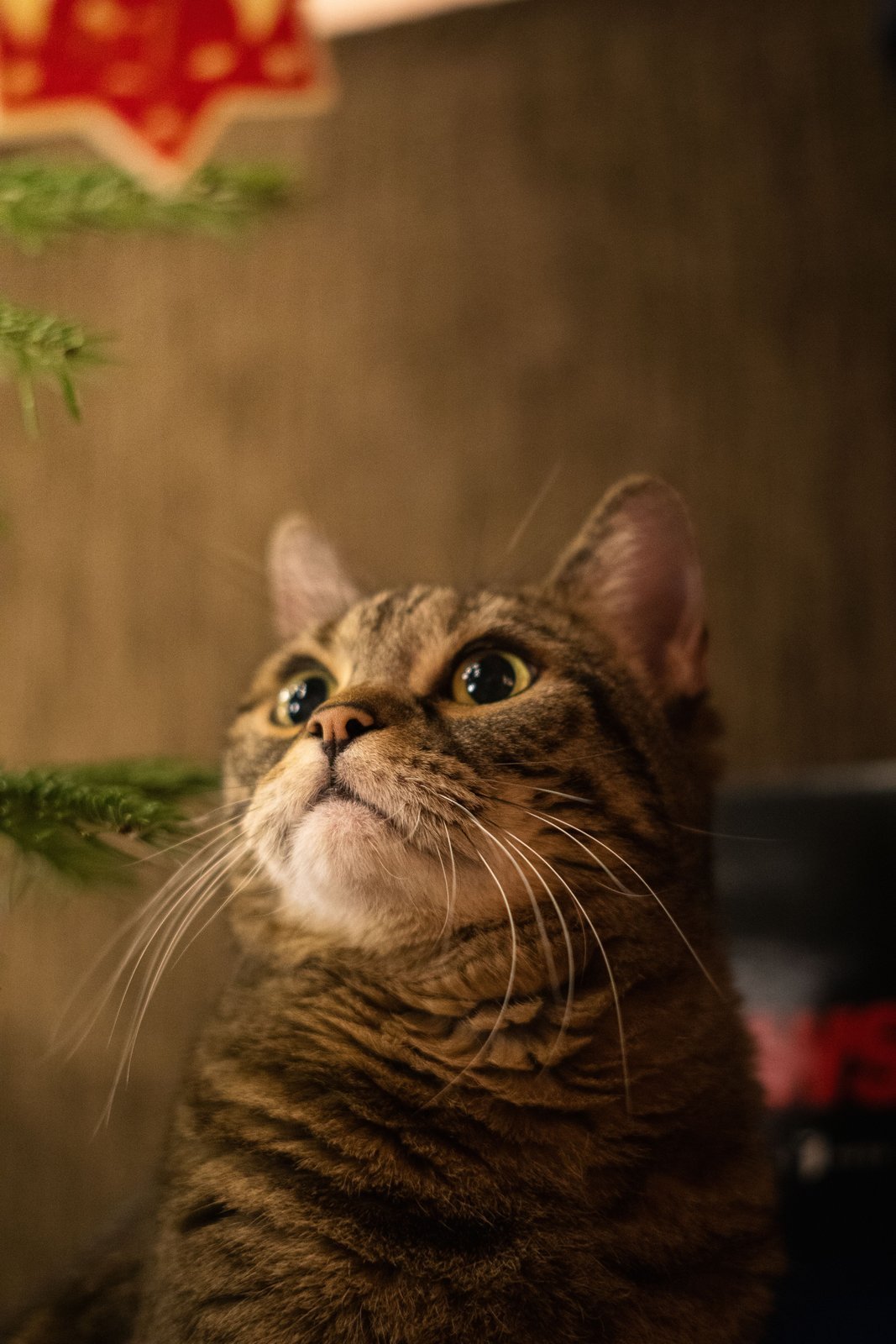
New light strings add new cords. Run them along the wall or behind the tree, not across the rug in the cat’s usual path, and cover or hide the stretch a chewing cat can reach. If your cat already mouths chargers and lamp cords, treat holiday lights as the same risk, and use the same habits from stopping a cat from chewing cords and chargers. Unplug the lights when you leave or go to sleep if you cannot keep the cords out of reach. A chewed cord is an electrical and burn risk, not just a ruined display.
Skip lit candles, or put them where a jump cannot reach, which in many studios means you simply do not light them. A tail, a jumping cat, or a brushed-off table runner can all move a flame faster than you can cross a small room. Battery candles or string lights already on the tree are a calmer choice. Do not leave a menorah, an advent candle, or a scented candle on a low table “just for dinner.”
Skip lilies entirely, and be careful with other holiday plants
Skip lilies entirely, including bouquets, flower-shop mixed bunches, and “just a few stems” in a vase. Lilies are an emergency for cats. You do not need a dose chart, and you should not try to guess whether a small chew is “enough to matter.” If a lily comes into the home, or if you think the cat chewed one, contact a veterinarian or a pet poison hotline. Do not wait for vomiting or “worse signs.”
Other holiday plants can also be a problem, including holly, mistletoe, and some evergreens, depending on the plant and how much is eaten. You do not need a complete botany lecture. Keep unknown greenery out of reach, do not leave trimmings on the floor, and use the same caution you would for everyday plants in stopping a cat from eating houseplants. If the cat chews a plant and seems unwell, call a professional rather than searching for a home rinse.
Give the cat a competing perch and play away from the tree
A tree is interesting because it is tall, new, and in the middle of the room. Give the cat a better lookout that does not wobble. A cat tree that fits a small apartment, wall-mounted shelves, or a window perch can pull the cat to a stable height away from the branches. Place that perch before the tree goes up, or at least on the same day, and put it in a spot the cat already likes: a radiator-adjacent wall, a window, or a corner with a view of the room.
Play should also happen away from the tree. A short daily play routine with wand toys in a clear patch of floor gives the cat a legal way to pounce. Do not trail the wand through the branches or leave a string toy under the tree. If you will be out more than usual during the holidays, the usual plan for keeping an indoor cat busy while you are at work still applies: food puzzles, a safe window view, and play before you leave, not a tree left as the only new object in a quiet room.
Guests, windows, and what good enough looks like
Holiday guests change the room again. Doors open, coats land on chairs, and people want a photo under the tree. Ask guests not to dangle ornaments at the cat or to lift the cat into the branches. If the cat already gets tense when people visit, use the calm, optional-retreat plan in helping a cat stay calm when guests visit, and keep a quiet room available that does not contain the tree.
The tree should not block a window the cat uses, and it should not turn a balcony door into a climbing launch. Window and balcony habits still follow keeping an indoor cat safe around windows and balconies. A tree pressed up against a poorly latched balcony door is a fall risk as well as a tipping risk.
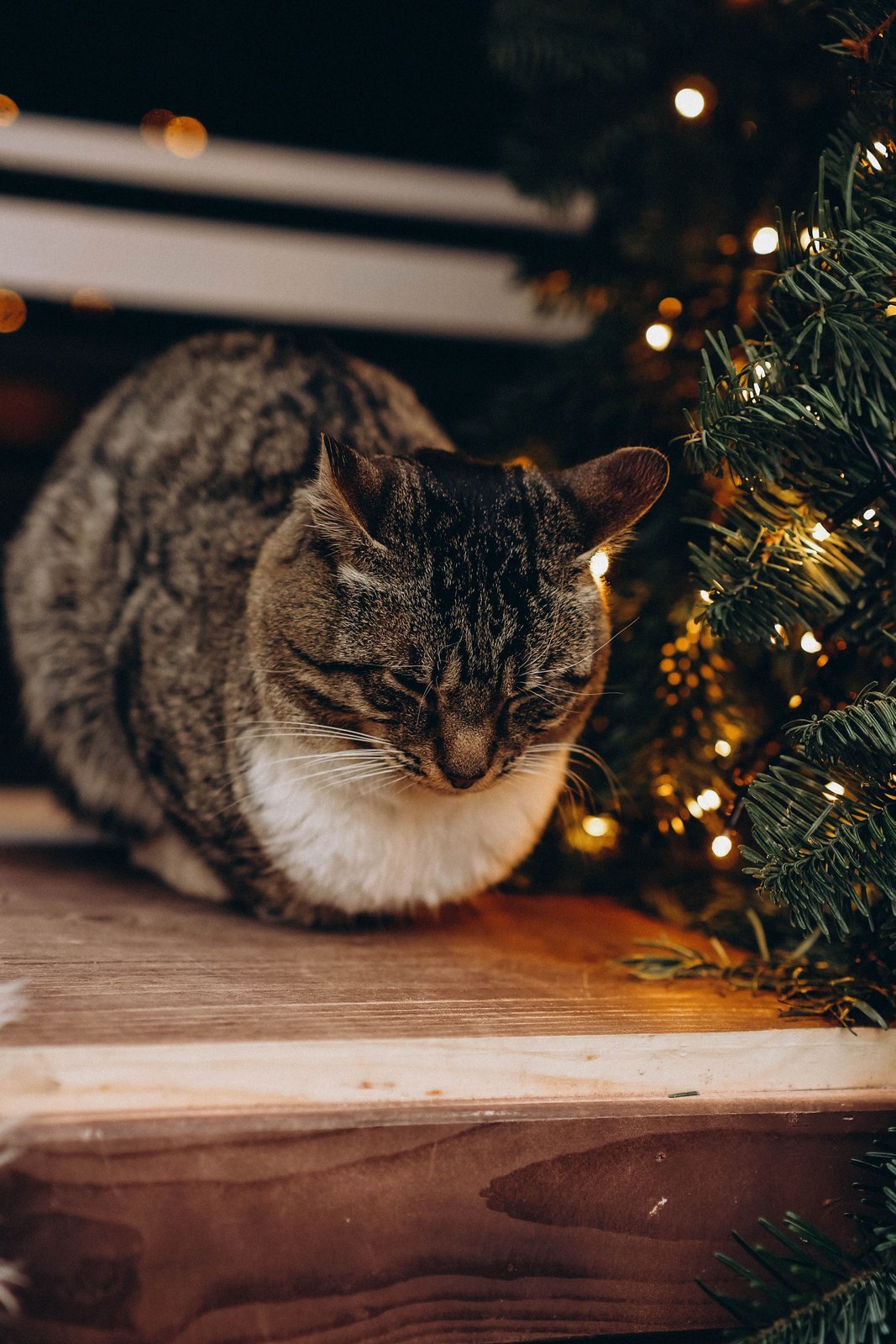
Good enough is a modest tree that stays upright, with water covered, cords tucked, no tinsel or loose ribbon, no lilies, no low breakable ornaments, and a cat who has somewhere else to sit and something else to chase. The cat may still sniff the trunk and sit under the branches. That is not a failure. A weekly emergency, a fallen tree, or a swallowed string is.
If you suspect the cat swallowed tinsel or ribbon, chewed a lily, or drank a lot of tree water and now seems quiet, wobbly, or sick, contact a veterinarian or a pet poison hotline. Do not try to make the cat vomit unless a veterinarian tells you to. Do not invent an antidote, a dose that is “probably fine,” or a wait-and-see plan that delays care.
FAQ
Can I have a Christmas tree if I have a cat?
Yes. Many cats share a small apartment with a modest, well-weighted tree if the water is covered, tinsel and loose ribbon are skipped, breakable ornaments stay off the lower third, cords are hidden, and the cat has a competing perch and play away from the branches. The cat may still investigate. That is expected.
Where should ornaments and lights go on a tree in a small apartment?
Keep breakable ornaments off the lower third, or skip low ornaments entirely, and close the hooks. Run lights along the wall or behind the tree, and hide or cover any cord the cat can reach. Unplug the lights when you leave if the cords are not out of reach.
Are tinsel and ribbon really a problem for cats?
Yes. Both can be swallowed and can bunch in the gut. Skip tinsel, keep loose ribbon and gift bows in a closed closet, and pick up stray strands the same day. If you think the cat swallowed a piece, contact a veterinarian or a pet poison hotline rather than waiting.
What should I do if my cat drinks tree water or chews a plant?
If the cat drank a lot of tree water and seems unwell, or chewed a lily or another holiday plant, contact a veterinarian or a pet poison hotline. Skip lilies entirely, including mixed bouquets. Do not give a home remedy, and do not make the cat vomit unless a veterinarian instructs you to.
How do I keep my cat from climbing the tree when guests visit?
Weight the tree, keep a competing perch in a spot the cat already likes, and give play away from the branches before people arrive. Ask guests not to dangle ornaments or lift the cat into the tree, and leave a quiet room without the tree if the cat wants to leave. You may not stop every investigation, and you do not need to.