

If you need to set up a quiet room for a cat when overnight guests stay, do the setup before the air mattress comes out, not after the cat has already lost the sofa. Overnight guests change where people sleep, which doors stay closed, and whether the litter box, food, and hiding spots stay reachable. In a one-bedroom or a studio, that can last one night or a holiday weekend. This is general household advice for cat parents in the US and the UK, not a veterinary diagnosis, and not a plan to make the cat social on a guest pillow. A good result is simpler: the cat can eat, toilet, and hide without weaving through bedding in the hallway.
Do not improvise a bare closet as a “quiet room,” block the only litter box behind a closed guest-room door, or force the cat to socialize at breakfast. Do not use sedatives, CBD, essential oils, or calming products as a stand-in for a room that still works. If the cat stops eating, hides for a day after guests leave, or has sudden litter-box changes, a veterinary check is the next step.
Why overnight guests are a different problem
A short afternoon visit is already covered in how to help a cat stay calm when guests visit. Shy cats, and the slower work of helping them feel safe in the home, belong in how to help a shy cat feel safe in an apartment. If you are leaving and a sitter or a boarding stay is the plan, use how to prepare a cat for a pet sitter or a holiday stay. If you are the one leaving the cat for a weekend, that is how to leave a cat home alone for a weekend. This article stays on the night the guests sleep in your home, when rooms, doors, and litter access change.
Holiday decor can add another layer, especially a tree in the only living room. Keep that as a separate safety job in how to keep a cat safe around a Christmas tree and holiday decorations. If you have two cats and overnight guests raise tension between them, how to help two cats get along in a small apartment is the better place for that relationship work. The quiet-room plan still applies: each cat needs a legal place to eat, toilet, and hide.
Pick a room or zone the cat already likes
Do not invent a new space the cat has never used. Choose the bedroom the cat already sleeps in, a bathroom it already visits, or a corner it already uses as a lookout, then make that the legal base for the stay. A window perch, a bed, or a hiding spot behind a curtain is more useful than a pretty guest towel in a room the cat avoids.
In a one-bedroom, the quiet room is often the bedroom if guests will take the sofa, or a gated slice of the living room if guests will take the bedroom. In a studio, a clearly gated zone can work if the litter, food, water, and a hide stay inside it, and if you can still open a path in the morning. A bare closet with no litter and no water is not a quiet room. It is a closed box.
If you need a physical boundary, a baby gate the cat can see through is often enough, provided the cat is not a climber who will treat the gate as a launch pad. The point is a clear territory, not a trap.
Move litter, water, food, and a bed before guests arrive
Set the room up the day before, or at least several hours before check-in, so the cat can find the new layout while the home is still quiet. Move a litter box, water, food, and a familiar bed into that zone. If you only have one box, it must stay reachable for the whole stay. Do not put the only box in the guest bedroom and then close that door at midnight.
Food and water should be in the same zone as the hide, not on the far side of an air mattress. Keep the usual diet. This is not the weekend to switch food or skip a meal because the kitchen is busy.
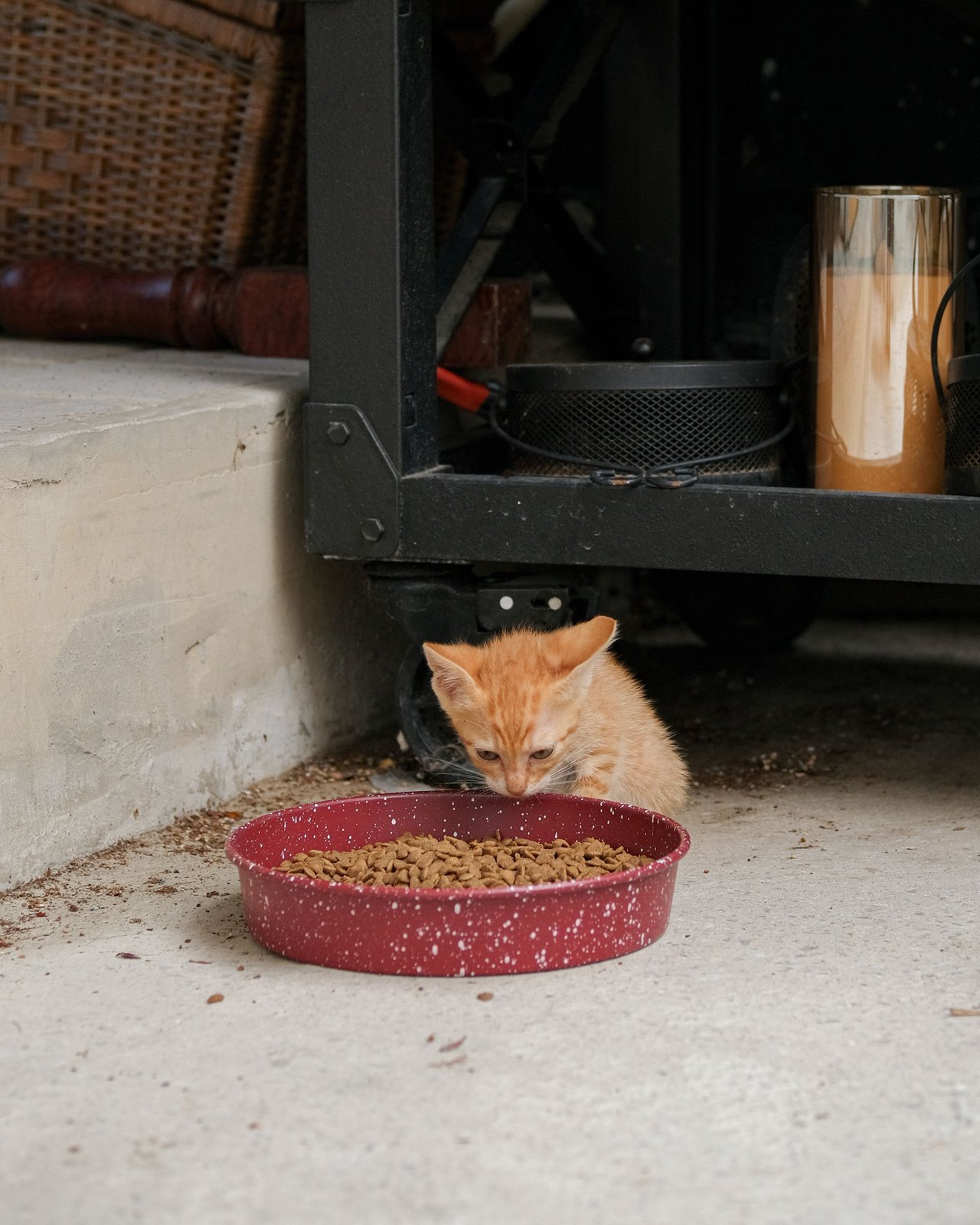
That feeding still is a utility corner, not a finished quiet-room station. It is here as a reminder that food has to stay reachable. Put the bowl in the chosen zone, on a stable surface, and scoop spilled kibble so guests are not tempted to “help” by chasing the cat off the floor.
A familiar bed or hide in the same room matters as much as the box. A carrier with the door left open, a covered bed, or a high shelf the cat already uses can all work. You do not need new furniture. You need a place the cat already trusts.
Keep the usual meal and play times
Overnight guests often scramble the evening. Try not to let the cat’s meals drift by hours. Feed at the usual time, in the quiet room, before guests sit down if the dining area will be loud. A short play session at the usual hour, using toys the cat already likes, is more useful than a new gadget. Practical ideas for indoor play live in indoor cat enrichment ideas. Keep that play in or beside the quiet zone so the cat does not have to cross a crowded mattress to reach you.
If you normally play in the living room and that room is now a guest bedroom, move the session, do not cancel it. The goal is a day that still has familiar anchors, not a cat that is ignored until morning.
Give a way in and out, and brief the guests
If you can leave the quiet-room door ajar, or use a gate the cat can pass, do that. A cat that can step out, check the hallway, and step back in usually copes better than a cat that is sealed in. The exception is a door-dasher when guests are arriving with bags and the building hall is open. In that narrow window, how to stop a cat from door dashing is the safety plan. Once the door is closed and bags are inside, return the cat’s ability to move between the quiet room and the rest of the home if you can.
Brief guests in one short script: please do not chase the cat, pick the cat up, or close the cat into a room to “say hello.” The cat is allowed to watch from a distance. Guests should not use the quiet room as overflow storage or as a place to hang coats on the hide. If a guest is also bringing a dog, that is a much larger introduction job and should not be improvised at the door.
This is not the same as a maintenance visit, when strangers enter and leave quickly. That pattern is covered in how to help a cat stay calm during apartment maintenance visits. Overnight guests stay, sleep, and use the bathroom at dawn, which is why the morning plan matters as much as the evening one.
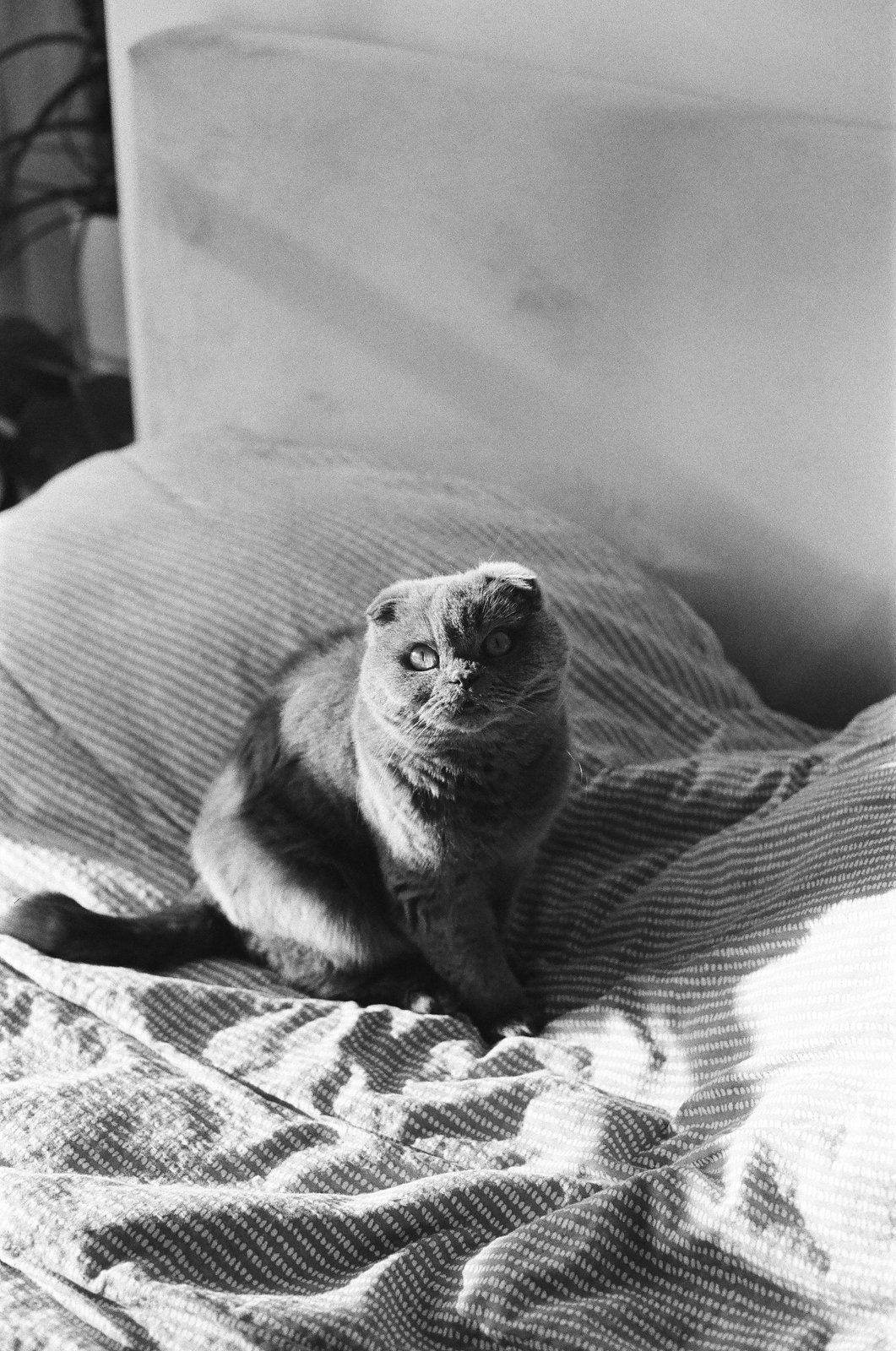
If the bed in the photo is the cat’s usual bedroom, and guests will take that room, move the legal hide and the litter before the suitcase lands on the duvet. Do not assume the cat will share a pillow and be fine.
Make a morning plan for the litter box
Most problems show up at 6 a.m., when a guest closes a door to get dressed and the only box is on the other side. Decide the night before who can open which door, and say it out loud. If the quiet room is the bathroom, agree that guests will use it quickly and leave the box accessible. If the box is in the bedroom, guests should not shut the cat out of that room all morning.
A temporary second box in the quiet zone is worth the floor space if you have it, even for one weekend. Scoop as usual. Sudden changes in toileting after guests leave are not a “stress quirk” to ignore. They are a reason for a veterinary check.
What not to do
Do not force a greeting at breakfast, put a bow on the cat, or hold the cat in a lap so a guest can take a photo. Do not use essential oils in the quiet room, and do not offer sedatives or CBD to “take the edge off.” A closed, empty closet is not a kindness. Neither is leaving the only litter box behind a guest who sleeps late.
If you are also trying to cat-proof holiday clutter, keep that work in the rest of the home, not by stripping the quiet room of every familiar object. A general pass over hazards belongs in how to cat-proof a small apartment. The quiet room should still feel like the cat’s space.
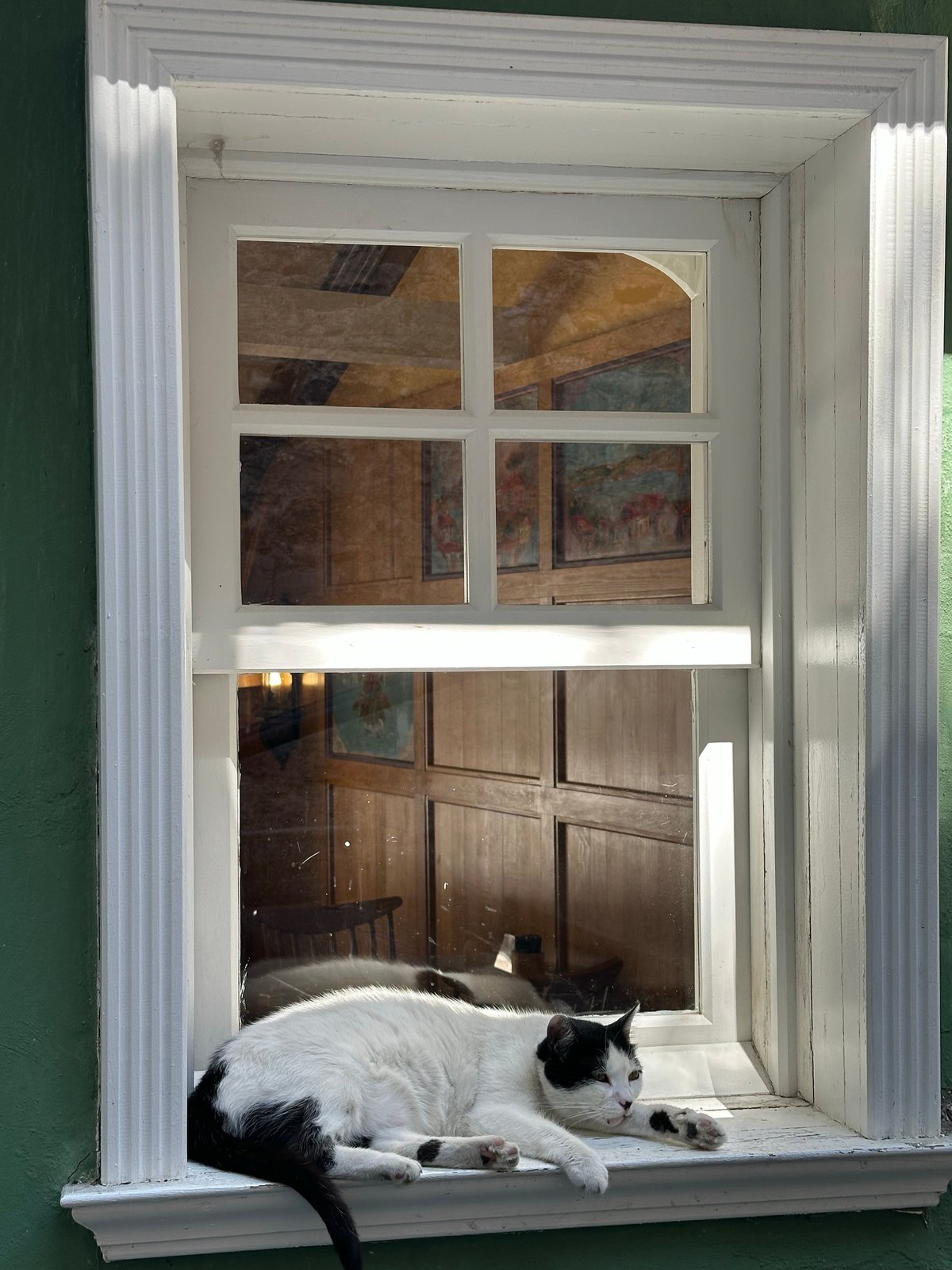
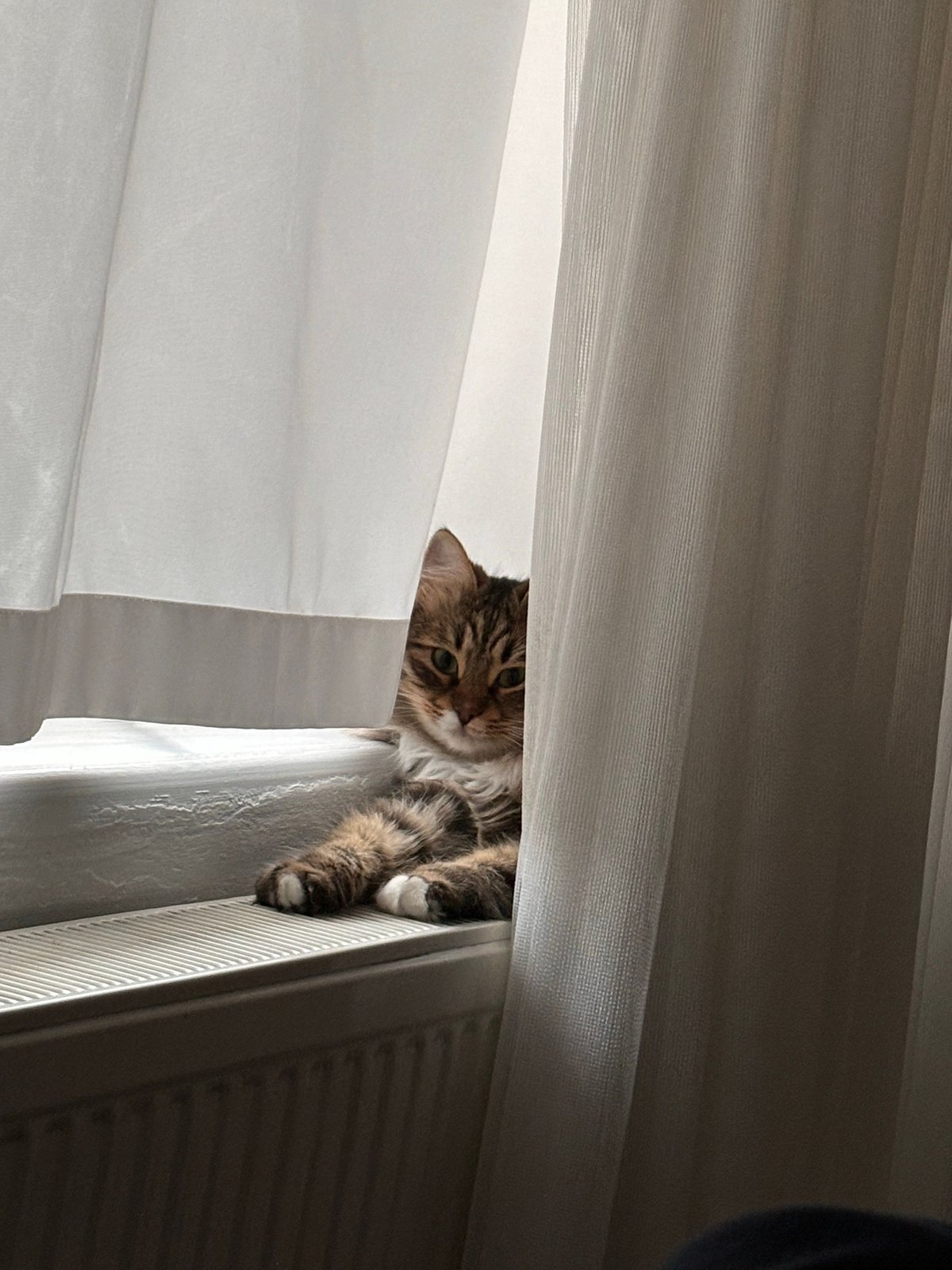
That window still is an outdoor sill, not an indoor quiet room. Use it only as a reminder to choose a spot the cat already likes, then build the real room inside, with litter, water, food, and a hide.
What good enough looks like, and when to get help
The cat can eat, toilet, and hide during the stay. Guests know not to chase. The morning door plan does not trap the cat away from the box. The cat does not have to be friendly, and it does not have to sleep on the guest’s feet.
If the cat stops eating, hides for a day after guests leave, or has sudden litter-box changes, book a veterinary check. Those signs can be stress, and they can also be illness. This guide cannot tell the difference. A qualified veterinarian should.
FAQ
What counts as a quiet room in a studio?
A clearly gated zone can work if litter, water, food, and a familiar hide stay inside it, and if you can open a path in the morning. A bare closet is not enough.
Should I shut the cat in all night?
Only if the cat cannot be safe with the door open, and only if litter, water, food, and a hide are in that room. If you can leave a way in and out, that is usually better.
What should I tell overnight guests?
Ask them not to chase, pick up, or trap the cat, and not to close the only litter box behind a bedroom door. The cat is allowed to watch from a distance.
Do I need a new bed or a new box for one weekend?
No. Move familiar items before guests arrive. A second litter box is useful if you have the space, but a new, unused hide is less helpful than a bed the cat already uses.
When is this a reason to call a veterinarian?
If the cat stops eating, hides for a day after guests leave, or has sudden litter-box changes, a veterinary check is the next step. Do not wait to see whether the habit “settles.”
[…] help a cat stay calm when guests visit can help you read the room. If overnight visitors will stay, how to set up a quiet room for a cat when overnight guests stay is the fuller setup. During the meal itself, you only need a prepared option ready if the cat will […]
[…] overnight guests need a closed retreat for the cat, use how to set up a quiet room for a cat when overnight guests stay. If the cat is already tense around new people, how to help a cat stay calm when guests visit and […]
[…] is also not a quiet-room rewrite. If overnight guests need a retreat for the cat, use how to set up a quiet room for a cat when overnight guests stay. If the cat is already tense around visitors, how to help a cat stay calm when guests visit is the […]