

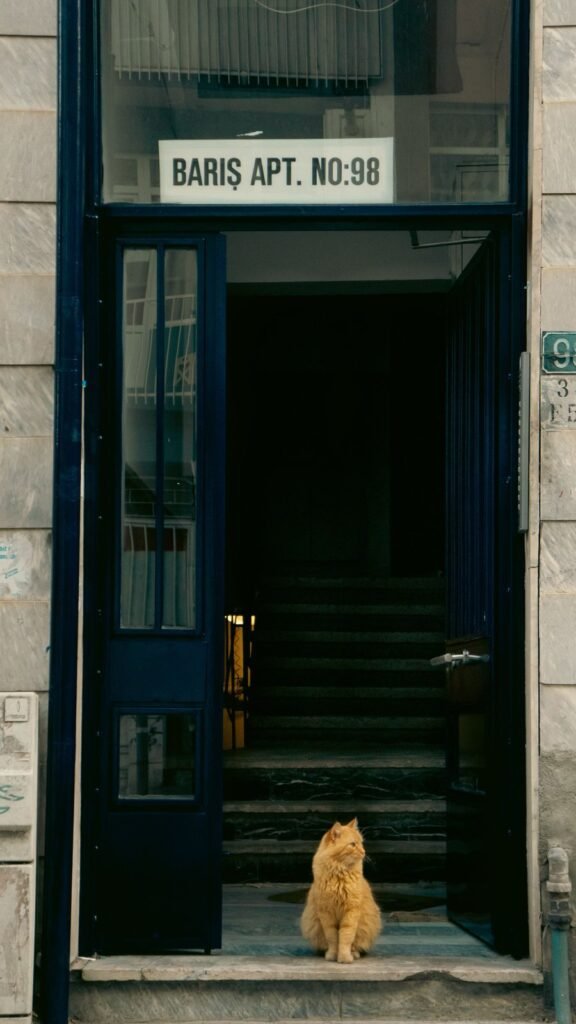
A closed-room plan can help a cat stay calm during apartment maintenance visits, but the honest goal is simpler than a relaxed cat: the cat stays in one closed room with litter, water, and a hiding spot, the door to the hall is managed, and the visit ends without a search for a missing cat. This is not a guest-visit article and not a vet-visit article. It is about a stranger with tools and smells who has to enter a small apartment, sometimes while you are not home, and a door that may stay open to the hallway.
This is general information for apartment cat parents in the US and UK, not a veterinary diagnosis and not a promise that any spray, treat, or routine will make a cat relaxed. Do not use sedatives or other medication unless your veterinarian has prescribed them for that cat. If the cat seems in pain, cannot hide, or was already unwell, contact your veterinarian rather than waiting to see how the visit goes.
Why a maintenance visit is a different problem
A maintenance visit packs several hard pieces into a short window. A super, inspector, exterminator, or contractor may arrive with a toolbox, a ladder, or a strong product smell. The front door may stay open while they go back to a van. The visit may be required, and you cannot always reschedule it around the cat’s preferred afternoon nap. That is different from helping a cat stay calm when guests visit, which you can often shorten or move, and different from getting a cat comfortable at the vet or getting a cat comfortable in a carrier, which are travel and clinic skills.
It also sits next to, but is not the same as, stopping a cat from door dashing, helping a shy cat feel safe in an apartment, or leaving a cat home alone for a weekend in an apartment. Use those skills if you have them. This article is the in-home work visit, with a door that may not stay shut and a person the cat did not invite.
If you also have a dog, keep the plans separate. Keeping a dog calm during apartment maintenance visits is a different job, with a leash and a settle spot, and it should not be copied onto the cat.
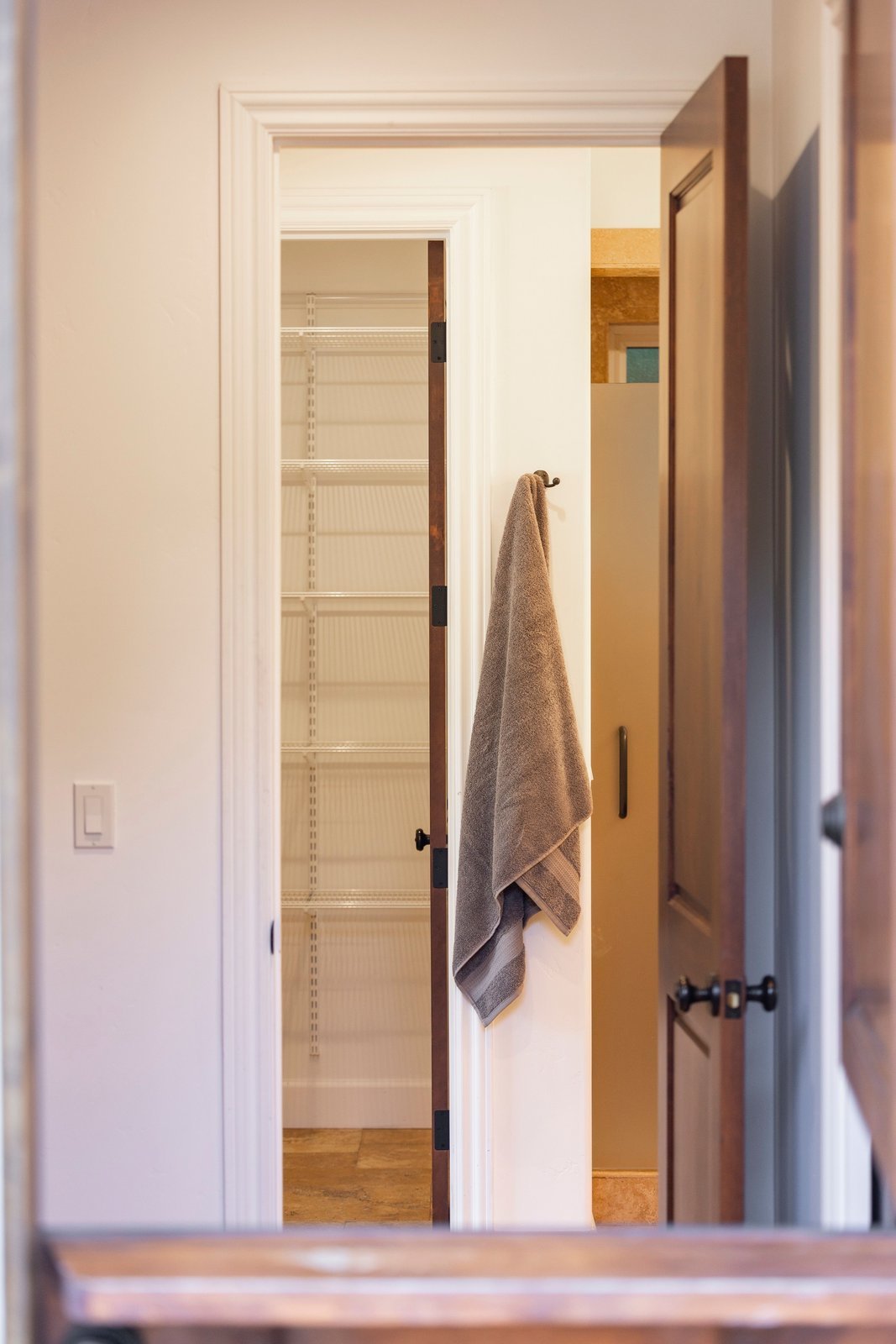
The photograph is a bathroom and linen closet in a home hallway, with no cat in the frame. That is still a useful picture of the room you may close: a bathroom you can stock and shut, not a decorative spa, and not a room the worker needs to enter if the work is in the kitchen or living room. If the job is inside that bathroom, choose a different closed room.
Set up a closed safe room
Pick one room the worker does not need to enter. A bathroom is often easiest in a small apartment, because it already has a door that latches and enough floor for a litter box. A bedroom can work if the work is in the kitchen, hall, or living room. Do not use a balcony, a window ledge, or a room with an open window.
Before the appointment, move into that room:
- A litter box the cat already uses, with enough space to turn around
- Fresh water
- A hiding spot the cat already likes, such as a covered bed, a carrier with the door open, or a cardboard box on its side
- A familiar blanket or towel with the cat’s own smell
Keep the setup boring and familiar. This is not the day to introduce a new bed, a new food, or a loud toy. If the cat already has a hiding place in that room, leave it where it is. If you have to move a litter box, do it early enough that the cat has used it there at least once.
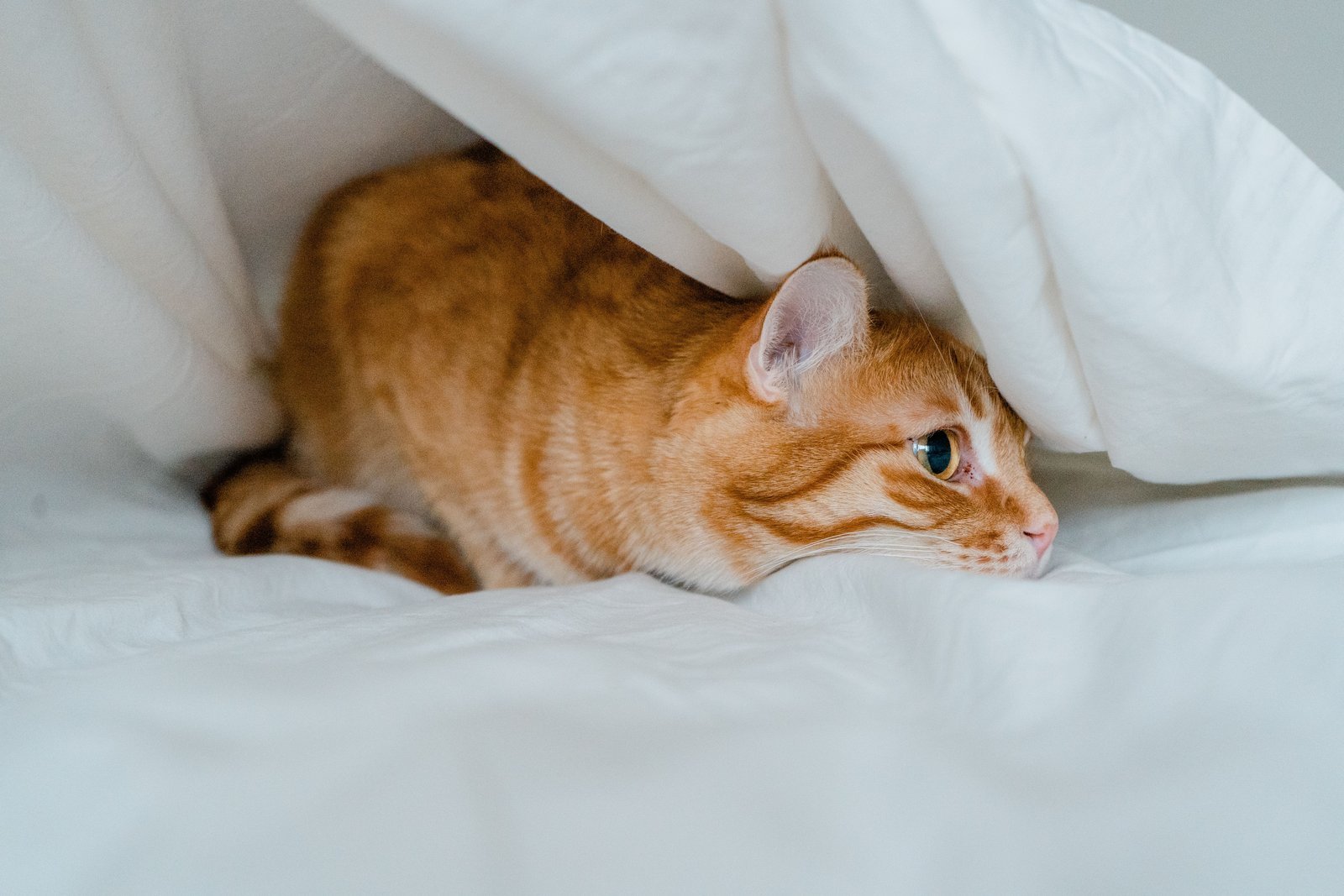
A cat tucked under a duvet is a fair picture of a hiding spot, not proof the cat is relaxed about a work visit. The official title mentions a fluffy cat lying under a duvet; what you can see is an orange tabby under white bedding, looking to the side. If this is the room you will close, leave the bed or a similar cave available and do not pull the cat out to “say hello” when the worker arrives.
Close the door before the appointment starts, not after the doorbell rings and the cat is already in the hall. Check that the window is closed, that the worker will not need that room, and that you can still hear or reach the front door. If the cat is not already in the room, use treats or a calm carry. Do not chase the cat through the apartment as the worker stands in the open doorway.
Manage the door so the cat cannot dash
The biggest practical risk is not a noisy toolbox. It is an open door to the hallway, a stairwell, or an elevator lobby. Agree on a door plan before the worker arrives. If you will be home, you meet the person at the door, the cat is already in the closed room, and you keep the front door from standing open any longer than it has to.
If the worker needs to make trips to a van, ask them to close the apartment door between trips, or stand at the door yourself. Do not prop the door open “just for a minute” while the cat’s room door is also ajar. One closed room is not enough if the cat can slip out of it and then out of the apartment.
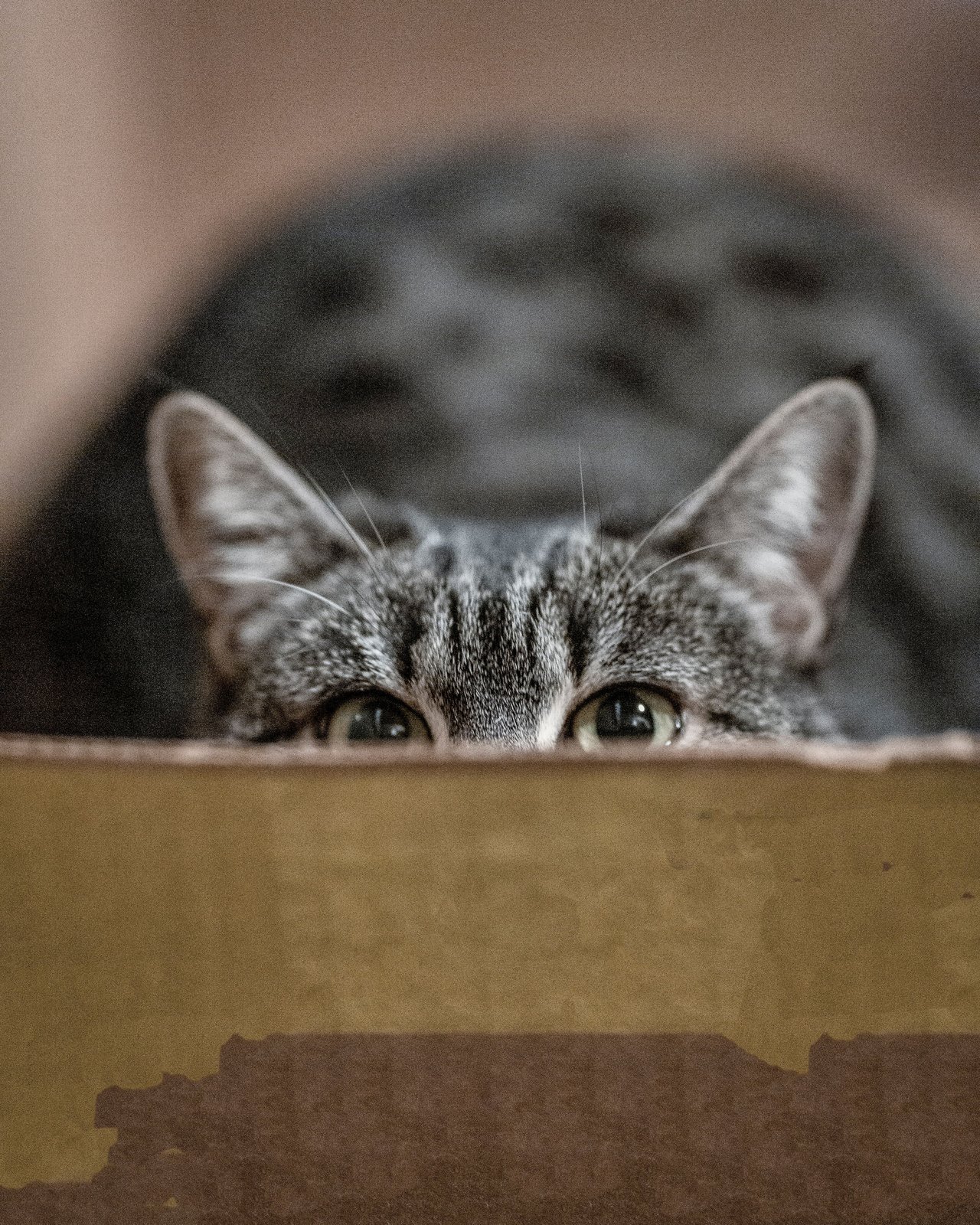
A cat peeking from a box is a useful stand-in for a hide you can leave in the closed room. The official title is a gray cat in a box; what you can see is the top of the head and a pair of wide eyes, not a cat being handled or placed in a carrier. Leave that kind of hide alone during the visit. Checking on the cat by opening the room door over and over only adds traffic at the threshold you are trying to keep quiet.
If you cannot be home, the door plan has to be even tighter. Put the cat in the closed room before you leave, with litter, water, and a hide. Add a short note on the apartment door or in a message to the office: which room is closed, that the cat is inside, and that the worker should not open that door. If your building requires access to every room, ask the office ahead of time whether the visit can wait, or whether you can be present. Do not assume a note will stop someone from opening a door they were told to enter.
A carrier can be a backup hide in the closed room, with the door open, if the cat already uses it that way. It is not a substitute for a closed room, and this is not the moment to start a brand-new carrier routine. If you need the cat in a closed carrier because the worker must enter every room, that is a different plan, and it should be practiced on quieter days first.
If you cannot be home
A maintenance visit you cannot attend is closer to a short, interrupted version of leaving the cat home than it is to a weekend alone, but the open-door risk is higher. Do the same closed-room setup, then add the note and, if your building allows it, a way for the office to reach you. Tell a neighbor only if that person has already agreed to listen for a door left open, not as a last-minute favor in the hallway.
Do not leave food puzzles, running water fountains, or loose balcony access as “enrichment” for this short window if those things also make it harder to know where the cat is. The cat needs a litter box, water, and a hide, not a new activity.
If the visit is part of a move-in or a unit repair after a move, keep this plan separate from moving to a new apartment with a cat. A cat that is still learning the new rooms needs an even more boring, already-used safe room, not a tour of the work.
What “good enough” looks like
“Good enough” is that the cat stays in the closed room for the whole visit, uses the litter or at least has the option, and is still in the apartment when the worker leaves. You do not need the cat to come out and greet anyone. You do not need a quiet, friendly face at the door. You do not need the cat to like the smell of sealant or the sound of a drill.
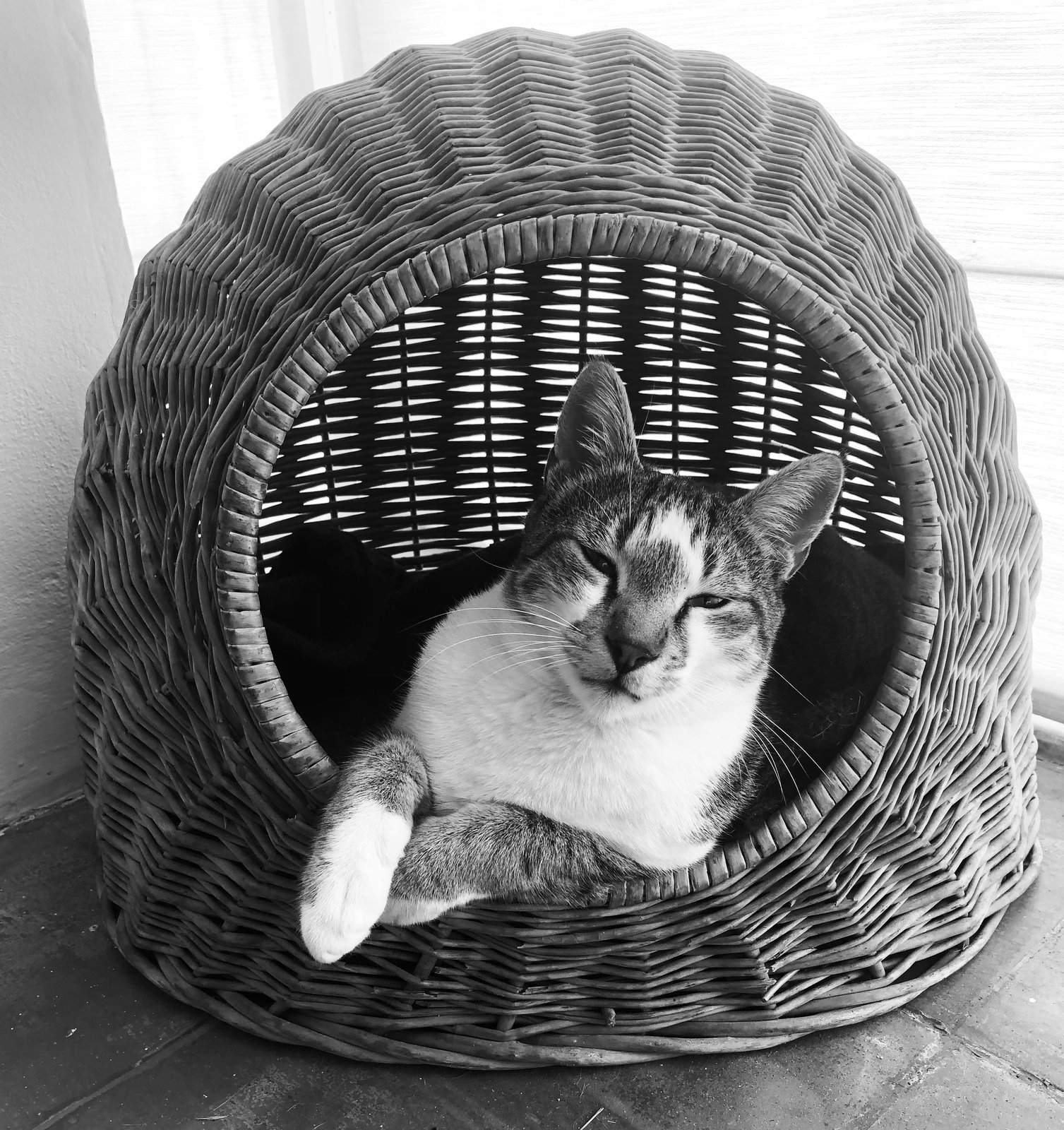
The official title mentions a cat lying on a woven basket; what you can see is a cat resting in a round wicker cave, in a black-and-white photograph, with one paw over the rim. That is a fair picture of a hide you can leave in the room, not proof the visit already went well. After the worker leaves, open the room, let the cat come out on its own, and check that windows and the front door are shut.
After the visit, put the apartment back in its usual order. Return the litter box if you moved it, and give the cat time to walk the rooms if it wants to. Some cats hide longer afterward. That can be ordinary caution after a noisy morning. Watch for signs your cat is stressed that last, such as hiding for an unusual stretch, not eating, or avoiding the litter box, and contact your veterinarian if those show up or if anything looks new and severe.
When to get more help
Contact your veterinarian if the cat has a history of hiding to the point of not eating, if urine or stool happens outside the box after visits, or if the cat was already sick. A maintenance plan cannot replace care for a medical problem, and it cannot tell you whether a particular cat should be left alone with a worker in the apartment.
If the cat consistently dashes, or if your building will not allow a closed room, you may need a person at home for every visit, a practiced carrier plan, or both. Ask the office what access is required, then build a plan you can actually keep. The useful test is still the same: the cat stays in one closed space, and you do not end the day searching the hallway.
Used well, a maintenance visit is a short, boring interruption with a door you control. Used poorly, it is an open threshold, a missing cat, and a unit full of tool noise. Set the room up early, manage the door, leave the hiding spot alone, and treat “the cat is still here when the work ends” as the win.
FAQ
What is a good enough result for a maintenance visit?
The cat stays in one closed room with litter, water, and a hiding spot, and the visit ends without a search for a missing cat. The cat does not have to look relaxed or come out to greet the worker.
Can I leave my cat loose in the apartment if I cannot be home?
That is a poor plan when the front door may stay open to the hallway. A closed room, plus a short note that the cat is inside and that door should stay shut, is the safer default when the building will allow it.
Should I put the cat in a carrier for the whole visit?
Only if the worker must enter every room, or if your veterinarian or a practiced plan already uses a carrier that way. For most visits, a closed room with a familiar hide, and a carrier left open as a cave if the cat likes it, is enough.
Is this the same plan I use when guests come over?
No. A guest visit can often be shortened or moved. A maintenance visit may be required, the door may stay open, and the person may bring tools or strong smells. Use a closed-room plan even if your cat is fine with friends.
When should I call a veterinarian?
Call if the cat seems in pain, stops eating, avoids the litter box, or hides in a way that is new and lasts after the visit. This guide is general care information, not a diagnosis, and not a reason to wait on a cat that already seems unwell.