

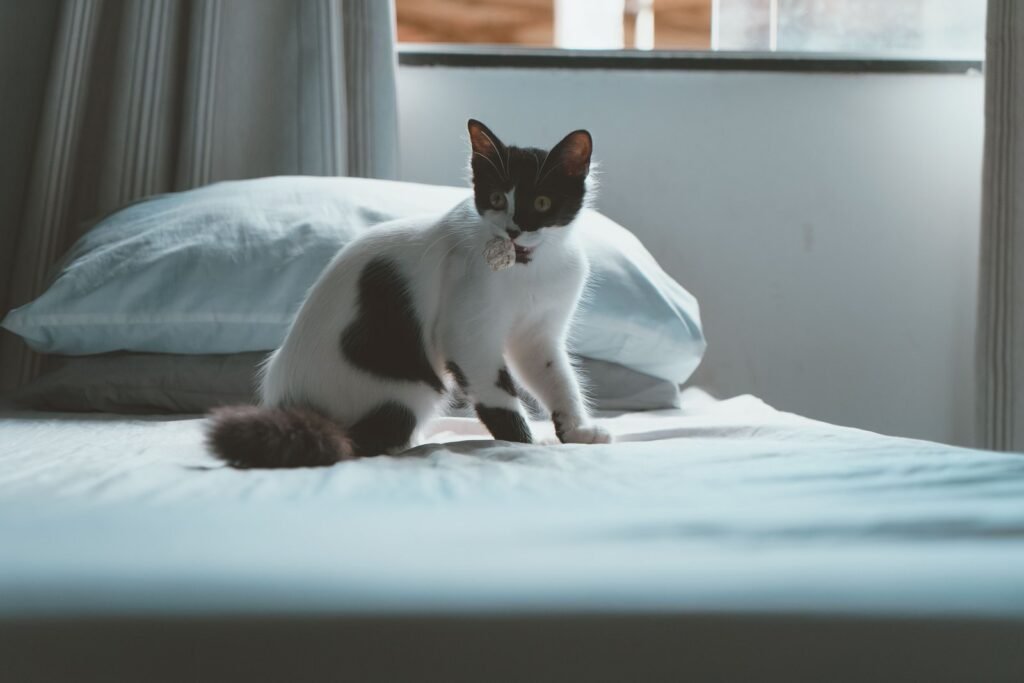
If you need to keep a cat off guest beds, coats, and overnight bags, plan for a few nights in your own apartment, not for a lifelong ban on beds. Overnight guests bring a made-up sofa bed or a spare bed, coats on a chair, and an open suitcase at nap height. Those surfaces are warm, novel, and often left unattended while people eat or shower. That is a different problem from setting up a quiet room, helping a cat stay calm around visitors, or keeping a cat off a holiday table. This is general household advice for cat parents in the US and the UK, not a veterinary diagnosis, and not a promise that a curious cat will ignore an open bag. A good result is simpler: guests do not find a cat in the suitcase or a pile of fur on the pillow.
Do not use sedatives, CBD, or essential oils around cats. Do not spray a guest pillow with a scent to “keep the cat off,” and do not trap the cat in a bare bathroom with no litter as a shortcut.
Guest bedding and open luggage are a different problem
A quiet room can give a shy cat a retreat, and a calm greeting can lower the temperature of the visit. Neither one stops a confident cat from claiming a warm duvet or curling up in a half-packed bag. Guest bedding is often softer than the cat’s usual bed, and an open suitcase is a box with familiar-smelling clothes. Coats on a chair back are a high, soft perch at the exact height a cat already likes.
If overnight guests need a closed retreat for the cat, use how to set up a quiet room for a cat when overnight guests stay. If the cat is already tense around new people, how to help a cat stay calm when guests visit and how to help a shy cat feel safe in an apartment cover that social job. This article is about the objects guests leave in the room: the bed, the coats, and the bags.
It is also not a decorations article or a table article. For trees, tinsel, and ornaments, see how to keep a cat safe around a Christmas tree and holiday decorations. For platters and serving dishes, see how to keep a cat off the holiday table and serving dishes. For shelves and small objects, how to stop a cat from knocking things off shelves stays in its own lane.
Protect the guest bed without picking a fight
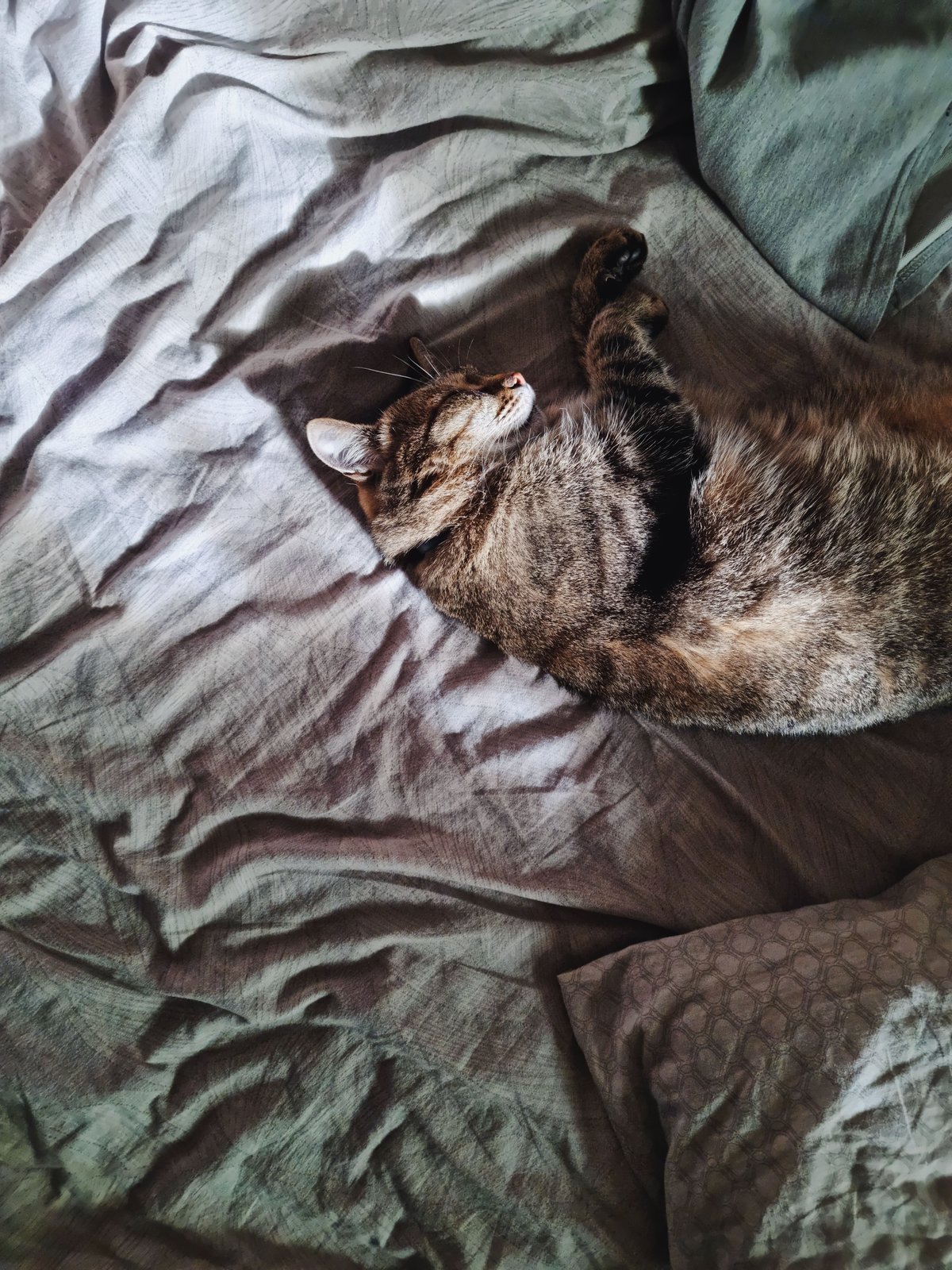
You will not usually win by scolding the cat after the fact. A cat that has already napped on a pillow has already left fur, and a shouted “no” does not explain a sofa bed. Management does more than a late correction.
Make the guest bed less available when nobody is sleeping in it. If you have a sofa bed, close it during the day if that is practical. If it has to stay open, put a spare sheet, a washable throw, or a cheap extra duvet cover over the sleeping surface between uses. Guests can peel that layer back at bedtime. The point is not to decorate. It is to give you a layer you can wash if the cat still lands there, and to make the nicest pillow less obvious when the room is empty.
Give the cat a legal nap spot that already works. A bed the cat uses, a tree perch, a window seat, or a hideaway in another room will beat a brand-new cushion unpacked at 6 p.m. If you need a compact bed that actually gets used in a small home, best cat beds for small apartments is the buying guide. For height, look at best cat trees for small apartments or best window perches for cats. A tunnel or hideaway can help a cat that wants a covered nest rather than an open guest pillow. Offer the legal spot before guests arrive, not after the cat has already chosen the suitcase.
A short play session before bedtime helps some cats settle in their own place. It is not a guarantee, and it is not a substitute for closing a bag. It is one more way to make the legal spot more interesting than a packed sweater. Keep the play in the cat’s space, not on the guest bed, and put the wand away so it does not become one more object on the pillow.
If the cat still lands on the guest bed, reset the washable layer and close the door when the room is empty, if the guest agrees. A closed bedroom door for a few hours is often kinder than a tug-of-war with a cat already curled on the duvet. If the guest needs the door open, keep the throw in place and accept that you may be washing that layer in the morning. That is still a better outcome than fur on the only pillowcase you have.
Do not punish the cat for using a bed that smells like warm people. Do not lock the cat away from litter, water, and a familiar place just to protect a duvet. If you need a broader proofing pass for the whole flat, how to cat-proof a small apartment is the wider guide. Tonight you are protecting a few guest surfaces, not redesigning the home.
Zip the bags, and keep them off the bed
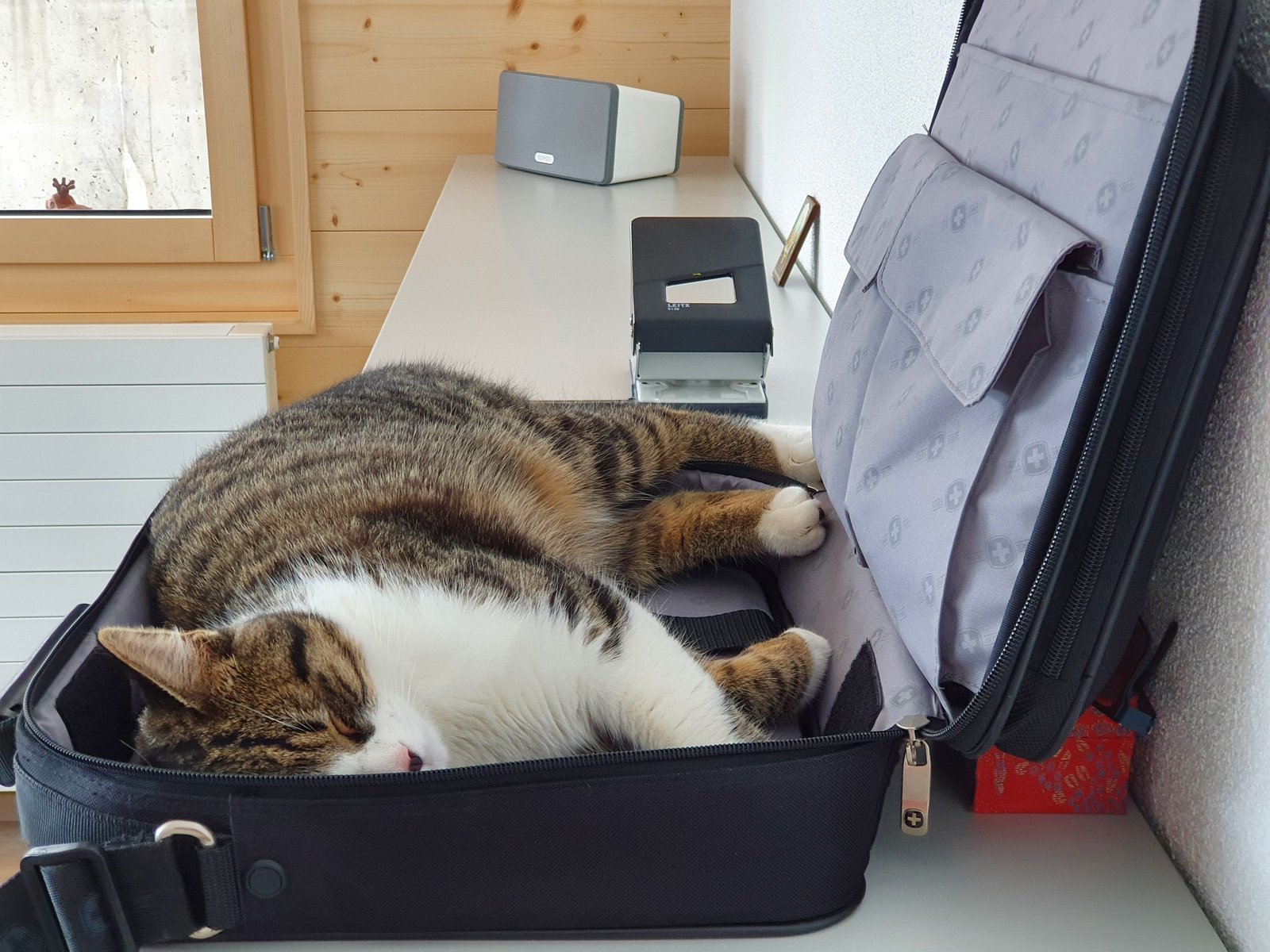
An open suitcase on a bed is an invitation. It is a box, it is soft, and it is full of new smells. Zip bags when you are not packing or unpacking. Ask guests to do the same. Keep luggage off the floor if the cat will treat it as a nest, or put it in a closed closet when it is not in use. Off the bed is the first move. Off the floor and behind a door is better if you have the space.
Brief guests on the first evening, not after someone finds a cat in a shirt pile. The request is short: do not leave an open bag on the bed, zip it when you step away, and put coats in the closet instead of on the chair. Most people will do this if you say it once, clearly, and without making it a joke about the cat being “bad.”
If a guest has to live out of an open bag in a tiny room, agree on a closed-door plan for the times they are out of the room, or move the bag to a closet shelf. A door the cat cannot open is more reliable than a warning. If the only closet is already full, a zipped bag on a high shelf or on top of a wardrobe is still better than an open case on the pillow.
Check the bag once before guests go to sleep and once in the morning before anyone leaves. Cats are quiet, and a half-zipped case can hide a sleeping animal. Look before you close a lid, lift a bag, or start a car. If you find the cat inside, let the cat step out on its own. Do not dump the bag.
Smaller items matter too. An open tote, a backpack on the floor, or a pile of scarves on the bed can be as inviting as a suitcase. Ask guests to treat those the same way: zip or close them, and keep them off the sleeping surface.
Give coats a closet, not a chair back
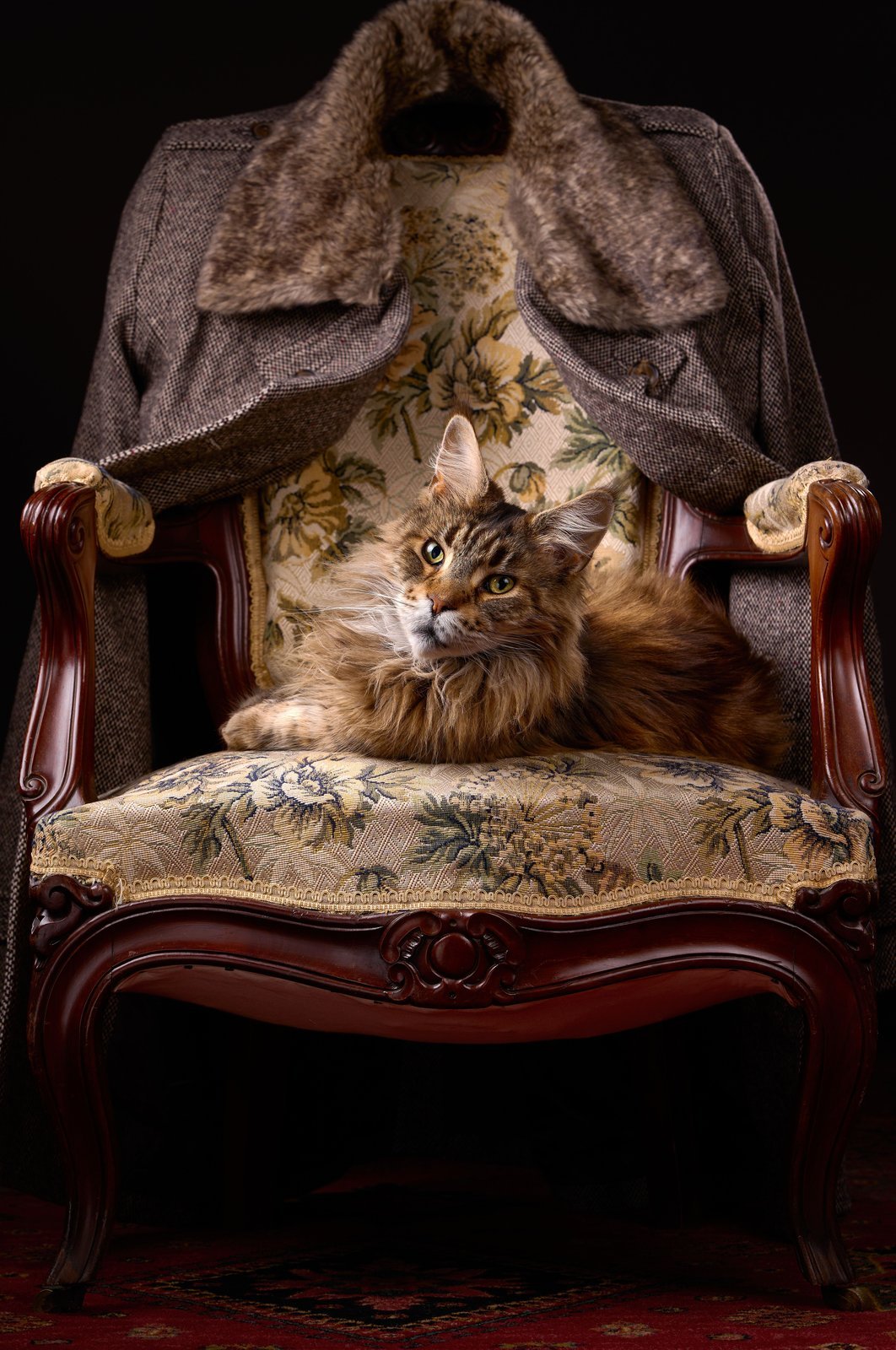
Coats on a chair, a sofa arm, or a hook at cat height are a second bed. A wool coat holds heat and smell. If you have a closet, that is the legal place for guest coats. Say so when people arrive, and offer a hanger. If the closet is full, a closed bedroom or a wardrobe beats a chair in the main room.
If a coat has to sit out for a few minutes, keep it away from the guest pillow and away from the open bag. Do not drape it over the sofa bed “just until dinner.” That is how fur and claw marks show up on the one item a guest has to wear tomorrow.
This is not a reason to start a new scratching plan mid-visit. If the cat usually uses a tree or a post, make sure that legal scratch and rest place is still available while guests take up floor space. The goal is to keep the coat uninteresting and the legal perch easy to reach.
If a guest drapes a coat on the sofa because the closet is full, offer a different hook behind a door, or move a dining chair into a closed room as a temporary rack. A coat on a chair in the main room will keep looking like a bed. You do not need new furniture. You need the coat to spend the night somewhere the cat cannot lounge on it.
What not to do, and what good enough looks like
Do not spray essential oils, citrus oils, or “pet deterrent” scents on a guest pillow, a coat, or a suitcase lining. Many of those products are a poor idea around cats, and a strong smell is a rude surprise for the person who has to sleep there. Do not use sedatives or CBD to keep the cat off the furniture. Do not shut the cat in a bare bathroom overnight with no litter box, no water, and no familiar bed. A closed quiet room can be kind if it is set up properly. A sudden lock-in is not the same thing.
Do not rely on punishing the cat after you find fur on the sheet. The cat already napped. Reset the layer, zip the bag, and close the closet. If the cat is panting, hiding without a safe place, or not using the litter box during the visit, that is a welfare problem, not a luggage problem. Get qualified help if the cat seems unwell or cannot settle anywhere.
What good enough looks like is modest. Guests can sleep in a bed that does not have a cat in it when they turn down the sheet. Coats come out of a closet, not off a chair with claw marks. Bags stay zipped, or they live behind a door. The cat still has a legal high nap spot, litter, water, and a way to get away from new people. You do not need a cat that never sits on a bed again.
FAQ
Should I close the sofa bed during the day?
Yes, if that is practical. If it has to stay open, put a spare sheet or washable throw over the sleeping surface between uses so you have a layer you can wash.
What should guests do with an overnight bag?
Zip it when they are not packing, keep it off the bed, and put it in a closed closet or on a high shelf if the cat treats open luggage as a nest.
Where should guest coats go?
In a closed closet on a hanger, not on a chair back, a sofa arm, or the guest bed. Say this when people arrive.
What can I offer the cat instead?
A legal high nap spot the cat already likes, such as a familiar bed, tree perch, window seat, or hideaway, set up before guests arrive. A short play session before bedtime can help, but it does not replace a zipped bag.
Can I use sprays, oils, or sedatives to keep the cat off the bed?
No. Do not use essential oils, sedatives, or CBD around cats, and do not spray a guest pillow to keep the cat off. Use management, a legal nap spot, and a brief for guests instead.