


If you are searching for the best litter mats for apartments, you are probably trying to keep scattered litter off a small bathroom floor, a hallway runner, or the only strip of vinyl between the box and the rest of the flat. You are not looking for a trophy table of scores. The useful question is simpler: what does a mat actually catch, where should it sit, and what will it not fix?
A litter mat, in this guide, is a washable layer placed where the cat leaves the box, meant to knock or trap loose litter before it travels. Some are soft and ribbed. Some are a mesh or honeycomb over a solid base. Some are oversized. All of them are a tracking tool, not a complete litter system.
This is general information for cat parents in the US and the UK, not a ranked review and not a veterinary diagnosis. It does not invent prices, test scores, or a “winner.” A mat reduces tracking. It does not replace a well-placed box or an appropriate litter. If your cat suddenly stops using the box, strains, or you see blood in the litter, contact a veterinarian. Those are medical questions, not mat questions.
What a mat can do, and what it cannot
A mat can catch a useful amount of litter that would otherwise stick to paws and scatter down a hallway. In a small apartment, that matters because there is not much floor between the box and the sofa, and rental finishes can be unforgiving.
It cannot correct a box that is too small, in a noisy or awkward spot, or filled with a litter the cat already dislikes. Those jobs belong in a cat litter box setup for an apartment, in a buying guide to litter boxes for small apartments, and in a guide to cat litter for apartments. If you are weighing an automatic box, that is a different purchase, covered in best automatic litter boxes for apartments. This article stays with the mat at the exit.
A mat also will not remove odor, clump waste, or persuade a cat who is avoiding the box. If tracking is only one complaint among many, start with the box and the litter, then add a mat. If tracking is the main leftover problem after the setup is already reasonable, a mat is a fair next step. In a studio or a one-bathroom flat, that leftover problem is easy to feel under bare feet, and it shows up quickly on dark socks and pale floors.
Size and placement at the box exit
The mat should cover the way out, not just sit like a doormat in front of a pretty box. Watch how your cat leaves. Some step out and pause. Some jump, land a foot beyond the box, and trot on. The useful mat is the one under that landing zone, plus a little extra.
In a small bathroom, measure the floor you actually have: the gap between the box and the bathtub, the washer, or the door swing. A mat that bunches against a door or curls under a toilet is a trip hazard and will not lie flat enough to work. If the box is in a hallway, the mat still belongs at the exit, not halfway down the corridor “to be tidy.” A long runner that starts a meter away from the box will miss the first, messiest steps, even if it looks neater in the rest of the hall.
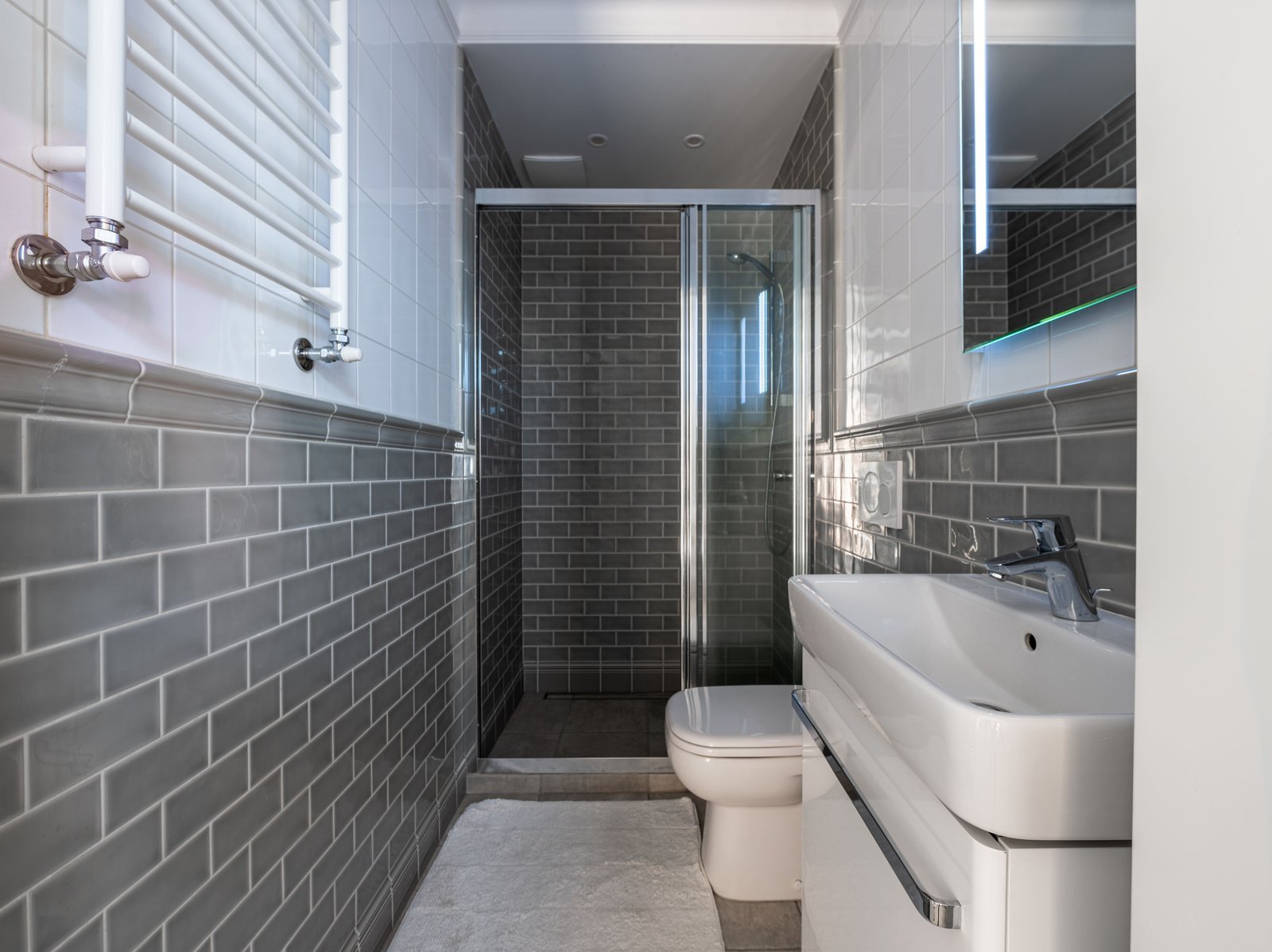
The room in many flats is already tight: a narrow bathroom with a shower, a toilet, and a slim run of floor. A pale bath mat in a room like that is a useful reminder of how little space a layer can occupy, but it is a bath mat, not a litter mat. A litter mat still has to sit at the box exit and stay flat. An oversized mat that looks generous in a product photo will not help if you have to fold it into lumps the cat will walk around.
Extra-large mats help when a cat launches out, or when a box has more than one opening. They only help if they fit. It is better to cover the true exit path well than to buy coverage you cannot place.
If you have two boxes, each exit needs its own coverage. One shared runner between rooms is not a substitute for a mat at each box, because most of the litter leaves the paws in those first steps. In a small home, that may mean two modest mats rather than one large one in the only “nice” place you want to show.
Soft, mesh, and extra-large: choose the job, not a ranking
There is no honest “best” style for every flat. There are trade-offs.
Soft, ribbed, or plush mats feel more like a bath mat underfoot. They can be kinder on older cats or on cats who dislike a plastic grid. Litter often lodges in the fibers, so they need more frequent washing, and a thick pile can stay damp in a windowless bathroom. Choose a soft litter mat for comfort only if you are willing to wash it often and let it dry fully.
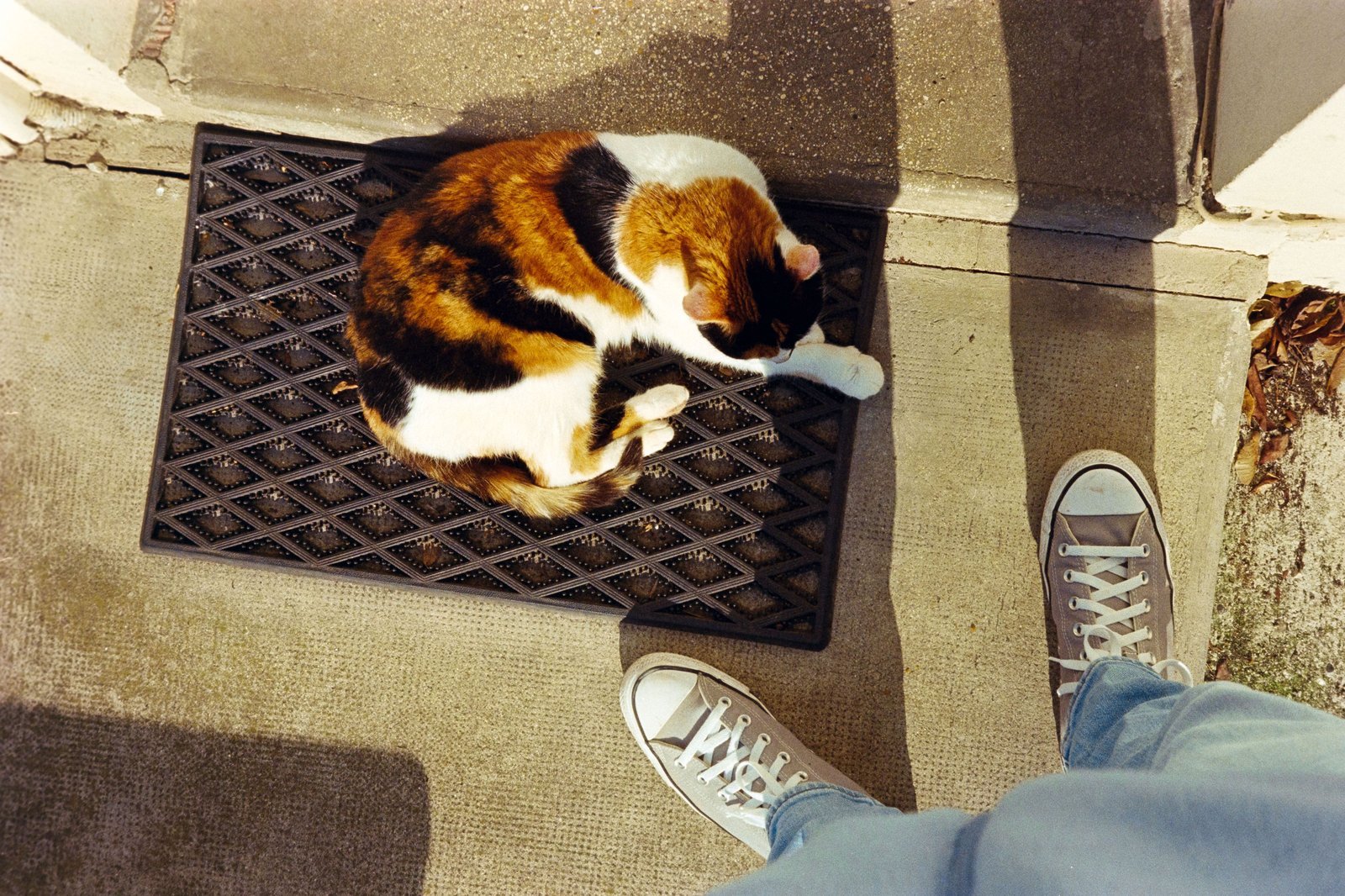
Mesh or honeycomb mats use an open grid so granules fall through to a solid base you can empty. Many people find them easier to shake out between washes. Some cats dislike the feel of a grid, or will only step on the solid rim. A rubber diamond-pattern doormat on a front stoop is a similar texture idea, not a litter mat and not an indoor bathroom scene. If you try a mesh litter mat, watch whether your cat actually walks across the grid or leaps over it.
Extra-large is a size, not a material. You can find soft or mesh versions that cover more floor. The question is still whether the cat lands on it and whether you can wash and dry it in a small home.
If you can, match the surface to the cat you have, not to a trend. A cat who already picks a careful path around new objects may do better with a lower, flatter mat that does not rock or rattle. Give a new texture a few quiet days, and watch the paws, not the marketing photo. If the cat starts leaping over the mat, the style or the size is not doing its job, no matter how tidy it looks when no one is using the box.
Washability in a small apartment
A mat that you cannot realistically wash will become a dirty rug. In a small apartment, ask where it will actually be cleaned. Can you shake it over the box or a bin? Can it be rinsed in a shower or tub? Will it fit in a compact washing machine, and can it dry without hanging over the only radiator for two days?
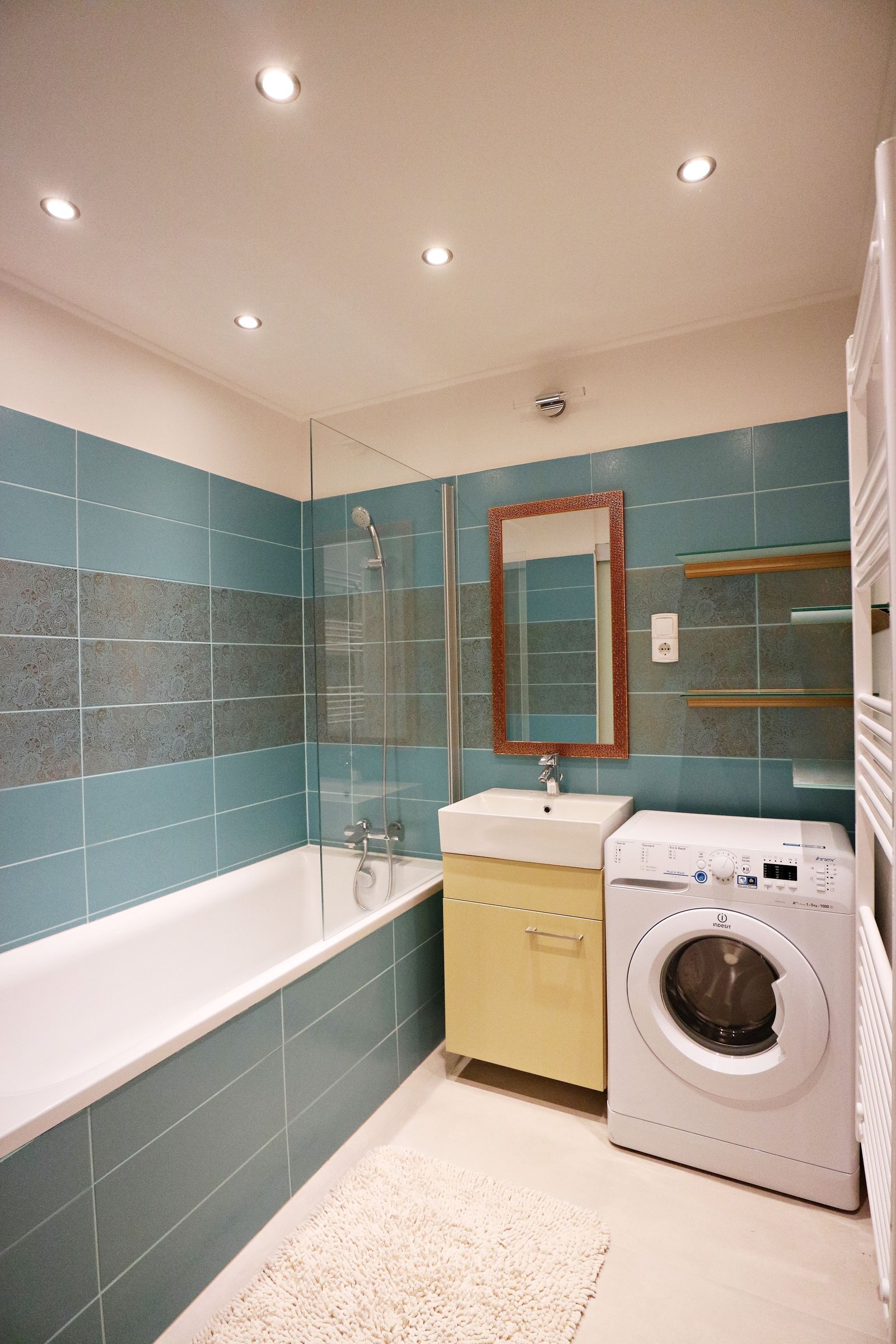
A compact bathroom that already holds a washer is a common apartment layout, and it can make machine-washing easier, but the cream bath mat on that floor is still a bath mat, not a litter mat. A litter mat has the same space problem: it has to come up, get washed, and dry somewhere that is not in everyone’s way.
Look for a mat that empties easily between deeper washes. Mesh designs often let you dump the tray. Soft mats usually need more thorough washing because litter and urine droplets hide in the pile. Follow the care notes that come with the mat you buy, and do not assume every “washable” label means the same thing.
Drying matters as much as washing. A damp mat in a tight bathroom can smell, and it can stay wet under the box area. If your bathroom has little air, prefer a mat that dries quickly, or have a second mat to swap in. This is not a reason to run a heater unsafely in a small room. It is a reason to choose a design you can dry. Shake or empty the mat more often than you deep-wash it, so litter does not get ground in and then walked back into the home.
A waterproof backing, and what mats cannot fix
If you rent, the floor under the box may be vinyl, laminate, or wood that you cannot easily replace. A waterproof backing helps stop wet litter, drips, and tracked urine from sitting against that floor. A mat without a sealed back can hold moisture underneath, which is worse than no mat if you never lift it to check. Choose a backing that lies flat and does not leave a dye stain. A non-slip back helps on tile, but “non-slip” is not the same as waterproof. You want both if the floor is valuable or not yours.
Lift the mat on a schedule and wipe the floor. A backing only protects what you also keep reasonably clean. In a rental, that quick look underneath is how you catch a slow leak or a damp patch before it marks the finish or becomes a smell you cannot place.
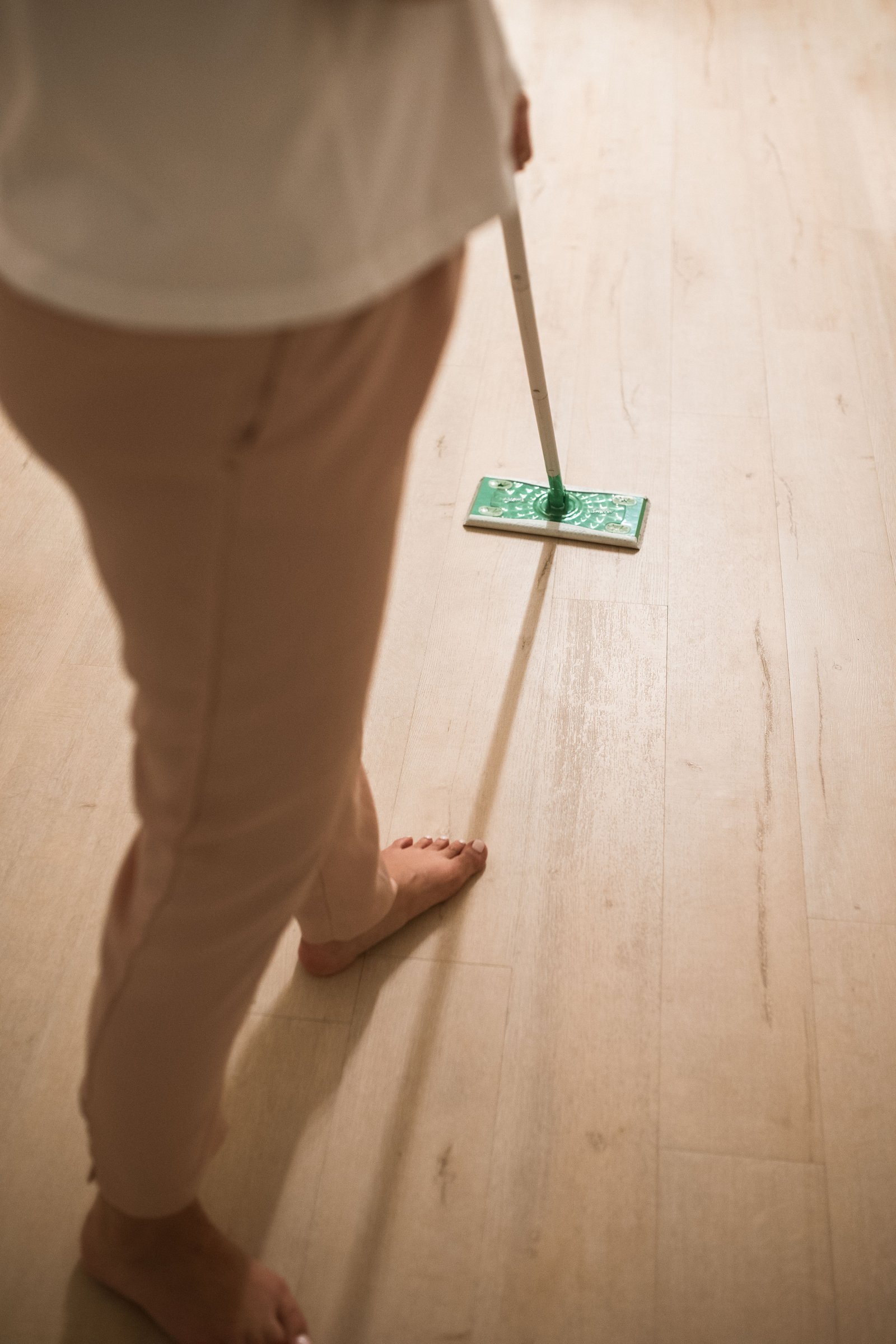
Even a good mat leaves some granules. You will still sweep or mop. A person mopping a light wood floor is a fair picture of that leftover job; it is not a picture of washing a litter mat. If you are still finding piles of litter in the next room, look again at mat size, at whether the cat is jumping over it, and at the litter and the box themselves. Long fur can carry more litter. A box with a high exit or a top opening can change the path, which is a box question, not a reason to keep buying bigger mats forever.
If the cat avoids the area after you add a mat, the mat may be too unstable, too slick, or too unfamiliar. Try a flatter style, or introduce it by placing it under only the front edge first. If avoidance continues, or if toileting habits change, contact a veterinarian. A new mat should not be the moment a medical problem is ignored.
Before you buy, you do not need a score or a ranked list. You need a few practical checks: Does the mat fit the exit path without blocking a door? Can you wash and dry it in this home? Is the back waterproof and stable on your floor? Will this cat walk on it? If you cannot answer those, wait, measure, and look again.
A mat is a practical layer at the exit. Used that way, it can reduce the grit that travels through a small home. Used as a substitute for a better box or a better litter, it will disappoint you, and it may not help the cat at all.
FAQ
What is the best litter mat for an apartment?
There is no honest single winner. The best mat is one that covers the cat’s actual exit path, that you can wash and dry in a small home, and that has a backing suited to a rental floor if that is what you have. Soft, mesh, and extra-large styles each have trade-offs. A mat is not a ranked trophy, and it does not replace the box or the litter.
How big should a litter mat be?
Big enough for the first steps or the landing after a jump, and small enough to lie flat in the bathroom or hallway you actually have. Measure the floor around the box exit, including door swings. An extra-large mat only helps if it fits without folding into lumps the cat will walk around.
Is a soft mat better than a mesh mat?
Not always. Soft mats can feel more comfortable but often hold more litter in the fibers and need more washing. Mesh mats can be easier to empty because granules fall through to a base, but some cats dislike walking on a grid. Choose the style your cat will actually step on, and that you can keep clean.
Will a litter mat stop all tracking?
No. A mat reduces tracking; it does not eliminate it and it does not replace a well-placed box or an appropriate litter. You will still need to sweep or mop. If litter is traveling a long way, check the mat size, the cat’s exit path, and the box and litter setup.
Can I skip changing the box or the litter if I buy a good mat?
No. If the box is a poor fit, or the litter is a poor match, a mat will not fix that. Use a mat as the layer at the exit after the setup is already reasonable. Sudden box avoidance is a reason to call a veterinarian, not a reason to add another mat.