

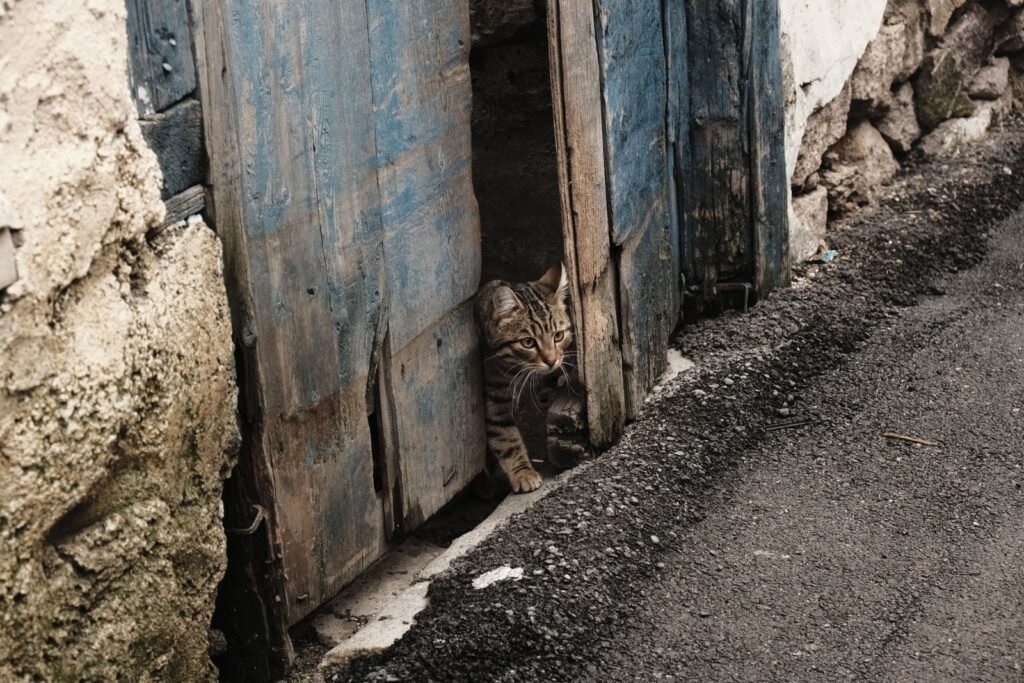
If you are shopping for the best pet gates with a cat door for apartments, you are usually trying to solve a doorway problem, not decorate a hallway. The cat needs a way into a litter room, a quiet room, or a feeding spot. The dog should stay on the other side. A gate with a pass-through can do that job when the opening, the latch, and the height actually match the animals you live with.
This is a buying guide for dog-and-cat households in US and UK apartments and small rentals. It is not a ranked list, not a price sheet, and not a “best for 2026” roundup. Best dog gates for apartments covers barriers meant mainly to hold a dog. This article is about the extra detail that matters when a cat also needs to come and go.
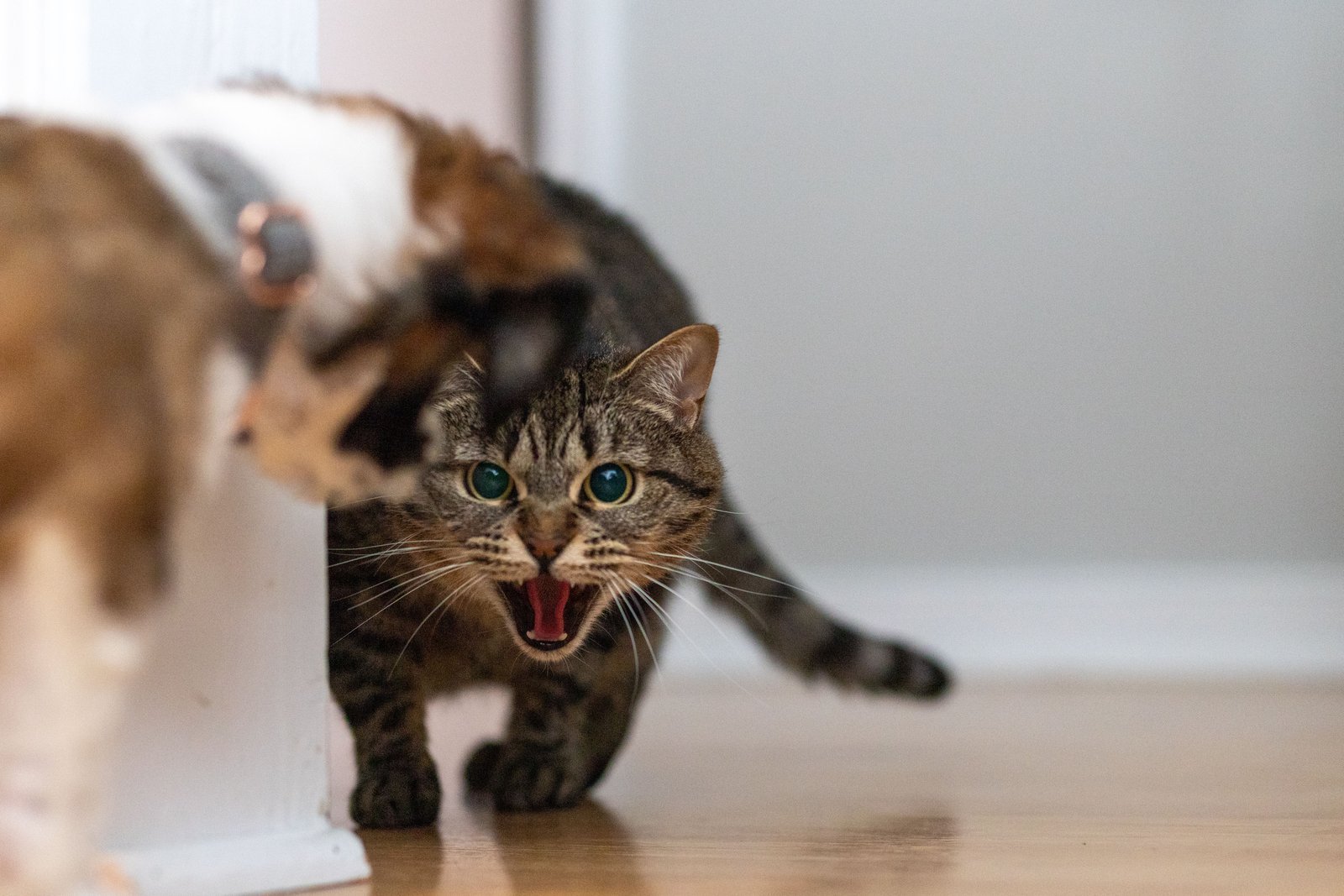
A tense moment in a doorway is one reason people shop for this kind of gate. The photograph is an indoor hallway, not a product still, and it is not a fight you can read in full. It is a reminder that a cat may need a room the dog should not enter, especially around a litter box or a food bowl. A gate is a tool for that split. It is not a substitute for a careful introduction between a cat and a dog in an apartment.
What a cat-door gate is for
The useful setup is simple. You place a gate in a doorway or hall. The dog stays out of one room. The cat uses a flap, a cutout, or a small opening to pass through. Common reasons include a litter room the dog will raid, a quiet room the cat uses when the apartment is busy, or a feeding spot you do not want the dog to reach.
That last job overlaps with how to feed a dog and a cat in the same apartment, and the litter job overlaps with a sensible litter box setup in an apartment. The gate does not replace those plans. It only helps you keep the rooms from becoming one shared buffet.
A cat-door gate is also not a crate, a playpen, or a front-door plan. If you need a foldable pen, see best pet playpens for small apartments. If you need a closed den for the dog, see best dog crates for apartments. If the problem is a pet shooting out the front door, that is how to stop a dog from door dashing in an apartment or how to stop a cat from door dashing, not a hallway pass-through.
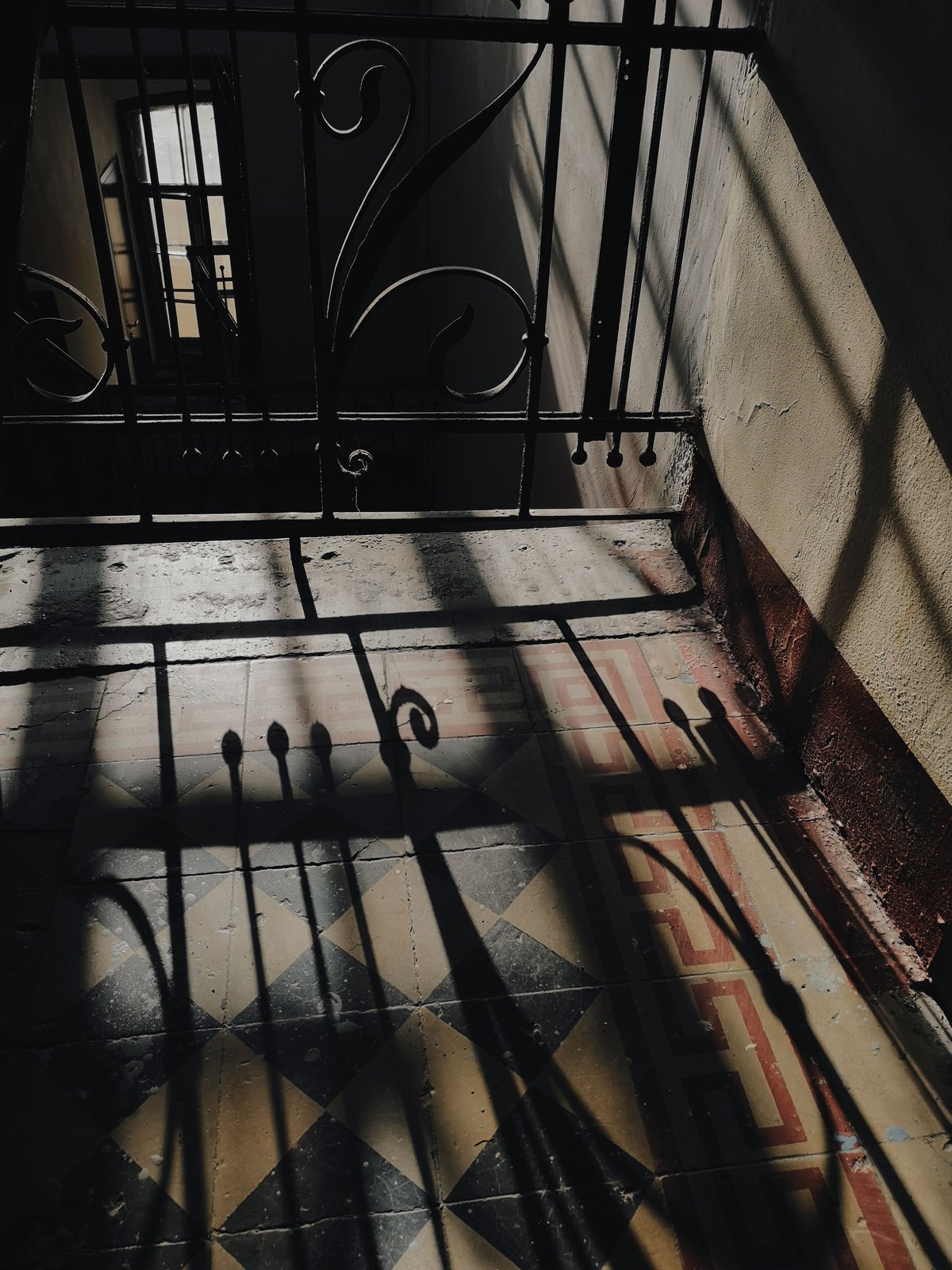
This is an ornamental iron stair barrier, not a modern pet gate with a flap, and there is no cat or dog in the frame. It is still a useful warning about opening size. Wide gaps can let a cat through, and they can also let a small dog through. If you want only the cat to pass, the opening has to be large enough for that cat and tight enough that your dog cannot follow.
How to compare opening size, height, and latch
Start with the animals, not the product photo. Measure the cat at the shoulders and at the widest part of the chest or hips, then look at the pass-through with those numbers in mind. A flap that looks generous in a listing can still catch a long-haired or large-chested cat. A cutout that looks modest can still be a tunnel for a small dog, a puppy, or a slim adult.
If you have a small dog, assume the dog will try the same opening. Watch a test at home after you install the gate, and do not call the setup finished until you have seen whether the dog can push, wriggle, or paw the flap open. Some households need a smaller opening, a higher cutout, or a different style of flap. Others find that a determined small dog will get through almost any cat-sized gap, in which case the gate may still help with a larger dog but will not protect the litter room on its own.
Height matters for the dog you are holding back. A short gate is easier for a tall or athletic dog to jump, and a pressure-mounted model can walk or tilt if the dog leans hard. Choose a height that matches the dog, and check that the gate sits firmly in the doorway after you set it. Recheck it after a week of daily use, not only on the day you unpack it.
The latch should stay closed when the dog bumps the gate, and a person in the home should still be able to open it with an armful of laundry. Avoid a latch that looks tidy in a photo but pops open with a nudge, and avoid one so awkward that people start leaving the gate propped. If the model has a walk-through door for people, test that door’s latch the same way. The cat flap can be perfect and still fail if the people-door swings open.
Pressure-mounted gates are often the renter-friendly choice because they usually need no drilling. They work best in a true doorway with sound, parallel jambs. They can slip on uneven floors, thick baseboards, or a dog that charges the barrier. Hardware-mounted gates are often sturdier, but they need screws in the wall or the trim, which may not be allowed in a rental and may leave holes when you move. If you rent, read the lease, use pads where the manufacturer calls for them, and do not force a pressure mount into a span it was not made to hold.
A leave-the-dog-home plan is a separate problem from a hallway split. How to leave a dog home alone in an apartment is about the dog’s day, not about whether the cat can reach the litter box. If you use a gate while you are out, walk through the setup first: water, shade, a safe room for the dog, and a litter path the cat can actually use.

This is a front stoop, not an apartment hallway and not a gate with a cat door. The official title of the photograph mentions fighting; what you can see is a mixed-pet cluster at a doorway, which is the living situation this gate is for. A product still of a pressure-mounted gate with a flap was scarce, and many close matches were already used on the site. Use the picture as a reminder that dog-and-cat homes need a plan for shared doorways, not as proof of any one product.
Fit, flap style, and where the gate actually goes
Measure the doorway before you buy. Note the width between the jambs, whether the sides are parallel, and whether a thick baseboard or an uneven floor will fight a pressure mount. A gate that is too narrow will not hold, and a gate forced into a span it was not made for can walk out of the opening the first time the dog leans on it. If your only option is a wide hall rather than a true door frame, you may need a hardware-mounted model or a different location, not a longer pressure bar and a hope.
Look at the flap as carefully as the frame. Some openings are a simple cutout. Some have a rigid or flexible flap that swings, and some flaps can be set so they stay closed unless the cat pushes them. A flap that swings both ways can make it easier for the cat to come back out. A flap that stays shut can help if a curious dog noses the opening, but only if the cat will still push through it. A timid cat may need the flap held open for a few sessions, then eased down. If the hole is large enough for the dog, the flap style will not change that.
Think about traffic in the apartment. A bathroom or a short hall to the litter box is a common place for this gate. A kitchen doorway can work if you are keeping the dog out of the cat’s food, but only if people can still walk through and the latch stays closed when it is bumped. A bedroom doorway can give the cat a quiet room. Avoid putting the only gate across a front door or a fire exit, and do not treat a hallway cat door as a plan for door dashing.
If you have two cats, watch both of them, not only the bolder one. One cat may sail through a new flap while the other avoids the room for a day. Keep the litter path obvious, and do not block a second box if you already use two.
After you install it, wipe the flap and check the tension or the screws on a regular schedule. A pressure mount can loosen, a sticky flap can teach the cat to stop using the opening, and a walk-through door left propped open defeats the whole setup. Live with the gate for a week, then decide whether the opening, the latch, and the location are actually doing the job.
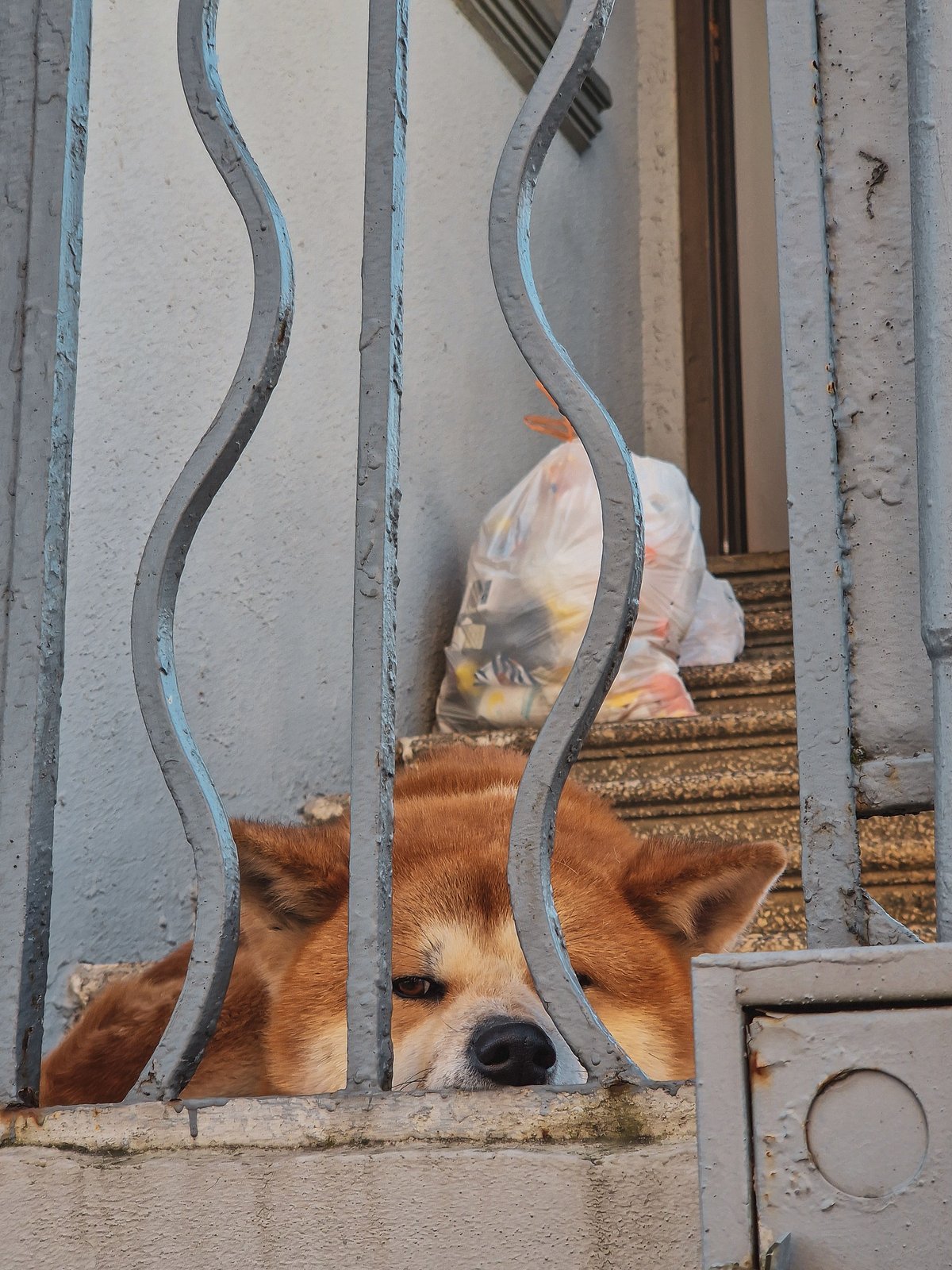
A reddish-brown dog lies on outdoor stairs behind wavy metal bars, with trash bags on the steps. This is an exterior stair gate, not a pressure-mounted apartment gate with a cat flap.
What a gate cannot do, and how to live with one
A gate will not teach the dog to ignore the litter box, and it will not finish a tense introduction. It will not stop a cat from door dashing at the front door, and it will not make two pets share food peacefully if you still leave bowls in the open. Treat the gate as one tool in a doorway, then keep the training, the feeding plan, and the litter setup in place.
Install the gate, then watch both animals use it. The cat should be able to go through without squeezing in a way that looks painful or scary. The dog should not be able to open the flap, climb the bars, or shove the whole gate out of the opening. If the dog can also squeeze through, change the opening, add a different barrier, or keep the litter and food farther from the dog’s reach until you have a setup that actually holds.
Give yourself a little time to live with the hardware. People will bump it, and the pressure mount may need a tightening. The cat may hesitate at a new flap for a day or two. A treat on the far side and a calm first walk-through usually help more than a second purchase.
Do not invent a ranking, a price, or a “best for 2026” winner from this page. Compare opening size, latch quality, height, and whether a renter can use a pressure mount, then buy the gate that fits your doorway and your pets. If the dog still gets through, or the cat will not use the opening, adjust the setup rather than assuming a more expensive model will fix a size problem.
FAQ
What is a pet gate with a cat door for?
It is a barrier that holds a dog back from a room while giving the cat a flap, a cutout, or a small opening to pass through. People often use one for a litter room, a quiet room, or a feeding spot the dog should not enter.
Can a small dog go through the cat door too?
Yes, sometimes. If you have a small dog, a puppy, or a slim adult, test the opening after you install the gate. The pass-through has to be large enough for the cat and tight enough that your dog cannot follow.
Is a pressure-mounted gate better than a hardware-mounted one in a rental?
A pressure-mounted gate is often easier in a rental because it usually needs no drilling, but it has to fit a true doorway and stay in place if the dog leans on it. A hardware-mounted gate can be sturdier, but it needs screws and may leave holes. Check your lease before you drill.
Will a gate replace training or a slow introduction?
No. A gate can split a doorway. It will not finish an introduction, teach a dog to ignore a litter box, or replace a feeding plan. Keep those habits in place and use the gate as one tool.
How do I know the latch is good enough?
The latch should stay closed when the dog bumps the gate, and a person should still be able to open it with an armful of laundry. Test the people-door latch the same way if the model has one, and recheck the fit after a week of daily use.