

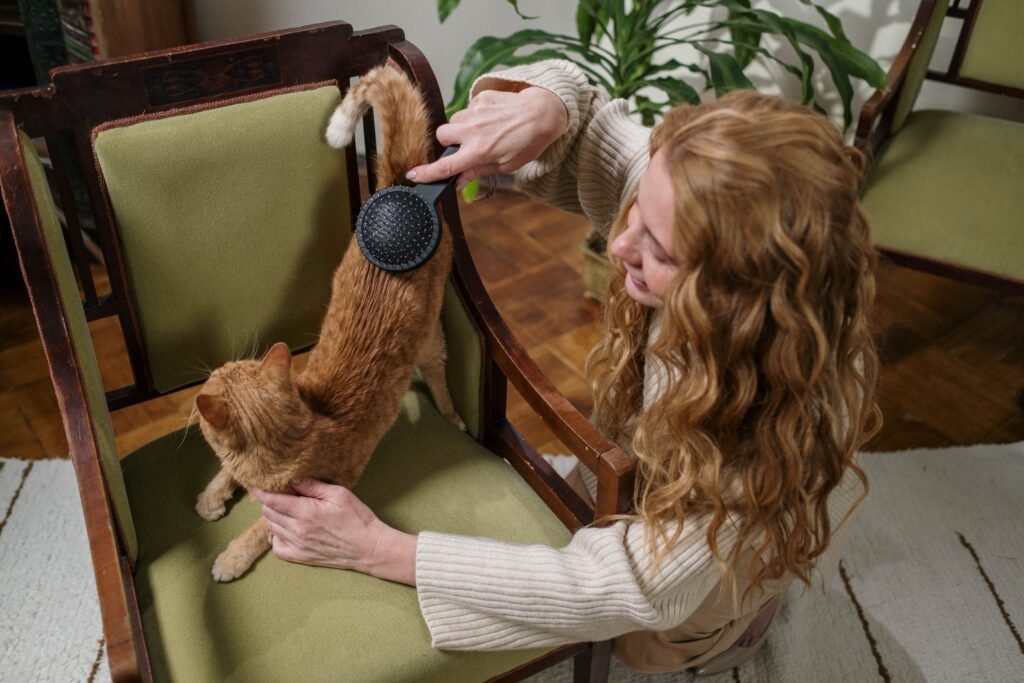
If you want to know how to brush a cat at home, the useful skill is not “get every loose hair in one sitting.” It is teaching a short, predictable routine your cat can finish calmly, with a tool that matches the coat you actually have. Cats are not small dogs. Many tolerate handling in brief doses and leave when they have had enough. A forced marathon on the sofa often makes the next session harder, especially in a small apartment where the cat cannot put a whole floor between you.
A calmer approach is regular, light passes, a clear stop rule, and help when the coat or the cat is telling you this is no longer a home job. Brushing can reduce loose hair on your clothes and furniture, help you notice changes in the skin or coat, and feel pleasant for cats who like it. It will not, on its own, cure a skin condition, end hairballs, or replace veterinary care.
This is general information for cat parents in the US and UK, not a veterinary diagnosis and not a grooming guarantee. Cats vary. If you see fleas, raw or sore skin, sudden bald patches, a rapidly worsening coat, or mats tight against the skin, contact your veterinarian. If your cat panics, bites, or cannot be handled, stop and ask a professional groomer or a vet-recommended clinic for help rather than pushing through.
This article is about cats. If you also live with a dog, how to brush your dog at home is a separate routine, with different tools and a different kind of patience.
Why a regular brush is kinder than a rare overhaul
Loose hair, a little dander, and the odd tangle are ordinary. What often goes wrong is waiting until the coat looks neglected, then trying to fix it in one determined evening. Long gaps let small knots become mats, and mats hurt when they pull. A two-minute session several times a week is usually easier on everyone than a twenty-minute struggle once a month.
Regular brushing also gives you information. You will notice a new lump, a greasy patch, a flea, or a thin area sooner if your hands are already on the coat. That is observation, not a diagnosis. Apartment life makes the habit easier to keep: the tools live in a drawer, and you do not need a garden or a grooming table. It also makes the mess more obvious, which is a reason to brush over a towel or in a room you can sweep, not a reason to scrub the cat harder.
Match the tool to the coat, not the aisle display
There is no single best brush for every cat. Coat type should lead.
Short, close coats. Many short-haired cats do well with a soft bristle brush, a rubber curry or grooming mitt, or a fine comb used gently. The job is often a light once-over to lift loose hair and to check the skin, not a heavy rake.
Medium and long coats, including fluffy breeds. These usually need more frequent work and a combination of tools: a wide-toothed comb to find tangles, and a brush suited to longer hair—often a slicker used lightly, or a pin brush. Work in sections. Do not drag a dense slicker in long, hard strokes through a knot.
Double coats and seasonal blowouts. Some cats shed heavily at certain times of year. A gentler, more frequent routine usually beats a single aggressive session. If you are unsure whether a tool is too sharp for your cat’s skin, ask a groomer or veterinary nurse to show you on a small section.
Skip miracle claims on the packaging. No brush “eliminates shedding” or “treats skin disease.” Deshedding tools can be useful in careful hands and can also scratch skin if you press or repeat the same spot. If the coat is already matted close to the skin, scissors in untrained hands are a real risk. Mats often sit against skin that you cannot see; cutting toward the body is how nicks happen. That is a groomer or vet job, not a late-night DIY.
A small towel, a treat your cat likes, and a quiet room with the door not fully blocking an exit will do more than a complicated kit. Keep nail work as a separate, equally short session; how to trim a cat’s nails at home can sit beside this routine without turning one handling session into two jobs.
Set up a session your cat can actually tolerate
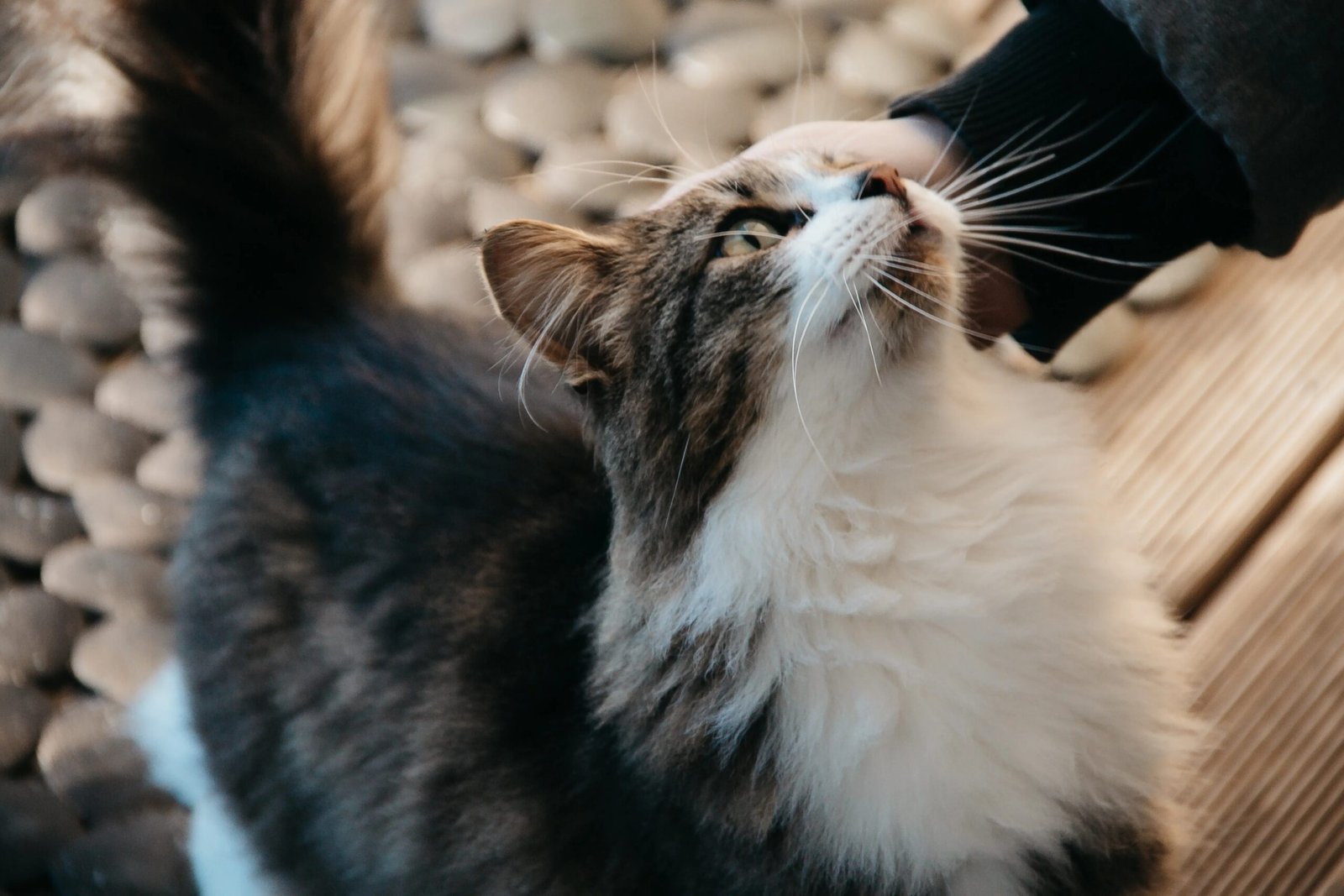
Choose a time when your cat is already relaxed—after a short play session and a snack, or during a lap habit they already enjoy—not when they are hunting, hiding, or overstimulated. Sit on the floor or in a stable chair. Have the brush, a towel, and treats within reach so you are not leaving mid-stroke.
Start with touch they already accept: a cheek rub, a stroke along the back. Then let the tool touch the coat for a second or two in a favorite spot, often the cheeks, chin, or the back near the shoulders. Reward, stop, and try again later if that was plenty. Early sessions can last less than a minute and still count.
Read the cat, not the clock. A purring cat who leans in is a green light to continue briefly. A tail flick, skin twitch, flattened ears, a turning head, or a shift away is a pause. A growl, swat, or scramble is a stop. Ending while things are still all right teaches the next session. Pinning a cat in your lap until you are finished teaches the opposite.
In a studio, pick a corner that is not the only escape route to the litter box or the bed. Let the cat leave if they choose. You can always invite them back in ten minutes. If brushing only happens on a high table with no way down, many cats will start to avoid the room.
How to brush, in short, calm passes
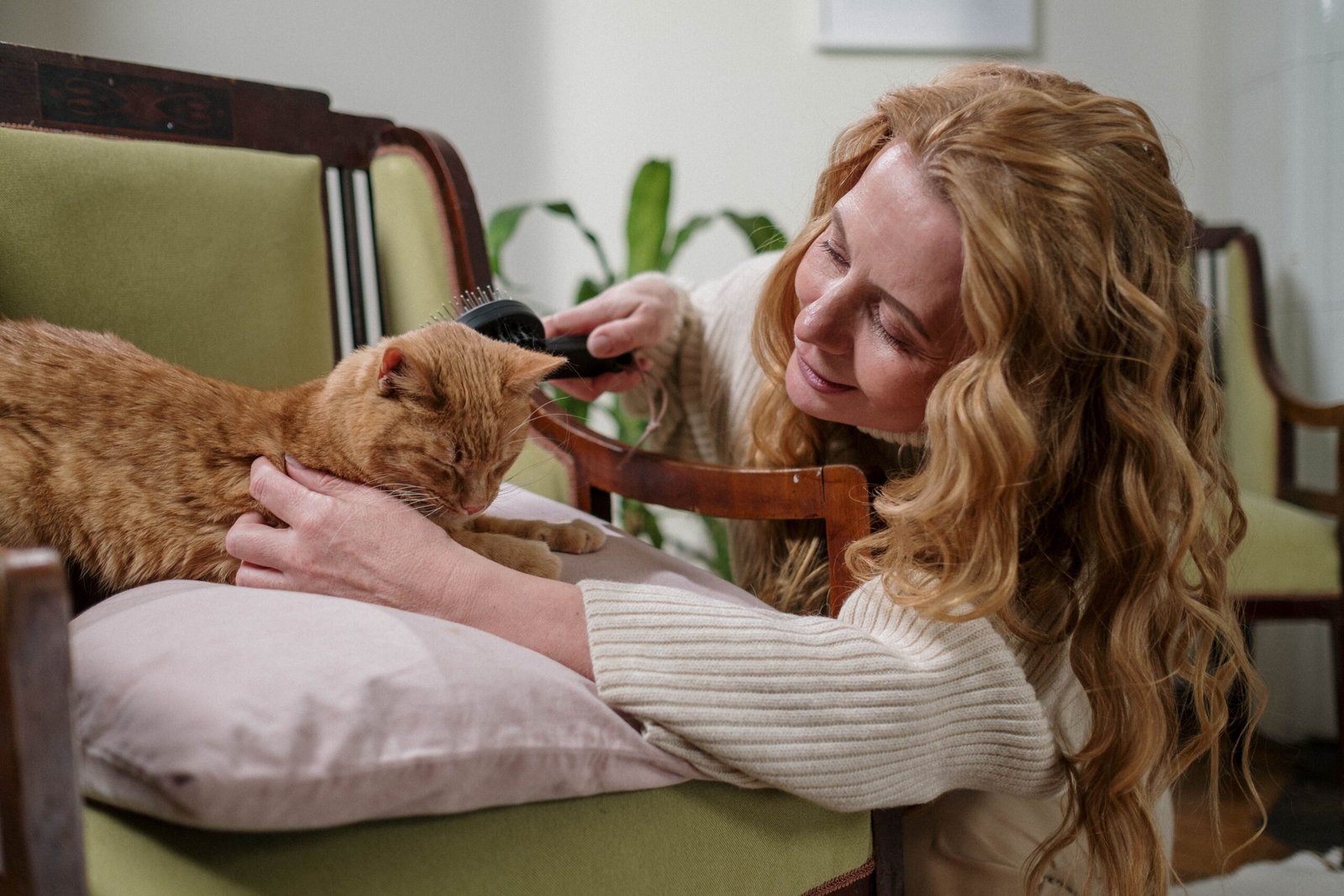
Brush in the direction the hair grows, with light pressure. Work in small sections rather than long sweeps from neck to tail. Support the skin with your other hand if a comb needs to move through a thicker patch, and keep the tool parallel to the body rather than digging in at an angle.
Many cats prefer the back, cheeks, and sides first. The belly, armpits, and behind the legs are more sensitive and often more prone to tangles in longer coats. Leave those for later sessions, or for a single gentle pass once the easy areas are done. If you find a small tangle, hold the hair at the base so you are not pulling the skin, and ease it with a comb. If it does not give easily, stop. A mat that you cannot lift away from the skin is not a home project.
Keep the face and ears out of the experiment unless your cat clearly enjoys a very soft touch there. Do not use a slicker around the eyes. Check the coat as you go: the skin should look comfortable, not pink or scored. If you raise a welt or your cat flinches repeatedly, the tool or the pressure is wrong.
Stop while the session is still a success. A few calm minutes, a treat, and a clear end are better than “just the back legs” after the cat has already checked out. Wipe or rinse the brush so you are not putting yesterday’s hair back on the coat, and empty the fur into the bin rather than the sink if it will clog a drain.
How often to brush, and when to get help
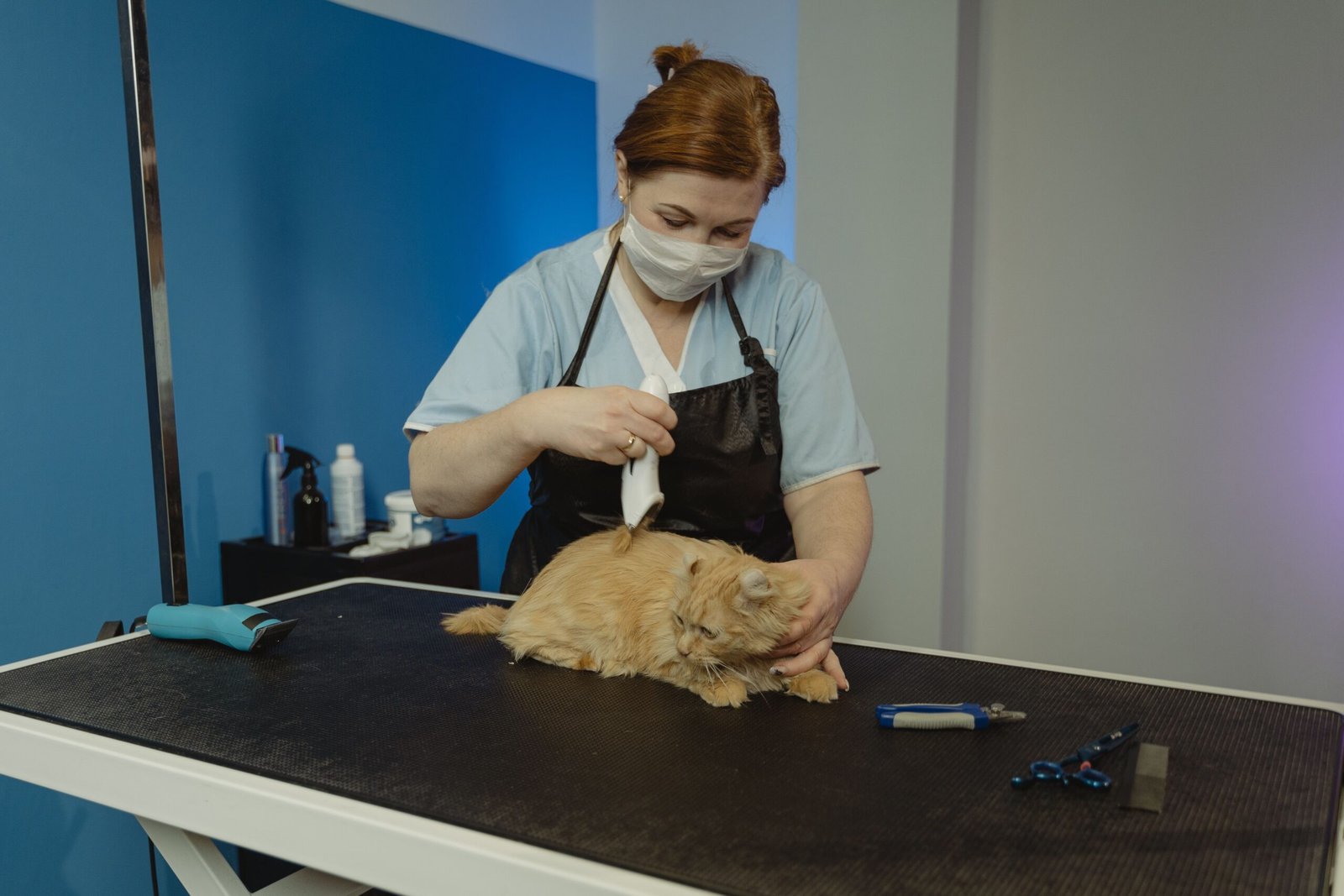
Frequency follows the coat and the cat, not a rigid calendar. Many short-haired cats do well with a quick brush once or twice a week, or even less if they groom themselves thoroughly and you still check them with your hands. Medium and long coats often need short sessions several times a week, and daily passes during a heavy shed. Kittens can learn the habit in tiny doses. Seniors and cats who cannot groom easily—after dental pain, arthritis, or a heavy body—may need more frequent, gentler help, and sometimes a professional.
Book a groomer, and often a veterinarian, if:
- Mats are tight, large, or close to the skin, especially in the armpits, groin, or behind the legs.
- The coat is greasy, smelly, or suddenly different, or there is hair loss, redness, or lots of scratching.
- You suspect fleas, or you see scabs and irritation.
- Your cat cannot be handled safely at home, even in short sessions.
- You are tempted to use scissors, clippers, or a sedative you were not prescribed.
A groomer can safely remove mats and tidy a coat that has gone beyond a home brush. A veterinarian is the right call for skin, parasites, pain, or a cat who used to enjoy being touched and now cannot. Neither visit is a failure of your routine. Some long-haired cats simply need both a home brush and occasional professional help.
Do not use human shampoos, essential oils, or leftover dog products on a cat. Bathing is a separate question, and many cats never need a bath as part of an ordinary brush routine. If the coat is soiled with something sticky or dangerous, call your veterinarian for advice rather than improvising a wash.
If brushing always ends in hiding, or your cat seems generally tense at home, look at the wider picture as well as the tool. Signs your cat is stressed can help you notice patterns that are larger than one grooming session.
A calm routine you can keep
Use this as a first draft, then adjust to your cat and your coat:
- Choose a tool that matches the coat you have, and skip anything that scratches the skin.
- Start with seconds, in a favorite spot, when the cat is already relaxed.
- Brush with the lie of the hair, in short sections, and leave sensitive areas until the cat is comfortable.
- Stop at the first clear “enough,” and end on a calm note.
- Repeat often enough that small tangles do not become mats.
- Never cut mats at home if they sit against the skin.
- Call a groomer or a veterinarian when the coat, the skin, or the cat’s tolerance is beyond a gentle home session.
How to brush a cat at home is mostly about consistency and consent, not about finishing a whole coat in one evening. The aim is a short routine you can keep in a small home, a cat who still trusts your hands, and enough familiarity with the coat that you notice when something changes. If the skin looks sore, the mats will not lift, or your cat is distressed, get professional help rather than turning the next session into a battle.
FAQ
How often should I brush my cat?
It depends on the coat and on how well your cat grooms themselves. Many short-haired cats do well with a short session once or twice a week, plus a hands-on check in between. Longer coats often need several short sessions a week, and daily attention during a heavy shed. The honest test is whether the coat stays comfortable and free of tightening tangles, not whether you hit a number on a chart.
What brush should I use on my cat?
Match the tool to the coat. Soft bristles, a rubber mitt, or a gentle comb often suit short hair. Longer coats usually need a wide-toothed comb plus a brush designed for longer hair, used lightly. If a tool leaves pink skin, skips over tangles, or makes your cat flinch, it is the wrong tool or the wrong pressure. Ask a groomer to show you a starting option if you are unsure.
My cat hates being brushed. What should I do?
Shorten the session until it is almost trivial, start in a place they already like being touched, and stop before they have to leave. Pair the tool with a treat or a calm routine they already know. Do not restrain them in order to finish. If even a one-second touch causes panic, or you need to deal with mats now, book professional help rather than turning your living room into a wrestling match.
Can brushing replace professional grooming for a long-haired cat?
Sometimes, if you keep up a frequent, gentle routine and the coat never mats. Many long-haired cats still benefit from an occasional professional groom, and any cat with tight mats, soiling, or a coat you cannot safely work through needs a groomer or a veterinarian. Home brushing and professional care are partners, not rivals.
When should I see a vet rather than just book a groomer?
Contact your veterinarian if you see skin irritation, sores, fleas, sudden hair loss, a rapidly deteriorating coat, weight loss, or a cat who seems painful when touched. Also call if a usually relaxed cat suddenly cannot bear handling. A groomer can help with the coat; a veterinarian can help you sort grooming discomfort from illness or pain.