


The best breakaway cat collar for indoor cats is not a fashion extra, and it is not a tool that keeps a cat inside a flat. It is a soft everyday collar that can come apart if it snags, and that can carry a visible ID if the cat slips out a door or a window. For some households that is useful. For others, a microchip, a well-fitted harness for the rare hallway or balcony walk, and better habits at the door and the window are the more honest setup. Skipping a collar can be a reasonable choice when those pieces are already in place.
This is general information for cat parents in the US and UK, not a ranked list, not a test of models, and not a promise that a collar will prevent an escape or “save birds” if you add a bell. A collar is not a substitute for a microchip. It is also not a substitute for keeping screens, windows, and the front door closed and fastened. If you mention a harness, a backpack, or a GPS tag, treat those as different tools with their own guides.
When an indoor cat actually benefits from a collar

The honest case for a collar is identification after an accident, not daily style. Indoor cats do get out: a delivery at the door, a window left open, a balcony door that does not latch the way you thought. A microchip helps a shelter or a clinic identify the cat, but only after someone has already found the cat and thought to scan it. A visible tag on a collar can tell a neighbor a name and a phone number in the first minute. That is the benefit.
The honest case against a collar, or for leaving one off, is risk and comfort. A collar can catch on furniture, a crate door, a shelf, or another cat’s jaw. A shy cat who hides in tight spaces may be a poor candidate for unsupervised collar wear, and a calmer layout may matter more than a tag; that plan is in helping a shy cat feel safe in an apartment. If the cat already has a microchip, you already close windows and doors carefully, and you have practiced a plan for a slip-out, going without a collar can be reasonable.
A collar does not replace the escape-prevention work. If the real problem is a cat who charges the front door, use how to stop a cat from door dashing. If the weak point is a window, a screen, or a balcony, use indoor cat window and balcony safety and, for the wider home, how to cat-proof a small apartment. Those articles are the prevention plans. This article is only the everyday collar, and when you can skip it.
A harness is also a different tool. A well-fitted harness can be the right choice for an occasional hallway, lift, or balcony walk, but it is not an all-day indoor collar. See cat harnesses and getting a cat used to a harness and leash for that job. A backpack is for travel and vet trips, not for everyday identification; that overview is in cat backpacks for apartment travel.
A breakaway buckle is the safety baseline
If you do use a collar, the buckle should be breakaway: it should release under pressure if the collar catches. That is the safety baseline for unsupervised wear in a home full of chair legs, radiator pipes, crate doors, and another animal’s mouth. A non-breakaway collar, including many decorative buckles and some tight elastic loops, can keep pulling after it snags. Do not recommend, and do not leave on, a non-breakaway collar when you cannot watch the cat.
Elastic that only stretches, and never opens, is not the same as a breakaway buckle. A little give can seem comfortable in the shop and still tighten or twist in long fur. If a collar cannot come apart, it does not belong on an unsupervised indoor cat, even if the cat “never goes outside.”
Dog collars are a different product and a different species. A city dog collar is designed around walks, tags, and a neck that is not built like a cat’s. Do not borrow a small dog collar and call it a cat collar. The dog-side overview is in dog collars for city walks. A GPS tracker made for city dogs is also not a cat-collar plan; that gear is covered in GPS trackers for city dogs. If you want location help for a cat, talk with a veterinarian or a qualified trainer about cat-specific options rather than clipping a dog device to a tiny neck.
Check the buckle with your fingers when you first fit the collar and again after a few days of wear. Fur, washing, and a change in weight can all affect how easily it opens. If the release feels stiff, or if the collar has stretched, take it off and replace it. This guide will not name models or invent a test score for how much pull should open a buckle; follow the maker’s instructions for the collar you actually buy.
How a collar should fit, including long fur
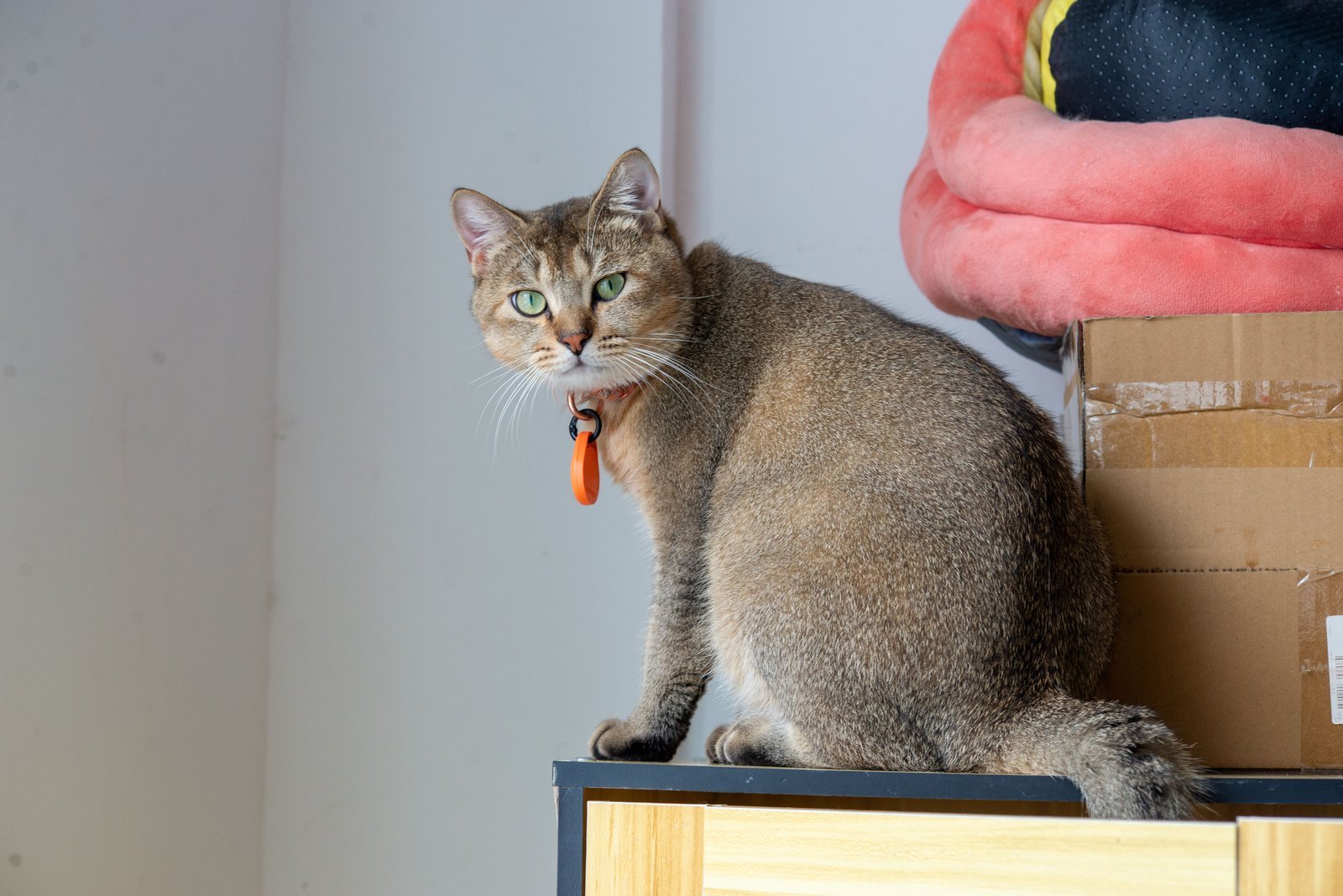
Fit is a daily check, not a one-time shop measurement. A common starting point is two fingers slipped between the collar and the neck, but that is only a starting point. Thick ruff fur can hide a tight band. Weight gain, weight loss, a wet coat, or a mat under the collar can change the feel overnight. Slide your fingers around the whole neck, including under the jaw and behind the ears, and look at the skin when you can part the fur.
The collar should be snug enough that it cannot slip forward over the ears or catch on a jaw, and loose enough that it does not leave a mark or make the cat scratch at it all afternoon. If you cannot find that middle, take the collar off and measure again later rather than leaving a poor fit on overnight.
Take the collar off if it is wet, soiled, or has stretched. A damp collar can irritate skin, and a stretched one may not release the way it should. Dry the fur at the neck before you put a clean, dry collar back on. Long-haired cats often need a more frequent check, because hair can felt around a buckle or a tag ring.
If the cat paws at a new collar, give a short supervised trial rather than a full day on the first try. Offer ordinary meals and rest so the collar is not paired only with fuss. If the cat keeps pulling, hiding, or crying, the collar may be a poor fit, or this cat may do better without one.
Bells, tags, and dangling charms
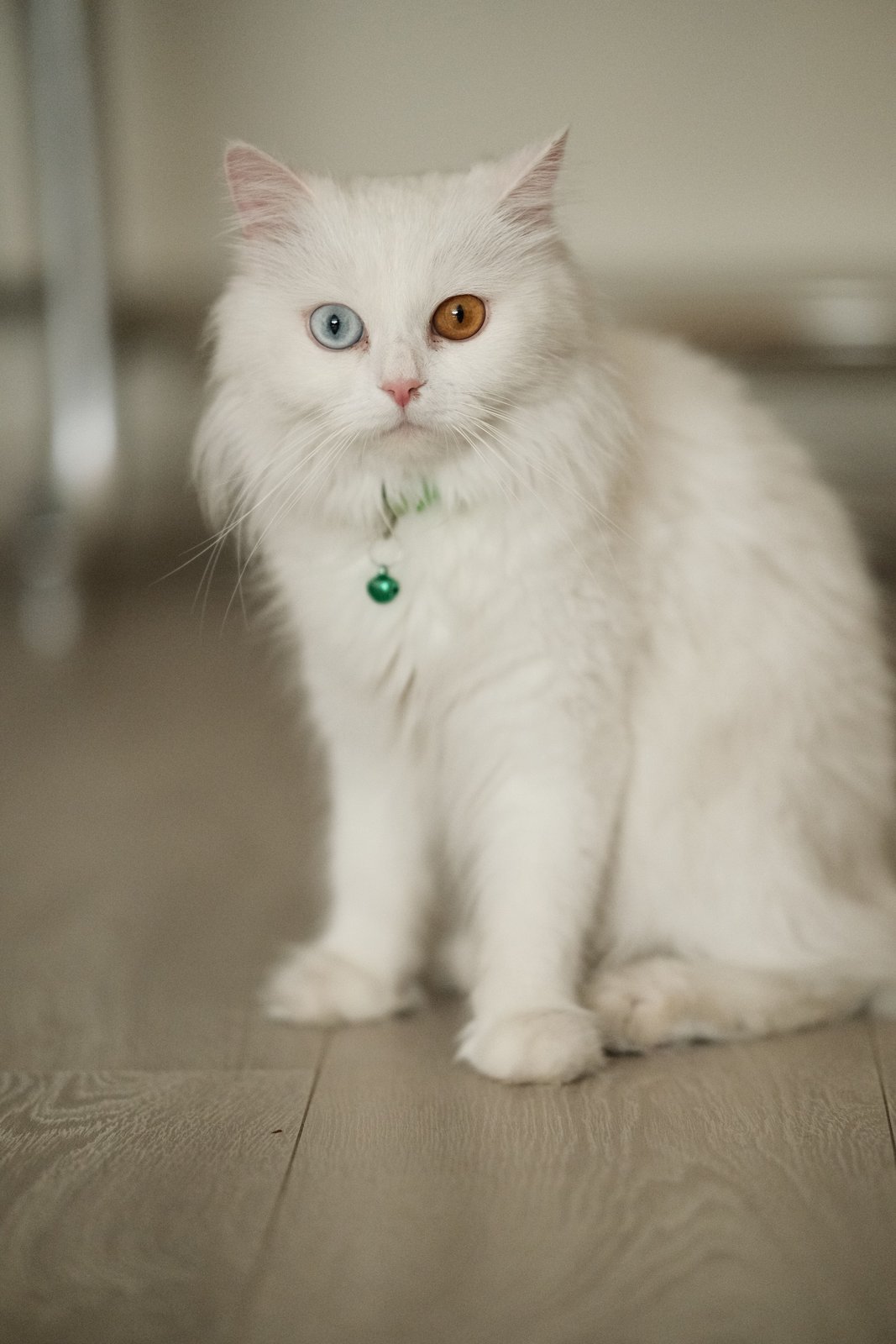
A small ID tag is the most useful thing you can hang on an indoor collar, if you use a collar at all. Keep it light. A name and a phone number are enough, and a mobile number that you actually answer is more useful than an outdated landline. Check that the tag ring is closed and cannot catch a claw or a jaw. A heavy disc, a stack of tags, or a large dangling charm can swing into the cat’s legs, catch on a crate door, or make the breakaway buckle work harder than it should. If you want a charm, choose a small, smooth one and watch how it moves when the cat climbs and sleeps.
A bell is optional. Some people like the sound as a way to notice where the cat is in a small flat. Some cats find it irritating, and some households find it noisy through a thin wall. A bell is not a proven indoor-cat fix for hunting, and you should not claim it “saves birds” as a reason to put one on. If the cat shakes its head, avoids play, or seems tense after you add a bell, take the bell off and keep the tag.
Do not load the collar with lights, large pendants, or extra rings “just in case.” The collar already has a job: come apart if it snags, and show an ID if the cat is found. Everything else is a tradeoff you should be able to explain.
When skipping a collar is reasonable

You do not owe a cat a collar. If the cat is microchipped, your door and window habits are already careful, and the cat hates anything around the neck, leaving the collar off can be the kinder plan. Write the microchip number down, keep your contact details current with the registry, and still work on the door and window habits in the guides linked above.
The same is true if you cannot check the collar every day, or if you live with a cat who gets a collar caught, or who shares the home with a dog or another cat that mouths necks and gear. In those homes, unsupervised collar wear may be a poor fit even with a breakaway buckle. Supervised wear for a short outing is a different decision from leaving the collar on all night.
If you only want identification for travel days, use the carrier or backpack plan for those trips and leave the neck bare at home. There is no rule that an indoor cat must wear a collar to be well cared for. The useful test is simple: does this collar make it easier to get the cat home if there is a slip-out, without adding a snag risk you cannot watch? If the answer is no, skip it.
A calm way to choose
You can keep the decision small.
- Decide whether a collar is needed at all. A microchip, careful doors and windows, and a harness for rare walks may already be enough.
- If you use a collar, choose a breakaway buckle. Do not leave a non-breakaway or tight elastic collar on unsupervised.
- Check fit every day. Two fingers is a common starting point, but fur and weight change matter. Take the collar off if it is wet, soiled, or has stretched.
- Keep what hangs from the collar light. A small ID tag helps; a bell is optional and can bother some cats; skip heavy charms.
- Do not treat the collar as escape prevention or as a substitute for a microchip. Use the door, window, and harness guides for those jobs.
This is not a ranked list of the “best” models, and it is not a promise that a tagged collar will bring a cat home. The useful goal is a safer, lighter everyday choice, or a clear decision to skip the collar and put your effort into identification and escape prevention instead.
FAQ
Does an indoor cat need a collar?
Not always. A collar can carry visible ID if the cat slips out, but a microchip, careful door and window habits, and a harness for rare walks may already cover you. Skipping a collar is reasonable when those pieces are in place, or when the cat cannot wear one comfortably.
Is a breakaway buckle required?
If the collar will be worn unsupervised, yes: a breakaway buckle is the safety baseline. A non-breakaway or tight elastic collar can snag on furniture, crate doors, or another cat’s jaw. Do not leave that kind of collar on when you cannot watch the cat.
How tight should the collar be?
Start with a two-finger check around the neck, then look at fur, skin, and how easily the collar can slip forward. Recheck every day, because weight and coat change. Take the collar off if it is wet, soiled, or has stretched, or if it leaves a mark.
Should I put a bell on the collar?
Only if the cat tolerates it. A bell is optional and can bother some cats or some neighbors. It is not a proven way to “save birds” for an indoor cat. A light ID tag is the more useful add-on.
Can I use a small dog collar or a GPS tracker instead?
Do not treat a dog collar or a dog GPS tracker as a cat-collar plan. They are different products, and often a different fit and a different risk. Use a breakaway cat collar if you use a collar, and see the dog-collar and GPS guides if you also have a dog.