


If you are choosing the best cat backpack for travel, the hard part is not the idea of “wear the cat.” It is knowing whether a backpack-style carrier is a kind choice for this cat, on this short trip from a flat into the city, or whether a traditional hard or soft carrier will keep them safer. Hands-free walking is useful on stairs and sidewalks, but it is not a reason to put a frightened cat in a bag that flexes, overheats, or unzips at the wrong moment.
A useful mindset is this: you are matching a short outing to a cat who can already handle being carried, and you are choosing structure, air, and a secure close before you choose a color. Fit, ventilation, a rigid panel, escape-proof zippers, a clear way in, and a slow introduction at home matter more than looks.
This is general information for cat parents in the US and UK, not a veterinary diagnosis and not a treatment for anxiety. It is not a ranked test of models and does not use prices or scores. Airline and cargo travel are out of scope here. If your cat panics, overheats, or tries to force a zipper, stop and switch to a more secure carrier.
This is a backpack guide, not a carrier rewrite
A backpack-style carrier has a job of its own: a short, hands-free trip for a cat who can stay reasonably settled while you walk. It is not a substitute for the wider set of best cat carriers, which covers traditional hard and soft carriers. It is also not a harness guide; walking a cat on a lead, when that is even appropriate, is covered in best cat harnesses.
Getting a carrier to feel ordinary at home is a separate rehearsal; start with how to get a cat comfortable in a carrier. Clinic trips have their own plan in how to get a cat comfortable at the vet. A move is a larger job than a short outing; see how to move to a new apartment with a cat. Windows and balconies are covered in indoor cat window and balcony safety. The rest of a small-home setup, including door escape routes, lives in how to cat-proof a small apartment.
Think of three jobs, not one:
- Match the cat and the trip. A confident cat and a short outing are a different question from a long or stressful journey.
- Choose structure and air. Interior size, ventilation, windows, and a rigid panel matter more than the print on the fabric.
- Close it securely, then practice at home. Escape-proof zippers and a calm way in are of little use if the bag first appears on the outing.
When a backpack-style carrier makes sense

A backpack can be a good fit when three things are already true. The cat is reasonably confident about being handled and about sitting in an enclosed space. The outing is short: a walk to a nearby clinic, a brief visit, or a few city blocks, not an all-day excursion. And you need your hands for doors, railings, or bags, so a pack on your back is more practical than a carrier in one hand.
It is not a good fit for every cat. A cat who already panics in a standard carrier, overheats easily, claws at mesh, or has never practiced at home is a poor candidate for a less structured bag on a busy sidewalk. In those cases, a traditional hard carrier, or a well-built soft carrier with more support, is the kinder starting point.
Outdoor photos of backpacks often show trails, snow, or long hikes. Those scenes are useful for seeing how a structured pack sits on a person. They are not a suggestion that a city apartment cat should be taken on a winter hike, or that a backpack replaces a more secure carrier on a long or unfamiliar trip.
Fit, interior size, ventilation, and windows
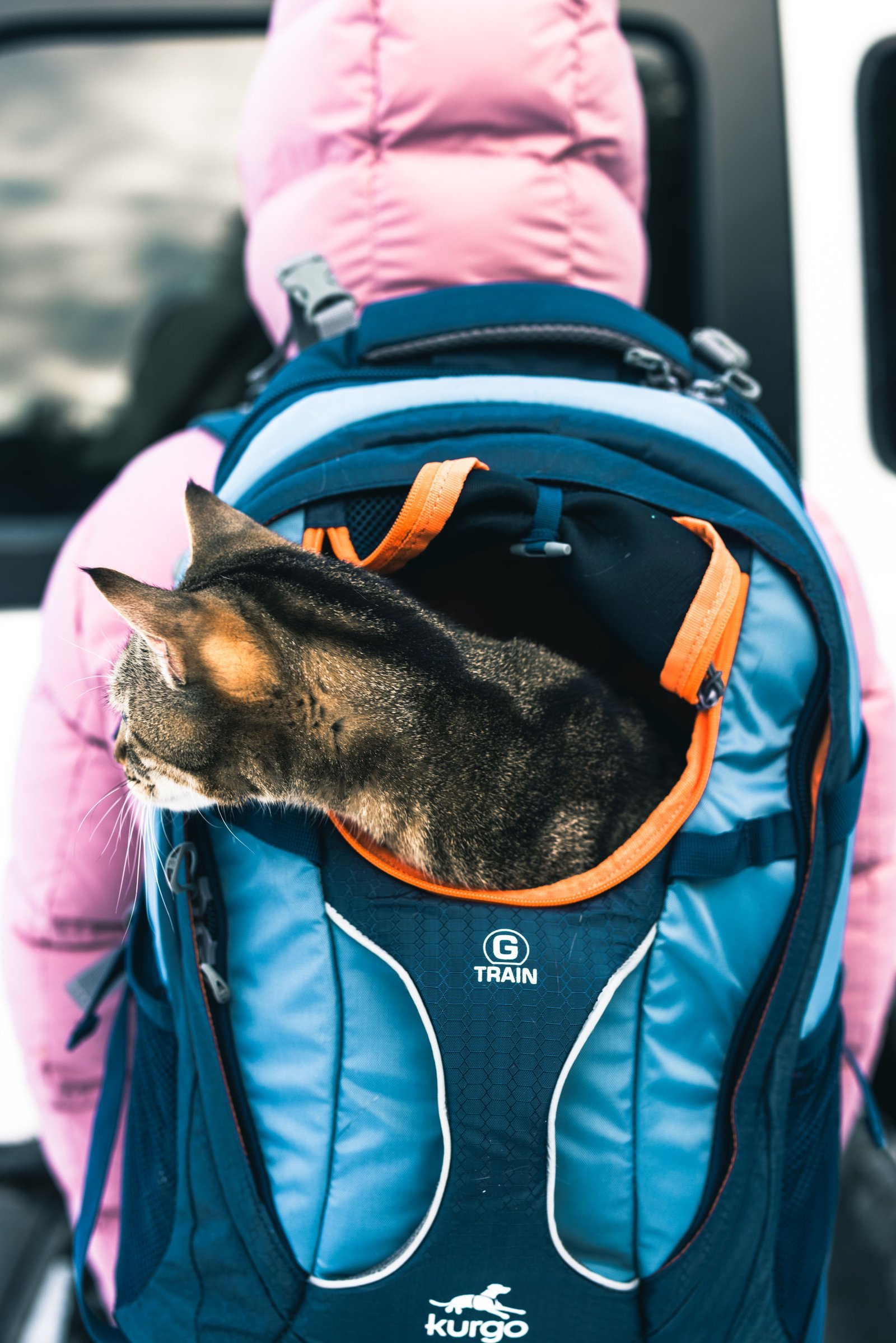
Start with the cat, not the bag’s exterior. The interior should let the cat sit, lie down, and turn around without pressing into the roof or folding against a wall. A backpack that looks roomy on a shelf can be tight once it is zipped and worn, because your back and the frame take up some of the space. Compare interior length and height with your cat sitting and curled.
Ventilation is not a single mesh pocket. Air needs to move when the pack is against your back, on a warm pavement, and in a lift. Look for openings on more than one side, and for a design that does not bury the cat’s face in fabric when you lean forward. Windows and clear panels help you check the cat without opening the bag on the street. Some cats like seeing out; others find it overwhelming, so a smaller panel or a coverable flap can be kinder than a fully exposed bubble.
Watch for heat. A backpack sits close to your body and can trap warmth, especially after stairs or in summer. If the cat is panting, restless, or damp, get to a cooler place and switch to a more secure, better-ventilated carrier if needed.
A rigid panel versus a fully soft bag
A fully soft bag is light and easy to store in a small apartment, but it can collapse inward when you bump a doorframe, sit down on transit, or lean against a wall. A rigid or semi-rigid panel in the back, base, or sides is what keeps the bag from folding around them.
You do not need a framed hiking pack, and this guide does not rank models. Press the empty bag: Does the floor stay flat? Do the sides stand when the zip is closed? If you set it down, does it stay upright long enough for the cat to step in?
A structured pack is still not automatically the right tool. If the cat needs more enclosure, a solid door, or a box that can sit belted in a car, a traditional hard carrier is usually the more secure choice. Keep that carrier for the days that need it, and use the backpack for short, hands-free trips.
Escape-proof zippers and how the cat gets in
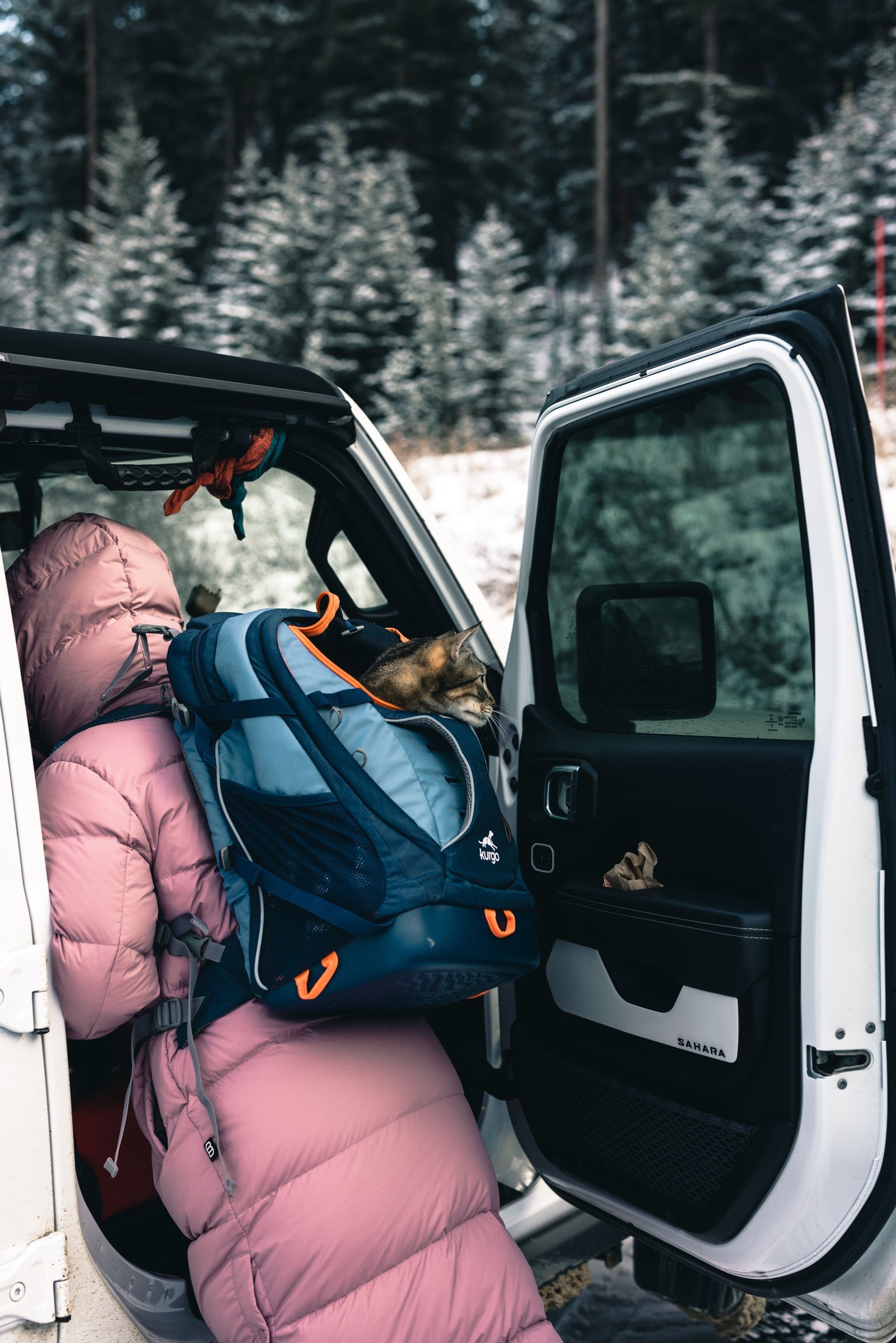
A stylish zipper is not the same as an escape-proof one. Look for zippers that close fully, do not gap at the corners, and can be clipped, locked, or doubled back so a paw cannot walk them open. Check the seams around mesh windows and entry points. If you can force a gap with your hand, a determined cat can probably do the same.
How the cat gets in matters as much as how the bag closes. Some backpacks open from the top, some from the side or a front panel. A top opening can be simple once the cat is used to being lifted in, but it is a poor first step for a cat who hates being picked up. A side or front panel that lets the bag sit on the floor is often easier to practice at home. The opening should be large enough for this cat.
Do not leave a zipper partly open on a sidewalk so the cat can “enjoy the view.” Keep the close secure while you walk. If the cat tries to force a zipper, stop, move to a quiet place if you can, and get the cat into a more secure carrier rather than continuing the outing as a test of the bag.
A short at-home acclimation plan
Do not wear the backpack for the first time on the same day as the first trip downstairs. Leave the empty bag open in a quiet room, with a familiar towel or bed inside. Let the cat sniff it or ignore it. Feed a few treats around the opening, then just inside, over several short sessions.
When the cat will step in, close the zipper for a few seconds, then open it and let them out. Build up to a closed bag on the floor, then to lifting it, then to wearing it briefly in the apartment. Keep sessions short. If they freeze, cry, claw at the mesh, or try to force the zipper, go back a step or stop for the day.
Practice the route in small pieces: the hallway, the lift, a brief stand just outside the building door, then back in. The point of acclimation is to find the hard parts at home, not on a crowded pavement.
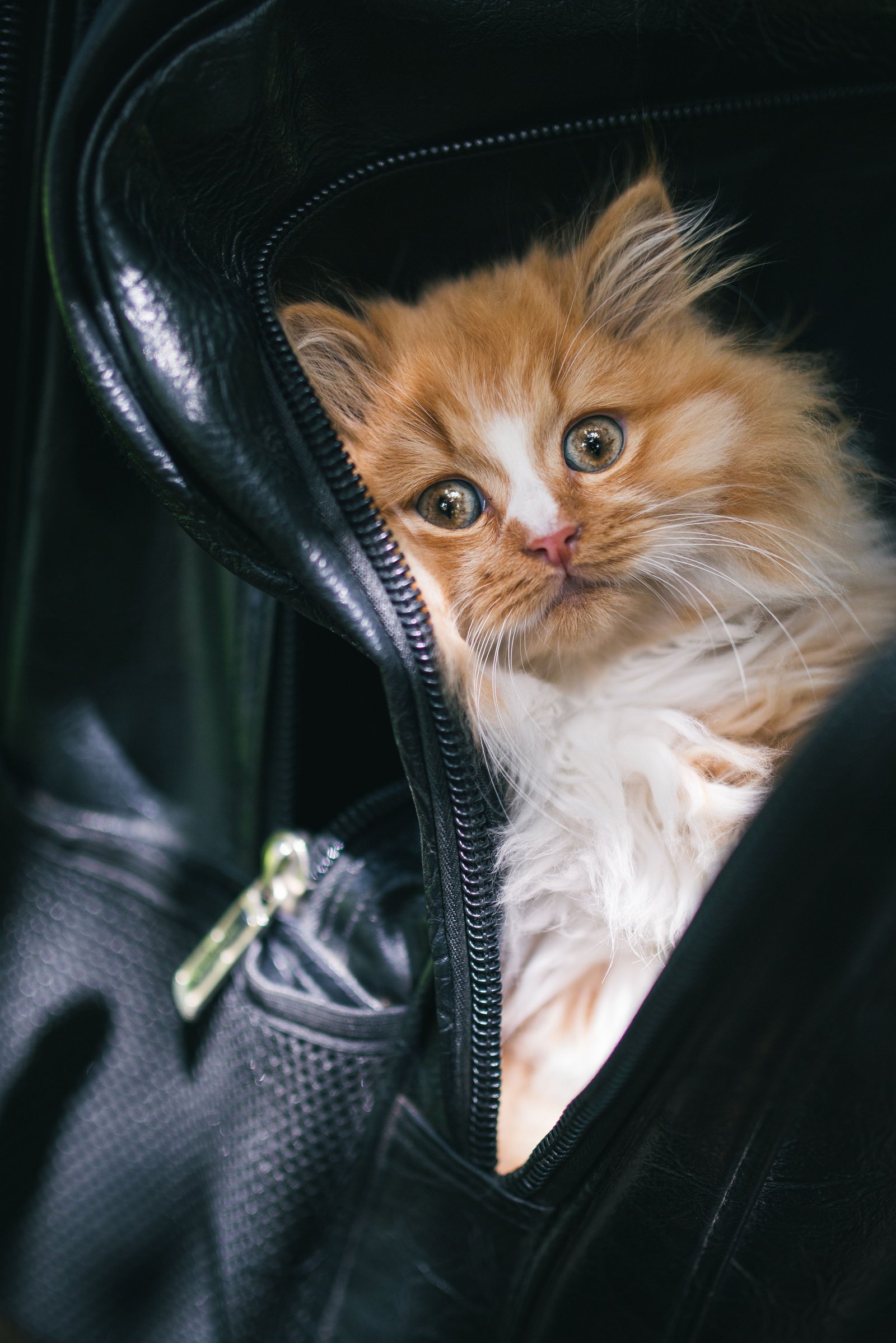
A photo of a kitten in an ordinary zippered bag is not a model for travel gear. A zipper and a dark interior can feel like a hiding place to one cat and a trap to another. Use a purpose-built backpack or carrier, not a regular bag, and only after the cat can enter and rest there calmly.
When to stop and switch to a more secure carrier
If the cat panics, overheats, or tries to force a zipper, stop. Get to a quiet, cooler place, keep your body between the cat and traffic or a crowded aisle, and move them into a more secure carrier when you can do so safely. Do not keep walking to “see if they settle.”
This is not a treatment for anxiety, and it is not a way to coach a terrified cat through city noise. A cat who cannot settle in a carrier at home is telling you the outing is too much, that a different carrier is needed, or that a veterinarian or a qualified behavior professional should be involved before you add more trips.
Airline and cargo travel are out of scope here. Do not assume a backpack that works for a short clinic walk is acceptable in a cabin or a hold, and do not invent a policy from a product page. If you ever need to fly, check the rules for that airline and route separately, with a carrier that meets them.
A calm starting plan you can repeat
Use this as a first draft, then adjust:
- Decide whether this trip is a short, hands-free outing for a reasonably confident cat, or one that needs a more secure traditional carrier.
- Check that the cat can sit, lie down, and turn around once the bag is closed and worn.
- Look at ventilation and windows on more than one side, and watch for heat against your back.
- Prefer a bag that holds its shape with a rigid or semi-rigid panel over a fully soft bag that collapses when bumped.
- Choose escape-proof zippers and an opening the cat can use, then practice closing them at home.
- Acclimate in short sessions at home before you try the hallway, the lift, or the street.
- If the cat panics, overheats, or tries to force a zipper, stop and switch to a more secure carrier.
A backpack is a tool for a specific kind of short trip. The aim is a secure, well-ventilated bag this cat can enter calmly, not a claim that every cat will enjoy travel, and not a ranked list of models.
FAQ
When is a backpack a better choice than a traditional cat carrier?
A backpack can make sense for a reasonably confident cat, a short apartment-to-city outing, and a walk where you need your hands free. It is not automatically better. If the cat needs more structure, startles easily, or the trip is longer or more stressful, a traditional hard or soft carrier is usually the more secure choice.
How should a cat backpack fit?
The interior should let the cat sit, lie down, and turn around without being pressed against the roof or the sides once the bag is closed and worn. Check ventilation on more than one side, and make sure you can see the cat through a window or panel without opening the bag on the street. A bag that looks roomy when empty can feel tighter on your back.
Does a backpack need a rigid panel?
A fully soft bag is easy to store, but it can collapse when bumped or set down. A rigid or semi-rigid panel in the back, base, or sides helps the bag hold its shape. That is a structure question, not a ranked list of models. If the cat needs still more enclosure, use a more secure traditional carrier.
How do I get my cat used to a backpack at home?
Leave the bag open in a quiet room with a familiar towel inside. Feed near the opening, then just inside, and only close the zipper for a few seconds at first. Build up to lifting the bag and wearing it briefly in the apartment before you try the hallway or the street. If the cat freezes, cries, or forces the zipper, go back a step.
What should I do if my cat panics, overheats, or tries to force the zipper?
Stop. Get to a quiet, cooler place if you can, and switch to a more secure carrier rather than continuing the outing to see if the cat settles. A backpack is not a treatment for anxiety, and a mid-trip struggle is a reason to change tools, not a reason to keep walking.