

If you need to reduce litter tracking in a small apartment, start with the path the granules actually take, not with a new product. The mess is rarely a mystery. Your cat leaves the box, walks a few steps, and the same trail shows up on the hallway floor, the sofa, and the bed. In a tight bathroom or a closet, that path is short, and every step counts.
This is general information for cat parents in the US and UK, not a veterinary diagnosis and not a promise that a mat or a different fill line will stop every grain. If the box suddenly looks much messier than usual, if you see blood, or if your cat starts peeing outside the box, contact your veterinarian. Those changes are a health question. They are not a tracking problem you should try to handle with a stronger mat or a scented additive.
The job of this article is narrower than where the box should live, and narrower than how you scoop it. Placement and the number of boxes belong in a litter box setup for an apartment. Scooping and washing belong in a guide to cleaning a litter box in a small apartment. What follows is the tracking problem: litter leaving the box and riding out into the rest of the home.
Follow the trail, not just the box
Stand in the doorway of the room that holds the box and look at the first eight or ten steps your cat takes. That is the system. Granules cling to paws and fur, drop onto the first hard floor, and then get carried onto a rug, a sofa throw, or a bed if you never interrupt the path.
In a house, that first stretch can be a utility room you rarely sit in. In a flat, it is often a bathroom that opens onto a hallway, and the hallway opens onto the only living space you have. A closet setup has the same problem: the cat has to walk out through living rooms to get anywhere else. If the only route from the box crosses the rug you sit on, granules will show up there unless you catch them earlier. The trail is not a sign that you have failed at cleaning. It is a sign that the exit has no landing zone, or that the daily sweep happens after litter has already traveled.
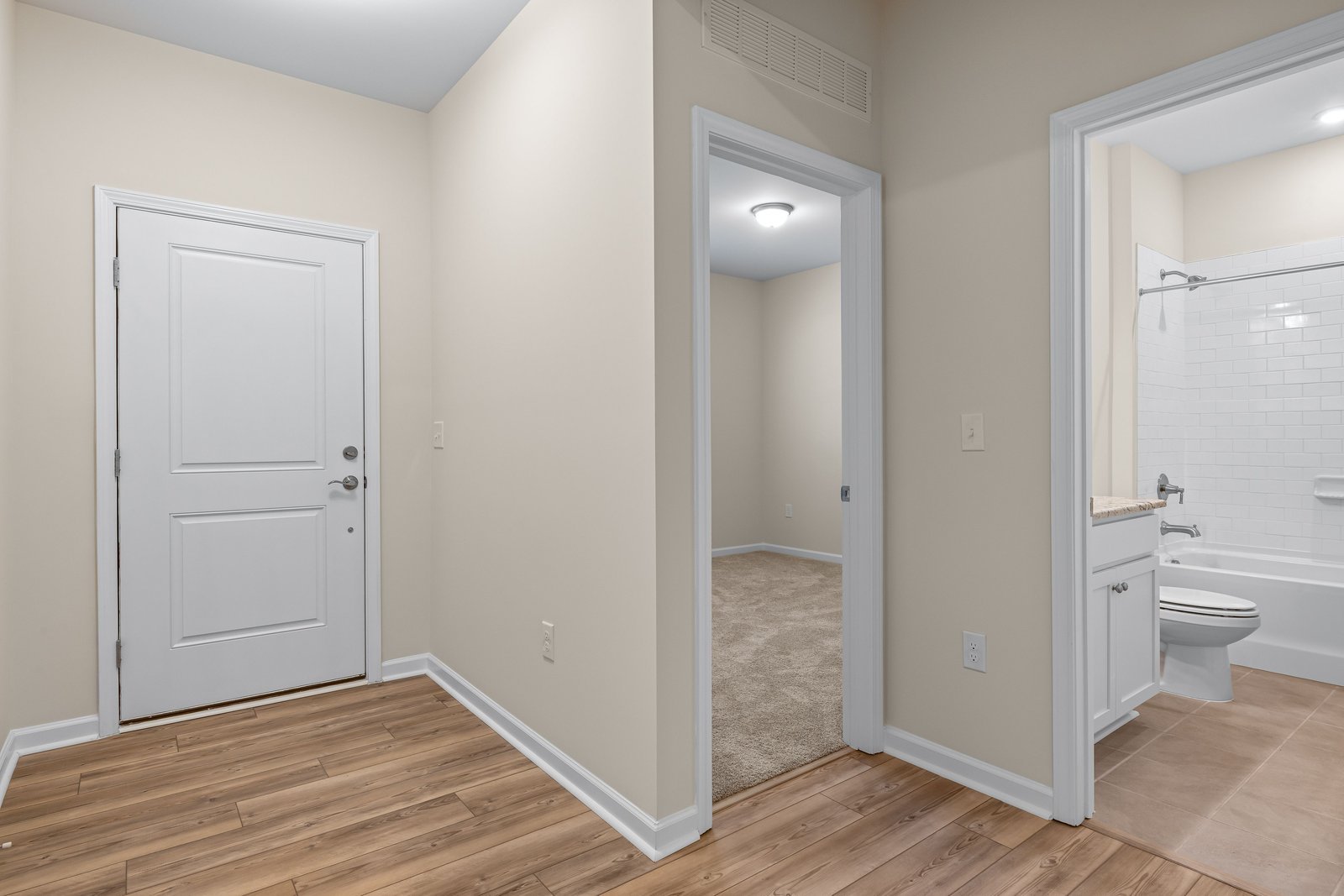
Once you can see that path, the fixes get simpler. You want something underfoot right outside the box, a short zone where paws can dry and drop loose granules, and a habit of picking up what still escapes before it reaches soft furniture. You do not need a harsher cleaner, and you should not put essential oils in the litter or on the mat. Those are not a tracking plan, and they can make a cat avoid the box. If the box is already in the only bathroom you have, you do not have to move it to start this system. You can still add a landing zone and a daily sweep on the floor that already exists.
Tight bathrooms, closet corners, and the way a cat leaves
A box in a small bathroom or closet has little spare floor. If the entry is high, narrow, or badly aimed, your cat has to hop, twist, or push through a flap, and granules fly. A low, wide entry on the side that faces the most open floor usually sheds less than a high-sided jump toward a wall or a laundry machine. That is a layout choice, not a shopping list. When you do need to compare styles, use a guide to litter boxes for small apartments rather than treating this article as one.
Covered boxes and cabinets can help contain scatter inside the enclosure, but they do not automatically stop tracking. A cat still walks out with granules on their paws. If the only exit is a tight hole, some cats kick more litter on the way through. An enclosure is useful when it gives you a defined doorway and a place to put a mat. It is not the whole system. For cabinet and cover options, see litter box enclosures for apartments. Automatic boxes have the same exit problem: the unit can bury waste and still send a trail into the hall. Features and fit belong in a guide to automatic litter boxes for apartments.

Fill level matters as much as the box. Overfilled pans splash more when a cat digs. A very thin layer can make a cat scratch hard at a bare base, which also throws granules. Aim for the fill your litter maker suggests, then watch the floor after a few days and adjust a little at a time. Litter type plays a part, too. Larger or heavier granules often cling less than a fine, dusty mix, but the “best” bag still depends on odor, dust, and what your cat will use. This is not a product test. When you are ready to compare formulas, use a guide to cat litter for apartments and keep this page focused on how much leaves the pan.
Kittens can be messy on the way in and out while they are still learning the box. That is a training question as well as a tracking one, and the training plan lives in a guide to litter training a kitten in a small apartment. Adult cats who have used the box well for months and then start going nearby need a veterinary check, not a lecture about mats.
A landing zone and a mat you will actually shake out
The most useful piece of floor is the first one the cat steps onto. A small landing zone — a clear stretch of hard floor or a washable rug right outside the entry — gives loose granules a place to fall before the hallway runner or the sofa. In a tight bathroom, that zone might be only the width of a mat. That is still better than stepping from the box straight onto bare tile and then onto carpet.
A mat helps when it is large enough for several steps, not just a courtesy wipe, and when it sits tight to the entry so the cat cannot hop over it. Place the longer side along the direction the cat walks, and keep the mat from bunching against a door swing or a laundry machine. If the box is in a closet, the mat should start at the threshold, not two steps into the hall, or the first granules have already landed on the floor you walk on in socks. A deep-groove or ribbed surface can catch more than a flat towel, but only if the cat will walk across it instead of around it.

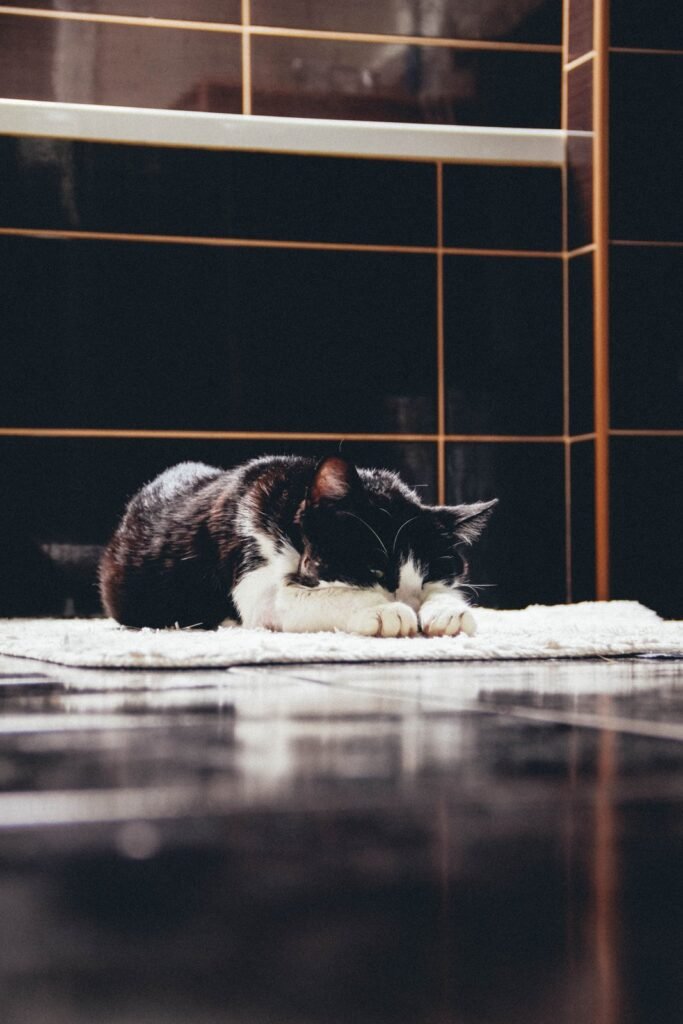
The photo above is a bathroom mat on tile, not a litter mat, but the placement idea is the same: a washable surface should sit on the hard floor where feet land. Shake or vacuum the mat on a schedule you can keep, ideally into a bin rather than back onto the bathroom floor. A mat you never empty becomes a second tray of loose granules. Size, texture, and which mat to buy belong in a guide to litter mats for apartments. This article only needs you to put one where the paws actually go, and to empty it.
If you collect the shake-out in a small lidded bin, keep that bin next to the box rather than walking a dusty mat through the living room. Disposal hardware is a separate choice, covered in a guide to litter disposal bins for apartments. The tracking system just needs a place for the granules to go besides the hallway.
A short daily sweep so litter does not travel
Even a good mat leaves a few grains. The difference between a tidy flat and a trail to the sofa is whether those grains sit there all day. A short daily sweep or vacuum of the landing zone, the first stretch of hallway, and any rug the cat crosses will do more than a weekend deep clean after litter has already been ground into fabric.
You do not need a special machine. A hand vacuum, a broom and dustpan, or the vacuum you already use on the living-room rug is enough if you use it near the box each day. Pay attention to corners, the underside of a bathroom rug, and the first few feet of hallway flooring, where granules hide and then stick to socks. A thirty-second pass at the same time you scoop is easier to keep than a long clean you keep postponing. If litter is already in a throw or a bed, shaking it into the hall only spreads the problem. That is when washing the fabric becomes the next job, which is covered in a guide to washing cat beds, blankets, and toys at home.
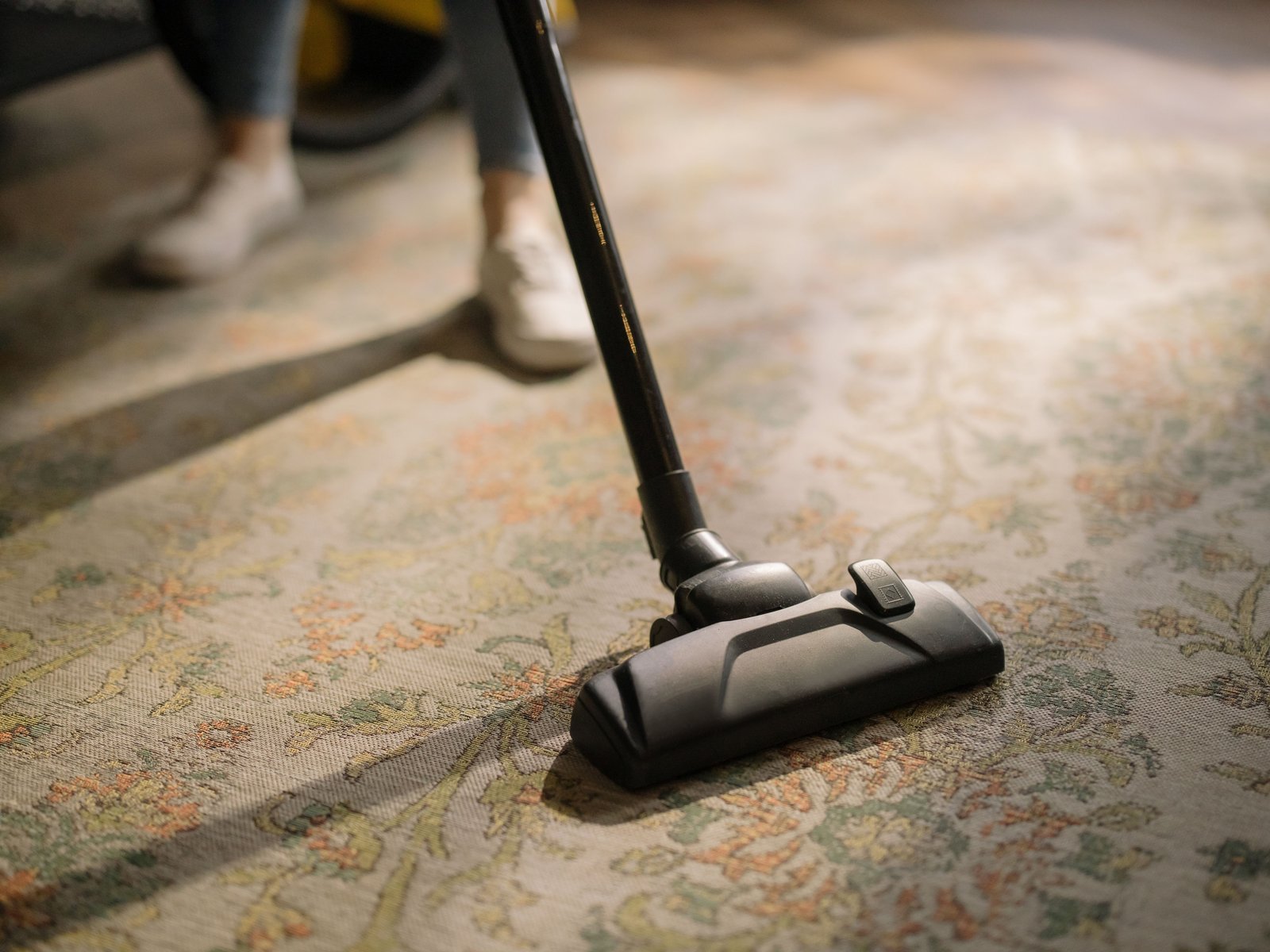
Hair and litter often travel together, but they are not the same project. Shedding has its own tools and routine, which we unpack in a guide to managing cat shedding in an apartment. If you are vacuuming only the sofa and skipping the path from the box, you will keep finding grit in the cushions. Vacuum the path first, then the furniture.
Give the system a week of honest use before you change five things at once. Watch where new granules appear, including along baseboards and under a hallway runner. If they stop at the mat, the landing zone is working and you only need the daily pick-up. If they start at the box lip, look at fill, entry, and how the cat leaves. If they appear halfway down the hall, the mat may be too small, or the cat is bypassing it. Small adjustments beat a cupboard full of unused products, and they beat any claim that a harsh chemical “anti-track” spray will solve the trail for you.
The goal is not a home with zero loose granules forever. The goal is a short, repeatable system: a box your cat can exit without spraying the room, a mat and landing zone that catch what still clings, and a brief daily sweep so the rest of the apartment stays livable.
FAQ
Why is litter showing up in the hallway and on the sofa?
Granules cling to paws and fur when a cat leaves the box, then drop along the first stretch of floor. In a small apartment, that stretch is often a bathroom or closet that opens onto the only hallway and living space you have. A landing zone, a mat the cat actually steps on, and a short daily sweep interrupt the trail before it reaches soft furniture.
Will a different litter box stop the tracking?
A lower, wider entry and a sensible fill level can reduce how much sprays out, and a cover or enclosure can keep some scatter in one place. The cat still walks out with granules on their paws, so the box alone is not the system. Pair any box change with a mat at the exit and a daily sweep of the first few steps.
How should I place a litter mat in a tight bathroom?
Put it tight to the entry, along the direction the cat walks, and make it large enough for several steps rather than a token square the cat can hop over. Keep it from bunching under a door or a laundry machine. Shake or vacuum it regularly into a bin so it does not become a second source of loose granules.
Do I need a special vacuum for litter?
No. The vacuum or broom you already use is enough if you use it on the landing zone, the first stretch of hallway, and any rug the cat crosses each day. The habit matters more than the machine. Avoid shaking a dirty throw or bed into the hallway, which only moves the problem.
When is tracking a veterinary issue?
Tracking itself is usually a layout and routine problem. Contact your veterinarian if the box suddenly looks much messier than usual, if you see blood, or if your cat starts peeing outside the box. Those signs are not something a mat, a new litter, or a scented additive should be asked to handle.