

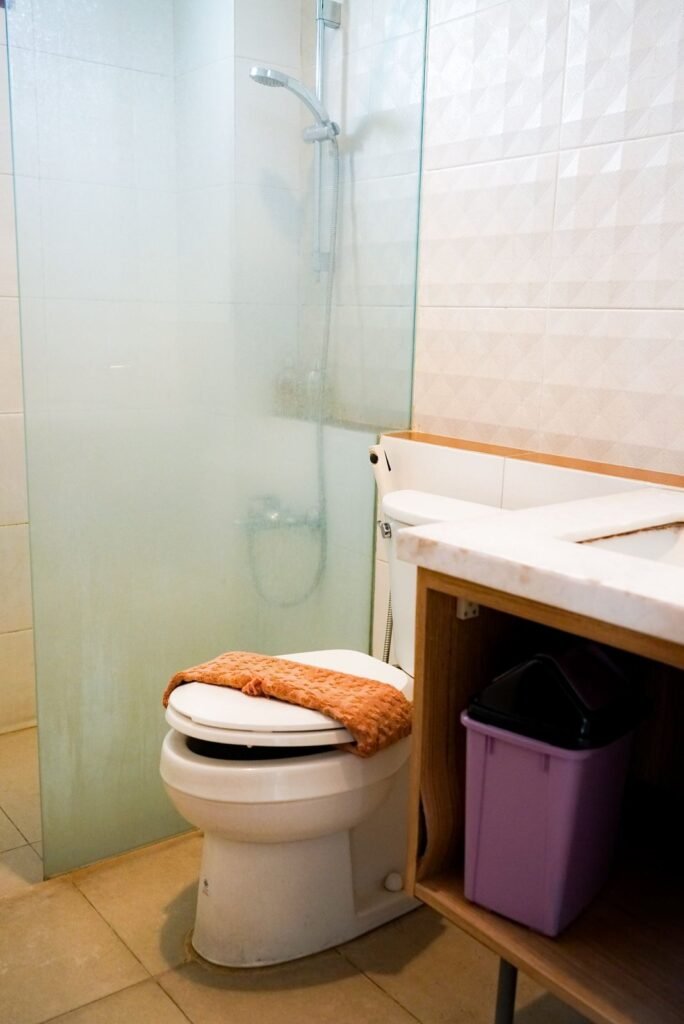
If you are looking for the best cat litter disposal bin for apartments, you are usually trying to solve a smell and a logistics problem, not a decorating one. Scooped clumps have to go somewhere between trash days; in a small flat, that place should not be the open kitchen bin. A dedicated lidded pail or a step-can can help. It is not always the first fix, and it is not a substitute for a box that is the right size and scooped often.
This article is about the after-scoop waste container that holds bagged clumps until you can take them out. This is general information for cat parents in the US and UK, not a ranking, not a price list, and not a test score. Measure the gap beside the box or under a sink before you assume a pail will “just tuck in” next to the box.
The after-scoop container is not the litter box
The box is where the cat goes. The disposal bin is where the waste goes after you scoop. If the box is too small, poorly placed, or hard for the cat to enter, fix the box first. Start with litter boxes for small apartments and how to set up a litter box in an apartment, then come back to the pail.
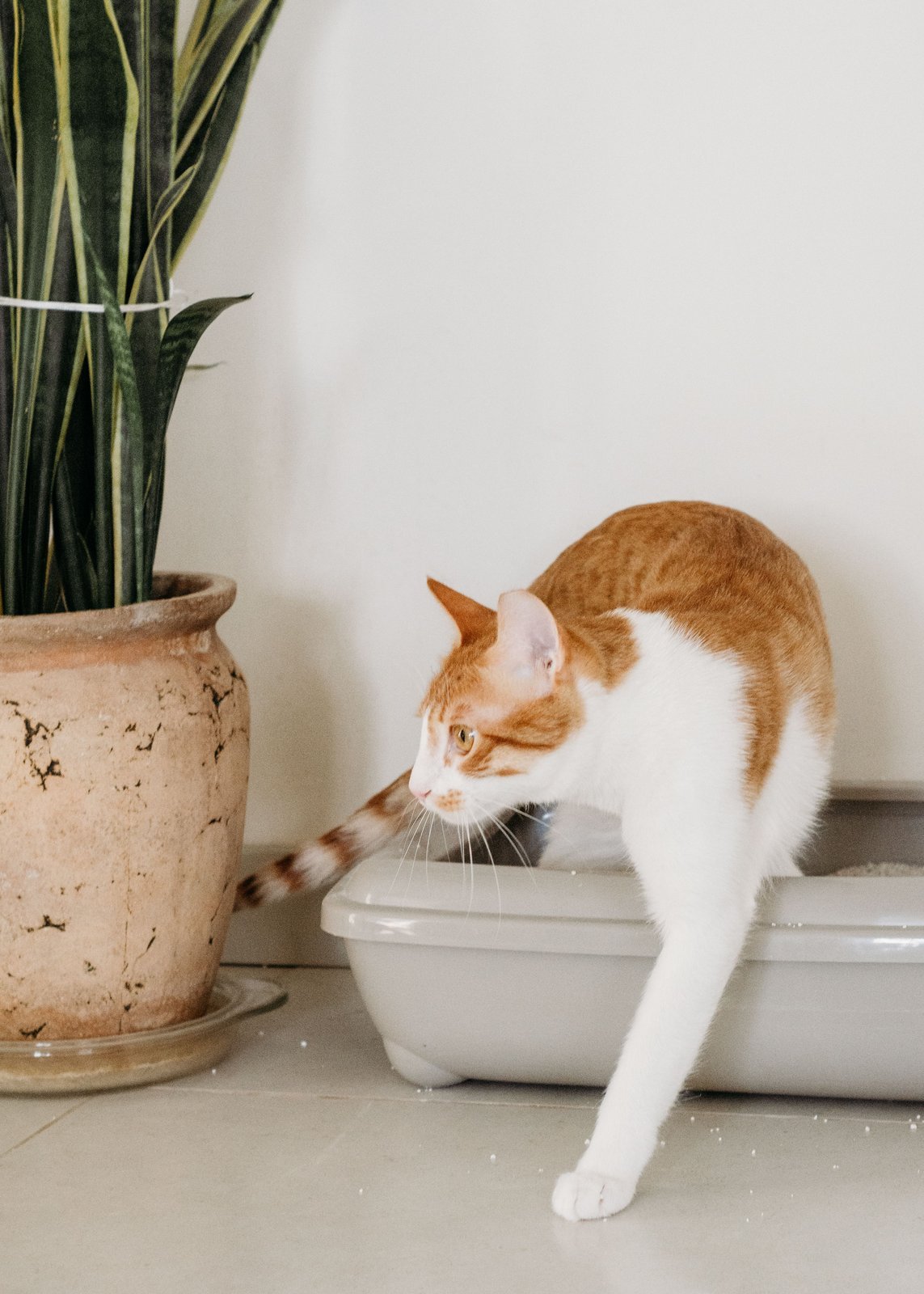
Tracked litter on the floor is a mat and a box-placement question, not a pail question. If granules travel down the hall, see litter mats for apartments. The litter you pour into the box also changes dust and odor at the source; that choice belongs in cat litter for apartments. A handsome pail will not rescue a box that is already overflowing.
Automatic boxes, enclosures, and travel boxes are also separate tools. An automatic box may collect waste in its own drawer, but you still need a plan for emptying that drawer. For the machines themselves, use automatic litter boxes for apartments. For a box that sits inside a cabinet or a cover, use litter box enclosures for apartments. For trips, use travel litter boxes. This article will not redo those setups.
When a dedicated pail actually helps
A dedicated lidded litter pail or a small step-can earns its floor space when you scoop once or more a day, but you cannot take the bag downstairs every time. That is common in a walk-up, or in a building with a distant dumpster or a chute on another floor. A close-fitting lid can slow the smell of bagged waste between those trips.
It also helps when you share the home with a dog that will eat cat feces if given the chance, or with a toddler who likes to open bins. A pail you can close is more useful than a prettier can that sits with the lid up.
A pail is less useful if you already take scooped waste out of the flat at every scoop, and if that habit is easy to keep. In that case, a simple bag and a short walk to the chute may be cleaner than a container that sits for days. A pail is also the wrong first purchase if the real problem is the box itself. Fix that before you add hardware.
When a simpler habit is the more honest fix
If odor hits you the moment you enter the bathroom, start with scooping frequency and the box setup, not a new can. A tighter scoop-and-take-out habit, even with a plain lidded bathroom can, can be enough in a small flat that has a chute just down the hall.

Do not use the kitchen bin as the default home for scooped litter. Food prep and cat waste do not belong in the same open container, and an under-counter kitchen bin is also the first place a dog will check. Keep scooped waste in its own closed container, or take it straight out of the flat, and wash your hands after you empty it.
The pail is the last container in the chain, not the first. Hair on the furniture is a shedding question, covered in how to manage cat shedding in an apartment, and it will not be solved by a waste bin. Closed storage for food is a similar habit, which we unpack in how to store cat food in a small apartment, but food and used litter should never share a bin.
Lids, gaskets, and how tight is tight enough
A lid matters more than the color of the can. An open-top bin, or a lid that stays up, will let odor into a small bathroom quickly. A step-can is convenient when your other hand is holding a scoop, but only if the lid then closes fully on its own.
Some bins add a gasket or a tighter rim to slow odor. That can help in a windowless bathroom, but it is a tradeoff, not a miracle. You do not need to chase an airtight claim. You need a lid that closes completely, a liner that fits, and a schedule that does not leave waste sitting for a long stretch.
Skip any design that a dog can nudge open, or that a toddler can reach and tip. A foot pedal is helpful only if the bin is stable and a pet cannot work it. A lockable lid can be useful with a determined dog, but only if you will actually close it. This article will not name models or invent scores.
Liners and carbon filters, without miracle claims
A liner makes emptying easier and keeps the inside of the bin cleaner. Use a bag that fits the can so the edges do not hang out and hold the lid open. If the bag is only half full but the smell is already noticeable, empty it anyway.
Some pails include a carbon filter in the lid, or a slot for one. A filter can help with odor in a closed bin. It does not “eliminate” bacteria, viruses, or parasites, and it does not make old waste safe to store for a long time. Treat a filter as a modest odor helper, and keep the emptying schedule honest. If a filter is billed as a complete odor or germ solution, ignore that claim.
Do not sprinkle household chemicals, essential oils, or scented beads into the pail to “refresh” it. Those can be unsafe for cats and dogs, and they do not replace a trip to the chute. If you wash the bin, use mild soap and water, rinse, and dry it before you set a new liner.
Where the bin can live in a small apartment
The best spot is close enough to the box that you will actually use it, and far enough from food and beds that a closed lid is not your only protection. Many people want to tuck the pail beside the box or under a sink, but only after you measure. A “slim” can in a product photo may still be too tall for the vanity shelf, too wide for the gap next to the box, or too deep for a cupboard that also holds towels.

Measure height, width, and depth, including the lid in the open position if the bin lives under a shelf. Leave room to lift the bag straight out without scraping the vanity. If you will carry the whole pail to a chute, check that you can lift it comfortably when it is partly full, and that the lid stays closed on the walk down the hall. A kitchen compost caddy is not a litter pail, but the same idea applies: a lidded container you can carry out is more useful than a pretty can you never move.
Do not hide the bin in a bedroom closet or next to the cat’s food station. Keep it indoors, closed, and in a place you can clean if a bag leaks.
Emptying cadence with a chute or a walk-down dumpster
Do not store scooped waste so long that it becomes a smell or a health problem. In a small bathroom, that often means emptying every day, or every other day, even if the bag is not full. If a trash chute is on your floor, scoop, bag, and take the bag to the chute rather than letting a pail become a second box. If the dumpster is a walk down several flights, you may use the pail as a short-term holder, then empty it on a daily trip you already make for household trash.
Hot weather and a windowless bathroom shorten the clock. If you can smell the pail from the hall, you have waited too long. Empty the bin before a weekend away. Wash your hands after you empty it. Follow your building’s rules for bagging pet waste. Do not send loose litter down a chute, and do not flush clumping litter.
Dogs, toddlers, and keeping the lid closed
Cat feces can be harmful if a dog eats them, so the bin must stay closed and out of reach of any dog that will scavenge. A step-can in the middle of the floor is a poor choice if a dog can work the pedal. Place the bin behind a bathroom door you can close, inside a cupboard, or in a spot a toddler cannot reach, as long as you can still empty it.
If a child is old enough to scoop, teach a simple routine: waste goes in the pail, the lid closes, and hands are washed. If you cannot keep a dog or a toddler away from a particular corner, that corner is not a good home for the bin, no matter how well it fits the gap.

A simple can with a hole in the lid can be fine for paper in an office. It is a weak choice for scooped litter, because odor and a determined dog can both get through an open hole. If you are comparing a basic lidded can with a tighter pail, look at how completely the lid shuts. A complete close and a short emptying schedule will do more than a decorative bin that stands open.
Choose a size after you measure, not before
Buy the smallest bin that will hold a day or two of bagged scoopings and still fits the spot you measured. A huge can invites you to leave waste for a week. A tiny can that overflows after one scoop will be abandoned.
You do not need a special color, a brand name, or a “litter” label for the container to work. You need a lid that closes, a liner that fits, a place the bin actually fits, and a habit of taking the bag out before the room smells. Skip invented rankings and model lists. Stand in the bathroom with a tape measure, think about the chute or the stairs, and pick the boring can that you will close and empty.
FAQ
Do I need a dedicated litter disposal bin in a small apartment?
Not always. A dedicated lidded pail helps when you cannot take scooped waste out at every scoop, or when you need the waste out of the kitchen bin. If a chute is close and you already bag and take waste out promptly, a simple lidded can or a tight take-out habit may be enough.
Can I put scooped litter in my kitchen trash can?
It is a poor default. Food prep and cat waste do not belong in the same open kitchen bin, and that bin is also easy for a dog to check. Use a separate closed container, or take the bagged waste straight out of the flat, and wash your hands afterward.
How often should I empty a litter waste bin?
Often enough that it does not become a smell or a health problem. In many small bathrooms that means daily, or every other day, even if the bag is not full. Empty it before a weekend away, and sooner in hot weather or a windowless room.
Do carbon filters remove germs from scooped waste?
No. A carbon filter may help with odor in a closed bin, but it does not eliminate bacteria, viruses, or parasites, and it does not make old waste safe to store for a long time. Keep the emptying schedule honest.
Where should I put the bin so a dog or a toddler cannot open it?
Measure a spot close to the box, then place the closed bin behind a bathroom door, in a cupboard, or otherwise out of reach of a scavenging dog or a curious toddler. Skip any corner you cannot keep them away from, even if the can fits the gap.
[…] to reduce litter tracking in a small apartment is for the granules that travel onto rugs. A lidded litter disposal bin helps only if you empty it, and choosing cat litter for an apartment is about the substrate, not a […]