


If you need to reduce everyday pet odors in a small apartment, treat it as a whole-home plan, not as one cleanup task. The smell may come from a litter box, a dog coat, a damp bed, yesterday’s wet food, or all of those at once. In a tight space, those sources sit close to the sofa and the bed, and a spray will not do the job of scooping, washing, and airing.
This is general information for dog and cat parents in the US and UK, not a veterinary diagnosis and not a promise that any product will wipe a home clean. Odors can also be a health question. If a new smell starts suddenly, or a pet is urinating outside the box, has diarrhea, or seems painful or unwell, contact your veterinarian before you buy another bottle.
Why a small apartment holds odor
A house with a spare room can keep the litter closet, the laundry, and the sofa farther apart. A small apartment often cannot. Little airflow, shared living and sleeping areas, and a litter box or a damp dog bed a few steps from the couch mean yesterday’s smell is still in today’s air. Hair on a throw holds odor too, and so does a bowl left out after wet food.
The useful plan is to handle the sources, then give the room some air, then use a spray only as a finishing step if you still want one. The source articles stay specific. This article is the apartment-level routine that ties them together.

A dog at a window with a towel and bedding nearby is a useful picture of the setting: living space, sleeping space, and fabric in the same few square feet. The photograph is not a dirty bed and not a proof of a smell. It is the kind of corner where a damp throw can linger if you never wash it.
Daily habits that actually change the air
Start with the litter if you have a cat. Scoop on a schedule you can keep, and do not let a full box sit beside the sofa because the apartment is small. How to clean a litter box in a small apartment is the box-care article. How to reduce litter tracking in a small apartment is for the granules that travel onto rugs. A lidded litter disposal bin helps only if you empty it, and choosing cat litter for an apartment is about the substrate, not a scent cover. None of those pages replaces the daily scoop.
If the smell is coming off the dog, that is often the coat, a damp bed, or both. How to freshen a smelly dog between baths in an apartment is the coat-care article. It is not a substitute for washing the bed the dog just dried off on. How to wash dog beds, toys, and leashes at home and how to wash cat beds, blankets, and toys at home are the laundry plans. Put beds, throws, and covers on a realistic rotation, not a promise to wash everything every day. In a small home, one clean spare throw is often more useful than a pile of damp ones waiting for a weekend.
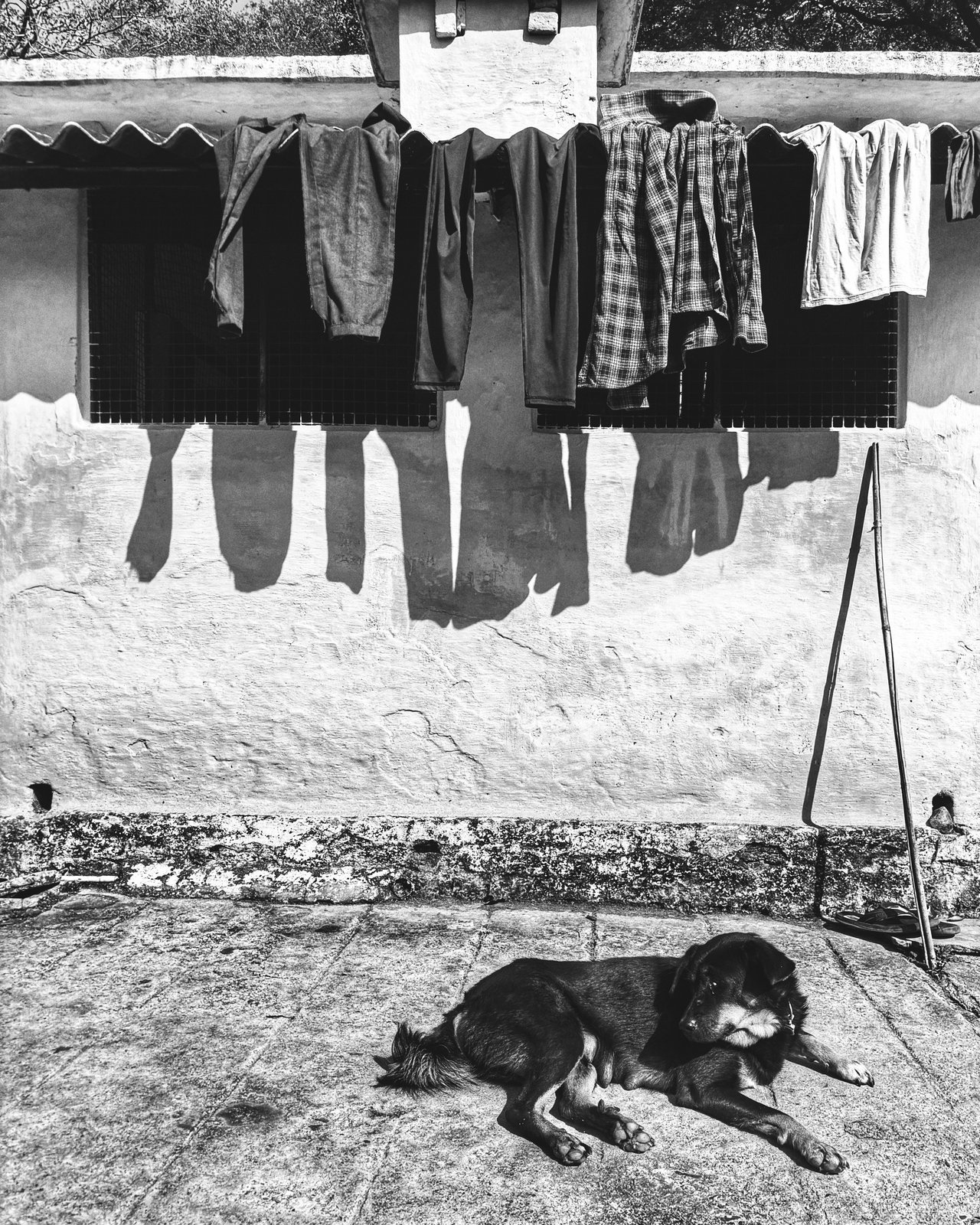
This is outdoor laundry on a line, not a compact apartment dryer, and the dog is resting on concrete rather than on a bed. It is still a useful reminder that fabric has to dry. A washed bed that stays bunched and damp in a bathroom will smell like wet cloth by the evening. Give washed items air and space, and do not stack them on the sofa while they are still wet.
Air the room when you can. Open a window for a short stretch if the weather and the building allow it, and run a fan to move stale air rather than only adding fragrance. Hair and dander on fabric hold odor, so a regular pass with a pet hair remover helps the wash do more. How to manage dog shedding in an apartment and how to manage cat shedding in an apartment are the shedding routines. They will not make a home odor-free on their own, but they reduce the coat left on the throw you sit on.
A lidded trash can or litter bin only helps if the lid stays closed and you empty it on a schedule. An open bag of used litter or leftover wet food under the sink will undo an otherwise tidy day. How to serve wet cat food in a small apartment includes the leftover-food problem: wash bowls, do not leave wet food out, and tie off scraps instead of parking them in an open bin.
Accidents, sprays, and what they cannot do
An accident is a different source from everyday smell, and it needs a different cleanup. How to clean a pet accident on apartment floors and carpets is the step-by-step cleanup. Best enzyme cleaners for pet accidents in apartments is the product-choice article for that job. Enzyme cleaners can help with urine on a washable surface when you use them as directed. They are not a daily air freshener, and they are not a substitute for scooping the box or washing the bed.

A cat on a wooden chest is not a litter-box photograph. Ideal stills of a scooped box or a lidded bin were scarce, and many close matches were already used on the site. Use this as a reminder that the cat lives in the same rooms you do, and that litter odor will travel if the box is left until it is obviously dirty.
Be honest about what a spray can and cannot do. A light scent may make a freshly cleaned room more pleasant for a short time. It cannot replace washing, scooping, or airing, and it can make a dirty source harder to notice. Do not treat a spray as a complete odor fix, and do not keep spraying a box, a bed, or a coat instead of cleaning it. If you use a spray, use it after the source work, in a room with some airflow, and stop if a pet avoids the area or seems irritated.

A cat on the sofa is the everyday backdrop for this problem: the place you sit is also the place hair, throws, and leftover smell collect. The photograph is not a dirty couch. It is a reminder that fabric in the living room needs the same honest rotation as a pet bed, especially when the litter or the laundry is only a few steps away.
A simple weekly rhythm that fits a small home
A plan only works if you can keep it on a week with work, walks, and a late grocery run. You do not need a perfect daily checklist. You do need a rhythm that hits the sources often enough that the air does not get ahead of you.
On most days, scoop the box, wash food bowls, close the lid on the trash or litter bin, and give the room a short airing if you can. If a dog came in wet from a walk, dry the coat and hang the towel so it can dry instead of dropping it in a heap. If you used a wet-food pouch, rinse the bowl and throw the leftover scraps out the same day.
Once or twice a week, wash the bed or throw that has had the most use, vacuum or wipe the area around the box, and empty the lidded bin even if it is not overflowing. Hair on a sofa cushion or a hallway runner can wait a day; a damp crate pad or a wet bath mat should not. In a small apartment, those two items often sit in the same bathroom or entry and quietly hold odor while you attend to the more obvious box or coat.
In winter, or in a building where you cannot leave a window open, airing is harder. Run a fan for a short stretch, crack a window when you are home if the weather allows it, and rely more on washing and scooping because fragrance will not move stale air for you. Do not run a strong scent in a closed room and assume the problem is gone. You may only notice it again when you come home.
If you share the apartment with both a dog and a cat, keep the sources separate in your mind even if the rooms are not. Litter odor and a damp dog bed can stack in the same air. The litter plan still belongs to the box, the coat plan still belongs to the dog, and the laundry plan still belongs to the beds and throws. Doing one well does not cancel the other.
Where smells hide when the box already looks fine
People often scoop and still notice a smell because the source has moved. A bath mat under a wet dog, a crate pad that never quite dries, a sofa cushion the cat naps on, or a hallway runner near the box can hold odor after the box itself is in decent shape. Check those spots before you add another spray.
Bowls and feeding mats matter too. Wet food left in a bowl, a mat that was never wiped, and a trash bag of pouches under the sink can smell like yesterday’s meal even when the litter is current. Wash the bowl, wipe the mat, and get the scraps out of the kitchen the same day.
If you dry laundry in the apartment, give it space. A rack packed with damp beds next to a radiator or in a windowless bathroom will smell like wet fabric, and the room will hold that smell. Rotate fewer items and let them dry fully rather than washing a large pile and leaving it bunched.
Neighbors can notice a smell you have stopped noticing. If you have been home all day, step out for a short walk and come back in, or ask a trusted person who does not live with the pets. That is not a reason to panic or to buy a stronger scent. It is a reason to go back to the source list: box, coat, beds, leftovers, and air.
What not to do, and when to get help
Do not mask a dirty litter box with fragrance. Do not leave a damp bed or a wet towel in a heap. Do not park wet food or used litter in an open bin. Do not promise yourself a miracle odor product, and do not use a spray as a substitute for washing and litter care. Do not skip the coat or the bed because you already sprayed the room.
If odor appears suddenly, if a house-trained pet starts having accidents, if the litter box is being avoided, or if a pet seems unwell, contact your veterinarian. Everyday smell is often a maintenance problem. A sudden change can be a health problem, and a clean routine will not answer that question on its own.
FAQ
Why does a small apartment hold pet odors more than a larger home?
A tight space often has little airflow, and the litter, laundry, beds, and sofa share the same air. A smell that could stay in a spare room in a larger home sits in the room where you live.
Will an air freshener or scent spray fix the smell?
Not on its own. A spray may make a freshly cleaned room more pleasant for a short time, but it cannot replace scooping, washing, and airing. Use it only after you have handled the source, if you use it at all.
How often should I wash pet beds and throws?
Use a rotation you can actually keep, and wash when a bed or throw is damp, dirty, or starting to smell. In a small home, one clean spare throw is often more useful than a pile of damp ones waiting for a weekend.
Does a lidded litter bin remove the need to scoop?
No. A lidded bin helps only if the lid stays closed and you empty it on a schedule. The daily scoop and regular box care still do the main work.
When is odor a reason to call a veterinarian?
Call if a new smell starts suddenly, if a pet is having accidents, avoiding the box, or seems painful or unwell. Everyday odor is often a cleaning problem, but a sudden change can be a health question.
[…] but it is a different article. If you want the longer plan for daily smell in a small home, see how to reduce everyday pet odors in a small apartment. If you want the regular cleaning method, how to clean a litter box in a small apartment is the […]